As South Africans, we’ve been part of the BRICS grouping for over a decade. The new, expanded BRICS+ is now a global heavyweight, and a report from the DHL GIBS Development Series, makes a compelling case for why the continent is central to its success. It's time to understand how this global shift affects us.
Seeing Africa Through a Wider Lens
In this, our fourth and final paper for 2025, we take a step back to examine Africa’s role within BRICS—now reimagined as the broader BRICS+ group. From population trends and trade dynamics to migration patterns and knowledge exchange, we benchmark this coalition against other major players on the world stage. What emerges is clear: the world’s economic and social tectonic plates are shifting, and Africa is poised to play a critical, leading role.
Hennie Heymans
CEO, DHL Express Sub-Saharan Africa
In this, our fourth and final paper for 2025, we take a step back to examine Africa’s role within BRICS—now reimagined as the broader BRICS+ group. From population trends and trade dynamics to migration patterns and knowledge exchange, we benchmark this coalition against other major players on the world stage. What emerges is clear: the world’s economic and social tectonic plates are shifting, and Africa is poised to play a critical, leading role.
Africa at the Core of Change
The global socio-economic landscape is shifting dramatically. Africa, with its youthful and expanding population coupled with abundant natural resources, is uniquely positioned for a significant surge in prosperity.
Since South Africa joined BRICS in 2011, this bloc has grown into an 11-nation BRICS+ alliance that now includes African peers Egypt and Ethiopia. Together, these nations represent nearly half the world’s population and generate roughly 40% of global output (purchasing power parity). That officially places BRICS+ beyond the G7 in scale and influence. Its mission? To empower the Global South and amplify the voice of developing countries within key global institutions.

A New Pathway Opens
The BRICS+ expansion is more than just numbers; it’s a strategic alternative in a world wrestling with protectionism and geopolitical friction.
Established institutions like the New Development Bank (NDB) have already pledged over US$30 billion toward infrastructure and green energy initiatives across member states.
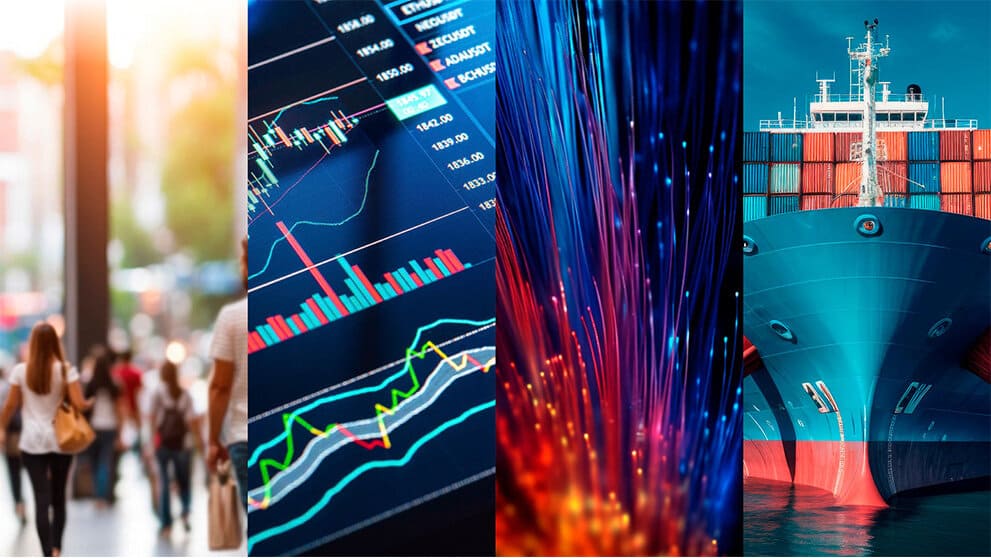
Yet, the DHL GIBS report uncovers an intriguing paradox through the TCIP framework—Trade, Capital, Information, People:
Trade flows within the bloc remain modest — only about 20% of exports circulate internally.
Capital flows tell a different story, with intra-member Foreign Direct Investment jumping from 5.7% to nearly 29% in recent years. Financial ties are strengthening, though trade integration still needs greater momentum.
Building the Future on Connectivity
The report’s bottom line? Connectivity is the linchpin for unlocking BRICS+’ real power. Deepening the ties between trade, capital, information, and people will fuel the bloc’s future success. For South Africa and the continent, that’s a game-changer — a foundation for sustained growth and development for decades ahead.
Dive deeper into the data, explore future scenarios, and unpack the detailed TCIP analysis by reading the full DHL GIBS report here.


 Share
Share
Similar Stories