The service accepts shipments from 50 kg up to 3,000 kg in total, with individual palletized pieces of up to 1,000 kg and maximum dimensions of 300 x 200 x 160 cm per piece, according to the DHL Express 2026 Rate and Service Guide for Brazil.



 Share
Share

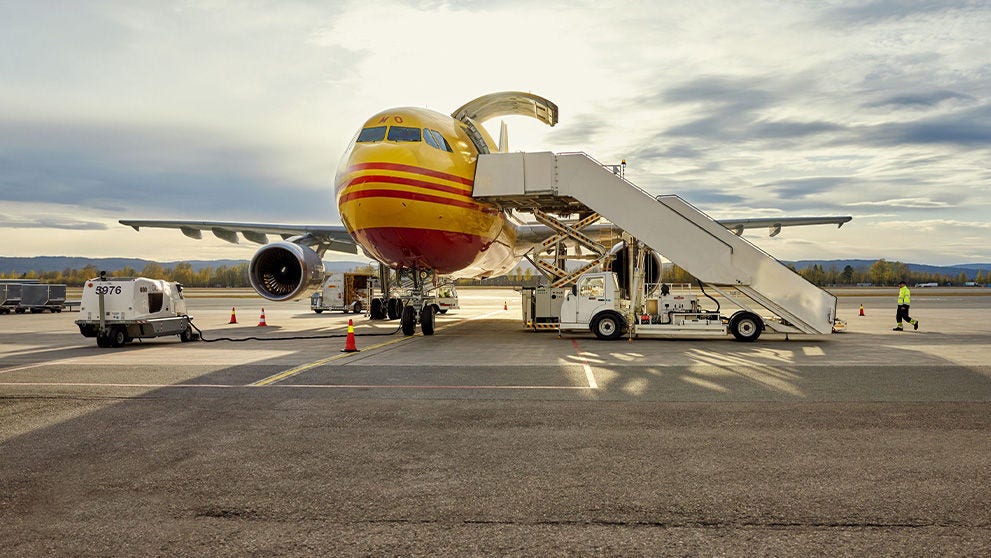
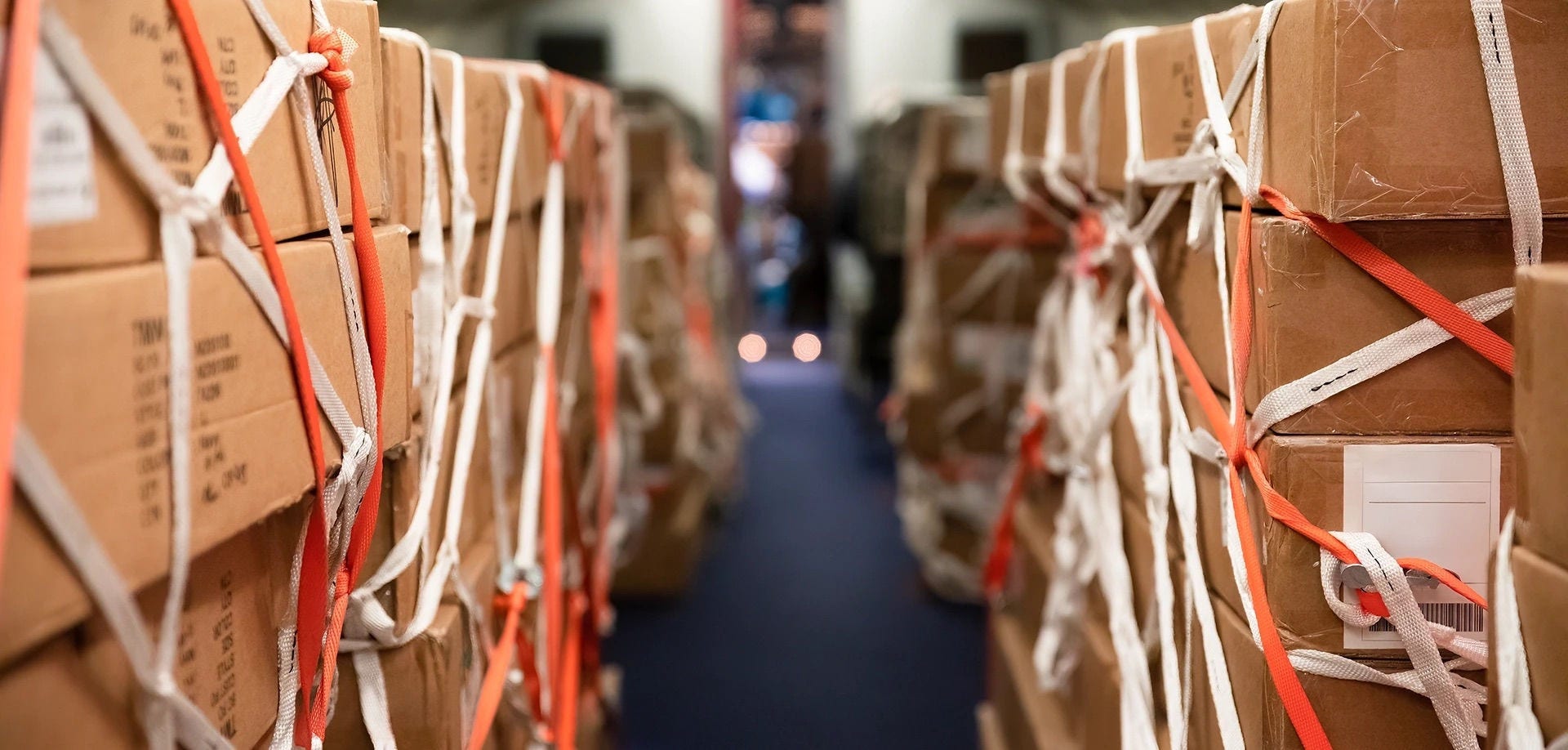
Heavy weight express shipping moves shipments from 50 kg to 3,000 kg through the integrated air network used for courier parcels, with customs clearance included and international delivery that can take a few days. At DHL Express, the service is called DHL Heavy Weight Express and accepts palletized pieces of up to 1,000 kg each.
If your company has ever waited weeks for a spare part stuck somewhere in a traditional freight chain, you know what that wait really costs: a production line standing still, a customer chasing you, a team improvising. This guide to heavy weight express shipping in Brazil explains how the service works, who it makes sense for, what changes on the Brazilian customs side and how to compare it with conventional freight before you choose.
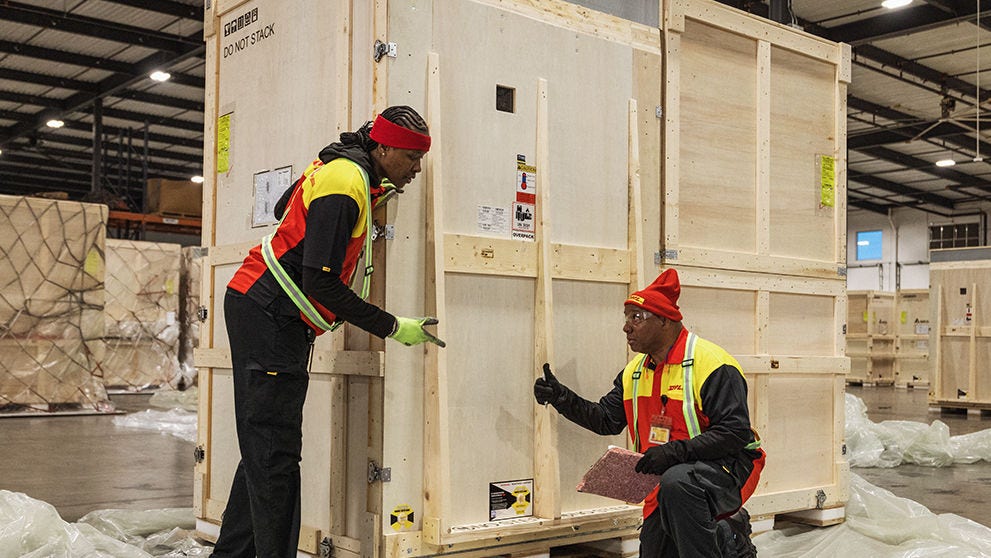
DHL Heavy Weight Express is the DHL Express service for international shipments from 50 kg, with a limit of 3,000 kg per shipment and individual palletized pieces of up to 1,000 kg, within maximum dimensions of 300 x 200 x 160 cm per piece. Source: DHL Express 2026 Rate and Service Guide for Brazil.
In Brazil, pallets travel on DHL Express Worldwide, the end-of-day service that covers more than 220 countries and territories. The DHL Express 9:00 and 12:00 services, which deliver by those times on the next possible business day, do not accept pallets and stop at 300 kg per shipment, so a palletized load goes on Worldwide.
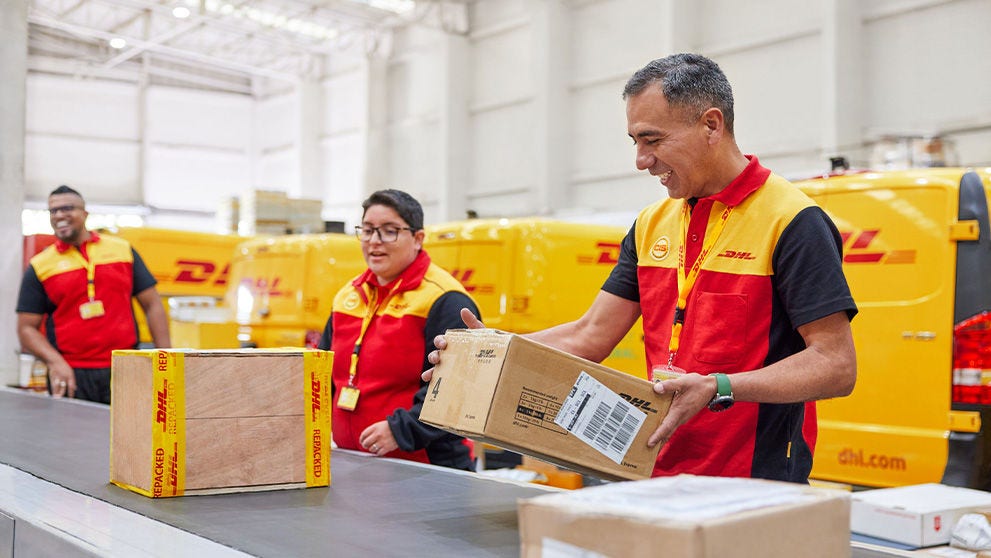
The real difference lies in how the operation is built. In traditional freight, heavy cargo usually passes through a freight forwarder, an airline, a customs broker and a local trucking company, each with its own contract, invoice and tracking. With Heavy Weight Express, the shipment moves through a single network from pickup to delivery, with customs clearance handled inside the same flow.
If you manage production schedules, customer commitments or projects with an installation date, that difference shows up directly in your planning: fewer handovers mean fewer places where a shipment can stall without anyone telling you.
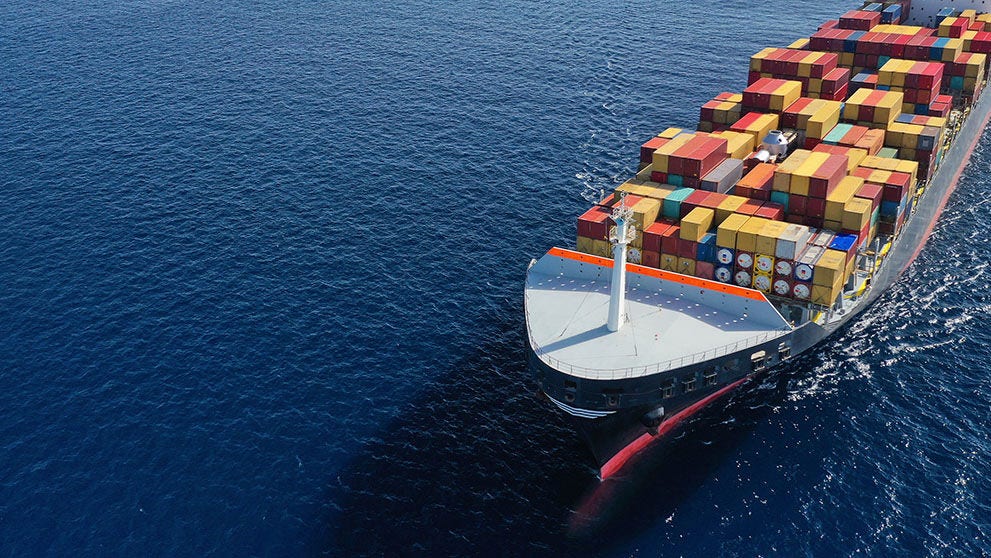
For decades, the market treated weight and speed as opposites. Above a certain number of kilos, cargo left the express world and entered conventional air or ocean freight, with lead times measured in weeks.
Weight was never the only reason. Fragmentation is. Every intermediary adds a waiting window, a document check and a queue. One missed flight on the first leg pushes back every step that follows.
The express model for heavy cargo removes several of those junctions. According to DHL, shipments in Heavy Weight Express can cross borders in as little as 1 to 3 days, depending on the route, customs clearance and the season. That is not a promise of transit time: it is the practical effect of reducing the number of hands the cargo passes through.
An honest reminder first: not every shipment needs express speed, and paying for urgency you do not have is wasted margin. The benefits below count when the cargo's time has real economic value.
The typical profile is a company whose operation stops when the cargo is late. A few Brazilian scenarios make it concrete.
A metalworking plant in the interior of São Paulo waits for a 400 kg component while its line is down. A hospital needs imported diagnostic equipment before a new wing opens. An auto parts maker exports an 800 kg palletized batch to its parent company in Germany for validation. A data center receives high-value servers that cannot wait for an ocean crossing.
Industrial machinery and components, auto parts, medical devices, high-value electronics and IT infrastructure are the most common cargo on the service. These are not everyday shipments. When they happen, the whole operation rides on them.
This is the point every freight buyer dealing with Brazil needs to master before asking for a quote. The tax treatment of the shipment depends on its value and on the type of import, and that changes documents, timelines and costs.
Express courier shipments with a customs value of up to USD 3,000 can be cleared under the Simplified Taxation Regime (RTS), according to the Receita Federal international shipments manual, updated on June 12, 2026. How that regime works is explained in the guide to courier imports and the RTS in Brazil.
Above that value, or when the product needs a license, the operation becomes a formal import: a declaration registered in Siscomex (Brazil's foreign trade system), an importer registered to operate in it (the registration known as Radar) and taxes paid according to the tariff classification of the goods.
The guide on customs clearance and restrictions explains the steps, and the guide on what import duty is covers the taxes involved.
In practice, the typical value of heavy cargo puts most of these shipments in the formal flow. That is exactly where integrated clearance saves the most time: the same network that carries the goods prepares the release, and DHL Express runs a bonded warehouse at Viracopos airport, in São Paulo, for formal imports, according to its 2026 Rate and Service Guide for Brazil.
The comparison below sums up the structural differences between the options for a heavy international shipment. Transit times vary by route, customs and time of year, so treat the ranges as planning references, never as commitments.
Criteria | Heavy Weight Express | Traditional air freight | Ocean freight |
Weight range | 50 kg to 3,000 kg | No practical ceiling | No practical ceiling |
Typical transit | Days | 1 to 2 weeks | Weeks to months |
Intermediaries | One network | Several (forwarder, airline, broker) | Several |
Customs clearance | Built into the service | Contracted separately | Contracted separately |
Tracking | End to end, in real time | By leg, in separate systems | By leg |
Best use | Critical cargo, high value per kg | Regular volume without urgency | Large volumes, low cost per kg |
The math that decides is simple to set up: add the freight cost of each option to the cost of the downtime it imposes. For a part that unlocks a production line, express usually wins. For regular stock replenishment with no rush, traditional freight stays competitive.
A heavy shipment quote is only as good as the data behind it. Gather this before you call:
Packing is where most heavy shipments win or lose time, and the guide on how to palletize cargo in Brazil walks through it step by step.
The service accepts shipments from 50 kg up to 3,000 kg in total, with individual palletized pieces of up to 1,000 kg and maximum dimensions of 300 x 200 x 160 cm per piece, according to the DHL Express 2026 Rate and Service Guide for Brazil.
Brazilian law sets no fixed customs clearance time for any type of shipment. What the express service changes is the preparation: the network checks the documents before the cargo arrives, which reduces the issues that usually hold shipments at the border.
It depends on the regime. Express shipments of up to USD 3,000 follow the simplified courier regime; above that, a formal import requires the importer to be registered in Siscomex, according to the Receita Federal.
Yes. The express network works in both directions, and exports of palletized cargo follow international packing rules, including the phytosanitary treatment of wooden pallets required by the ISPM 15 standard (NIMF 15 in Brazil).
No. According to the DHL Express 2026 Rate and Service Guide for Brazil, pallets are accepted only on DHL Express Worldwide; the 9:00 and 12:00 services do not accept pallets and are limited to 300 kg per shipment.
If your operation depends on cargo that cannot wait, the shortest path is to price the real scenario: weight, dimensions, origin, destination and urgency. With the checklist above in hand, the quote comes back faster and closer to the final cost.
To simulate a shipment with DHL Heavy Weight Express and manage all your international shipping in one place, open a DHL Express business account.
Share