
No. The taxes on imports are defined by Brazilian law and calculated by the competent authorities; DHL Express clears the shipment and represents the importer during the process.



 Share
Share
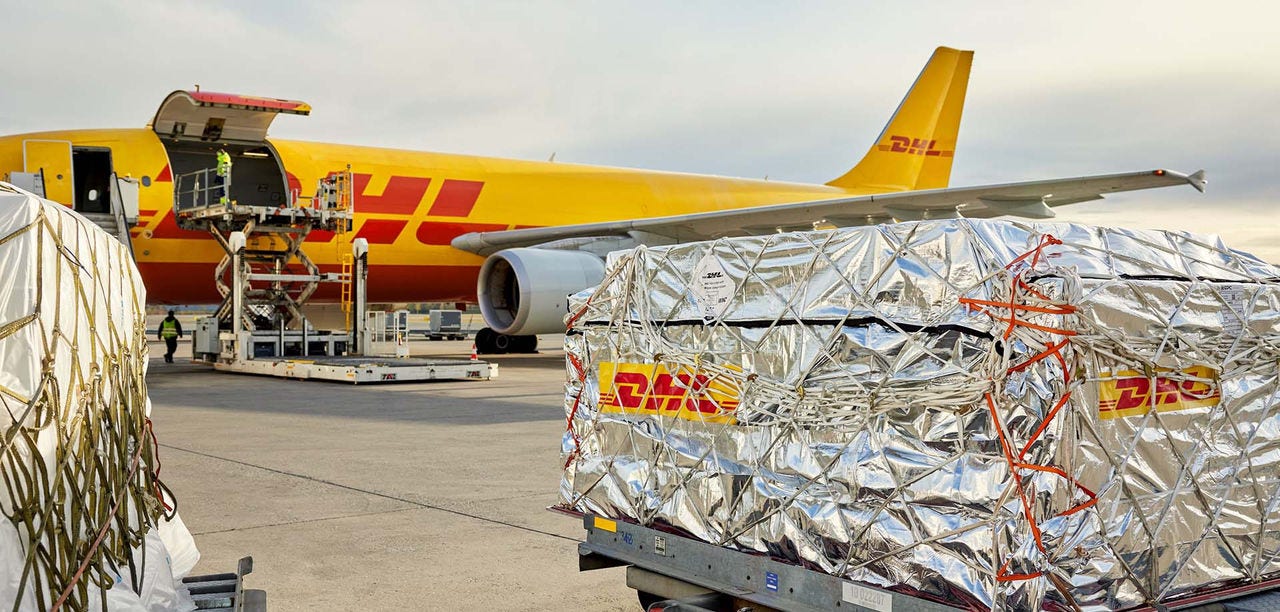
Courier shipments into Brazil with a customs value of up to USD 3,000 are taxed by default under the Simplified Taxation Regime (RTS). Brazil's Federal Revenue Service (Receita Federal) calculates the taxes on goods, freight and insurance in a single flow, which speeds up clearance. You see the amounts on the Debit Note or Customs Release Receipt before delivery.
Bringing goods into Brazil by courier is one of the fastest ways to receive products from abroad. What still catches many senders and recipients off guard is the tax side: which taxes apply, what each fee pays for and why the final bill is higher than the price of the product. This guide to RTS in Brazil walks through each piece, with a worked example.
The RTS (Regime de Tributação Simplificada) is the tax regime Brazil created for international shipments with a customs value of up to USD 3,000, sent to individuals or companies. When a courier shipment reaches Brazil, it goes through customs clearance and can be taxed under this regime, as provided in Brazilian law.
Under the RTS, the taxes are calculated on the customs value of the shipment, which is the sum of:
The RTS charges Import Duty (Imposto de Importação, or II) and exempts the shipment from IPI, PIS and COFINS, three federal taxes that apply to regular imports. It is applied by default but is not mandatory: a recipient who prefers another regime must tell the courier in time and file an import declaration (DI or DSI) instead. Source: Receita Federal, international shipments manual, page updated on June 12, 2026.
Above USD 3,000, the import leaves the RTS and follows the formal route, with the steps described in the guide on importing into Brazil.
Important: the tax treatment of courier shipments can differ from the treatment of postal shipments, so the rules below refer to express courier imports.
As a rule, shipments imported under the RTS are subject to Import Duty and to ICMS. Here is how each one works.
Import Duty is calculated at the rate set for the Simplified Taxation Regime, subject to the rules and exceptions in the legislation in force. For a deeper look at the tax itself, see the guide on what import duty is.
ICMS is the state tax on the circulation of goods. It is charged according to the law of the state where the goods are delivered, at the rate in force in each of Brazil's 27 federal units. It applies whether or not the purchase was made on a site certified in Remessa Conforme, the Receita Federal compliance program for e-commerce sites.
The table below summarizes the Import Duty rules published by the Receita Federal. ICMS comes on top in every case, at 17% to 20% depending on the state.
Situation | Import Duty (II) |
General rule, for individuals or companies | 60% of the customs value |
Purchase by an individual on a site certified in Remessa Conforme, up to USD 50 | 0% (declarations registered from May 12, 2026) |
Purchase by an individual on a certified site, above USD 50 | 60%, minus the equivalent of USD 30 from the tax due |
Medicines imported by an individual for personal use, up to USD 10,000 | 0%, if health authority requirements are met |
Source: Receita Federal, international shipments manual, page updated on June 12, 2026. Between August 1, 2024 and May 11, 2026, the certified-site rate up to USD 50 was 20%, with a USD 20 deduction above that value.
The rules can move again. Law 15,502 (Lei nº 15.502), of September 10, 2026, allows the Minister of Finance to change these rates by ministerial act, including cutting them to zero up to USD 50 and to 30% up to USD 3,000, and to set different rates for postal and express shipments or for companies in the compliance program. The law authorizes the change; it does not apply it by itself. Source: Planalto, Law 15,502 of September 10, 2026.
Here is a practical example of a company importing by courier under the general rule:
The customs value used to calculate the taxes is USD 1,936.00. That is the base for every tax on the import.
The amount in reais is converted at the exchange rate adopted by the Receita Federal on the date the import declaration is registered. The tax amounts can also be checked on the Debit Note (Nota de Débito) or the Customs Release Receipt (Recibo de Liberação Alfandegária) issued during the process.
With the 60% general rate, Import Duty is USD 1,161.60. ICMS is then calculated on a grossed-up base: customs value plus Import Duty, divided by one minus the ICMS rate. In a state charging 17%, the base is USD 3,732.05 and the ICMS is USD 634.45.
The total comes to USD 1,796.05, or about 93% of the customs value. In a state charging 20%, the taxes add up to exactly 100% of the customs value. This is why the quote you get from a supplier abroad says little about your real cost until you run this math. The formula comes from the Receita Federal manual; your actual rate depends on the destination state.
DHL Express acts as the representative of your company or of the importer in the customs clearance process. When the shipment arrives in Brazil, DHL Express pays the taxes in advance, nationalizing your goods so that customs release can move faster.
What the service covers:
For formal imports, DHL Express also runs a bonded warehouse at Viracopos airport, in the state of São Paulo, according to the DHL Express 2026 Rate and Service Guide for Brazil.
It depends on how the goods were bought. For purchases on sites certified in Remessa Conforme, Import Duty, ICMS and any service charges are paid at checkout, on the site itself.
In the other cases, the recipient pays on the courier's website within 20 days after release, and delivery depends on the payment being confirmed. Source: Receita Federal, page updated on June 12, 2026. The step by step is in the guide on paying your DHL invoice.
One safety note from the Receita Federal itself: it does not send payment slips, make phone calls or email anyone to collect these amounts. Any message like that is a scam.
Besides the taxes set by Brazilian law, some administrative fees can apply during the import. They cover the services needed to clear the shipment, process the documents and release the goods. The Receita Federal makes the distinction clear: these charges are a private arrangement between the recipient and the courier, not taxes.
Value: USD 22.50 per waybill or 2% of the Import Duty and ICMS, whichever is higher. It pays for the administrative work behind the import, including document checks, data handling and the procedures needed for customs clearance. In the example above, 2% of USD 1,796.05 is USD 35.92, so that is the amount that applies.
Value: USD 4.00 per shipment. It covers the operational and administrative costs of releasing the shipment at bonded terminals. It can change according to the costs charged by airport operators.
Value: USD 0.40 per kilogram, per day, from the first day after arrival. It applies when the shipment stays in storage waiting for customs clearance to finish, usually because of:
Value: USD 10.00 per shipment. In some cases, customs may order a physical inspection to check the declared contents. It can be partial or full and include checking the goods, taking samples, reviewing documents and marking the cargo. All of it follows the customs legislation in force.
Charge | Value |
Administrative Service | USD 22.50 per waybill or 2% of II plus ICMS (whichever is higher) |
Courier Shipment Release Fee | USD 4.00 per shipment |
Storage Fee | USD 0.40 per kg, per day |
Physical Inspection (when applicable) | USD 10.00 per shipment |
These values come from the DHL Express 2026 Rate and Service Guide for Brazil and can change without prior notice as DHL Express, airport operators or the authorities update their tables. Fees charged on arrival are converted into reais at the official Central Bank of Brazil rate published one day after the shipment arrives. For current rates and surcharges, check the latest edition of the guide.
As a rule, international shipments carried by courier are taxed under Brazilian law. Some situations set out in law, however, can remove or zero the Import Duty. They are summarized here and explained in full in the guide to import duty exemptions in Brazil.
Exemptions depend on meeting the legal requirements and are assessed case by case by the competent authorities.
No. The taxes on imports are defined by Brazilian law and calculated by the competent authorities; DHL Express clears the shipment and represents the importer during the process.
The taxes and administrative fees are reported during the import process and appear on the Debit Note or the Customs Release Receipt issued for the shipment.
Yes. If the importer believes there is an error, the Receita Federal has procedures for filing a dispute under the applicable legislation.
No. DHL Express does not set or change taxes. Its role is to clear the shipment and represent the importer during the import, in line with the legislation in force.
No. The Receita Federal applies the RTS to shipments worth up to USD 3,000 sent to individuals and to companies, and the general Import Duty rate of 60% applies to both.
Yes. The RTS is applied by default but is not mandatory, so a recipient who prefers another regime must inform the courier in time and file an import declaration (DI or DSI).
Importing by courier gets simpler when you know the regime, the rates and the fees before the shipment lands. The surprises that remain usually come from documents, not from the tax table: a vague description or a value that does not match the invoice is what sends a shipment into storage.
If your company imports regularly and wants specialists handling clearance for every shipment, open a DHL Express business account.
Share