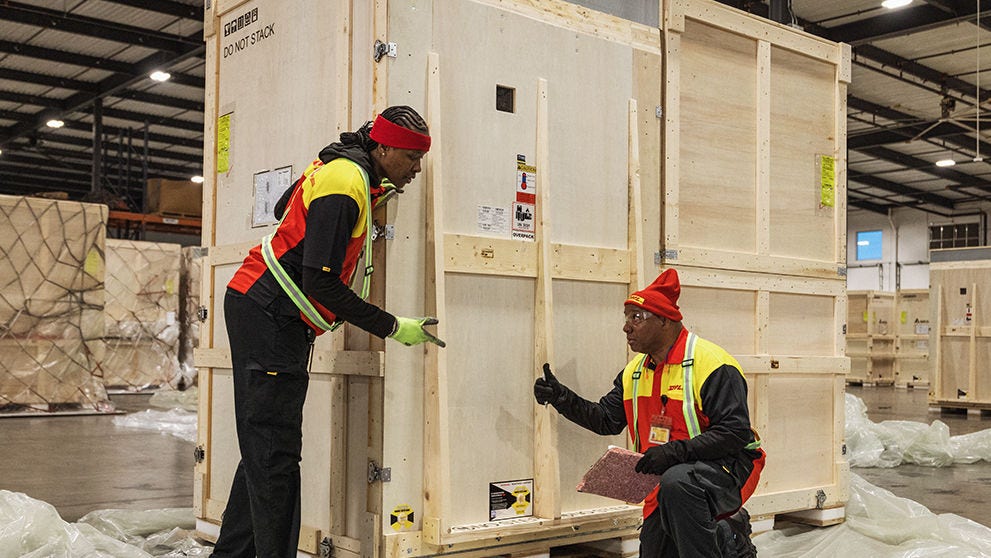
EXW stands for Ex Works. The seller places the goods at the buyer's disposal at its own premises, without loading them onto a vehicle and without clearing them for export.

Under the EXW Incoterm (Ex Works), the seller carries the lightest set of obligations of all 11 rules. The goods are made available at the seller's own premises, not loaded onto any vehicle and not cleared for export. Loading, inland carriage, export and import all fall to the buyer. It works with any mode of transport.
Buy from a Brazilian supplier on those terms and the arrangement breaks at the first step. A foreign buyer cannot file the paperwork that takes goods out of Brazil, so the job bounces back to the exporter, usually after the price has been agreed.
Packed goods, placed at the buyer's disposal, at the agreed address and within the agreed period. Nothing beyond that. The official description used in Siscomex (Brazil's federal foreign trade system) is blunt: the seller "merely places the goods at the buyer's disposal at the seller's premises, within the agreed period, taking no responsibility for export clearance or for loading the goods onto any collecting vehicle". Source: Camex (Brazil's Foreign Trade Chamber) Resolution No. 16/2020.
Everything that follows belongs to the buyer:
EXW is one of the 11 rules published by the International Chamber of Commerce (ICC). The other ten are covered in the guide What are Incoterms®?.
At the moment the goods are placed at the buyer's disposal at the agreed point, ready for loading, still inside the seller's premises. According to the ICC, risk of loss or damage transfers then, before any loading takes place. Source: ICC Academy, Incoterms® 2020.
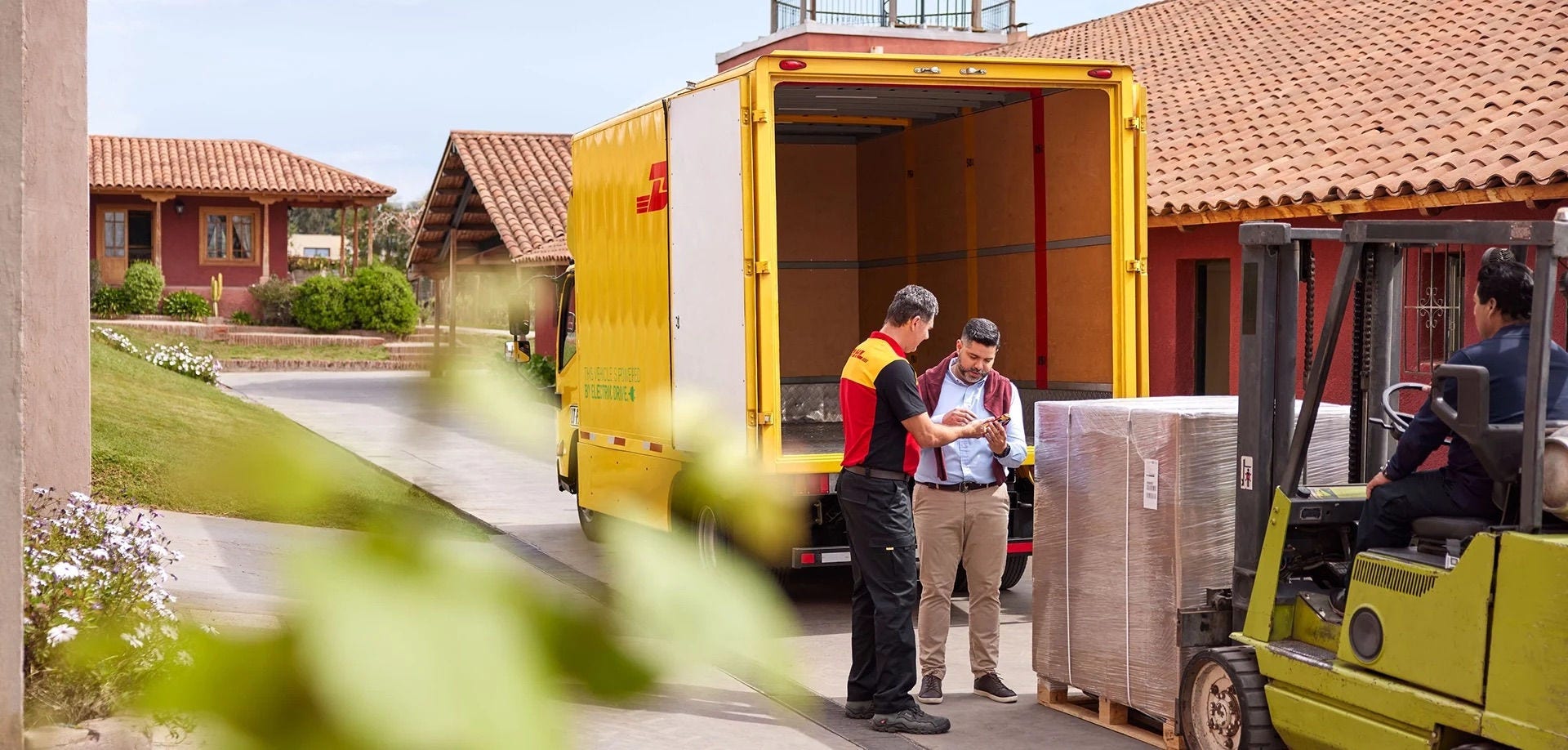
Picture a batch of machined parts staged in a plant in Joinville, in southern Brazil. The carrier hired by the buyer arrives, runs its forklift and drops the pallet on the ramp. The loss belongs to the buyer, even though the cargo never left the seller's yard.
That gap causes the most common dispute in EXW deals. The party with the dock, the forklift and the trained crew is almost always the seller, so the seller ends up loading as a favour. On paper, it is handling cargo that is no longer at its risk, with nothing in the contract or the insurance policy to cover it.
Because a foreign buyer has no legal standing to clear goods out of the country. Camex Resolution No. 16/2020 records the exception in a note: since the foreign buyer lacks the legal means to arrange clearance for goods leaving Brazil, it is understood that the seller takes that step, at its own cost and risk, in Brazilian exports.
The ICC repeats the point in its survey of national regulatory barriers to the Incoterms® 2020 rules, updated in January 2025. Brazil appears on the list of countries with a barrier to EXW, and the reason given is exactly this one: the buyer cannot handle the process, so clearance, costs and associated risks sit with the seller.
The practical effect is easy to measure. You signed EXW, you quoted a gate price, and you will still pay the customs broker, the documents and the export filing. The contract says one thing, the operation does another, and the difference comes out of your margin.
The Brazilian exporter, every time. The DU-E (Declaração Única de Exportação, Brazil's single export declaration) asks for the agreed sales term and for the VMLE, the value of the goods at the place of shipment, which "in exports corresponds to the FOB value of the goods". Source: Receita Federal (Brazil's federal revenue and customs authority), DU-E filing manual, updated on 13 November 2025.
Even selling at the factory gate, you need to know what it costs to move the cargo to the point of shipment, because that is the figure the declaration wants. The rest of the process, from registration to foreign exchange, is covered in the guide to exporting from Brazil.
If the goods cross a border, FCA describes reality better. Delivery still happens at origin, but loading and export clearance move to the side of the contract that can actually perform them. The table compares the two on the points that shape a negotiation:
Criterion | EXW | FCA |
Place of delivery | Seller's premises, not loaded | Named place at origin, to the carrier nominated by the buyer |
Who loads the collecting vehicle | Buyer | Seller, when delivery is at its own premises |
Export clearance | Buyer | Seller |
Where risk passes | Goods at disposal, before loading | On handover to the carrier |
Mode of transport | Any | Any |
On-board bill of lading | Not provided for | Possible, if agreed |
Exports from Brazil | Clearance returns to the seller by rule | Matches the operation as it happens |
The ICC guidance is direct: where the buyer intends to export the goods and anticipates difficulty in obtaining export clearance, it would be better advised to choose FCA, the rule under which the obligation and cost of export clearance lie with the seller. How the rule works, including the 2020 change on bills of lading, is set out in the guide to the FCA Incoterm in Brazil.
When the cargo moves by sea and the buyer wants to control ocean freight, the conversation shifts to the port rules, compared in the guide to the FOB Incoterm and Brazil.
When the goods cross no border at all. The ICC itself says EXW may be suitable for domestic trades, where there is no intention to export. That is the setting the rule was built for: hand over at the gate and stop there.
Three situations where it causes no trouble:
Outside those cases, the practical advice is to offer FCA at your premises instead. The delivery point stays the same, the price barely moves, and the contract starts describing who does what.
Check these before signing:
A complete clause names the place and the version, as in "EXW Rua Industrial 400, Joinville, Incoterms® 2020". Without an address, the delivery point becomes an argument at the first delay.
EXW stands for Ex Works. The seller places the goods at the buyer's disposal at its own premises, without loading them onto a vehicle and without clearing them for export.
The buyer. From the moment the goods are placed at its disposal, the buyer covers loading, inland carriage, international freight and import duties and taxes.
Yes. EXW works with any mode of transport, including air and express, although the ICC recommends FCA whenever the goods are going to cross a border.
Under EXW the buyer loads the goods and handles export clearance. Under FCA the seller clears the goods for export, and it also loads them when delivery takes place at its own premises.
It does, with one mandatory adjustment. Under Camex Resolution No. 16/2020, export clearance stays with the Brazilian exporter even in an EXW contract, because the foreign buyer cannot perform it.
No. Neither party is obliged to arrange insurance under EXW, so a buyer who wants cover has to buy its own policy from the moment of loading.
Selling at the gate looks simple until an export stalls for a missing document, or until cargo is damaged and nobody can say whose risk it was. Rules such as FCA, CPT and DAP keep the deal readable and let you sell with carriage and clearance already arranged, including on small, urgent shipments.
If your company wants to move beyond a gate price and deliver closer to the customer, open a DHL Express business account and export with end to end tracking and customs handled on both sides.


 Share
Share