Yes. Commercial exports require Radar registration, but the value ceilings of the limited category apply only to imports, so a small company registered as limited can export without that cap.

Exporting from Brazil means selling Brazilian goods or services to a foreign market, with the operation registered on the Portal Único de Comércio Exterior, Brazil's single foreign trade portal. To export, your company needs a CNPJ, Radar registration, the sales documents and a logistics partner to carry the cargo to its destination. Most exports carry no domestic tax.
Exporting sounds like a big-company project. It is not. The hard part is not volume, it is the sequence: what gets registered, who inspects, which documents the buyer on the other side will ask for, and how the product arrives without a cost surprise. That is what this guide lays out.
Exporting means sending goods out of Brazil in a registered commercial operation. It can be a container of coffee or a box of ten handicraft pieces sent by express service. Scale changes the logistics, not the principle.
Any company with an active CNPJ, the Brazilian company tax ID, and Radar registration, the customs registration that opens the foreign trade systems, can export. Individuals can also send goods abroad in specific situations and within limits, but recurring commercial operations call for a company structure. If you sit on the other side of the trade, the guide to importing into Brazil covers the inbound route.
One point that changes the conversation with your finance team: exports are, as a rule, exempt from Brazil's domestic taxes. The incentive exists because the country wants you to sell abroad. It does not remove logistics costs or paperwork, but it improves the numbers a great deal compared with the equivalent domestic sale.
Brazilian practice recognises five main types:
Choosing between direct and indirect export is a strategic call, not a bureaucratic one. Direct export builds relationships and margin. Indirect export speeds up the first sale and lets you learn with less exposure.
In practice, the first export always takes longer than the ones that follow. What eats time is registration and learning the paperwork. From the second operation on, the same flow runs in days.
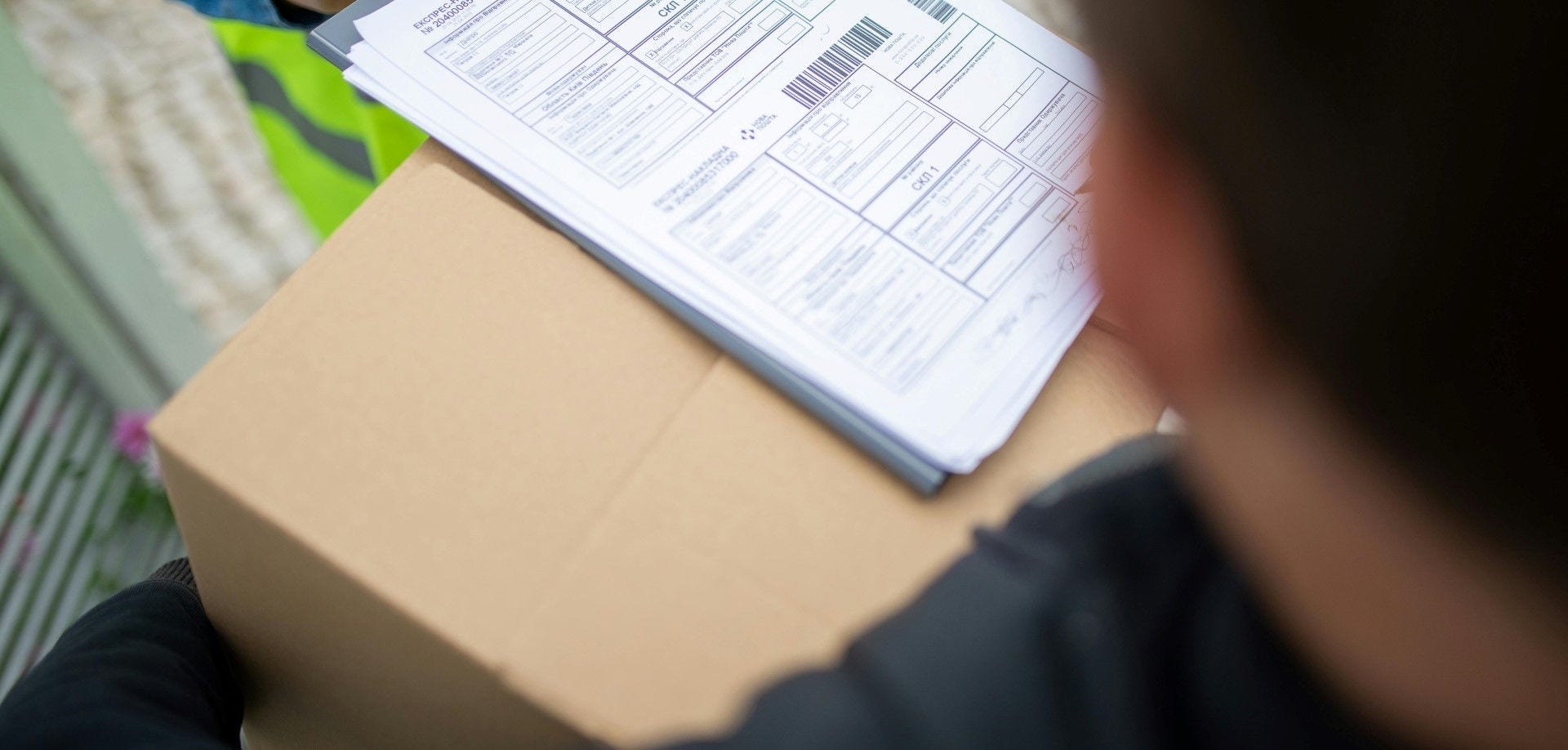
The table sums up what usually goes with a sale abroad and what each document does:
Document | What it is for |
Commercial invoice | Formalises the sale, the value and the agreed terms |
Packing list | Details packages, weights and the contents of each one |
Outbound nota fiscal | Brazilian tax document for the operation |
Transport document | Contract of carriage and proof of shipment |
Certificate of origin | Unlocks tariff benefits in countries with a trade agreement |
Specific certificates | Sanitary, phytosanitary or technical, depending on product and destination |
Consistency between these documents is what prevents delays. A weight on the invoice that differs from the weight on the transport document raises questions both on departure and on arrival. The breakdown by type of operation is in the guide to documents for import and export.
Export costs fall into four blocks: preparing the cargo (packaging fit for international transport, palletising, marking), documentation and certification, international freight and insurance, and destination charges when the chosen Incoterm puts them on you.
Preparation is the block that surprises beginners most, because badly packed cargo takes up more space and pays for it in freight. Size the packaging to the product and to the pallet before you quote, not after.
One habit that saves money: get a freight quote before you set the price with the buyer. Selling on an Incoterm that includes freight and only then discovering the real rate is the fastest way to wipe out an order's margin.
This is the story of the year for Brazilian exporters. On July 15 and 23, 2026, the United States published two measures under Section 301 of its trade law, with additional tariffs of 25% and 12.5% on parts of its imports from Brazil, which stack when both apply to the same product. The measures took effect on July 22, 2026.
According to Brazil's Ministry of Development, Industry, Trade and Services (MDIC), based on 2024 bilateral trade, 23.1% of Brazilian exports to the United States are subject to the new tariffs: 1.9% only to the 25% tariff, such as sugar; 4.7% only to the 12.5% tariff, such as stone products, ores, essential oils, perfumery and fish; and 16.5% to both, a combined 37.5%, including machinery and equipment, wood, fats and oils, footwear, furniture and apparel. Another 52.7% face only the ordinary tariff, including coffee, meat, aircraft and orange juice. Source: MDIC, July 2026.
What this means for your company, in three moves:
In official figures, Brazilian exports to the US market reached US$ 17.4 billion in the first half of 2026, down 13% on the same period a year earlier. Source: MDIC, July 2026. Diversification is no longer textbook advice. It is risk management.
For high-value cargo, commercial samples, spare parts and cross-border e-commerce, express air delivers predictability and end-to-end tracking. For commodities and large volumes, ocean freight wins on cost per unit.
The criterion people forget is clearance capacity at destination. A shipment that arrives fast and then sits in the buyer's customs has not met its deadline. Ask your partner how they handle clearance in the country of entry, not just how long the flight takes.
Yes. Commercial exports require Radar registration, but the value ceilings of the limited category apply only to imports, so a small company registered as limited can export without that cap.
As a rule, exports are exempt from Brazil's domestic taxes. What may apply are tariffs charged by the destination country, paid by the importer according to the agreed Incoterm.
In a direct export, your company sells and exports in its own name. In an indirect export, you sell to a trading company or export trading house, which runs the international operation.
Most of the time goes into registration and getting the documents in order. After that, the shipping cycle depends mainly on the transport mode and the destination.
No. According to MDIC, 23.1% of Brazilian exports to the United States are subject to the new tariffs, while 52.7% face only the ordinary tariff, based on 2024 trade data.
Most companies that export well today started small, with a sample order and a client willing to test. What you learn about paperwork in the first operation is the asset that unlocks all the others.
If you want to understand the cost and timing of your first export from Brazil, open a DHL Express business account.


 Share
Share