


1 - Cision PR Newswire, March 2021
2 - Shopify, December 2021
3 - McKinsey, AI Multiple, January 2023
4 - Wakefield Research, Supply Chain Dive, April 2023
5 - Stream
6 - OptimoRoute

So much of your customers’ experience with your business is directly impacted by how you manage your fulfillment channels. For Brazilian entrepreneurs, establishing an efficient distribution model is the single most important factor in transforming an online store into a scalable international enterprise.
Brazil represents Latin America's largest e-commerce market, which provides local digital brands with an immense growth engine. However, capitalizing on this momentum requires moving past domestic shipping and mastering the complex rules of international trade.
Here, we break down what the final delivery leg truly means for an expanding enterprise, how to optimize your localized warehousing, and how to structure a resilient cross-border logistics Brazil strategy to cut your overhead while delivering goods to global buyers on time.
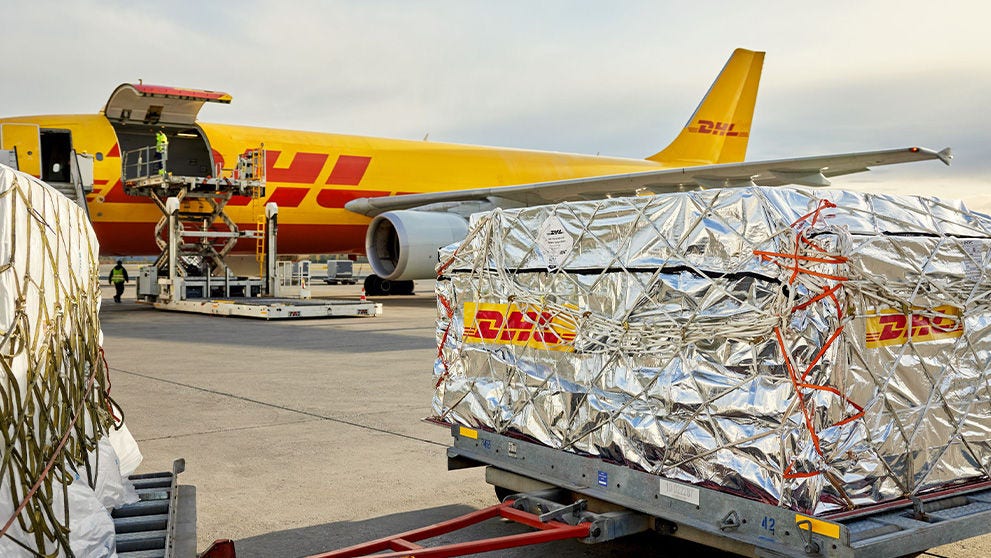
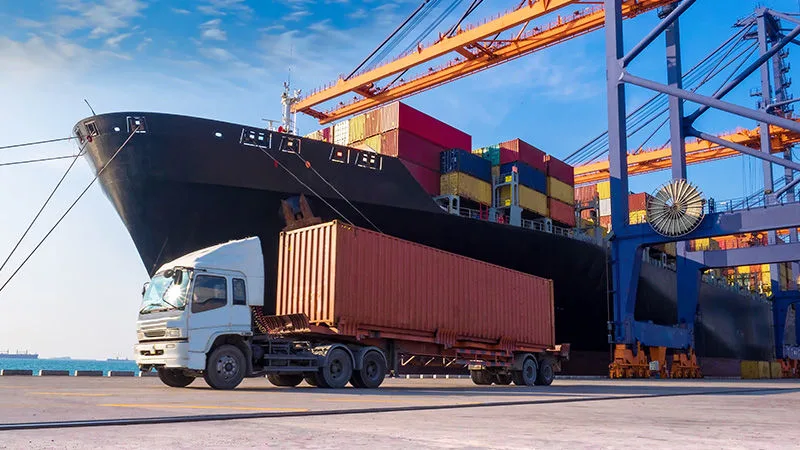
Cross-border logistics Brazil refers to the strategic planning framework, customs documentation compliance, and international transport networks that enable local businesses to export physical goods securely from Brazil to global consumers. It serves as the operational spine of international trade, covering everything from origin warehouse packing and NCM tax code classification to clearing Receita Federal checkpoints and executing final-mile delivery in destination countries.
For small and medium-sized enterprises (SMEs)—especially those utilizing local e-commerce platforms like Nuvemshop or VTEX—optimizing this workflow is not an operational luxury; it is a baseline necessity to protect your margins.
An efficient international shipping process is built on specific foundations:
Physical cargo movement: Routing inventory from a domestic fulfillment center through an airport gateway to a foreign customer.
Upstream supplier coordination: Sourcing raw manufacturing materials or finished goods from local suppliers with predictable lead times.
Complete transport reliability: Relying on international air carriers to maintain consistent transit schedules regardless of changing border conditions.
Regulatory documentation: Integrating Material Safety Data Sheets (MSDS), commercial invoices, and export manifests to ensure rapid customs clearance.
Conversely, a successful distribution strategy requires recognizing what this discipline is not. It is never an afterthought to be handled manually at the last minute, nor is it identical to the broader supply chain—it is a specialized execution arm within that larger system that can be successfully outsourced to an international logistics partner.
Logistics is the specific phase of the supply chain that your business has direct operational control over, focusing on the packaging, customs compliance, inventory tracking, and physical transport of your products. It represents the immediate tactical execution of moving an item from point A to point B.
[ Supply Chain: Global Sourcing & Manufacturing ] ➔ [ Logistics: Packaging, Customs, & Transport under Your Control ]
To optimize your outbound operations, your team must understand how this differs from the broader ecosystem:
Supply Chain Management: This represents the entire macro network of corporate activities required to source raw components, manage vendor relationships, manufacture finished goods, and balance wholesale distribution. The broader supply chain is a complex global web that an individual SME often has minimal direct influence over.
Logistics Execution: This is your specific territory. It dictates how safely your electronics are boxed, how fast your documentation clears Receita Federal, and which delivery options your customers can select at checkout.
Cross-border logistics Brazil is critical to your bottom line because international transit delays, unexpected customs penalties, and cargo rejections can instantly wipe out an SME's profit margins.
Data from ABCOMM (Associação Brasileira de E-Commerce) reveals that unexpected international shipping holds and documentation mistakes are leading causes of lost revenue for local digital brands trying to scale past national boundaries.
Furthermore, your operational efficiency is directly tied to the front-end user experience. Consider inventory management as a primary example: if a global shopper encounters an inaccurate stock listing or receives a notification that their package is delayed at a customs gateway, they will cancel the transaction and shop with a competitor.
Taking your international transport framework seriously is the most direct way to build long-term buyer retention in competitive global markets.
Logistics management is the strategic process of planning, executing, and controlling the efficient procurement, movement, and storage of raw materials, parts, and finished inventory from their point of origin to their point of consumption.
In the context of cross-border logistics Brazil, this management framework determines how effectively your enterprise can scale its international operations.
To evaluate whether your logistical strategy is structured for global growth, your operations team can rely on the foundational framework known as the "Seven Rs". Your core objective must be to achieve each of these metrics consistently:
Deliver the right product.
In the right quantity.
At the right time.
In the right condition.
To the right place.
To the right customer.
At the right cost.
Mastering these seven operational pillars is what allows an emerging e-commerce brand to remain highly competitive when selling to international buyers.
To build a highly efficient cross-border logistics Brazil workflow, you must first define your primary business goals so you can implement targeted operational changes.
For most expanding digital brands, these objectives center on a clear combination of factors: reducing total shipping costs, generating higher international revenue, minimizing overstocking overhead at your main fulfillment facility, and accelerating your delivery turnaround times. Because small businesses and startups often operate with incredibly narrow margins, lowering transport and handling costs is almost always the immediate priority.
Integrating artificial intelligence (AI) and automated warehouse technology is the most effective path to reaching these milestones.
Global supply chain data compiled by McKinsey demonstrates that businesses adopting intelligent automation improve their overall logistics costs by 15%, reduce necessary inventory buffers by 35%, and elevate customer service levels by an impressive 65%.
To capture these efficiency gains, you can deploy targeted digital tools across five critical phases of your fulfillment lifecycle:
More than 70% of modern retailers state that they struggle with accurate inventory demand forecasting, while 65% experience distinct difficulties tracking stock as it moves through their cross-border supply chain.
Automating your local inventory tracking is essential to hitting your global fulfillment KPIs and protecting your cash flow. By integrating specialized inventory management software with your warehouse infrastructure, your team can:
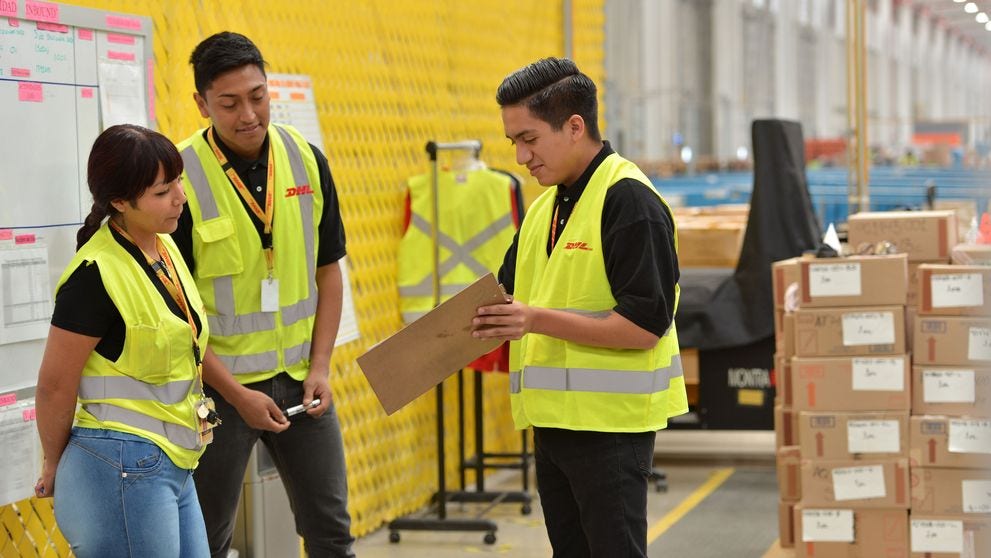
Monitor real-time item status: Track every individual stock-keeping unit (SKU) as it arrives at your facility, shifts to a packing station, or gets loaded onto a carrier truck.
Evaluate inventory turnover performance: Identify which specific product lines experience rapid international demand spikes and which items create stagnant, expensive warehouse overhead.
Synchronize multi-channel data: Consolidate active sales data from global marketplaces like Amazon, Mercado Livre, and Shopee to build highly accurate predictive demand models.
Establish automated replenishment thresholds: Configure your ERP software to trigger automatic purchase orders with your suppliers the moment warehouse volumes drop below a safe baseline.
Lower baseline supplier overhead: Digitally monitor, cross-reference, and analyze contract rates across multiple component vendors to secure the most profitable raw material deals.
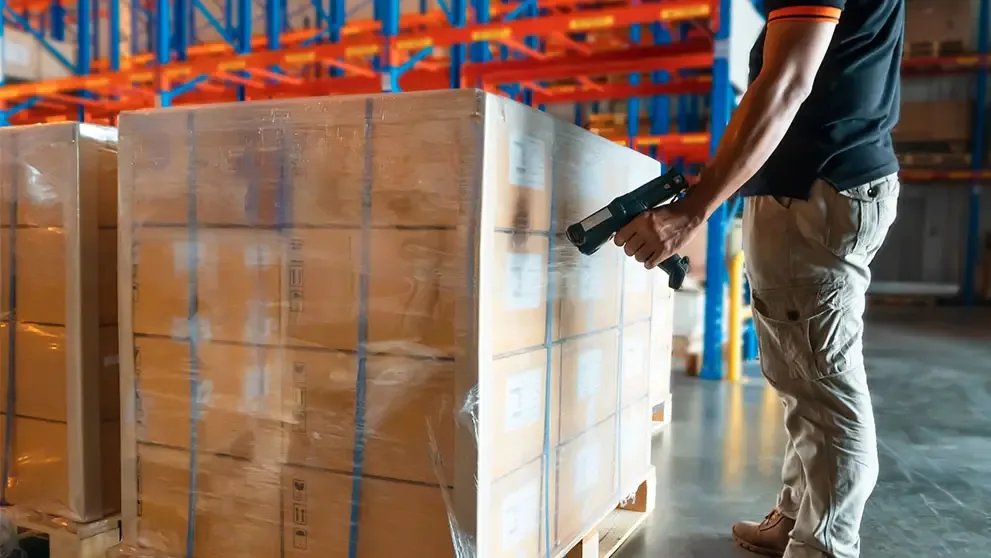
Eliminate manual counting errors: Replace traditional pen-and-paper inventory audits with automated barcode scanning and digital report generation.
Every item your e-commerce storefront sells must be stored, organized, packed, and labeled with absolute consistency inside your distribution hub to guarantee that it reaches international buyers in flawless condition.
Your primary metric to monitor here is your Picking Accuracy Rate—the percentage of perfectly packed orders relative to your total processed shipments. When an international buyer receives the wrong item, the resulting return shipping fees and damaged customer trust create a severe financial deficit for your business.
[ Inbound Dock ] ➔ [ High-Turnover Picking Zone ] ➔ [ Packing & Labeling Station ] ➔ [ Outbound Express Line ]
To accelerate your processing speeds, analyze your physical floor plan. A straightforward change like positioning your highest-turnover and seasonally popular SKUs directly adjacent to your sorting and packing lines substantially shortens the physical transit distance for your warehouse staff.
Additionally, stay ahead of technological trends by evaluating indoor mobile robotics. As highlighted in comprehensive global research like the DHL Logistics Trend Radar, autonomous mobile warehouse bots utilize real-time path planning to navigate distribution centers along the most efficient routes.
Deploying these automated tools can lower your order processing costs and significantly accelerate your cross-border logistics Brazil preparation timelines.
The physical transport of your products represents a major percentage of your operational expenses, meaning even minor routing optimizations can save your enterprise substantial sums over time. To find hidden inefficiencies in your network, actively monitor your Average Delivery Time and your On-Time Delivery Rate.
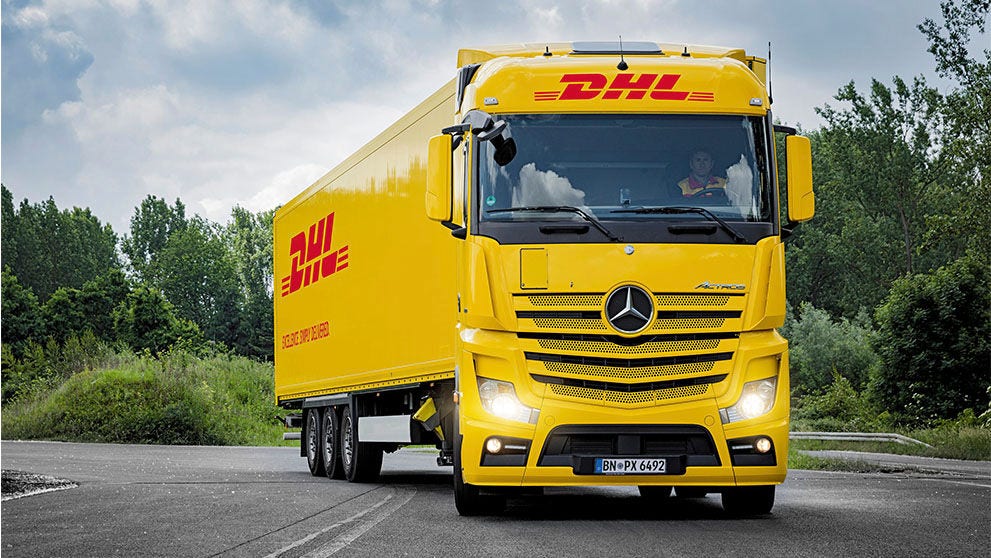
If your business operates a local delivery fleet for regional distribution, integrating intelligent route planning software is an operational necessity. Digital platforms like Stream and OptimoRoute automatically map out, schedule, and distribute multi-stop delivery paths based on complex live variables, including driver availability, vehicle capacity limits, real-time traffic gridlock, and total transit windows.
Automating your scheduling ensures that your delivery vehicles travel along the most efficient routes, reducing your transit costs while cutting fuel consumption.
Enclosing your products in oversized, generic boxes surrounded by excessive plastic filler does more than damage your brand's sustainability profile with eco-conscious consumers; it actively costs your business money. International air freight transport networks calculate shipping fees based on dimensional weight, meaning bulky packages incur immediate pricing surcharges.
Designing compact, tailored packaging that matches the physical dimensions of your products ensures that your inventory occupies the minimum possible space inside your warehouse and during transit.
Adopting a streamlined, lean packaging philosophy allows you to maximize your shipping pallet efficiency and protect your export margins.
Your Order Accuracy Rate is the defining metric for final-mile success, as missed delivery attempts create costly operational bottlenecks, expand carrier carbon emissions, and frustrate consumers.
The most effective way to eliminate delivery failures is to provide flexible delivery choices to buyers directly within your e-commerce checkout interface.
Allowing international customers to select explicit delivery timeslots, authorize carriers to leave packages with a designated neighbor or in a secure location, or route shipments to neighborhood parcel lockers significantly increases your first-time delivery success rate and elevates the buyer experience.
While large corporations can afford to build and maintain their own dedicated international transport fleets and global fulfillment facilities, small and medium-sized enterprises typically need to outsource their operations to remain competitive. The scale of third-party collaboration ranges from basic first-party logistics (1PL)—where a business manages its local distribution internally using its own delivery vehicles—up to highly advanced fifth-party logistics (5PL) frameworks, an innovative solution designed specifically to handle the multi-channel complexities of global e-commerce.
[ 1PL: Internal Local Transit ] ➔ [ 3PL: Outsourced Warehousing & Packing ] ➔ [ 5PL: Integrated Global Supply Chain Management ]
Partnering with an international logistics leader like DHL Express allows your business to leverage a comprehensive 360-degree fulfillment framework that handles picking, packing, and global customs clearance. By plugging your online store directly into an established regional distribution network, your business can consistently execute on same-day and next-day international delivery options at competitive transport rates, allowing your brand to scale seamlessly in global markets.
To review how each of these specific fulfillment models operates and find the exact strategic alignment for your business goals, check out our dedicated logistics partner guide.
Logistics nodes are the specific physical or virtual locations across a supply chain where cargo is formally received, stored, processed, or dispatched.
Examples of physical logistics nodes include fulfillment warehouses, regional distribution hubs, ocean ports, and retail storefronts, while virtual nodes include online order management platforms, cloud-based ERP software, and digital inventory databases. Maintaining perfectly synchronized data across all physical and virtual nodes is crucial to ensuring an efficient flow of goods.
Modern businesses are looking to build highly agile, flexible supply chains that can adapt dynamically to unexpected global market shifts.
Driven by changing consumer demands, accelerated fulfillment timelines, and the growth of cross-border e-commerce, the rapid deployment of high-speed 5G connectivity is digitalizing traditional logistics frameworks. Using real-time IoT sensors and data-driven networks allows businesses to monitor transit conditions and boost their operational productivity.
1 - Cision PR Newswire, March 2021
2 - Shopify, December 2021
3 - McKinsey, AI Multiple, January 2023
4 - Wakefield Research, Supply Chain Dive, April 2023
5 - Stream
6 - OptimoRoute


 Share
Share