

Shipping internationally? An accurate and complete Commercial Invoice is your key to a smooth and fast customs clearance process. For Brazilian small and medium enterprises (SMEs) expanding into global markets, mastering this document is the single most important step to prevent unexpected supply chain bottlenecks.
Marcelo Godoy Rigobello, DHL Express’ Global Trade and Customs Compliance Expert, explains why "good" (i.e., complete and accurate) data is so important — and shares practical tips on getting it right.
Every day, thousands of growing Brazilian brands — from fashion labels using local platforms to tech component suppliers — rely on international logistics networks to deliver goods to their global customers quickly and efficiently.
But you may be surprised to hear what one of the biggest obstacles to that expansion is. It’s not complex trade barriers, currency fluctuations, or international weather patterns; it’s bad data.
Businesses shipping cross-border are required to provide Commercial Invoice information electronically. In Brazil, where outbound shipments must align precisely with internal fiscal documents like the Nota Fiscal Eletrônica (NF-e), incomplete and inaccurate data — such as a vague Goods Description — can cause immediate problems. It means your shipment risks being delayed by international Customs Authorities until the issue is resolved.
This creates a damaging knock-on effect for your end customers, who receive their purchases late.
Maintaining absolute data quality is so critical that it serves as the foundational rule for any business aiming to scale internationally.
What is a Commercial Invoice?
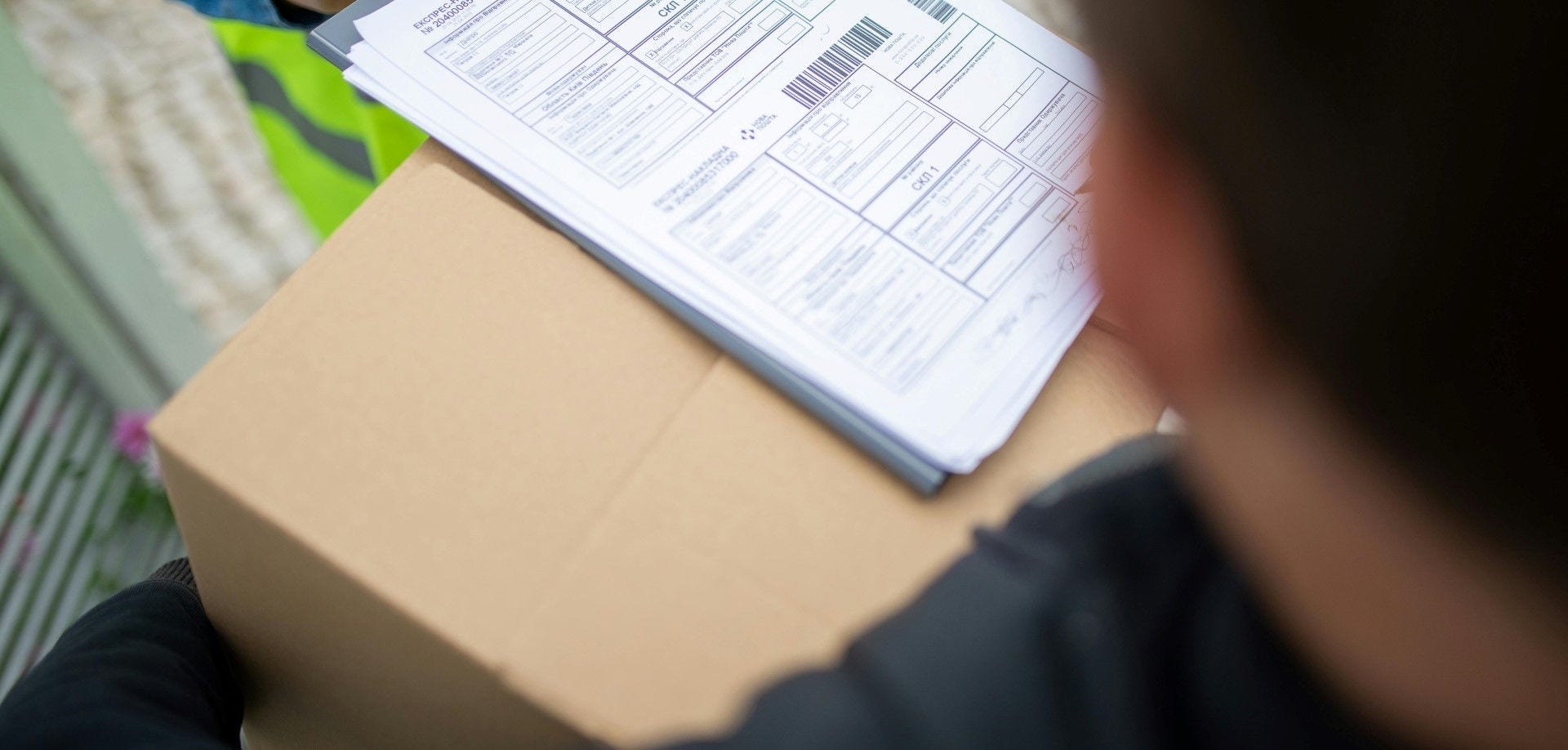
A Commercial Invoice is a legal document that provides detailed information about goods being shipped across international borders to calculate import duties and enforce trade laws. It serves as the primary customs declaration for cross-border trade.
To ensure seamless border passage, the document must contain comprehensive transaction information, such as:
Names, complete physical addresses, and verified contact details of both the exporter (shipper) and importer (receiver).
Tax Identification Numbers, such as the CNPJ or CPF for Brazilian entities, and equivalent international identifiers like an EORI number in the EU or an EIN in the US.
Clear, specific Goods Descriptions.
Harmonized System (HS) Code, preferably the complete Tariff Classification Code.
Country of Origin.
Net transaction Values and the specific settlement Currency.
Total Weight and physical Quantity of the units.
Globally recognized Incoterms (e.g., DDP, DAP).
Clear Reason for Export (e.g., Commercial Sale, Permanent Export, Gift).
The customs broker uses your Commercial Invoice information to prepare the official Customs Declaration for port authorities. This data allows officials to determine if the goods are safe, legal, and compliant for entry, while enabling them to calculate exact taxes and duties.
How do you ensure high data quality on your invoice?
Ensuring complete and accurate electronic data on your Commercial Invoice requires matching your operational data with destination market rules.
When managing your cross-border workflow through local ERP systems like Bling, Tiny, or Omie, you must pay close attention to three specific regulatory pillars to avoid customs gridlock.
1. Write highly specific Goods Descriptions
The primary purpose of a detailed Goods Description is to help customs authorities identify restricted items and perform accurate safety risk profiling.
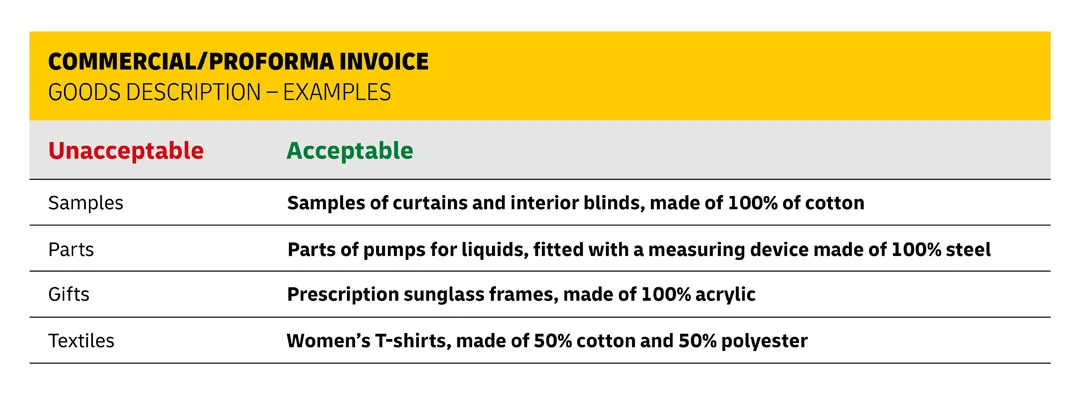
However, many Brazilian shippers do not provide enough detail, relying on vague terms that trigger automatic red flags. Writing "samples", "parts", or "clothing" is not an adequate Goods Description for international customs.
If you use vague descriptions, your logistics provider will hold the shipment and contact the importer to request further clarification, delaying the delivery and damaging your customer's unboxing experience.
A clear, accurate, and detailed description for each item is required for fast customs clearance. For example, instead of writing "leather goods," write "men's shoes made of 100% bovine leather."
In addition to clear descriptions, you should always provide the corresponding Tariff Classification Code. Using digital tools like DHL’s MyGTS (My Global Trade Services) can help your team identify the correct Export and Import Tariff Codes before packing your items.
2. Declare exact goods values to prevent penalties
On the Commercial Invoice, you must declare the true transactional value for each item being shipped, reflecting the price paid by the buyer to the seller along with the currency. This valuation must align with World Trade Organization (WTO) Customs Valuation rules. Customs authorities rely on this declared value to calculate exact duties and consumption taxes.
Some shippers are tempted to undervalue goods to reduce tax burdens for their customers, which is an illegal practice with serious financial consequences.
If authorities suspect undervaluation, they will hold your shipment, demand bank transaction evidence of the price paid, and levy additional duties alongside heavy penalties. They may even contact your end customer directly for proof of payment, damaging your brand's reputation.
Furthermore, customs authorities frequently escalate severe undervaluation to an instance of tax evasion, leading to asset seizures and criminal legal implications. For this reason, always remain fully transparent about the values provided in your Commercial Invoice.
Ensure you break down all additional cost elements that form part of the total customs value, including international freight, insurance, and handling fees.
3. Ensure strict compliance with destination regulations
Customs requirements vary significantly from country to country, creating operational challenges for businesses exporting to multiple global destinations. Before booking an international pickup, your team must research the export requirements of Brazil and the import laws of the destination country, or seek professional advisory from qualified tax experts.
For instance, if you are a Brazilian brand exporting cosmetics, fashion, or food items, your products must meet specific certification standards abroad, such as FDA regulations in the United States or CE marking in the European Union. You can utilize platforms like DHL’s MyGTS to navigate these international shipping regulations.
This free, user-friendly platform helps small businesses check country-specific import and export requirements before dispatching inventory.
"Regulatory Authorities across the globe are moving towards a fully data-driven environment to enable efficient and risk-based clearance processes. Complete & accurate Commercial/Proforma Invoice line item data is the key enabler for fast & compliant clearance processes, avoiding delays, fines & penalties." - John Pearson, CEO DHL Express
How does the Nota Fiscal (NF-e) tie into your international Commercial Invoice?
For Brazilian exporters, the international Commercial Invoice must structurally match your domestic Nota Fiscal Eletrônica de Exportação (NF-e). The Receita Federal uses automated systems to cross-reference data between your domestic tax filings and your international shipping documents before granting export clearance.
Automated Data Cross-Check: NF-e vs. Commercial Invoice
| Domestic NF-e Data | Automated Cross-Check Rule | International Commercial Invoice |
| NCM Code (8 Digits) | ➔ Partial Match ➔ | HS Code (First 6 Digits Must Match) |
| Total Value in BRL | ➔ Currency Conversion ➔ | Converted Value & Currency |
| Shipper CNPJ | ➔ Registration Validation ➔ | Exporter Registration Details |
If there is a mismatch between the 8-digit NCM (Nomenclatura Comum do Mercosul) on your NF-e and the 6-digit HS code on your Commercial Invoice, or if your declared values differ after currency conversion, the Receita Federal can halt the shipment at the port of departure.
To avoid this administrative bottleneck, ensure your e-commerce ERP system automatically maps your internal NCM data directly to your international invoices, keeping your weight, values, and descriptions synchronized.
How to complete a Commercial Invoice: A step-by-step guide
A complete and accurate Commercial Invoice is essential for a fast customs clearance. Utilizing the comprehensive step-by-step instructions provided in the DHL Express Global Customs Customer Guidelines will ensure the data you submit to border officials is clear, accurate, and complete.
By following these structured guidelines, your business can avoid the common pitfalls associated with missing or incorrect customs data, including:
Prolonged customs clearance delays and shipments held in expensive bond storage facilities.
Inefficient customer service interactions to request missing business information from customers.
Shipments being permanently stopped, returned to Brazil at your expense, confiscated, or hit with heavy regulatory fines.
To streamline your cross-border supply chain, optimize your documents, and access global customs expertise, consider opening a DHL Express Business Account.
DHL Express makes every effort to ensure that information from external sources is accurate at the time of publishing. However, details from outside agencies can change without notice. Please read our disclaimer here.


 Share
Share

Similar Stories