On the international leg, only when the sales contract requires it, as under the CIF and CIP rules of Incoterms® 2020. For transport within Brazil, Decree-Law 73/1966 lists insurance of goods belonging to companies as mandatory.



 Share
Share

Cargo insurance pays out for loss of or damage to goods in transit, from the warehouse at origin to the warehouse at destination. In international trade, cover follows the Institute Cargo Clauses A, B and C, and the Incoterm in the sales contract decides who buys the policy. Without one, you are left with the carrier's per-kilo liability cap.
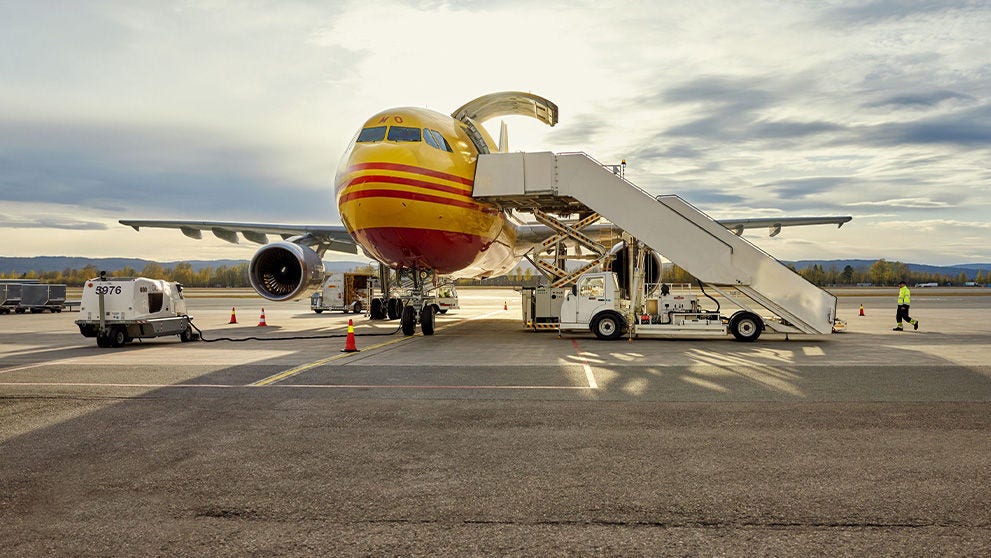
Picture a 5 kg box holding US$8,000 of electronic components that goes missing on an air connection into Brazil. Under the Montreal Convention, the carrier's compensation stops at around US$177. Insurance covers the gap, and that decision has to be made before the goods ship, not after the damage.
It covers physical loss of or damage to the goods from causes named in the policy, during the ordinary course of transit. Under the reference clauses of the international market, cover starts when the goods are first moved in the origin warehouse for loading and ends when they are unloaded at the final warehouse, which is why it is called warehouse to warehouse.
Those clauses are the Institute Cargo Clauses, drafted by the Joint Cargo Committee of the London market, made up of the Lloyd's Market Association and the International Underwriting Association. The version in use dates from 1 January 2009 and comes in three levels: A, B and C. Air shipments have their own text, the Institute Cargo Clauses (Air), with all-risks cover along the lines of clause A.
One detail catches importers off guard. Under the air clauses, cover ends 30 days after the goods are unloaded from the aircraft at the final destination, even if they have not yet reached your warehouse. For sea cargo, the equivalent limit is 60 days after discharge from the vessel. Cargo sitting at a Brazilian terminal waiting for customs clearance can end up uninsured. Source: Institute Cargo Clauses (Air) and (A), 2009 edition.
Clause A covers all risks except those expressly excluded. Clauses B and C only cover the risks they list, and C is the narrowest, built for major events such as fire, sinking and collision. Theft, pilferage and handling damage are only covered under A.
The table sums up what each level covers, based on the 2009 wording.
Risk | Clause A | Clause B | Clause C |
Fire or explosion | Yes | Yes | Yes |
Vessel stranded, grounded, sunk or capsized | Yes | Yes | Yes |
Overturning or derailment of land transport | Yes | Yes | Yes |
Collision with an external object | Yes | Yes | Yes |
Jettison and general average sacrifice | Yes | Yes | Yes |
Earthquake, volcanic eruption or lightning | Yes | Yes | No |
Entry of sea, lake or river water | Yes | Yes | No |
Total loss of a package during vessel loading or unloading | Yes | Yes | No |
Theft, pilferage and handling damage | Yes | No | No |
For high-value, fragile or theft-prone goods such as electronics, cosmetics and pharmaceuticals, clause C rarely does the job. It makes sense for bulk commodities, where the risk that matters is losing the ship, not a single carton.
All three versions share the same core exclusions: wilful misconduct of the insured, ordinary leakage and loss in weight, ordinary wear and tear, inherent vice of the goods, delay, and insufficient packing done by you or before cover started. War and strikes are also excluded and are bought under separate wordings, the Institute War Clauses and the Institute Strikes Clauses.
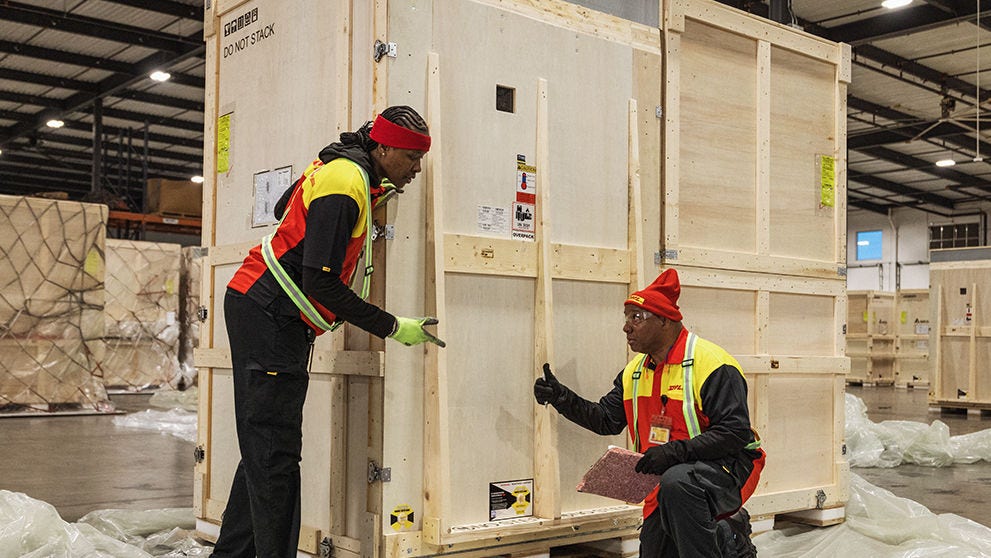
The packing exclusion is the one that hurts most when you prepare your own cargo. A weak carton, a badly strapped pallet or no protection against humidity turns a claim into a refusal. Insurance pays for accidents in transit, not for poor packing.
Only two Incoterms® 2020 rules oblige anyone to buy insurance: CIF and CIP. In both, the obligation sits with the seller, for the buyer's benefit. Under CIF, minimum cover under clause C is enough; under CIP, the ICC requires clause A cover, with an insured value of at least 110% of the contract price. Source: ICC, Incoterms® 2020.
Under the other nine rules nobody is obliged, and whoever carries the risk on the international leg should protect it. The table shows where risk changes hands and who usually buys the policy.
Rule | Where risk passes to the buyer | Insurance obligation | Who usually insures |
EXW, FCA | At delivery, at origin | None | Buyer |
FAS, FOB | Alongside or on board the vessel | None | Buyer |
CPT, CFR | At handover to the carrier or on board | None | Buyer, even though the seller pays freight |
CIF | On board the vessel at the port of shipment | Seller, clause C at minimum | Seller; the buyer tops up if needed |
CIP | At handover to the first carrier | Seller, clause A and 110% of value | Seller |
DAP, DPU, DDP | At destination | None | Seller |
If you import into Brazil on CIF terms, ask for the supplier's policy before the goods ship. Clause C does not protect your cargo against theft or handling damage, and you carry that loss because the risk became yours at the port of origin. The fix is to negotiate CIP or buy a top-up policy in Brazil.
How CIF splits cost and risk is covered in the guide to the CIF Incoterm for Brazil. The logic of all 11 rules is in the guide What are Incoterms?.
Not much, unless you declared a value. The Montreal Convention, enacted in Brazil by Decree 5,910/2006, caps an air carrier's liability for destruction, loss, damage or delay of cargo at an amount per kilo, set in Special Drawing Rights (SDR), the IMF's unit of account. Under the ICAO review in force since 28 December 2024, the cap is 26 SDR per kilo. Source: ICAO, 2024.
In cash terms: with the SDR at US$1.364590 on 22 September 2026, according to the IMF, the cap works out at about US$35.50 per kilo. The 5 kg box holding US$8,000 of electronics yields at most 130 SDR, roughly US$177.
The Convention itself offers the way out. Under article 22, the cap does not apply if the shipper makes a special declaration of value when handing over the package and pays the supplementary sum, where one is charged. Express carriers commonly offer this extended cover as an optional service at booking, on the conditions set out in their terms of carriage. Compare its cost with that of your own policy before choosing.
If your cargo flies, it also helps to understand how air cargo transport in Brazil prices freight and documents the shipment.
It goes into the tax base. Under article 77 of Brazil's Customs Regulation (Decree 6,759/2009), the cost of insurance up to the port or airport of unloading forms part of the customs value, together with freight. Import duty is calculated on that value, and the other taxes paid at clearance build on it. Source: Planalto (the Brazilian presidency's legislation portal), September 2026.
The domestic leg has its own rule. Decree-Law 73/1966, article 20, item h, lists insurance of goods belonging to companies and transported within Brazil as mandatory. In practice, your import policy needs to line up with cover for the road leg from the airport to your warehouse.
To see insurance next to freight, duties and local charges, use the guide to landed cost. The clearance steps are in the guide to importing into Brazil.
It depends on how often you ship. A single-shipment policy covers one consignment and suits companies that import or export now and then. An open policy covers every shipment in a period, and you report each one to the insurer before the goods leave, a step Brazilian insurers call averbação (declaration of each shipment under the policy).
If you ship every month, the open policy pays off: terms negotiated once, a predictable rate and no shipment left out. Its weak spot is discipline. A shipment not declared on time may end up without cover, and that tends to surface on the day of the loss.
Buy cargo insurance in Brazil from an insurer authorised by Susep, the federal agency that supervises the insurance market. Ask the broker to state in writing the clause (A, B, C or Air), the insured value and the leg covered.
Act at delivery. The evidence gathered at handover and a timely written notice decide whether the claim is paid, and the deadlines are short.
Under Law 15,040/2024, Brazil's insurance contract framework in force since December 2025, the insurer has up to 30 days to decide on cover, counted from delivery of all documents, and a further 30 days to pay once cover is accepted. Susep may extend the first deadline to up to 120 days for complex lines of insurance. Source: Planalto, September 2026.
Against the air carrier, the right to damages lapses after two years from arrival at destination (article 35 of the Montreal Convention). Once the insurer pays, it steps into your shoes to recover from the carrier, so a notice filed on time protects both of you.
On the international leg, only when the sales contract requires it, as under the CIF and CIP rules of Incoterms® 2020. For transport within Brazil, Decree-Law 73/1966 lists insurance of goods belonging to companies as mandatory.
The premium is a rate applied to the insured value and varies with the goods, route, transport mode, packing and the claims history of the insured. Ask for quotes with the clause and value already defined, because comparing policies with different cover on price alone is misleading.
For air cargo, the market uses the Institute Cargo Clauses (Air), which cover all risks except the exclusions in the wording. For fragile, high-value or theft-prone goods, that is the level that actually protects you.
No. The Institute Cargo Clauses exclude loss caused by delay, even when the delay results from an insured risk. Losses from delay are claimed against the carrier, within the Montreal Convention limits.
Yes, and it is the usual route. Under FOB and FCA the risk passes to you at origin, so your own policy with a Susep-authorised insurer covers the international leg from shipment onwards.
Good cargo insurance starts in the purchase contract: a defined Incoterm, a chosen clause, a clear insured value and packing that survives the trip. With that settled, a claim, when it comes, follows a known script.
To ship with end-to-end tracking and customs clearance handled by the carrier that moves your goods, open a DHL Express business account.
Share