#SmallBusinessAdvice

China+1 Strategy: A Complete Guide for Hong Kong Business

5 Mins Read
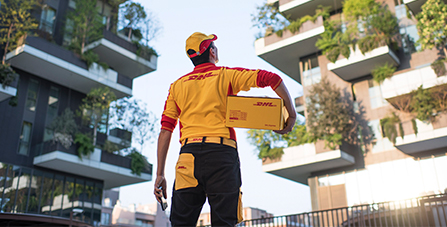
Two DHL Express employees providing expedited shipping services
This article covers
China Plus One Strategy: Structural business model mitigates geopolitical and supply chain risks.
Manufacturing Cost Arbitrage: Expanding production to ASEAN countries like Vietnam, India, and Malaysia reduces labor costs by 50-60% compared to major Chinese manufacturing cities.
Multi-Hub Logistics Management: Seamlessly manage your entire China+1 supply chain with DHL.com real-time tracking, expert customs brokerage, and expedited shipping across Southeast Asia.

The global business landscape is undergoing a structural shift. More organisations are moving beyond single-country manufacturing and adopting the China Plus One (C+1) strategy — keeping their core operations in China while adding production or sourcing capacity in a second country to manage risk, reduce costs, and respond to fast-changing trade policies.

For Hong Kong businesses, sitting at the crossroads of Asia's supply chains, this shift creates both urgency and opportunity. This guide covers everything you need to know, from choosing your Plus One destination to managing customs compliance and tracking shipments across multiple hubs — with practical support from DHL Express.

What is the China Plus One (C+1) Strategy? 

The China Plus One (C+1) strategy is a business approach where companies maintain their primary manufacturing or sourcing operations in China while establishing at least one additional base in another country — typically in Southeast Asia — to reduce supply chain risk, lower production costs, and navigate shifting trade policies.

  • Protects your business if supply chains in China face sudden disruptions, policy changes, or shipping blockages
  • Helps reduce rising labour and factory costs that have increased in China's major manufacturing cities over the year
  • Shields supply lines from geopolitical tensions, border disputes, or unexpected tariff changes

From China Plus One to Plus X — The Next Evolution

In 2026, many businesses have evolved beyond the traditional C+1 model to adopt a "Plus X" approach — building multiple secondary hubs across different countries simultaneously, such as Vietnam for electronics assembly, India for large-scale manufacturing, and Malaysia for tech components. Rather than a single backup location, Plus X creates a fully distributed supply chain network that spreads risk across multiple markets at once.

Why Are Hong Kong Businesses Adopting China+1?

Three structural forces are driving Hong Kong businesses to diversify their supply chains now:

Rising Trade Risks and Tariff Pressures

Tariff instability is now the top concern for businesses running Asia-based supply chains — and for good reason.

  • According to industry surveys, 72% of supply chain professionals identify tariff changes as the single biggest threat to profit margins
  • Businesses relying on a single-country supply chain are most exposed to sudden policy shifts, export controls, and retaliatory trade measures
  • Diversifying your production base reduces the impact of any single tariff change on your total cost structure

The Investment Surge Reshaping Southeast Asia

Southeast Asia is no longer just a cost play — it has become the world's fastest-growing manufacturing destination.

  • ASEAN attracted approximately US$226 billion in foreign direct investment in 2024, with Vietnam alone registering US$15.2 billion in new FDI in the first quarter of 2026 — with over 60% directed into manufacturing
  • Countries like Vietnam, India, and Malaysia are actively upgrading infrastructure to attract foreign manufacturers
  • For Hong Kong businesses, early entry into these markets offers competitive advantages before costs and competition increase

Lower Production Costs

Beyond risk management, the cost case for China Plus One is equally compelling.

  • Labour costs in Vietnam, India, and Malaysia are 50–60% lower than in China's major manufacturing cities
  • Combined with improving infrastructure and growing local supplier bases, these markets offer strong cost efficiency
  • New consumer markets in Southeast Asia also turn your production hub into a regional sales hub — expanding your customer base simultaneously

Sector Opportunities for Hong Kong Businesses

The China Plus One strategy creates distinct opportunities across Hong Kong's three most strategic sectors:

Electronics

Electronics remains one of Hong Kong's most significant export sectors and stands to benefit directly from supply chain diversification.

As one of the major contributors to its economy, this industry can benefit significantly from diversifying manufacturing and sourcing to other countries in the region. This can help alleviate risks associated with over-reliance on China and potentially reduce costs by tapping into lower labor costs and favorable trade agreements in emerging markets. Furthermore, diversifying production locations can enhance supply chain resilience, ensuring continuity despite changing dynamics.

Finance

Hong Kong's financial sector is an integral part of its economy, contributing significantly to Hong Kong's GDP, and establishing the city as one of the world's leading financial centers.

As businesses expand their operations under the China Plus One strategy, Hong Kong's financial sector can play a crucial role in enabling cross-border investments, providing financial services, and managing risks associated with international expansion. This presents an opportunity for Hong Kong's financial institutions to strengthen their position as regional leaders in providing innovative financial solutions and supporting businesses venturing into new markets. 

Consequently, this growth and diversification in the financial sector can also have a positive ripple effect on other sectors, such as manufacturing and logistics, as businesses seek solutions for their expansion into new markets.

Logistics

The China Plus One strategy runs on logistics. Hong Kong's well-established position as a regional trade hub — with direct connections to manufacturing markets across Southeast Asia — makes it a natural base for managing multi-country supply chains.

As businesses diversify their supply chains, the demand for Hong Kong logistics services including international shipping, customs brokerage, and end-to-end supply chain visibility will increase, creating new opportunities for Hong Kong's top international logistics providers, such as DHL Express.

DHL Express delivery van shipping parcels in the city

Choosing Your Plus One — ASEAN and Beyond

Within the China Plus One framework, Southeast Asian markets offer a combination of cost advantages, trade benefits, and growing consumer demand. Here is how the top destinations compare:

Vietnam — Electronics, Garments, and Tech Assembly

Vietnam is one of the most established Plus One destinations for Hong Kong manufacturers. Labour costs are significantly lower than in China's major manufacturing cities, making it particularly attractive for electronics assembly, garment production, and tech components. Its proximity to China also simplifies cross-border supply chain management.

India — Large-Scale Manufacturing and Workforce

India attracts large-scale manufacturing investment due to its massive domestic workforce and strong government incentive programmes. A rapidly expanding middle class also makes India an increasingly important sales market for Hong Kong exporters.

Malaysia and Thailand — Tech Components and Automotive

Malaysia and Thailand are established choices for high-tech component manufacturing, automotive parts, and specialised production. Both markets offer strong infrastructure, skilled workforces, and favourable investment conditions for Hong Kong businesses expanding their Plus One footprint.

Feature

China (Main Base)

Vietnam / India / Malaysia (Plus X)

Role

High-tech parts manufacturing

Final assembly and basic components

Trade Benefit

Extensive local supplier networks

Lower duties through RCEP and regional trade deals

Cost Profile

High efficiency, higher labour costs

Lower labour costs, developing infrastructure

Market Goal

Global and China domestic sales

Asia regional expansion and risk diversification

Favorable Trade Agreements — AHKFTA and RCEP

Hong Kong businesses can leverage two major trade frameworks when expanding into Southeast Asia:

The ASEAN-Hong Kong Free Trade Agreement (AHKFTA) provides preferential access to key markets in the region. These agreements eliminate or reduce tariffs on a wide range of goods, streamline customs procedures, and promote investment flows, creating favorable conditions for Hong Kong businesses to expand their import or export operations in ASEAN.

While Hong Kong is currently in the process of joining RCEP, businesses with manufacturing operations in RCEP member countries — including Vietnam, Malaysia, Thailand, and mainland China — can already leverage the agreement's unified rules of origin and reduced tariff rates when moving goods between member markets. Upon Hong Kong's formal accession, these benefits will extend further, cementing the city's role as a regional supply chain hub.

Key Challenges — And How to Overcome Them

Setting up a Plus One hub involves more than finding a factory. Here are the three most common challenges Hong Kong businesses face — and how to address them:

H3: Understanding Rules of Origin

Getting your origin documentation right is not optional — errors can be costly and compliance consequences are immediate.

  • When exporting goods that pass through multiple countries, you must correctly declare where the final and substantial manufacturing step occurred
  • For goods processed in Mainland China, origin documentation issued by the Hong Kong Customs and Excise Department (香港海關) will correctly state the origin as China — critical for compliance with EU, US, and other market import regulations
  • Errors in origin documentation can result in significant fines and penalties under Hong Kong's Trade Descriptions Ordinance — and in serious cases, shipment rejection 

HS Code Classification and Compliance

Correct product classification is one of the most overlooked — and most costly — compliance risks in cross-border logistics.

  • Incorrectly classifying goods under the wrong Harmonised System (HS) code can result in overpayment of duties, shipment delays, or compliance penalties
  • DHL's My Global Trade Services (GTS) tools help you identify the correct codes for your products across all your manufacturing hubs
  • Getting classification right from the start reduces your risk of costly audits and border delays

Managing Logistics Across Multiple Countries

The more hubs you operate, the more complex your logistics become — without the right partner, that complexity quickly becomes costly.

  • Operating hubs in Vietnam, India, and Malaysia simultaneously introduces complexity in customs procedures, documentation requirements, and shipping routes
  • Each market has its own import regulations and compliance standards
  • A cross-border logistics partner with in-country expertise across Southeast Asia is essential to keep your multi-hub supply chain running smoothly

Managing Your China Plus One Supply Chain with Digital Visibility

You cannot manage what you cannot see. When your supply chain spans multiple countries, real-time visibility is the difference between catching a delay early and losing a customer.

Real-Time Visibility

When goods are moving between multiple countries simultaneously, a single connected dashboard is not a luxury — it is a necessity.

  • DHL.com provides real-time shipment tracking so you can monitor all your shipments across your supply chain hubs simultaneously — whether goods are moving from China to Vietnam for assembly or from Malaysia to end customers in Europe
  • Live data lets you reroute cargo if a disruption hits one of your ports or transit hubs, before it becomes a delay
  • Having all shipment data in one place also simplifies customs audits and record-keeping

Giving Your Customers More Control

Expanding into new markets means meeting new customer expectations — and delivery flexibility is increasingly a deciding factor.

  • On Demand Delivery (ODD) lets your customers in new Southeast Asian markets choose when and where they receive their orders — improving satisfaction and reducing failed deliveries
  • As your customer base expands across Vietnam, India, and Malaysia, giving end customers delivery flexibility becomes a key competitive advantage

End-to-End Cross-Border Logistics

End-to-end supply chain management across a multi-hub network requires a reliable logistics partner who can:

  • Identify potential bottlenecks across all your hubs before they escalate
  • Optimise inventory levels across multiple locations simultaneously
  • Respond quickly to disruptions with proactive rerouting and communication

Is Your Supply Chain Ready? A 5-Point Audit

Use this checklist to assess whether your China Plus One network is built for what comes next:

Audit Area

Key Question

Why It Matters

Trade Laws

Have you identified the trade agreement with the lowest applicable duty rate for your product?

Optimising your tariff structure keeps total landed costs competitive

Infrastructure

Does your new hub have sufficient port access, power supply, and logistics connectivity?

Infrastructure gaps create unexpected delays and cost overruns

Digital Tools

Are your systems connected to a global logistics partner for real-time shipment visibility?

Live data helps you identify and resolve delays before they escalate

Duty Thresholds

Are you leveraging local duty-free import thresholds to reduce costs on smaller shipments?

Using de minimis thresholds lowers costs for e-commerce and sample shipments

Sustainability

Are your new hubs aligned with your ESG commitments and green warehousing standards?

Environmental compliance is increasingly required by major buyers and regulators

The way forward with DHL Express

The way forward with DHL Express

DHL Express handles thousands of documents, parcels, and cargoes every single day. Its global network of international specialists are well-versed in customs regulations so that every shipment moves on to its destination. Whether you're importing or exporting, opening a DHL Express Corporate Account means all the hassle of customs will be taken care of for you, so that you can focus on the business of selling!

Open a DHL Express Corporate Account to Enjoy Special Discount Today!

China Plus One - Frequently Asked Questions (FAQs)

The China Plus One strategy adds one secondary production or sourcing hub outside China to reduce single-country dependency. The Plus X model goes further — building multiple secondary hubs simultaneously across different countries, such as Vietnam for electronics assembly, India for large-scale manufacturing, and Malaysia for tech components. Plus X offers greater resilience across your supply chain but requires more sophisticated cross-border logistics coordination to manage effectively.

The right destination depends on your product type, target market, and operational needs. Vietnam suits electronics and garment manufacturers due to competitive labour costs and proximity to China. India is preferred for large-scale production requiring a sizable workforce and government incentive support. Malaysia and Thailand are strong for automotive parts, high-tech components, and specialised manufacturing. DHL Express operates across all these markets and can advise on the logistics feasibility for your specific business requirements.

RCEP (Regional Comprehensive Economic Partnership) covers 15 Asia-Pacific economies including mainland China, Vietnam, Malaysia, Thailand, Japan, and Australia. While Hong Kong is currently in the process of formally joining RCEP — with unanimous support from all member states — businesses with manufacturing operations in RCEP member countries can already benefit from the agreement's unified rules of origin and reduced tariff rates when moving goods between hubs. This means lower duty costs on inter-hub component transfers, less paperwork at each border crossing, and a more cost-efficient overall supply chain structure.

Goods exported from Hong Kong require a Certificate of Origin issued by the Hong Kong Customs and Excise Department (香港海關) or an authorised body such as the Hong Kong General Chamber of Commerce. The certificate must accurately state where the final and substantial manufacturing step occurred. For goods manufactured in Mainland China, origin is declared as China — this is essential for compliance when exporting to the EU, US, and other markets with origin-based tariff requirements. Incorrect declaration risks shipment rejection and financial penalties.

Timelines vary by country, industry, and scale of operation. Registering a business entity in Vietnam, for example, typically takes two to four months, while securing factory space, recruiting local staff, and completing compliance requirements can add a further six to twelve months. Working with an experienced logistics partner like DHL Express from the outset can help compress these timelines — covering import documentation for production equipment, local customs navigation, and ensuring your first cross-border shipments move without delays from day one.