#LogisticsAdvice

Factory-to-Factory Logistics: Managing Cross-Border Machinery Relocation for India

Key Takeaways

  • Downtime Risks: Delayed machinery components disrupt your factory activation timelines and can stall revenue generation.
  • Pre-Clearance Planning: Verifying tariff codes and import regulations before shipping is essential for reducing friction at the border.
  • Battery Compliance: Industrial electronics must adhere to strict Watt-hour safety regulations for any onboard batteries.
  • Financial Control: Utilising centralised duty billing options helps to streamline budget management during factory transfers.

Relocating a factory is an exercise in meticulous project management. The logistics manager must simultaneously act as a customs specialist, a safety officer, and a project lead. A successful outcome depends on a detailed understanding of what to check and when to check it. Here is a guide to navigating the customs frameworks, documentation, and compliance rules that keep a factory relocation on schedule.


What makes factory-to-factory logistics so challenging?

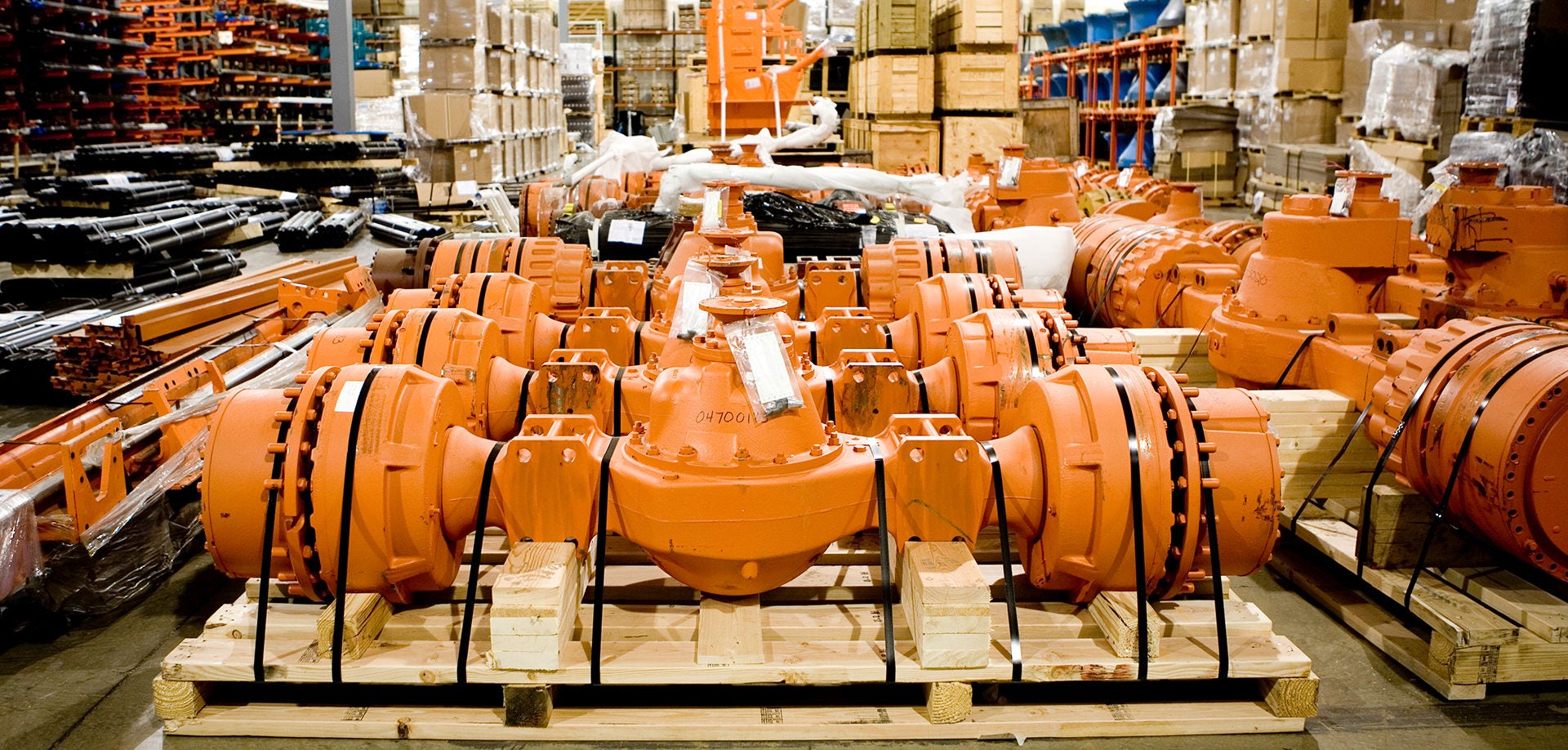
Relocating manufacturing assets across international borders presents significant risks: a single missing permit can stall an entire production line and result in considerable revenue loss. Import regulations and documentation requirements vary substantially between countries, and any ambiguity in paperwork can lead to unexpected and lengthy hold-ups at the border.

DHL Express helps reduce these risks with Clearance Processing and Dedicated Pickup and Delivery, keeping sub-assemblies, control units, and urgent replacement parts moving on schedule.

What downtime actually costs you

Unplanned downtime in large-scale manufacturing can translate to substantial financial losses, as every hour a production line is idle represents significant lost revenue.

To manage a factory transfer effectively, you must anticipate where friction points are likely to occur. Logistical capacity, for instance, often tightens considerably during the Diwali period, which can impact shipping timelines if not factored into planning.

The three biggest friction points to plan around

These are the challenges that most frequently impact project timelines:

  • Asset Protection: Industrial machinery contains sensitive electronic sensors and calibration tools that demand precise and careful handling throughout transit.
  • Timeline Metrics: Every day that your equipment is held in a customs warehouse delays the activation of your factory and leaves assembly teams idle.
  • Regulatory Variety: Each market applies distinct classification rules and import safety standards to industrial hardware, creating a complex compliance landscape.

For heavier machinery shipments, DHL Express also offers dedicated heavyweight freight options to ensure those components remain in motion.


Which customs documents are required for industrial equipment?

The documentation required for heavy machinery is extensive. Governments require precise paperwork to verify the valuation, safety standards, and usage history of all imported assets. It is important to note that temporary relocations operate under a different documentation framework than permanent transfers; incorrect paperwork can result in multi-day delays, administrative penalties, or even seizure of goods by border authorities.

How MyGTS and ATA Carnets simplify the process

MyGTS is a valuable tool for working through tariff codes and Harmonised System (HS) classifications while errors are still simple and inexpensive to correct, though it does not replace the final sign-off from your compliance team. DHL Express also supports documentation for temporary imports using the ATA Carnet system, which can help you avoid paying duties on items that will be re-exported.

Four documents to have ready before you ship

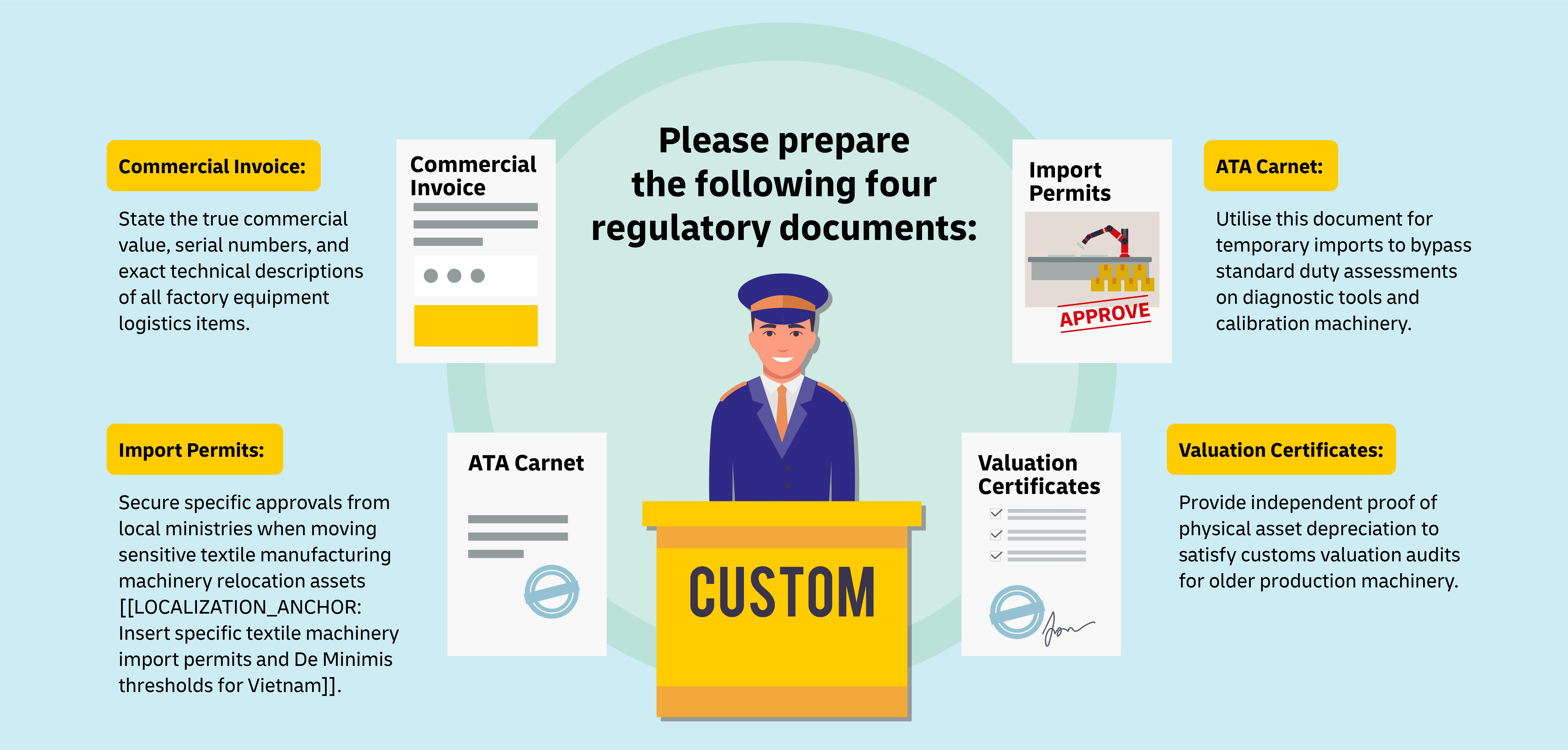
Preparing these documents in advance will contribute to a much smoother customs clearance process. Officials will expect to see the following:

  • Commercial Invoice: Clearly state the true commercial value, serial numbers, and exact technical description of each item.
  • ATA Carnet: Use this document for the temporary import of items like diagnostic tools and calibration machinery to avoid standard duty and tax assessments.
  • Import Permits: You must secure specific approvals when moving certain types of machinery into India. For instance, according to the Directorate General of Foreign Trade (DGFT), some second-hand capital goods are restricted and require specific import authorisation. Similarly, certain electronics require mandatory registration under the Bureau of Indian Standards (BIS) Compulsory Registration Scheme before they can be imported. It is vital to confirm all customs duty and tax implications with the Central Board of Indirect Taxes and Customs (CBIC) before shipping, as they oversee the final assessment based on your goods' classification and valuation under the Customs Tariff Act.
  • Valuation Certificates: Provide independent proof of physical asset depreciation to satisfy customs valuation audits, which are common for older or second-hand production machinery.

How can you avoid customs delays for specialised components?

Complex machinery often contains specialised electronics, batteries, telemetry systems, or backup power supplies. These components can trigger strict regulatory checks at the border. Shipping without the proper declarations and certifications can result in the shipment being stopped by transport authorities.

What DHL Express handles for battery-powered equipment

DHL Express provides Dangerous Goods handling for equipment containing lithium batteries under IATA regulations like PI967 and PI970 Section II, subject to contractual agreement. Please note that you will need the correct shipper certification in place first. We can help make sure your paperwork meets international air transit regulations, though ultimate responsibility for compliance remains with your business.

IATA Dangerous Goods regulations measure batteries by their Watt-hour (Wh) rating, which determines the specific packing instructions and restrictions. You should verify that your packaging meets the safety standards set by India's Directorate General of Civil Aviation (DGCA).

How each component type is handled

Here is how these regulatory challenges map to the support available from DHL Express:

Component Type

Regulatory Challenge

DHL Express Support

Industrial Telemetry

Internal lithium-ion batteries trigger strict aviation safety reviews under dangerous goods rules.

Handling under PI967 and PI970 Section II, subject to contractual agreement.

Electronic Control Units

Complex HS code classification can create valuation disputes and delays with customs authorities.

Classification support via MyGTS.

Pneumatic Actuators

Requirements for testing residual pressure or chemical traces can stall the clearance process.

Clearance Processing and permit verification support.


How do regional trade thresholds affect your shipping costs?

Taxes and duties can constitute a larger portion of your relocation budget than anticipated, and these costs can escalate quickly if you miscalculate the tax liabilities on incoming components.

How DHL Express keeps duty costs predictable

DHL Express supports this with Duty Tax Paid solutions, which allow you to bill all duties and taxes to a central account. This removes the need for your receiving facility to handle cash payments or bank transfers upon delivery. The MyDHL+ platform also provides visibility into estimated duties and taxes before you schedule the shipment.

Three tax factors that shift by market

These variables can influence how you route shipments or bundle installation parts. Be mindful of them for your destination market:

  • De Minimis Limits: When exporting from India, it is useful to know the destination's rules. For example, shipments to the United States valued below USD 800 can often enter duty-free under their de minimis threshold, according to U.S. Customs and Border Protection. When importing into India, however, the de minimis exemption generally does not apply to commercial B2B shipments, meaning most goods are subject to duties regardless of value, as outlined by the Central Board of Indirect Taxes and Customs.
  • Temporary Relief: Many markets, including India, waive duties if you can prove the machinery will be re-exported from the country within a specified timeframe, often managed via an ATA Carnet.
  • Localised Tax Rates: When importing into India, all imports are treated as inter-state supplies and are subject to the Integrated Goods and Services Tax (IGST), in addition to any applicable customs duties.


How do you keep your project on track when a replacement part goes missing?

A critical component has been damaged in transit, and your factory floor is now idle. Every hour spent waiting for a replacement delays activation, and you cannot afford to wait weeks for ocean freight when downtime is costing your business revenue.

The DHL Express options built for this

DHL Express Worldwide and time-definite options like DHL Express 12:00 are designed to deliver urgent replacement components rapidly. We can pick up critical parts from engineering hubs globally and get them directly to your factory floor. If your assembly engineers need to work through the weekend, our Saturday Delivery option, available in select locations, helps keep your timeline on track.

Transit times vary by lane, and you can find exact details in our service guides. If you are managing outbound freight from a major hub like Bengaluru, submitting customs documentation digitally in advance is highly recommended.

Four steps to get a replacement part moving fast

Work through these steps in order:

  • Identify Parts: Isolate the exact serial numbers and engineering diagrams for the required components.
  • Select Service: Choose a time-definite air express option such as DHL Express Worldwide or DHL Express 12:00, depending on your morning assembly schedule.
  • Verify Compliance: Use MyGTS to confirm that your replacement electronics do not violate local import rules or require special government agency permits.
  • Deploy Tracking: Use the DHL Express Mobile App to follow your urgent freight in real time from the supplier to the factory gate.


Keep your commissioning schedule on track

With the right documentation and transport partners, a factory relocation can transform from a high-stress event into a controlled and manageable project. DHL Express supports this process with tools like MyGTS for tariff classification, Clearance Processing for customs readiness, and time-definite options like DHL Express 12:00 for when urgent replacement parts are needed.

If you are already managing a relocation, speak to a DHL Express specialist today. If you are still in the planning stage, this guide will be a valuable resource when the paperwork begins.


Frequently Asked Questions

Successful management involves aligning your transit schedule with local customs rules in India and your destination market, and using tools like MyGTS to verify tariff codes before you ship. An ATA Carnet can reduce border friction for temporary shipments, while an express specialist can ensure urgent components move past typical clearance delays.

The primary challenges are operational downtime from delays, missing import permits for specialised equipment, and border hold-ups caused by incorrect tariff classifications. Combined with the risk of transit damage to sensitive electronic sensors, these factors make services like DHL Express's Clearance Processing and Dedicated Pickup and Delivery crucial for mitigating risk.

You will require a detailed commercial invoice with accurate serial numbers, asset valuations, and correct HS codes. Depending on the equipment and destination, you may also need specific import permits from local ministries. Temporary relocations can use a different framework, like the ATA Carnet system, which can help reduce your duty and tax burden.

You can reduce the likelihood of delays by identifying any built-in lithium batteries and complex electronics before your freight reaches the border. It is also important to ensure your team holds the right dangerous goods shipper certification. DHL Express supports compliance with IATA regulations like PI967 and PI970 Section II, subject to a contractual agreement.

Time-definite international air express services can deliver critical components directly to your factory floor. Options like DHL Express Worldwide and DHL Express 12:00 are specifically designed for this purpose. Saturday Delivery is also available in select markets, ensuring weekend reassembly teams are not left waiting for parts.