#ShippingWithDhl

A guide to door-to-door international shipping for Vietnamese businesses

3 Mins Read

Every business with a global reach must understand the diverse array of international shipping services available, including door-to-door, port-to-port, and door-to-port. Whether you are shipping clothes and bags or heavy machinery or equipment, the chosen delivery service can significantly impact the ease of operations and the overall efficiency of the logistics chain. 

Today, shipping strategies are not just about moving goods from point A to point B. They are about protecting brand reputation by meeting global competitors' delivery standards and delivering a seamless, high-quality experience that builds trust with buyers.

To gain this competitive edge, Vietnamese exporters must prioritize reliability and speed. This begins with understanding what international shipping services are available and adopting the strategic shift from basic port-to-port logistics to door-to-door courier services.

What is door-to-door, port-to-port, and door-to-port shipping

Vietnam has set an ambitious target to expand exports by 8% in 2026, equivalent to a turnover of approximately US$513 billion, by broadening market access and increasing added value. Vietnam's e-commerce export revenues alone are predicted to rise to US$5.5 billion by 2027 with an annual growth rate of 7%2.

With this target growth, shipment volumes are expected to rise substantially. Hence, understanding and utilizing various shipping services is imperative. This is especially so for high-value products that require more secure and specialized handling. Here's an overview of the primary delivery models and what they entail:

  • Door-to-door service: Provides end-to-end transportation from the sender's door to the receiver's door, covering all aspects of handling, shipping, and customs procedures. This service provides a comprehensive end-to-end solution with the highest level of convenience, safety, and security.
  • Port-to-port: Involves transporting goods between two ports, leaving responsibility for transportation to and from the ports, as well as customs clearance, with the shipper and receiver. This option often requires more coordination and effort from the parties involved.
  • Door-to-port service: Falls between the other two, covering transportation from the sender's door to the original port or the receiver's port, leaving the receiver responsible for the final leg of transport and import clearance. This service is a hybrid, offering some of the convenience of door-to-door but with more responsibilities placed on the receiver.

At a glance: door-to-door vs port-to-port vs door-to-port shipping

Feature

Door-to-Door

Port-to-Port

Door-to-Port

Pickup/Delivery

Included (Sender to Receiver)

Not Included

Pickup only

Customs Clearance

Handled by Courier

Responsibility of Shipper/Receiver

Responsibility of the Receiver

Complexity

Low (Single point of contact)

High (Multiple agents)

Medium

Risk of Delay

Minimal

Higher (Coordination gaps)

Medium

Best For

E-commerce & High-value goods

Bulk commodities

Business-to-business raw materials

Why port-to-port is no longer enough for modern Vietnamese exporters

While port-to-port services may offer some benefits, they also present potential challenges and costs. Consider a business that wants to send goods directly from the consignor to the consignee. If they choose port-to-port instead of door-to-door service, they might face the following challenges:

  • Increased coordination: The consignor and consignee must coordinate transportation to and from the ports, possibly leading to confusion or delays. 
  • Unexpected hassle: If the consignee is not well-versed in handling customs clearance, they may face unexpected circumstances and delays in receiving the goods, affecting their operations and customer satisfaction. 
  • Risk of damage: Handling by multiple parties during different legs of the transportation could increase the risk of damage to the goods. 
  • Less convenience: Overall, the process would require more effort and attention from both the consignor and consignee compared to a door-to-door service, where everything is handled by one entity. 
  • Potentially higher total costs: Though the transportation charge alone may seem economical, the consignor and/or consignee may incur additional costs related to intermediary steps such as pickup, airport handling, customs clearance, and last-mile delivery, among other factors. 

In 2026 and beyond, there are also hidden costs to consider, such as the volatility in port handling fees and the rising complexity of managing independent customs brokers. Furthermore, port-to-port shipments are frequently delayed by "Yellow Channel" document delays, where the lack of a single entity responsible for the paperwork causes customs officials to hold shipments for days while waiting for manual document verification.

This can create ripple effects that extend beyond the terminal, often resulting in steep demurrage charges, disrupted production schedules, and a forced expansion of working capital as businesses struggle to hold excess safety stock to compensate for unpredictable lead times.

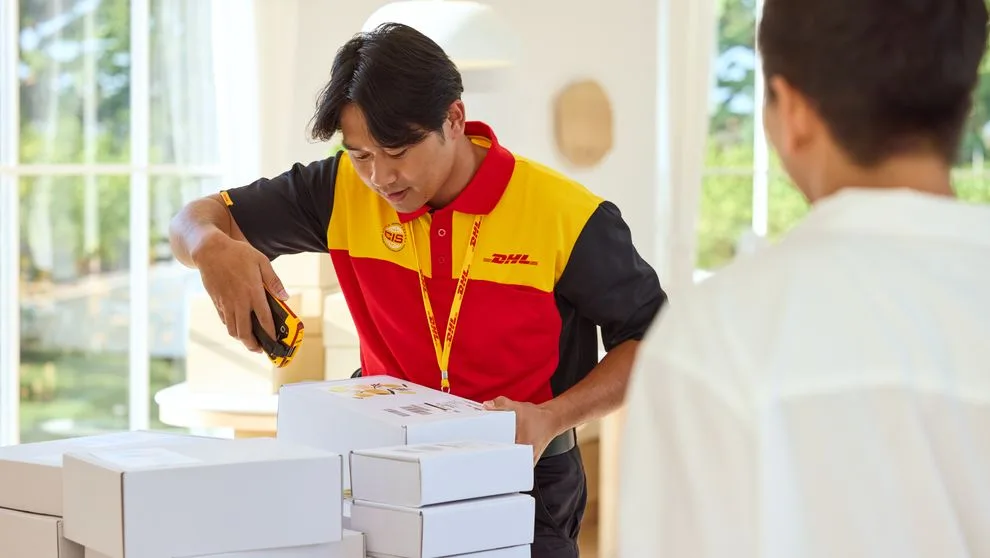
dhl employee

Strategic advantages of door-to-door delivery

The benefits of door-to-door delivery are evident, which include but are not limited to:

  • Lower costs and higher efficiency: This service eliminates the need for shipment consolidation and reduces transit time, effectively lowering shipping costs. Moreover, by outsourcing logistics to a courier company, businesses save time and resources, improving operational efficiency.
  • Simplified management and reduced paperwork: Online management and tracking of the entire process are typically provided, significantly reducing paperwork and making the shipping process more efficient.
  • Streamlined communication: Door-to-door shipping services enable direct communication between the seller and the buyer regarding the product's status, enhancing transparency and trust.
  • Landed cost predictability: With no hidden charges, you, as the exporter and your customers have a clear understanding of the total cost upfront. This eliminates unexpected fees and helps in budgeting and financial planning, a significant advantage for businesses seeking transparency and predictability in their shipping costs.
  • Customs clearance automation: An established shipping provider like DHL Express provides door-to-door service that includes automated customs processing. This is vital to meeting the expectations of overseas buyers, who now demand faster delivery times.

How to start your first door-to-door shipment in 5 steps

At DHL Express, we understand the importance of reliable, efficient, and timely logistics in today's fast-paced business environment. Thus, we strive to stay at the forefront of providing dependable door-to-door international shipping services that benefit businesses and their target customers. 

We offer an extensive range of door-to-door courier services that streamline your export processes through our suite of modern electronic shipping solutions, including MyDHL+. Additionally, our dedicated service network (25 dedicated flights per week, 2 gateways, 10 service centers, 17 service points, and more than 220 vehicles) seamlessly connects Vietnamese businesses to over 220 countries and territories worldwide.

We also offer preferential shipping rates based on your shipping volume, ensuring they meet your specific needs. We also offer flexible delivery options, such as On-Demand Delivery (ODD), which enhances customer satisfaction by giving them control over delivery timing and location, minimizing inquiries and returns for your business.

How to book door-to-door shipping services with DHL Express Vietnam:

  1. Describe your shipment: Detail your package's characteristics — goods description, value, weight, size, etc. This aids in selecting the optimal DHL Express service and processing customs clearance. 
  2. Identify recipient: Furnish accurate recipient details for efficient routing and delivery. DHL Express couriers will liaise with the recipient before delivery. 
  3. Organize documents: Use MyDHL+ Paperless Trade to submit your commercial invoices and certificates of origin digitally. This reduces the risk of physical document loss and speeds up clearance.
  4. Package shipment: It's your responsibility to pack your parcel well. Refer to our guides on shipping fragile itemsshipping liquids, and shipping electronics for specific requirements.
  5. Submit shipment to DHL Express: Drop off your parcel at a DHL service point or book your shipment directly on MyDHL+. Use your ten-digit DHL waybill number to track its progress.

Master logistics with DHL Express

Scale your business without leaving your office. Choose DHL Express Vietnam and open a business account today to unlock preferential shipping rates and access a dedicated account manager who will support your expansion into international markets.

1 - VIETNAM LAW & LEGAL FORUM, January 2026

2 - Vietnam Plus, April 2025