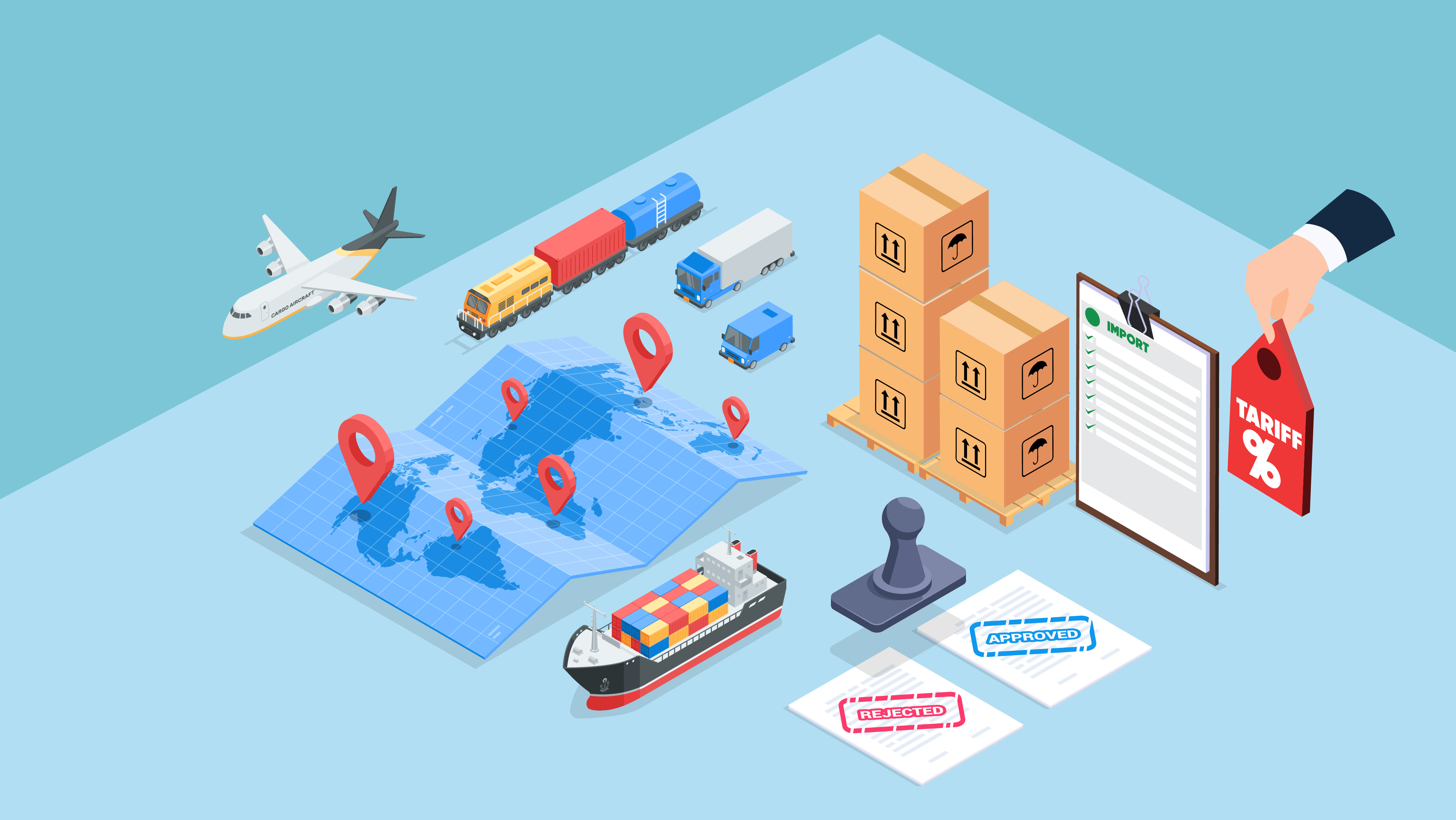
If you run a Canadian small business that ships products to, from, or through the U.S. or Mexico, the Canada-United States-Mexico Agreement (CUSMA) shapes your bottom line. This guide covers what every SME (small or medium-sized enterprise) should know about CUSMA, including the changes that could arrive with the July 2026 review.
What Is the Canada-United States-Mexico Agreement (CUSMA)?
The CUSMA is a free trade agreement between Canada, the United States, and Mexico. It replaced NAFTA (the North American Free Trade Agreement) in 2020 and now governs the goods, services, and data that move across the three countries' borders.
The CUSMA also includes enforceable labour provisions designed to improve conditions and protect rights and wages for workers.
CUSMA vs. NAFTA
What is the difference between CUSMA and NAFTA? CUSMA kept much of NAFTA's basic framework but changed several things that matter, especially automotive content rules, labour standards, digital trade, intellectual property, and, importantly for SMEs, customs and shipping facilitation.
A Big Deal for Small Businesses
Unlike NAFTA, the CUSMA includes a standalone chapter dedicated to SMEs. It builds on Canada’s first SME-inclusive trade agreement, the 2018 Comprehensive and Progressive Agreement for Trans-Pacific Partnership (CPTPP), and it is the first such deal with the U.S. That focus makes sense, because the United States is by far the largest export market for Canadian SMEs. Key SME-friendly provisions include:
- Simplified customs and certification of origin. USMCA no longer requires a specific certificate of origin form. Instead, exporters (the shipper or producer) or importers can self-certify origin in any format that includes a defined set of data elements, which cuts down on paperwork.
- Digital trade chapter provisions (e.g., no customs duties on digital products, support for e-signatures and paperless trading) that particularly help smaller firms engaging in cross-border e-commerce.
Government procurement and services chapters aim for greater transparency, which can make it easier for smaller suppliers to identify and bid on opportunities.
Labour and environment chapters, while not SME-specific, are meant to help level the competitive playing field, which trade advocates argue benefits smaller firms that can't as easily absorb cost disadvantages from lower standards elsewhere.
In practice, this chapter aims to make paperwork easier and reduce cost barriers that have long made cross-border shipping harder for smaller companies.
Let’s Talk About Tariffs
With all the dialogue about tariffs recently, it’s easy for the idea of “free trade” to get lost in the chatter.
So does USMCA allow Tariffs? For USMCA-qualifying goods, the Agreement generally provides duty-free treatment. However, governments may still apply certain trade remedies, including additional tariffs or other measures, to address specific concerns. For example, the U.S. has announced an additional 50% tariff on certain Canadian imports. For this reason it is key to stay updated on any regulatory change that may impact your business. And that brings us to what’s going on with the USMCA right now.
The July 2026 Joint Review
Here's where things get a little more complicated.
Unlike NAFTA, the CUSMA was built with a sunset clause. Under Article 34.7, the U.S., Mexico, and Canada must conduct a formal "joint review" on the sixth anniversary of the agreement entering into force, and that anniversary fell on July 1, 2026.
At that review, all three countries had to decide whether to extend the agreement, and while Mexico and Canada agreed to another 16-year term, the United States declined to renew the CUSMA in its current form.
- Is the CUSMA still in effect? Yes. CUSMA remains fully in force. Its current rights and obligations, including preferential tariffs, rules of origin, investment protections, and dispute settlement mechanisms, continue to apply exactly as before.
When does CUSMA expire? Because the U.S. did not confirm an extension, the agreement now moves into a cycle of mandatory annual joint reviews that will continue until either the parties agree to extend the agreement or it reaches its scheduled expiration on July 1, 2036.
What are CUSMA compliant goods? You can find more information about CUSMA compliance, including the CUSMA auto parts tariff exemption on the Trade Commissioner Service page. However, during these ongoing negotiations, it’s especially important to stay up to date on which products qualify so you don’t get hit with unexpected additional tariffs.
What This Means for Your Shipping Strategy
For now, nothing has changed for your shipments. Duty-free treatment, rules of origin, and customs procedures under CUSMA all remain active. With the agreement in flux, though, the review could become a high-stakes negotiation rather than a routine check. SMEs shipping across the Canada-U.S.-Mexico corridor should stay prepared without overreacting.

1. Confirm your rules-of-origin documentation is current and accurate. If your goods currently qualify for CUSMA preferential treatment, make sure your certification of origin and supporting records are audit-ready. Negotiations may bring closer scrutiny to origin claims.

2. Watch for changes to auto, steel, aluminum, and agricultural provisions. These sectors are widely viewed by policymakers and industry observers as likely areas of focus during the review process and could therefore be subject to adjustments.

3. Build flexibility into your supply chain. With the review process expected to stretch over months (or even years), businesses that diversify suppliers or maintain contingency sourcing plans will be better positioned to absorb any changes.

4. Keep an eye on de minimis and low-value shipment rules. Though the de minimis exemption isn’t currently in effect, U.S. and Canadian trade policy has changed these thresholds often in recent years, and any further adjustment can directly affect how you price and route smaller shipments.

5. Lean on your logistics partner for updates. Trade rules tied to an active negotiation can shift with little notice. Staying close to customs and compliance guidance will help you avoid disruptions at the border. When you ship with DHL, our team is here to help you get ahead of any changes that could affect your business.
The Bottom Line
The CUSMA replaced NAFTA in 2020 with an agreement built specifically to make cross-border trade easier for businesses of every size. Its SME-facilitating provisions, from simplified origin certification to higher de minimis thresholds, remain a real advantage for smaller shippers today.
The July 2026 joint review didn't end that framework; it opened a new chapter of negotiation that will likely play out over the coming months and years. For now, the rules you know still apply — but staying informed will be key to navigating whatever comes next.
DHL will continue to monitor developments in the CUSMA review process and share updates as they affect cross-border shipping for our customers.


 Share
Share

Similar Stories