#LogisticsAdvice

What is import duty? A guide to import tax and shipping duties

Vivien Christel Vella
Senior Global Digital Marketing Manager
5 min read
Import Duty
This article covers
A guide to import duty & import tax for SMEs
How to calculate customs fees
Tips to help you ship across borders without delays

If you are a small business owner, shipping internationally can be a game-changer, helping you reach more customers and boost your revenue. Yet, there are some challenges, namely navigating each country's tax and duties regulations. 

Let’s break down what you need to know to ensure your shipments always reach cross-border customers on time. If you're new to shipping goods across borders, our guide to what logistics is is a good place to start

What is import duty? 

Import duty (or customs duty) is a tax collected by customs authorities on goods sold across borders. Import duties aim to raise income for local governments - but also to increase the end price of goods for consumers, encouraging them to buy from the domestic market instead, which isn't subject to this tax.

In the UK, customs duty applies to commercial shipments and personal items valued at £135 or more (based on the value of the goods only, excluding shipping). Depending on the type of goods and their country of origin, duty rates range from 0% to over 20%.

For gifts, different thresholds apply:

  • Gifts worth £135 or less: no customs duty
  • Gifts valued between £135 and £630: charged at a flat 2.5% duty rate (lower for some goods)
  • Gifts above £630: rates vary depending on the specific commodity code

Note: import VAT is separate from customs duty and applies at a lower threshold - gifts over £39 are liable for VAT, and all other imports have been subject to VAT regardless of value since January 2021.

What is import tax?

Import tax, or Value-Added Tax (VAT) is a flat tax rate charged by customs on imports. In many cases, the tax is equal to the local sales tax - for example, it’s 20% in the UK.

Even when the goods have been purchased abroad, VAT still applies when they enter the country. Some items, like health products, fuel for heating, and children's car seats, are taxed at a reduced rate of 5%. Meanwhile, essential goods such as most food, books, and children's clothing are exempt from VAT altogether, as are gifts valued under £39.


How much is import tax?

Many countries have a minimum threshold of order value that goods must meet before taxes and duties apply – this is called a de minimis. In the United Kingdom, His Majesty's Revenue and Customs (HMRC) has set separate de minimis thresholds:

  • £135 for customs duty
  • £0 for VAT, meaning VAT applies to all imports regardless of value.

If your shipment exceeds these thresholds, the amount of tax and duties you’ll need to pay for a shipment will be influenced by:

  • The value of the goods (including insurance and shipping fees)

  • The goods description

  • The country or region of origin

  • The destination country’s tariff rates

How much is import tax?

A Harmonised System (HS) code is a unique identifier that classifies the exact type of goods being shipped. The system is internationally recognised and customs authorities use it to apply different regulations based on the classifications. The HS code system standardises classifications globally, so the first 6 digits of the code are the same worldwide.

In the UK, these HS codes form the foundation of commodity codes. A UK commodity code includes the first 6 digits from the HS code, followed by additional digits specific to UK regulations, which further define duties, taxes, and import/export rules.

When you fill out a waybill for your international shipment, you will be required to enter the HS code(s) for your goods. Customs authorities will use this code to understand what is being shipped and apply the correct taxes and duties. If you include the incorrect code, you could end up paying the wrong rate – or worse, have your shipment rejected by the destination country. Thus, it’s important to get it right. 

Here’s a dedicated HS code guide to help you. Rates vary significantly by destination, so it's worth checking the Country Guides for the specific market you're shipping to.

How to calculate import tax

As international logistics experts, DHL Express has a range of solutions to help make things easy for businesses shipping cross-border. This includes a dedicated Landed Cost Estimator – a simple calculator that estimates import duties, taxes, shipping costs, and more, to help you make better pricing decisions.

Parties responsible for import taxes and duties

So, who is responsible for paying the import taxes and duties on a cross-border shipment? Here’s where it can get a little complex, so let’s break down the different parties and their responsibilities.

  • Carrier: This is the service that transports the shipment cross-border – for example, DHL Express. In international trade, the carrier acts as a customs broker, managing border documentation for clients so that their goods clear customs without any problems. The carrier is also responsible for collecting all associated import taxes and duties. In the UK, customs authorities notify your courier about the applicable fees, but to speed up the process, you can request a copy of the shipping invoice beforehand and inform the courier in advance, allowing them to handle payment before your shipment arrives.

  • Exporter and importer: In the case of a cross-border, B2C e-commerce transaction, the seller sending the goods out of the country is the exporter, whilst the customer buying the goods is considered the importer. The party responsible for paying the taxes and duties passed on by the carrier is determined by agreed Incoterms between the exporter and the carrier.

    • Delivered Duty Paid (DDP) – The seller is responsible for transportation costs, including import taxes and duties. In this case, the seller acts as the Importer of Record, ensuring compliance with customs requirements in the UK.

    • Delivered Duty Unpaid (DDU) – The seller covers delivery costs, but the customer pays any import taxes and duties to the carrier upon receiving the goods. While this option might seem more cost-effective for businesses, it could lead to a poor customer experience, as unexpected fees are rarely welcomed by buyers.

Importer of Record: This is the individual or entity responsible for ensuring import compliance. They must manage all paperwork (such as licences and certificates) needed for the import, as well as covering all duties and taxes. In the instance of DDP, for example, the seller is the Importer of Record.

As part of this role, the Importer of Record will also usually need an EORI number to clear goods through customs.


three men in hard hats talking

How do import duties and taxes impact your shipment?

Import duties and taxes will impact the total cost of your shipment, so it’s important you are aware of them early on. You can then factor them into your pricing strategy to ensure your business remains profitable.

Additionally, failing to manage duties and taxes properly could cause your shipment to be held up at customs – not to mention any fines you may have to pay. 

Tariffs

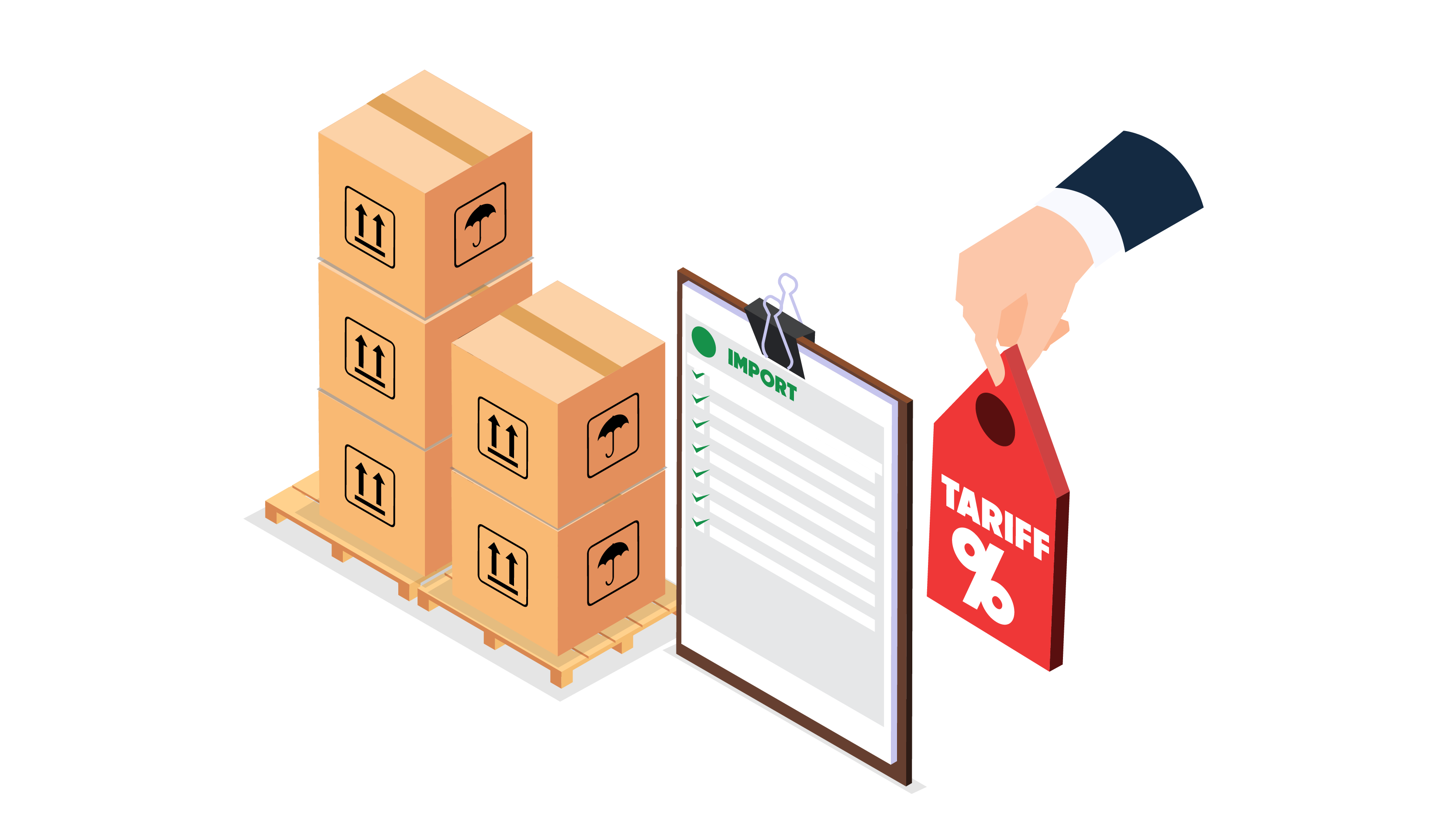
  • Tariffs are a specific kind of import duty applied to certain goods. They’re usually a percentage of the item’s value and are often used to help protect local industries.

Import taxes

  • This is the broad term for all taxes on imported goods. It covers import duties and tariffs, plus other charges like VAT or sales tax.

Types of duties and taxes

Here’s a quick overview of some of the most common duties and taxes your business might encounter when shipping internationally:


import duty

Customs duty

The standard tax charged on imported goods, usually based on the item’s classification, value, and country of origin.

Tariffs

Tariffs


A specific kind of customs duty applied to certain products, often used to protect local industries or balance trade between countries.

Excise tax

Excise tax

A tax on specific goods such as alcohol, tobacco, or fuel – often applied on top of import duties.

Value Added Tax (VAT) or Goods and Services Tax (GST)

Value Added Tax (VAT) or Goods and Services Tax (GST)

A consumption tax added to most goods and services, including imports, in many regions around the world.

Anti-dumping duty

Anti-dumping duty

An extra charge on imported goods sold at unfairly low prices, designed to protect domestic producers.

Considerations when shipping internationally

There is a lot to plan for when shipping to a new cross-border destination, including:

The destination country’s customs regulations. It’s important to research the local import tax and duty rates to factor into your costs. For example, in the UK, duties and VAT apply to most imports. To avoid any surprises, make sure to explore the specific requirements for your target destination—our Country Guides are a great place to start.

Shipping documentation and paperwork. This may include an accurate and detailed commercial invoice, waybill, and bill of lading.

It goes without saying that you want your shipment to arrive at its destination in perfect condition. Goods should be packed in correctly sized boxes to optimise space (and thus minimise your shipping costs!), with labels displayed clearly. Bonus points for sustainable packaging!

Prohibited and restricted items. Goods shipped without the correct certificates or permits could be seized by customs or earn you a hefty fine.

Insurance. This will give you peace of mind in case something does go wrong – such as a damaged or lost shipment. Here’s what you need to know about shipping insurance.


Practical steps for handling import tax and shipping duties

Managing customs declarations

When shipping goods internationally, you’ll be required to complete customs declaration forms, including a commercial invoice.

This specialised export document contains comprehensive information about the goods that customs authorities use to calculate the taxes, tariffs and duties due. You can cut costs by managing customs declarations yourself, or choose to engage a customs broker.

Choose a customs brokerage service

Partnering with DHL Express, for example, will mean your business has access to a global network of customs experts across over 100 countries. You’ll benefit from:

  • Full transparency and maximum visibility over what has been declared on your behalf

  • Global rate cards for transparent costs

  • New technologies such as AI-powered compliance tools to reduce clearance delays of your imports

DHL’s Duties and Taxes Outlay Service, where DHL settles all import duties and taxes upfront, preventing delays in getting goods to their destination. For shipments to London and other parts of the UK, this ensures fast, hassle-free delivery, even with local customs regulations.

Prepare your customers for paying import duties

Whatever Incoterms you choose for your international shipments, be clear about them to your customers upfront. Surprising them with high shipping fees at the very last moment is a sure way to lose the sale.   

Next steps

Managing taxes and duties for your international shipment may sound complicated, but with a DHL Express Business Account, it needn’t be. You’ll have expert guidance from customs specialists, whichever market you’re selling to. Grow globally with DHL. 

For fast, international shipping, open a DHL Express Business Account.

Frequently Asked Questions

Import duty is charged by the destination country's customs authority to raise revenue and to protect domestic industries by making imported goods less price-competitive than locally made alternatives. It applies whenever you bring goods across an international border above the relevant threshold.

It depends on the Incoterms agreed between the exporter and importer. Under Delivered Duty Paid (DDP), the seller pays. Under Delivered Duty Unpaid (DDU), the buyer pays the courier directly when the goods arrive.

1 – World Finance

2 – Visual Capitalist