#eCommerceAdvice

Shipping from Hong Kong to Korea with DHL | Costs, Delivery Times & PCCC/BRN Guide

5 Mins Read
Shipping from Hongkong to Korea with DHL

With the Korean Wave sweeping the globe, trade and travel between Hong Kong and Korea have grown increasingly frequent, and so has the demand for international shipping from HK to Korea. Whether you're running a cross-border e-commerce business, a brand shipping Hong Kong specialties to Korean customers, a Hong Konger heading to Korea for studies, or simply sending a gift to family and friends, choosing a reliable and efficient international courier service is essential.

This guide breaks down everything you need to know about shipping from HK to Korea, including how shipping costs are calculated, standard delivery times, the differences between B2C and B2B customs clearance requirements in Korea, what PCCC and BRN are, and the prohibited and restricted items you need to be aware of, so you can ship cross-border with confidence.

How to Calculate Hong Kong to Korea Shipping Cost?

Calculate the Shipping Cost

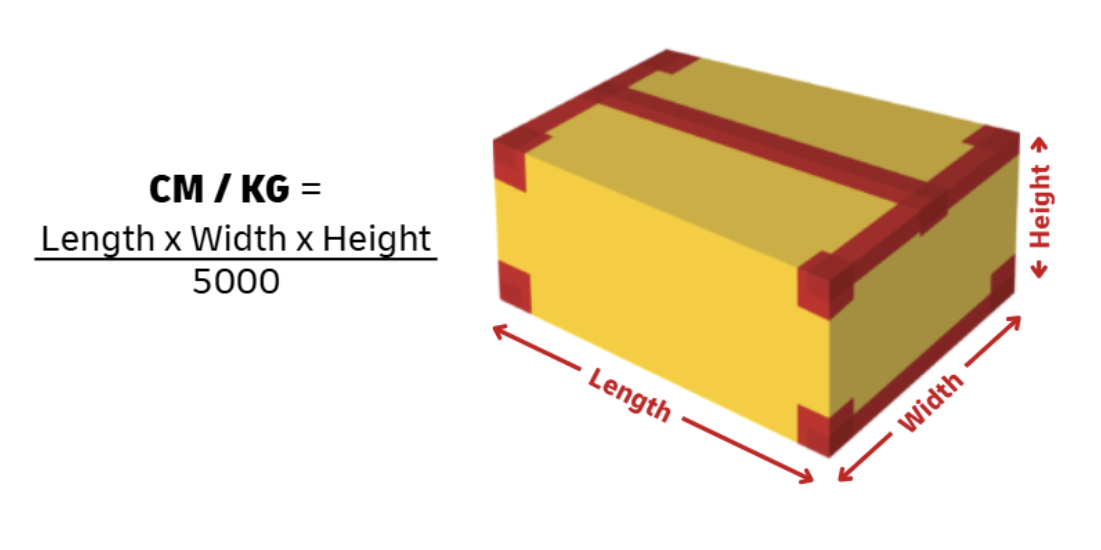
When calculating International Courier Shipping Costs, DHL Express measures both the actual weight and the volumetric weight of your shipment, and charges based on whichever is greater. If a parcel is light but bulky, such as stuffed toys, duvets, or gift boxes, it will typically be charged based on the volumetric weight.

For DHL, the volumetric weight formula is Length (cm) × Width (cm) × Height (cm) ÷ 5000

Once the chargeable weight is determined, the calculation is based on increments of 0.5 kg. For example, if the chargeable weight is 1.3 kg, the cost will be calculated as 1.5 kg; if it is 2.8 kg.

DHL also offers different service types. DHL Express Worldwide provides a balanced combination of delivery speed and cost, making it suitable for most commercial and personal shipments. DHL Express 9:00/12:00 time-definite services are designed for urgent deliveries, guaranteeing arrival by a specified time, though at a higher rate.

Key Factors Affecting Shipping Cost from Hong Kong to Korea

Beyond weight and dimensions, pick-up and delivery locations can also directly affect your shipping from HK to Korea costs. If the delivery address is in a remote area of Korea or far from major cities, a remote area surcharge may apply to cover the additional distance. Additional services such as Shipment Insurance for high-value goods, dangerous goods handling (e.g., lithium batteries in compliance with regulations), special temperature-controlled services, or specific packaging requirements, will also be charged separately. Fuel surcharges generally fluctuate in line with international oil prices and are reflected in the overall shipping cost.

Shipping from HK to Korea with DHL: Get an International Shipping Quote Today

To find out the specific shipping cost and estimated delivery time for shipping from Hong Kong to Korea, visit the DHL website to get a Free Online Shipping Quote. Simply enter your pick-up and delivery addresses, parcel weight and dimensions to receive an instant reference quote and delivery timeframe, making it easy to compare different service options and costs.

How Long Does Shipping from HK to Korea Take?

DHL Express Delivery Time

Generally, the standard delivery time for shipping from HK to Korea is approximately 1 to 3 business days. For major Korean cities such as Seoul, Busan, and Incheon, next business day delivery may be possible when flights connect smoothly, and customs documentation is in order.

DHL provides end-to-end shipment tracking, allowing both senders and recipients to monitor shipment status through the DHL system, with real-time updates at every stage, from pick-up and transit to Korea customs clearance and final delivery. DHL On Demand Delivery (ODD) also gives recipients the flexibility to change their delivery date or location or authorize the courier to leave the parcel at a designated safe location, such as parcel lockers or building management offices commonly used in Korea, making receipt more convenient.

Factors That May Affect Actual Delivery Time to South Korea

While DHL strives to ensure fast delivery, actual transit times may be affected by external factors. The most critical factor is the completeness of customs documentation, particularly for B2C personal shipments to Korea, which must include the recipient's PCCC (Personal Customs Clearance Code), while B2B commercial shipments require the recipient's BRN (Business Registration Number). If the PCCC number or BRN is missing, incorrectly entered, inconsistent with the recipient's details, or if the HS Code is declared incorrectly, Korea Customs Service may request supplementary documents or hold the shipment, causing customs clearance delays.

During major Korean holidays such as Chuseok (Mid-Autumn Festival) and Seollal (Lunar New Year), or peak shopping seasons, the significant increase in shipment volumes may slow down customs clearance and delivery processes, additional buffer time should be factored in when shipping during these periods. Weather is also a consideration: winter snowstorms or summer typhoons may affect flight schedules and local ground transportation. For deliveries to remote areas, additional transit time may also be required on top of any applicable remote area surcharges.

Shipping

End-to-End Tracking and Flexible Delivery Options

Throughout the entire shipping process, DHL provides comprehensive shipment tracking, allowing both senders and recipients to follow their parcel's journey, from courier pick-up and arrival at the Hong Kong hub, through international flight transit and Korea customs clearance, all the way to final delivery.

DHL On Demand Delivery (ODD) also enables recipients to manage their delivery with ease, simply reschedule the delivery date and time slot, redirect to an office address or a friend's address, or authorize the courier to leave the parcel with the building manager or at a parcel locker. This is especially convenient for busy professionals.

Korea Customs Clearance: How to Distinguish Between B2C and B2B Shipments?

Korea Customs Service takes a rigorous approach to inspecting imported goods, classifying shipments into two categories based on the recipient type and intended use: B2C personal imports and B2B commercial imports, each requiring different customs documentation and identification numbers.

How to Distinguish Between B2C Personal and B2B Commercial Shipments

Generally, B2C personal shipments and B2B commercial shipments can be distinguished by the recipient's identity and the intended use of the goods:

ItemB2C Personal ShipmentB2B Commercial Shipment
RecipientIndividual name; delivery address is typically residentialCompany name; address is usually an office or retail location
Purpose of GoodsFor personal use, in reasonable quantities and not for resaleFor commercial purposes such as import for sale, commercial samples, or production materials
Documentation RequiredPCCC (Personal Customs Clearance Code)BRN (Business Registration Number)

In practice, while the declared value of a shipment may serve as an indicator of commercial intent, it is not the sole determining factor. Even if the declared value is low, if the recipient is a company name and the goods are related to commercial activities, the shipment should be treated as a B2B commercial shipment and must include the BRN for customs clearance.

Important Notes for Senders

To ensure smooth customs clearance when shipping from HK to Korea, senders should clarify the recipient's status before dispatching, confirm whether the recipient is an individual or a company, and obtain the corresponding PCCC or BRN accordingly. When completing the DHL waybill and commercial invoice, ensure that the recipient's name or company name, as well as the PCCC/BRN, are accurately filled in. Whether in English romanization or Korean, all details must be consistent with the official registered information to avoid any customs queries arising from mismatched data.

If you have any questions about the customs classification of a specific shipment or the required documentation, you can consult the Korea Customs Service official website or the Mobile Customs Service App for the latest regulations, or contact a DHL Express Hong Kong Customer Service representative.

Essential Korea Customs Documents: Personal PCCC and Commercial BRN

PCCC (Personal Customs Clearance Code)

The PCCC (Personal Customs Clearance Code) is a 13-digit personal customs clearance code issued by Korea Customs Service, formatted as the letter "P" followed by 12 digits (e.g., P123456789012). It is primarily used to handle customs clearance procedures when individuals purchase goods from overseas or receive non-commercial imports. The PCCC was established to replace the previous practice of using sensitive personal identification data, such as the Resident Registration Number (Korea's equivalent of a national ID), to protect personal privacy and enable customs to more accurately identify each recipient.

All individuals residing in Korea, including Korean citizens and foreign nationals holding an Alien Registration Card who receive overseas shipments by their personal name must provide a valid PCCC, regardless of the value of the goods. Failure to provide a PCCC or providing a number that is inconsistent with the recipient's name, will prevent customs clearance. The shipment may be held for an extended period, incurring storage fees, or even returned to the original sender.

Applying for a PCCC is relatively straightforward. Applications can be submitted directly through the Korea Customs Service official website or mobile app, with identity verification completed using a Korean mobile number or official authentication certificate. Foreign nationals without a Korean mobile number can also apply using their Alien Registration Card details.

It is particularly important to note that in the past, some cross-border sellers used the recipient's date of birth (e.g., YYYYMMDD) as a substitute for the PCCC. However, Korea Customs Service has tightened its regulations in recent years, explicitly requiring the official PCCC as the clearance identification, and has stepped up enforcement against cross-border tax evasion and identity fraud. Online store sellers and other senders should therefore no longer use the recipient's date of birth as a PCCC substitute. If the recipient's PCCC cannot be provided, or if the PCCC provided does not fully match the recipient's name, whether in English or Korean, the shipment is very likely to be placed on a customs hold, causing serious delays. Storage fees may also accumulate while the shipment is held, and if customs clearance ultimately cannot be completed, the return shipping cost back to Hong Kong will typically be borne by the sender.

BRN (Business Registration Number) - Required for B2B Shipping from HK to Korea

The BRN (Business Registration Number) is the commercial registration number assigned to Korean companies and enterprises, used to identify business entities and their import/export activities. When the recipient is a Korean company, retailer, wholesaler, or other commercial organization, and the goods are intended for sales, manufacturing, or commercial operations, the shipment is classified as a B2B commercial shipment. In this case, the recipient company's BRN must be provided for customs clearance, a PCCC is not required.

Before shipping, proactively request the accurate BRN from your Korean client and verify that the company name spelling and address are consistent with their registered information. Enter these details accurately on the DHL commercial invoice and waybill. If you are unsure whether to use a PCCC or BRN for a particular shipment, refer to the B2C/B2B classification principles outlined above: contact the relevant departments; information can be found in the "Notes for Senders" section above.

Shipping

Restrictions and Prohibited Items for Shipping from HK to Korea

Before shipping any items from Hong Kong to Korea, it is essential to familiarize yourself with Korea's import regulations and DHL's prohibited items policy to avoid customs delays or legal violations. This is particularly important for popular goods commonly shipped from Hong Kong to Korea.

Common Popular Goods Shipped from HK to Korea & Shipping Tips

Many Hong Kong senders ship personal clothing, Hong Kong specialty food, gifts, or documents to Korea. Different product categories are subject to different regulations. Below are key shipping tips for common item types:

Personal Clothing & Everyday Items (e.g., Personal Luggage for Students or Migrants)

For personal clothing and everyday items, such as a student or migrant shipping personal belongings to Korea, used clothing and daily necessities in reasonable quantities generally face fewer restrictions, as long as they are clean and securely packaged. However, a large quantity of new clothing or identical items may be viewed by customs as having commercial intent, potentially triggering additional documentation requirements or taxation. For high-value clothing or branded apparel, senders should declare the true value and consider purchasing shipment insurance.

Hong Kong Specialty Food & Snacks (e.g., HK-style pastries, XO sauce, specialty tea)

Hong Kong specialty foods and snacks, such as HK-style biscuits, XO sauce, and tea, can generally be sent for personal use if in original commercially sealed packaging with clear ingredient lists and visible expiry dates. Quantities should be kept reasonable. Products containing meat, egg, or dairy ingredients may be subject to Korean animal and plant quarantine requirements, and some may be prohibited from import or require quarantine certificates. Home-made food, perishables, or items requiring refrigeration are not recommended for international courier shipment, as they may deteriorate in transit or be stopped at customs.

Health Supplements & Medicines (e.g., Vitamins, Traditional Chinese Medicine, Personal Prescription Medication)

Health supplements and medicines fall into a high-risk category. Korea has strict restrictions on the import of medicines and health products. Small quantities of over-the-counter medicines or vitamins with clearly labelled ingredients and original packaging may be permitted, but this depends on the specific ingredients and customs discretion. Traditional Chinese medicine, products containing controlled ingredients, or supplements with unclear compositions are highly likely to be held for inspection or require additional documentation. Before shipping, consult DHL customer service or refer to the Korea Customs Service official guidelines to avoid unnecessary risks.

Documents & Books

Standard documents, certificates, or books for non-commercial use can generally be shipped without issue, as long as they are properly packaged to protect against moisture and physical damage. For important documents, DHL's document service offers a faster, more secure delivery option.

Absolutely Prohibited Import Items Under Korean Law

Under Korean law, certain items are absolutely prohibited from import. If discovered, these items will be confiscated by customs and may result in legal liability. Common examples include pornographic or obscene materials, counterfeit branded goods and intellectual property infringements, narcotics and psychotropic substances, materials that incite constitutional subversion or threaten public order, and items related to sensitive North Korea-related matters.

Restricted Items Requiring Special Attention

Some goods are not entirely prohibited but fall under special regulatory control, requiring licences from specific authorities, quarantine certificates, or compliance with technical standards before they can clear customs. Common examples include pharmaceutical products and medical devices, animals, plants and their derivatives, certain food items and cosmetics, alcoholic beverages and tobacco products, weapons and ammunition, precious metals and jewelry, items of cultural heritage value, and radio communications equipment. If you plan to ship any of these items, always consult the Korea Customs Service official resources in advance, confirm compliance with the relevant regulations, and prepare the necessary documentation for accurate Customs Declaration.

DHL Prohibited Items

In addition to Korean government regulations, DHL maintains its own Global Prohibited Items Policy. Items that are prohibited or subject to strict restrictions include explosives, flammable liquids, compressed gases, narcotics and illegal substances, weapons and ammunition, offensive weapons (including decorative swords or military collectibles), Lithium Batteries that do not meet international safety standards (including swollen, damaged, or loose batteries), perfumes, nail polish, aerosols and other items with flammable or pressurized properties, live animals and plants, counterfeit and pirated goods, as well as cash, gold bars, and items of extremely high value that have not been properly declared. Please review these restrictions carefully before shipping.


Import and Export Duties for Shipping from HK to Korea

Hong Kong Export Duties

As an internationally renowned free trade port, Hong Kong imposes no customs duties on the vast majority of imported and exported goods. When shipping from HK to Korea, there is generally no need to worry about Hong Kong export duties — the primary costs are the international shipping fees and any applicable taxes at the destination.

Korea Import Duties and VAT

Korea imposes customs duties and Value Added Tax (VAT) on imported goods, with a standard VAT rate of 10%. For personal-use, non-regulated items, goods with an FOB value below USD 150 (approximately KRW 195,000) are generally exempt from customs duties and VAT. However, certain product categories, such as alcoholic beverages, tobacco, cosmetics, and luxury goods, may still be subject to taxation even if the declared value falls below USD 150.

Korea import duty amounts are calculated based on the product's HS Code and the tariff schedule published by Korea Customs Service. VAT is calculated as (declared value + shipping cost + import duty) × 10% and is generally payable by the recipient — the courier company will notify the recipient to settle the amount before delivery. If the recipient refuses to pay the applicable taxes, the shipment may be returned or destroyed, and the resulting return shipping costs and fees will typically be borne by the sender.

For detailed tax rates and individual product rules, please refer to the Korea Customs Import Declaration Guide.


Open a DHL Business Account for Seamless Global Exports

Open a DHL Business Account for Seamless Global Exports

Whether you frequently ship from Hong Kong to Korea or to other destinations, and whether you're a B2C online store seller or a B2B exporter, a DHL Business Account gives you greater flexibility for your cross-border logistics operations. Open a DHL Business Account today to enjoy exclusive volume-based discount rate agreements, and dedicated support for customs documentation, shipment arrangements, and market-specific regulatory queries.

📦Open a DHL Express Account to Enjoy Special Discount Today!

Shipping from HK to Korea - Frequently Asked Questions

English is required. DHL's international courier system and customs declaration systems both operate in English as the standard language. Please provide an accurate English delivery address, the recipient's English name (consistent with their customs clearance documents), and a local Korean contact number to ensure smooth data processing and avoid clearance or delivery delays.

Yes. For standard DHL Express shipments (non-palletized), the maximum weight per parcel is 70kg, and the maximum length on any single side is 120cm. For oversized or overweight shipments exceeding these limits, please contact DHL customer service in advance to arrange special logistics handling. Additional overweight or overlength surcharges may apply.

You are welcome to use your own sturdy corrugated cardboard boxes. Alternatively, if you visit a DHL Service Centre in person or hold a DHL Business Account, DHL provides a range of free standard-sized express boxes, document envelopes, and express bags to ensure your shipment meets international air freight safety standards.

DHL Express standard delivery in Korea operates Monday to Friday on business days. Standard customs clearance and door-to-door delivery services are generally suspended on Saturdays, Sundays, and Korean public holidays such as Chuseok and Lunar New Year. While DHL offers special weekend/holiday delivery services for extremely urgent shipments at an additional charge, for standard courier services, please factor in Korean public holidays when estimating the expected delivery date.

Shipping is flexible and convenient; there's no need to travel in person. Simply use the MyDHL+ online platform to schedule a free courier pick-up at your home or business address. Alternatively, you can drop off your parcel at any DHL Service Centre across Hong Kong, or at designated DHL partner drop-off points, whichever is most convenient for your schedule.