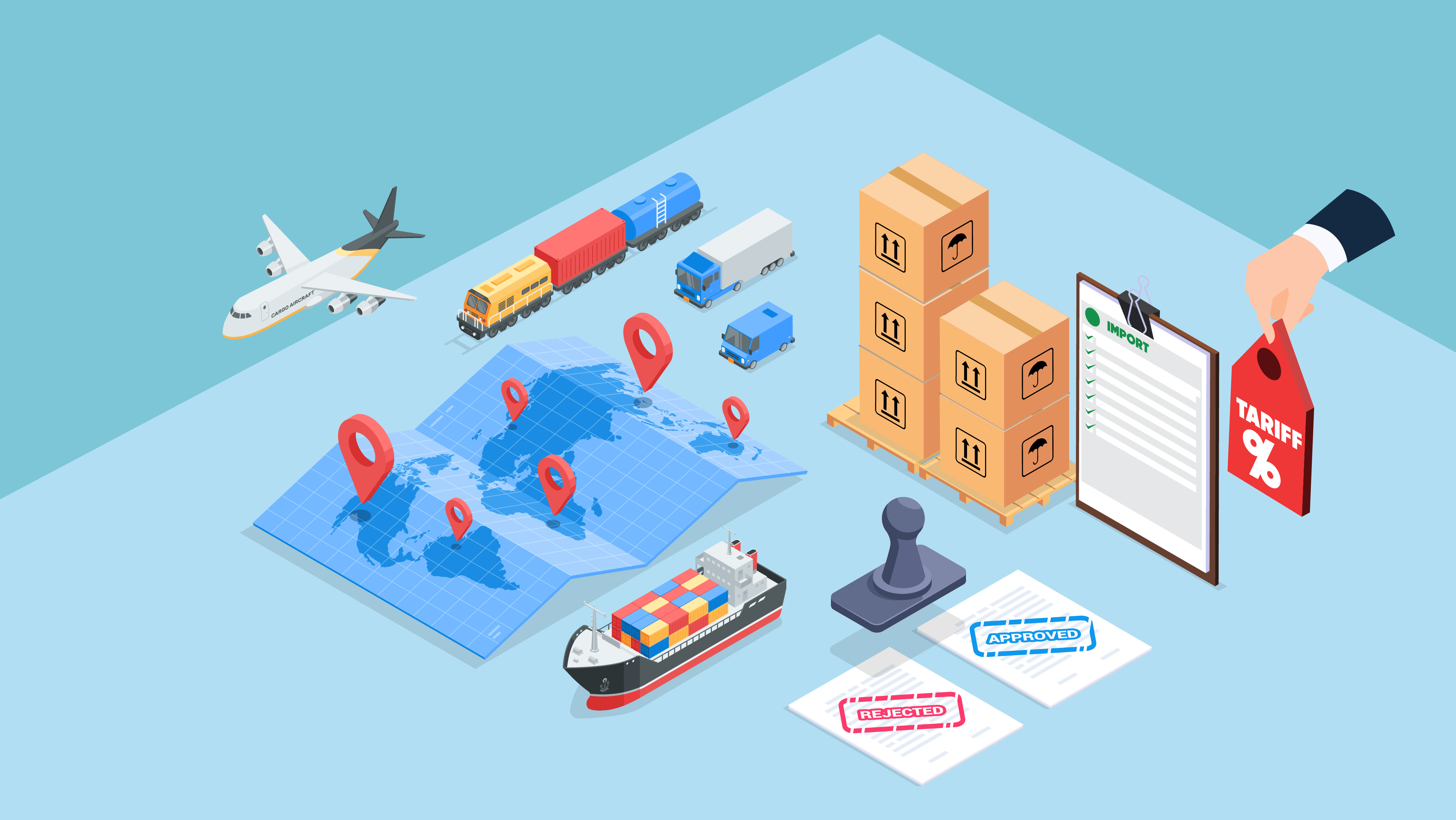
If you’re a small business owner in the U.S. who ships goods to, from, or through Canada or Mexico, the United States-Mexico-Canada Agreement (USMCA) can have a significant impact on your business. Here’s what small businesses need to know about the USMCA, including potential changes that may result from the July 2026 review.
What is the United States-Mexico-Canada Agreement (USMCA)?
The USMCA is a free trade agreement between the United States, Mexico, and Canada. It replaced NAFTA (the North American Free Trade Agreement) in 2020 and now governs how products, services, and data move across the three countries’ borders.
The USMCA also includes stronger labor rules meant to improve conditions and protect rights and wages.
USMCA vs. NAFTA
What is the difference between the USMCA and NAFTA? The USMCA retains much of NAFTA’s basic structure, but it also introduces important changes: including new automotive content rules, stronger labor standards, digital trade rules, updated intellectual property laws, and, importantly for small businesses, simplified customs and shipping.
A Big Step for Small Businesses
Unlike NAFTA, the USMCA includes a separate chapter just for small businesses. It’s the first time a U.S. trade agreement has done this, but it makes sense: Canada and Mexico are the two largest export markets for American SMEs. Key benefits include:
Easier customs procedures and origin certification. The USMCA no longer requires a specific origin form. Instead,importers, exporters, or producers can certify origin using any format that contains the required data elements, which helps reduce administrative burdens and paperwork.
Digital trade protections USMCA prohibits customs duties on digital products and includes stronger provisions related to data flows, cross-border data transfer, and digital commerce, which benefit SMEs operating in software, media, and digital services.
Faster clearance for express shipments. The agreement includes provisions designed to facilitate the rapid release of express shipments and low value packages, which is especially valuable for small businesses that rely on fast delivery to compete with larger competitors.
This small business chapter was designed to reduce the administrative burden and cost barriers that have historically made cross-border trade more challenging for smaller businesses.
Let’s Talk About Import Duties
With all the recent discussion about tariffs and trade policy, , it’s easy for the idea of “free trade” to get lost in the conversation.
So does USMCA allow Import duties and Taxes? For qualifying goods, the Agreement generally offers duty-free treatment. . However, governments may still apply certain trade rules, including additional duties, taxes or other actions to address specific concerns. For example, the U.S. has announced an additional 50% tariff on certain Canadian imports. For this reason it is important to stay updated on any regulatory changes that may impact your company. And that brings us to what’s going on with the USMCA right now.
The July 2026 Joint Review
This is where the situation gets more complex.
Unlike NAFTA, the USMCA includes a sunset clause. . Under Article 34.7, the U.S., Mexico, and Canada must conduct a formal joint review in the sixth year following the agreement´s entry into force. That anniversary fell on July 1, 2026.
At that check, all three countries had to decide whether to extend the agreement, and while Mexico and Canada agreed to support a new 16-year term, the United States did not agree to renew the USMCA in its current form.
Is the USMCA still in effect? Yes. The USMCA remains fully in force. Its current rights and rules, including preferential tariff treatment , rules of origin, investment protections, and dispute settlement mechanisms, continue to apply without change.
What’s next? Because the U.S. did not confirm an extension, the deal now enters a cycle of required annual reviews. These will continue until the countries agree to extend it or it reaches its scheduled expiration in 2036.
What are USMCA approved goods? You can find more information about USMCA rules at the International Trade Administration and the U.S. Customs & Border Protection. However, during these ongoing talks, it’s especially important to stay up to date on which products qualify for USMCA preferential treatment so you don’t get hit with unexpected duties or tariffs.
What This Means for Your Shipping Strategy
Nothing has changed overnight for your shipments. Duty-free treatment, rules of origin, and customs procedures under the USMCA are all still in effect. But with the future of the agreement under review, the joint review process is likely to become a serious negotiation rather than a routine assessment. Small businesses moving goods across the U.S.-Mexico-Canada route should prepare without panicking.

1- Check that your rules-of-origin documentation is up to date and accurate. If your goods currently qualify for USMCA preferential treatment, make sure your proof of origin and support documentation are ready for review. The ongoing discussions may bring increased scrutiny to origin statements.

2- Monitor potential r changes to automotive, steel, aluminum, and agricultural provisions. These industries are widely regarded by policymakers and trade experts as likely areas of focus during the review process and could therefore be subject to revisions.

3- Build flexibility into your supply chain. With the review process likely to last for several months (or even years), companies that diversify their supplier base or maintain alternative sourcing strategies will be better prepared to handle any changes.

4- Monitor the minimis and low-value shipment regulations. While the de minimis exception was modified in recent years, these regulations can change often, and any changes can directly impact how you price and send smaller packages

5- Rely on your shipping partner for updates. Trade rules associated with ongoing negotiations can change with little notice. Staying up to date with customs requirements and official guidance will help you avoid delays at the border. When you send items with DHL, our team is here to help you get ahead of any changes that could impact your company.
The Summary
The USMCA took the place of NAFTA in 2020 with an agreement designed to facilitate cross-border trade for businesses of all sizes. Its small-business rules, ranging from simplified origin certification requirements to trade facilitation measures, continue to provide meaningful benefits for smaller shippers today.
The July 2026 joint review did not end that framework. Instead, it started a new phase of discussion that talks will likely continue over the coming months and years. For now, the rules you know still apply, and staying updated will be the best way to prepare for any future developments.
DHL will continue to monitor changes in the USMCA review process and share relevant updates as they impact shipping for our customers.


 Share
Share