#LogisticsAdvice

How to Calculate Import Duties in Nigeria: A Simple Guide for Shippers

Hilary Okwechime
Hilary Okwechime
Marketing & Communications
How to Calculate Import Duties in Nigeria
This article covers:
Why import duties matter for planning costs.
How CIF formula calculates Nigerian customs duties.
Why accurate data and DHL reduce delays.

Ever opened a customs bill and wondered how those numbers added up? If so, you’re not alone. For many importers, especially those shipping into Nigeria for the first time, import duties can feel unpredictable, almost like they’re pulled out of thin air. But the reality is, once you understand how the system works, calculating what you owe is surprisingly straightforward.

With the right information and a simple formula, you can estimate your customs duty before your shipment even leaves the supplier’s warehouse.

Why Understanding Import Duties Matters

Import duty is often the most misunderstood part of bringing goods into Nigeria. Yet, knowing how it works doesn’t just save you from unwelcome surprises at the port, it also helps you plan your finances more accurately and ensures a smoother clearance process.

What Is Customs Duty?

Customs duty is a tax collected by the Nigeria Customs Service on goods as they enter the country. Its purpose is twofold: it generates revenue for the government and protects local businesses from being undercut by cheaper imports. The amount you pay depends entirely on what you’re importing, making proper product classification absolutely essential.

The Essentials: What You Need Before You Start

To calculate your duties with confidence, you’ll need four pieces of key information:

  1. HS Code: This internationally standardized code classifies your product and determines the duty rate. Getting this right is the foundation of everything else.

  2. FOB Value: The cost of your goods (excluding insurance and freight).

  3. Freight Cost: The expense to ship your goods to Nigeria.

  4. Insurance Cost: The cost to insure the shipment.

You’ll also need the official exchange rate from the Central Bank of Nigeria (CBN) at the time of customs assessment, since all calculations are converted to naira before the duty is applied.

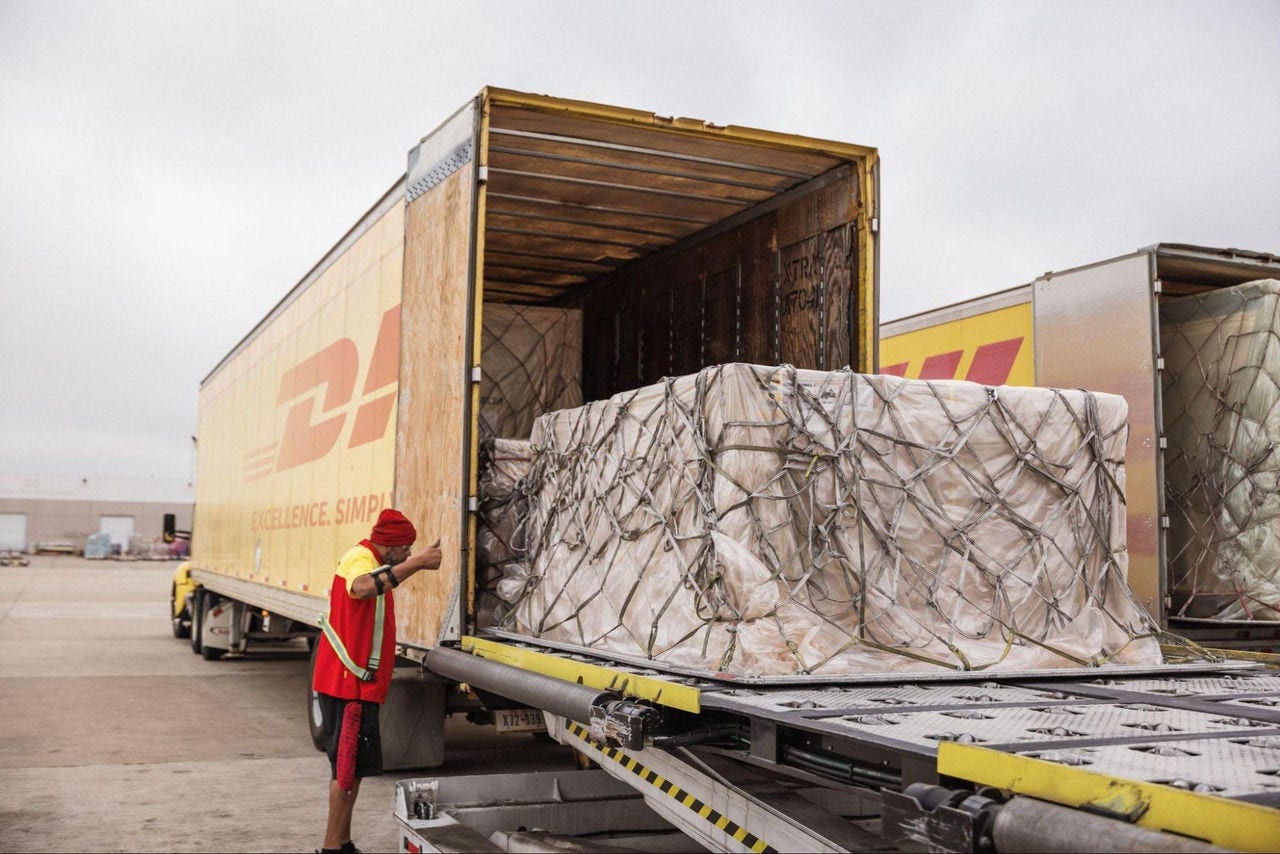
/content/dam/nigeria/logistics-advice/export-and-import-advice/The Formula.jpg

The Formula: CIF and Duty Rate

At the heart of every customs calculation is the CIF value; Cost, Insurance, and Freight. The formula is simple:

CIF Value = Cost of Goods + Insurance + Freight

Once you have your CIF value in the original currency, convert it to naira using the current CBN exchange rate. Then, apply your product’s duty rate to that figure to find your basic import duty.

Example:
If your CIF value (after conversion) is ₦5,000,000 and your product’s duty rate is 20%, your import duty is ₦1,000,000.

Beyond the Basics: The Other Charges

Import duty is just the beginning. Several additional levies are typically added to your bill:

  • Surcharge: 7% of the import duty.

  • Comprehensive Import Supervision Scheme (CISS): 1% of the FOB value.

  • ECOWAS Trade Liberalisation Scheme (ETLS): 0.5% of the CIF value.

  • VAT: 7.5% of the total (CIF + duty + surcharges/levies).

These extras can make your overall customs bill noticeably higher than the duty alone.

Step-by-Step Example

Imagine you’re importing electronics:

  • FOB (Product Cost): ₦3,000,000

  • Freight: ₦400,000

  • Insurance: ₦50,000

CIF Value: ₦3,000,000 + ₦400,000 + ₦50,000 = ₦3,450,000
If the duty rate is 20%:
Import Duty: ₦3,450,000 × 20% = ₦690,000

Now add the extras:

  • Surcharge (7% of duty): ₦48,300

  • CISS (1% of FOB): ₦30,000

  • ETLS (0.5% of CIF): ₦17,250

  • VAT (7.5% of CIF + duty + other charges): Calculated on the combined total

Add them all up, and you have your total customs bill, no surprises.

Don’t Overlook the Exchange Rate

One thing that catches many importers off guard is the exchange rate. Customs uses the CBN rate at the time your shipment is assessed, not the rate when you paid your supplier. If the naira moves between purchase and arrival, your total in local currency can change. Smart importers watch the exchange rate and build a buffer into their estimates.

/content/dam/nigeria/logistics-advice/export-and-import-advice/Avoiding Common Pitfalls.jpg

Avoiding Common Pitfalls

The two biggest causes of delays and extra costs at Nigerian customs? Incorrect HS codes and paperwork errors. A wrong HS code can increase your duty rate or lead to time-consuming inspections. Make sure your commercial invoice, packing list, and bill of lading are accurate and consistent.


That’s where DHL can help. Our customs services are built to eliminate these headaches. We handle duties and taxes, permits, bonded storage, regulatory compliance, and more, so you can focus on your business.

Ready for Stress-Free Imports?

Calculating import duty in Nigeria is all about understanding the right formula and having complete, accurate information. Start with the correct HS code, build your CIF value, apply the duty rate, then add surcharges, levies, and VAT. The math is simple, but precision in every step is crucial.

Of course, even the best calculations can’t fix paperwork errors or regulatory snags. That’s why working with experienced customs professionals like DHL, can make all the difference. Whether you’re new to importing or looking to streamline your process, combining reliable calculations with expert support is the key to smooth, cost-effective shipping into Nigeria.

Frequently Asked Questions

To figure out how much you’ll pay in Nigerian customs import duty, everything starts with the CIF Value, short for Cost, Insurance, and Freight. This value is calculated by adding together the cost of your goods (often called FOB), the insurance paid, and the freight charges. Once you have this total, it’s converted into Nigerian Naira (NGN) using the Central Bank of Nigeria’s official exchange rate. Your product’s specific duty rate is then applied to the CIF value to determine your base import duty.

Import duty is just the beginning. A typical customs bill in Nigeria includes several other mandatory charges. There’s a 7% surcharge, calculated on the import duty itself. The Comprehensive Import Supervision Scheme (CISS) levy adds 1% of your goods’ FOB value, and the ECOWAS Trade Liberalisation Scheme (ETLS) levy tacks on another 0.5% of the CIF value. To top it off, Value Added Tax (VAT) is applied at 7.5%, this is calculated on the combined sum of the CIF value, the duty, and any additional fees. All these can add up quickly, so it’s important to budget accordingly.

The exchange rate can make a big difference in your final customs bill. Nigeria Customs always uses the Central Bank’s official rate at the exact moment your goods are assessed, not the rate from when you paid your supplier or placed your order. If the Naira loses value while your shipment is en route, your duty liability in Naira goes up. Because these fluctuations are common, it’s smart to include a financial cushion in your budgeting for customs expenses.

Two issues come up more than any others: incorrect HS code classification and incomplete paperwork. If your product is misclassified, you might end up paying more duty than necessary or face a time-consuming physical inspection. Every document, commercial invoice, packing list, and bill of lading, needs to be accurate and perfectly matched. Small discrepancies can lead to delays or extra costs, so attention to detail here pays off.