As 2026 draws to a close, U.S. small- and mid-size enterprises (SMEs) are looking toward 2027 with optimism, while navigating a business landscape defined by rising operating costs, ongoing trade policy uncertainty, and an evolving approach to AI adoption.
To understand how these forces are shaping business performance, priorities, and sentiment, DHL Express U.S. surveyed more than 400 SME decision-makers across a variety of industries. The following executive summary explores the key findings from the survey and outlines how U.S. SMEs are approaching growth, workforce planning, AI adoption, and international expansion in 2027, alongside the challenges shaping their outlook for the 2026 holiday season.
What are the biggest growth opportunities and challenges for U.S. small businesses in 2027?
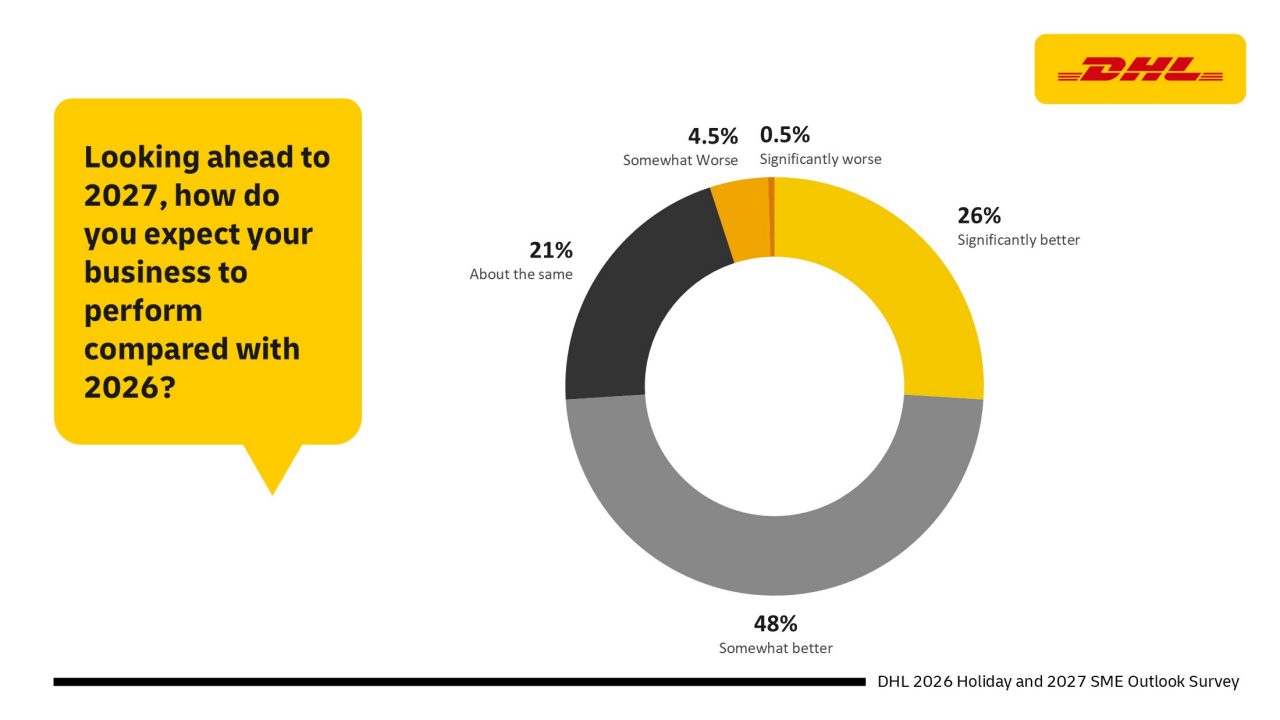
U.S. small and mid-size enterprises (SMEs) are optimistic about 2027, but they are not ignoring the challenges ahead.
- Nearly three-quarters (74%) expect their businesses to perform better than 2026, including 26% who anticipate significantly better performance.
- 21% expect business to remain about the same.
- Just 5% expect their business to perform worse than in 2026.
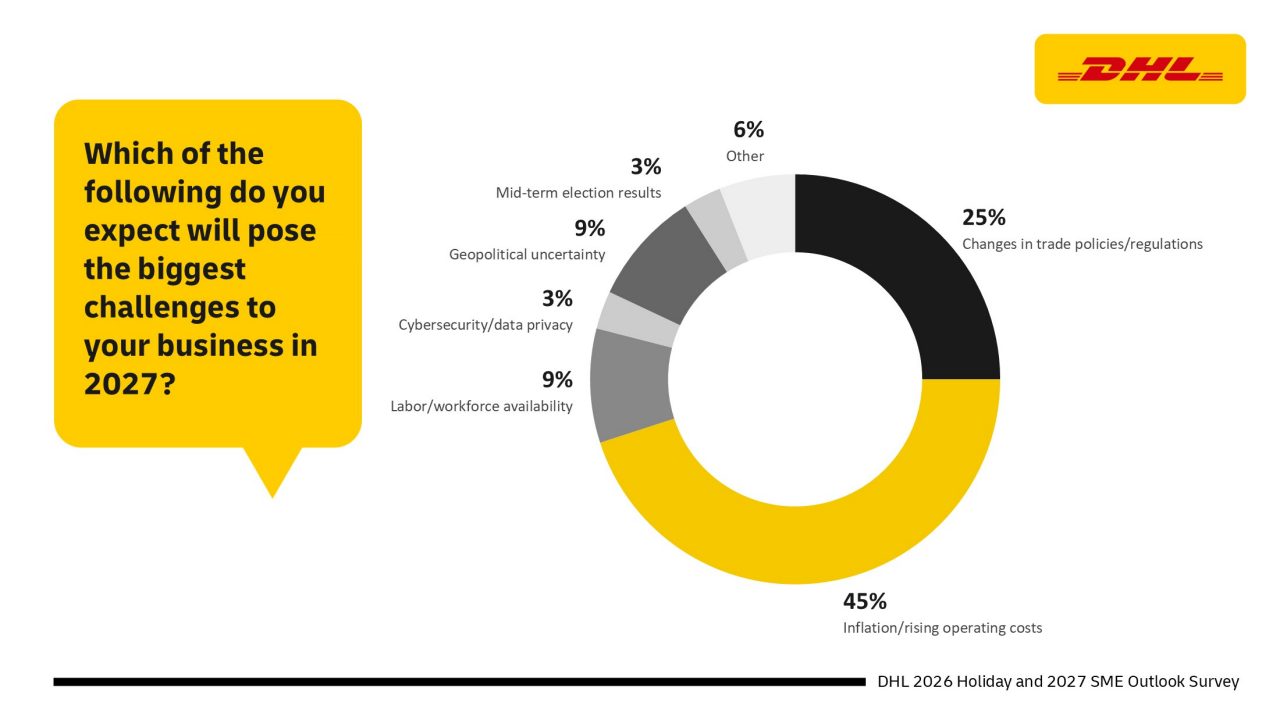
At the same time, there are key concerns shaping 2027 planning.
- Nearly 45% cite inflation and rising operating costs as their biggest business challenge in 2027.
- 25% identify trade policies and regulations as their leading hurdle.
- Labor availability (9%) and geopolitical uncertainty (9%) are also on businesses’ minds, but are a lesser concern.
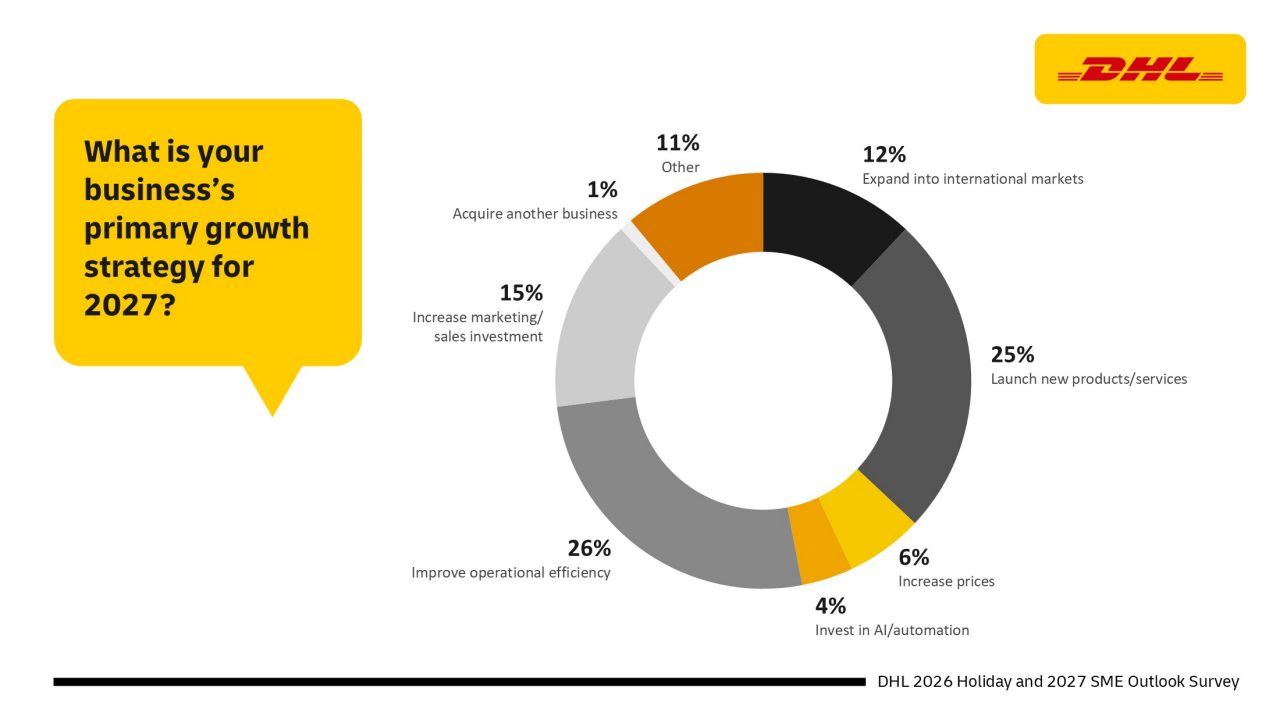
These worries are reflected in SMEs’ growth strategies and investment plans for 2027.
- Improving operational efficiency (26%) and launching new products or services (25%) are the top growth strategies for 2027.
- Increased investment in marketing and sales (15%) and expanding into international markets (12%) followed.
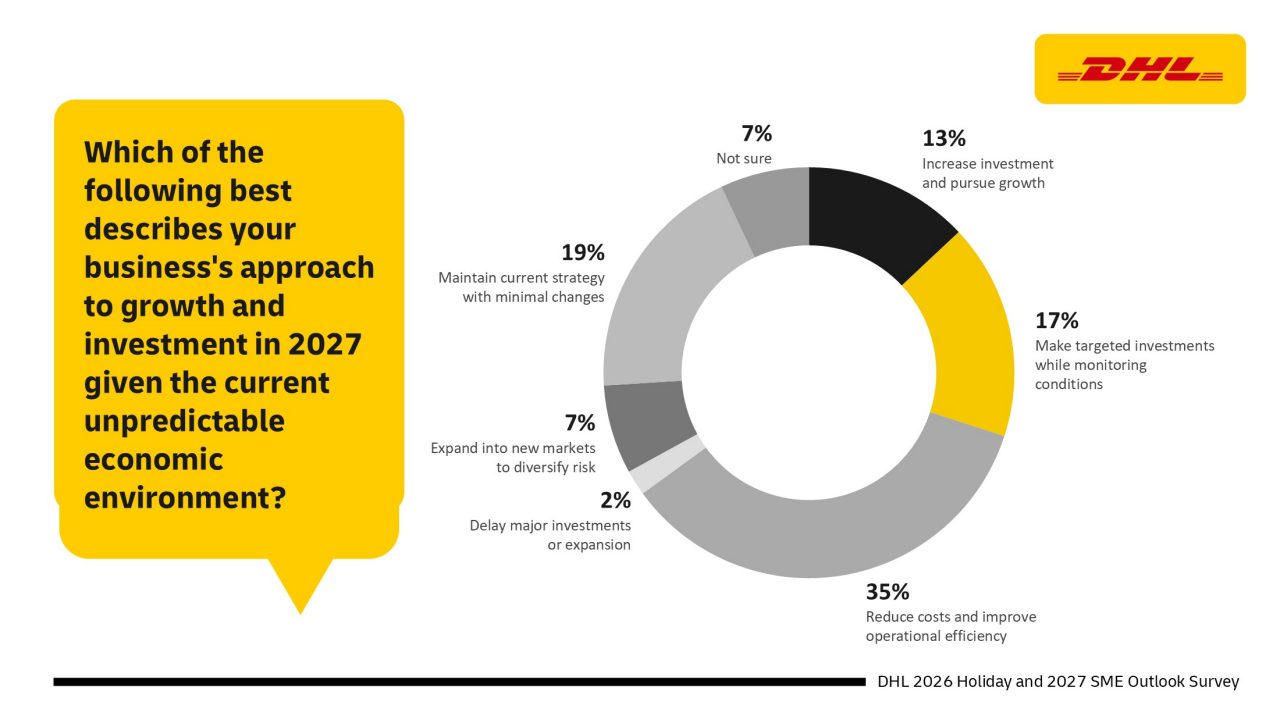
When asked more broadly about their approach to growth and investment given the unpredictable economic environment, 35% said they plan to focus on reducing costs and improving efficiency. Another 17% expect to make targeted investments while monitoring conditions.
The takeaway: SMEs expect opportunities to grow in 2027, but many are focused on controlling costs and making careful decisions about where to invest.

How are U.S. small businesses using AI in 2027?
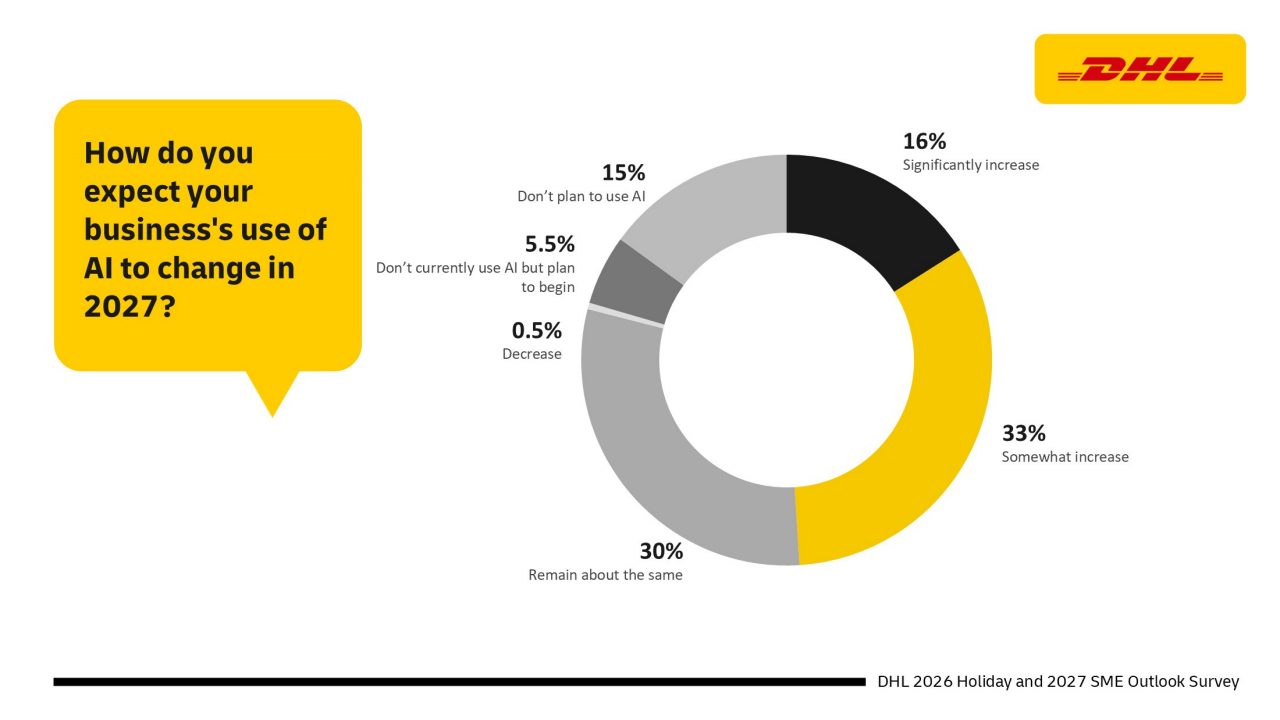
AI is part of many SMEs’ plans for 2027, though not every business is moving at the same pace.
- Nearly half (49%) expect to increase their use of AI.
- 5% said they don’t currently use AI but plan to start using it in 2027.
- 30% expect their use of AI to stay the same, and 15% do not plan to use it at all.
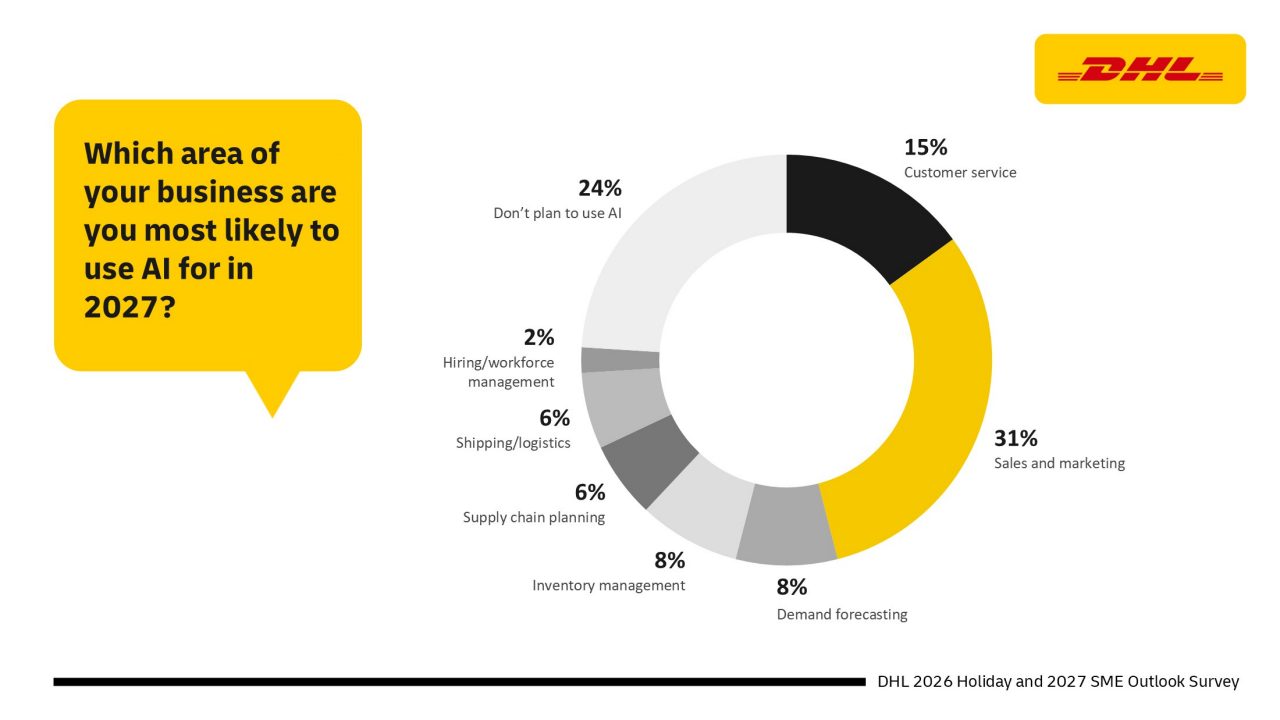
- Sales and marketing is the top anticipated application (31%), followed by customer service (15%), demand forecasting (8%) and inventory management (8%).
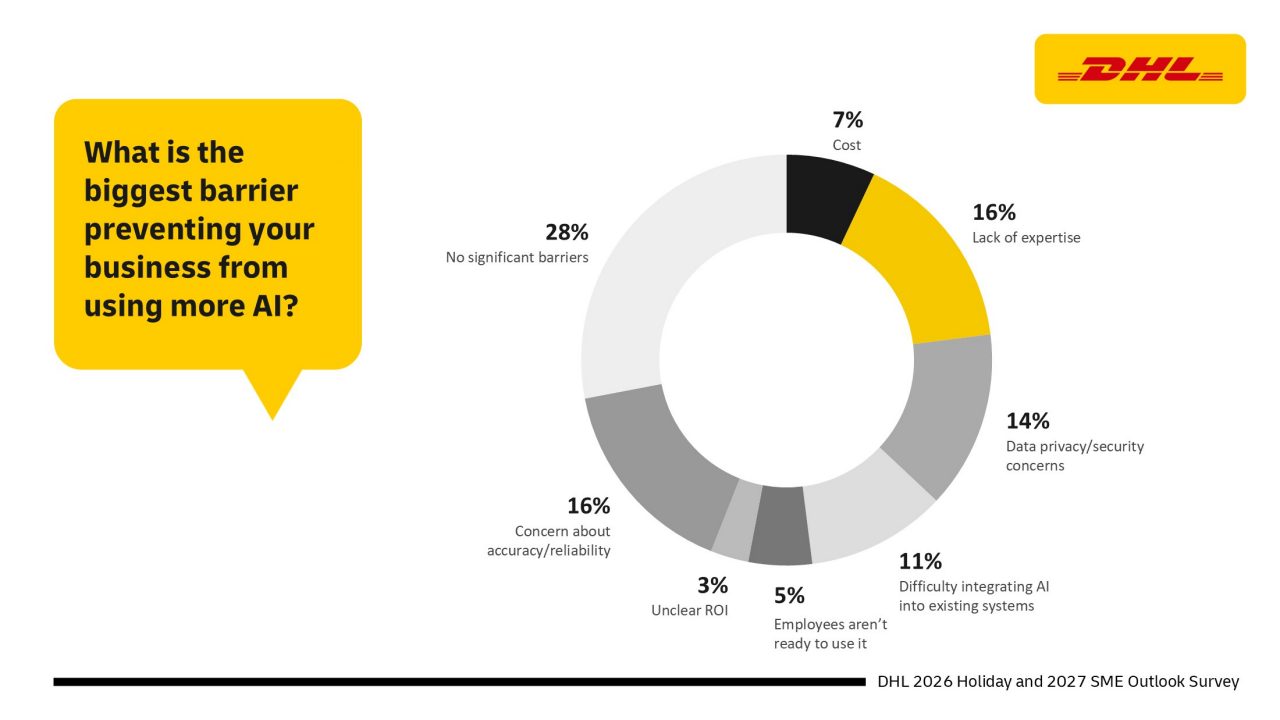
For businesses looking to adopt or expand their use of AI, the biggest obstacles are not necessarily financial. Instead, concerns about expertise and the technology’s reliability feature more prominently.
- A lack of expertise (16%) and concerns about accuracy and reliability (16%) are the most frequently cited barriers. Followed by data privacy and security (14%).
- Cost is less of a concern, cited by 7%, while 28% report no significant barriers.
The takeaway: SMEs are increasingly looking to AI to support business operations, particularly in sales and marketing, but gaps in expertise and concerns about accuracy and reliability remain barriers to adoption.
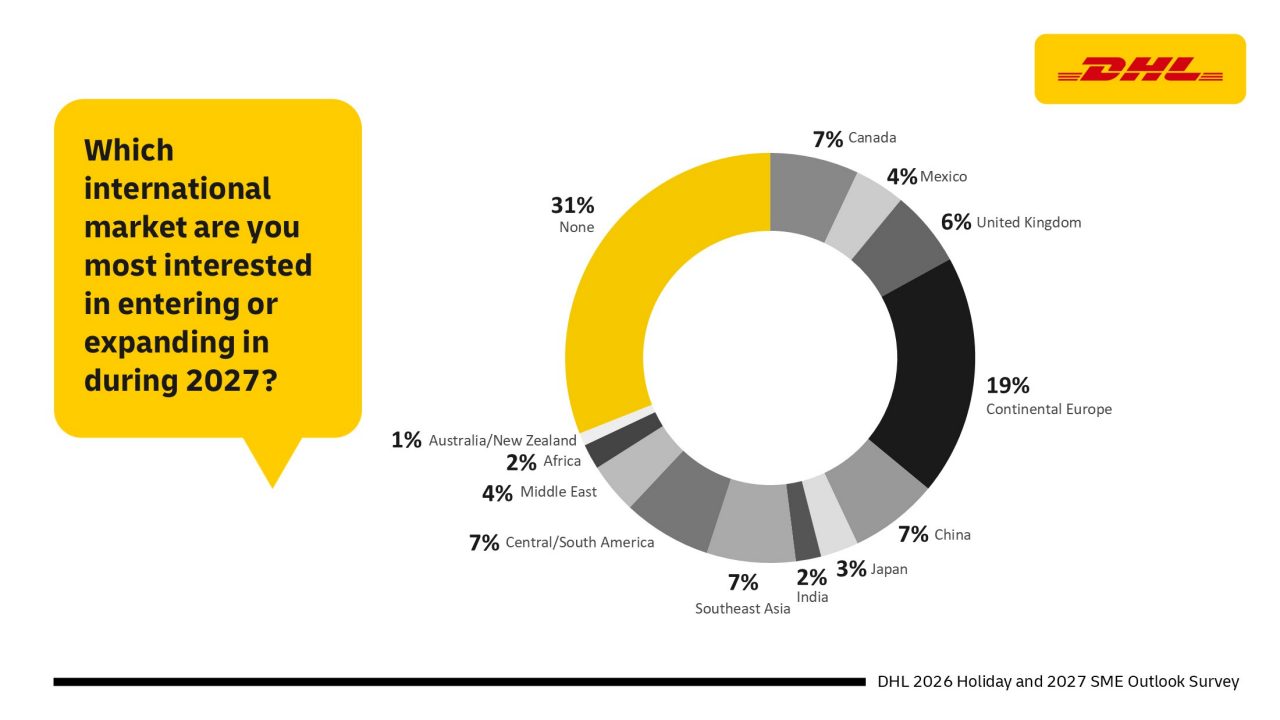
Which international markets are U.S. small businesses targeting for expansion in 2027?
Some business owners are looking beyond their domestic markets for growth in 2027, though international expansion is not a priority for everyone.
- Continental Europe is the most frequently identified market for potential expansion (19%)
- Canada, China, Southeast Asia and Central/South America, each follow at 7%.
- Nearly one-third of respondents (32%) did not identify an international market they plan to enter or expand into next year.
The takeaway: International growth, shipping costs, customs requirements and trade regulations are important factors for businesses to weigh when choosing where and how to expand. Understanding these requirements can help in planning for the practical demands of selling across borders.

What are U.S. small businesses expecting for the 2026 holiday season?
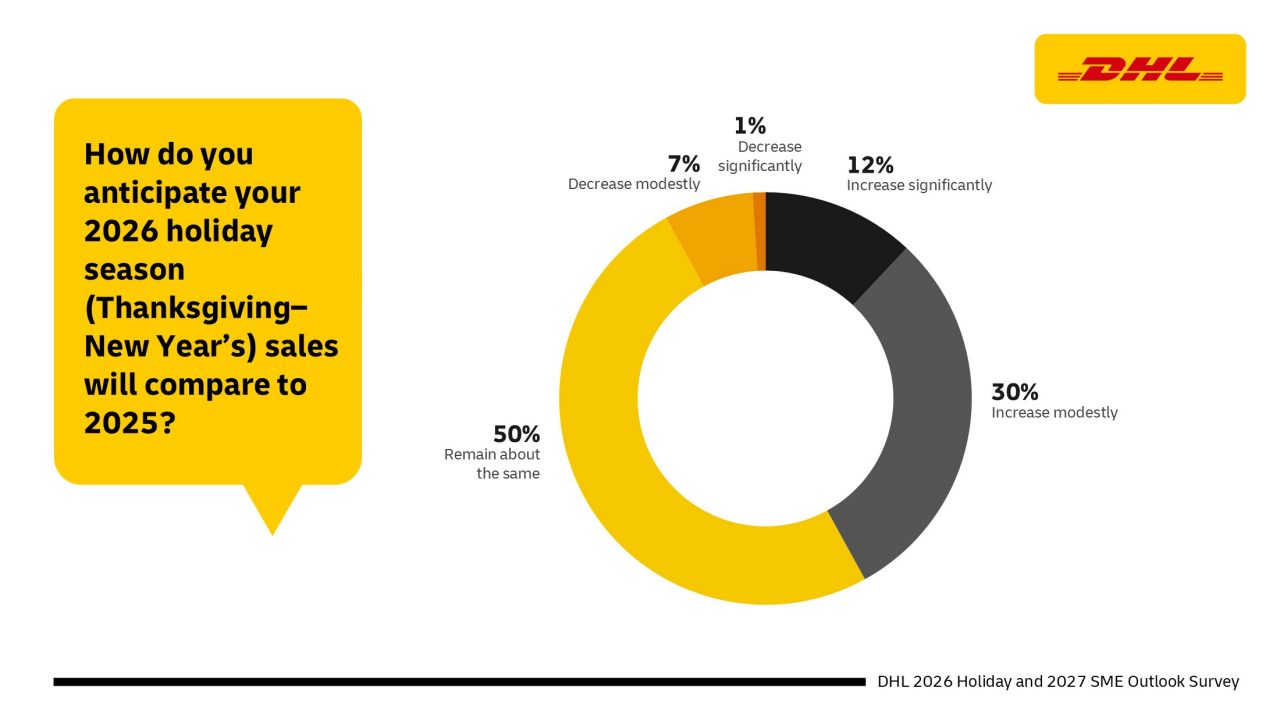
As SMEs approach the 2026 holiday season, most expect sales to hold steady or improve.
- 50% anticipate sales will be about the same as in 2025.
- 41% expect an increase, including 12% who predict significant growth.
- Just 9% expect sales to decline.
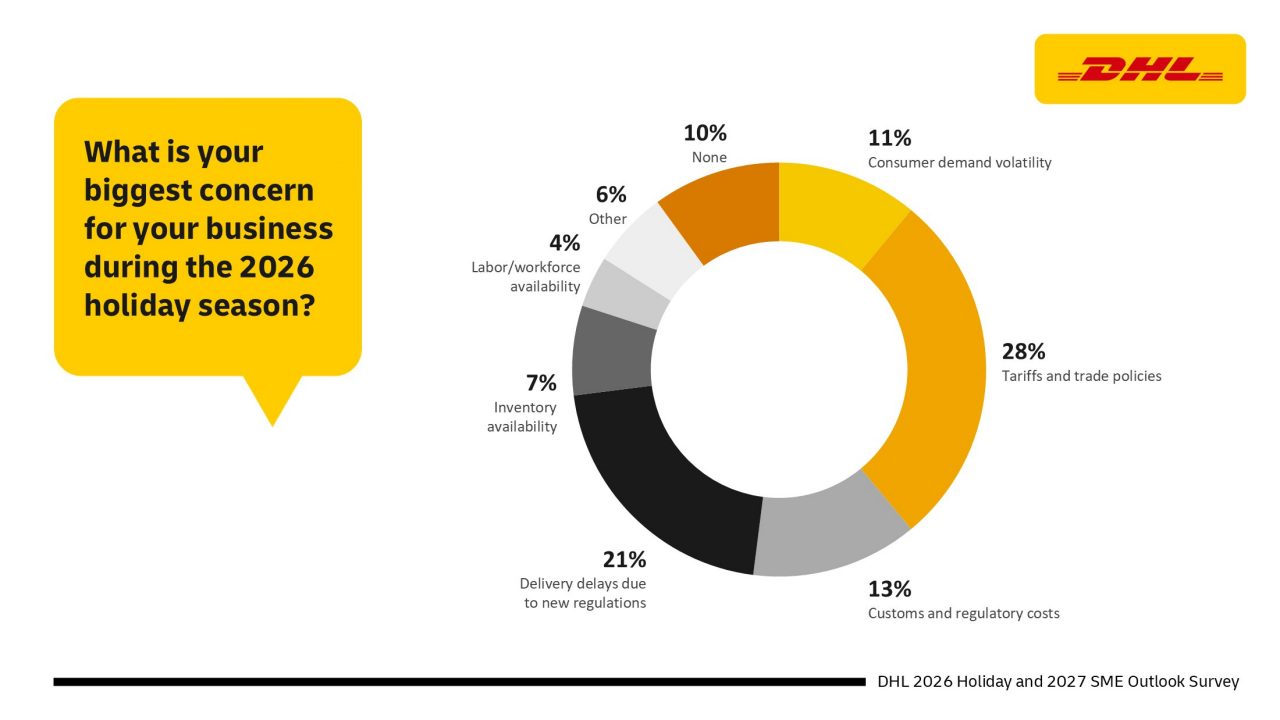
Trade and regulatory issues are top concerns as businesses prepare for the busy season.
- Tariffs and trade policies are the leading anticipated challenge (28%).
- Delivery delays due to new regulations (21%) and customs and regulatory costs (13%) follows.
- Consumer demand volatility (11%) and inventory availability (7%) are also factors in holiday planning..
The takeaway: Most SMEs expect holiday sales to remain steady or increase, but tariffs, changing trade policies and potential delivery delays could complicate preparations. Planning ahead for shipping timelines, customs requirements and related costs will be important to managing seasonal demand.
How can U.S. small businesses prepare for growth in 2027?
Business owners are approaching 2027 with cautious confidence as they weigh investments in their companies and explore new opportunities abroad. For DHL Express U.S., these priorities highlight the role reliable shipping and customs support can play as SMEs plan for growth. Whether preparing for peak-season demand or exploring new international markets, DHL Express remains committed to supporting these objectives through trade-compliance expertise, AI-enabled shipping tools, and accessible sustainability programs that help SMEs thrive amid continued uncertainty.
See below for the full survey results.
- slide1
- slide2
- slide3
- slide4
- slide5
- slide6
- slide7
- slide8
- slide9
- slide10
- slide11
- slide12


 Share
Similar Stories