What is the difference between prohibited and restricted goods?
Prohibited goods are items that are banned from entry under any circumstances for safety or legal reasons. Restricted goods are items that can be shipped if you hold the correct permits or follow specific packaging rules. Understanding this distinction is the first step in protecting your profit margins.
DHL does not simply refuse complex shipments. We help you find a compliant path by identifying the documentation you need. Here is how these categories typically break down:
Category
| Status
| Examples
| Requirements
|
|---|
Prohibited
| Banned
| Counterfeit goods, illicit drugs, asbestos
| Absolute ban with no exceptions
|
Restricted
| Conditional
| Antiques, seeds, medical devices
| Requires government permits or certificates
|
Dangerous Goods
| Regulated
| Lithium batteries, perfumes, aerosols
| Must follow IATA packaging and labelling rules
|
Failing to distinguish between these categories can result in your goods being destroyed at the border. While a counterfeit handbag is prohibited and will be seized, an 18th-century antique is restricted and can be shipped provided you supply an export licence.
Why is my beauty product classified as a dangerous good?
Many e-commerce merchants are surprised to learn that their best-selling perfumes and nail polishes are technically dangerous goods. Most high-end fragrances are alcohol-based, which classifies them as UN 1266, a Class 3 Flammable Liquid. Solvent-based nail polishes fall under a similar category.
We provide tailored solutions for the beauty industry to ship these items without incurring excessive costs. To ship them safely, you must follow these steps:
- Check the Safety Data Sheet (SDS): Ensure your manufacturer provides an up-to-date SDS that clearly lists the flashpoint of the product.
- Use Limited Quantity Packaging: Use leak-proof inner containers and sturdy outer packaging designed for flammable liquids.
- Apply Correct Labelling: Affix the Limited Quantity diamond mark and orientation arrows to the exterior of the box.
How do I ship electronics with lithium batteries safely?
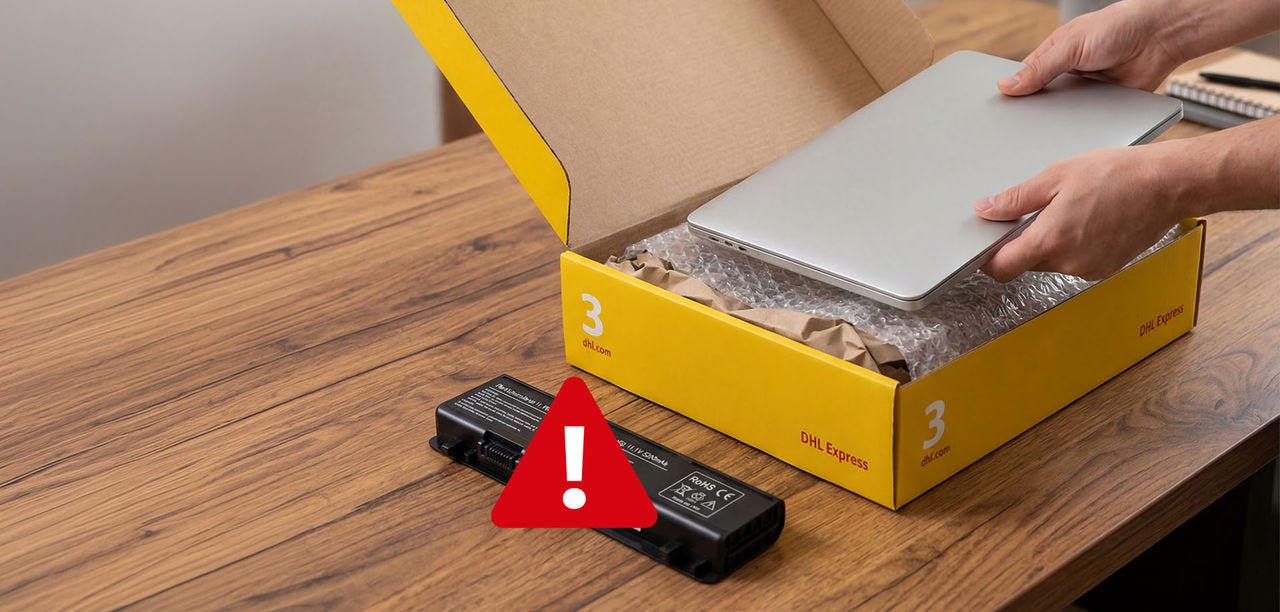
The rules for shipping electronics have tightened considerably with the latest IATA regulations. As of January 2026, air transport rules require many lithium-ion batteries to be shipped at a State of Charge (SoC) of 30% or less. This is now a hard requirement for international shipping of restricted items in 2026.
MyDHL+ includes a built-in battery wizard that guides you through these mandatory declarations. This ensures you use the correct UN numbers for batteries contained in or packed with equipment. Here is your 2026 battery compliance checklist:
- Verify SoC: Ensure your factory confirms that the charge level is below the 30% threshold before packing.
- Check Watt-Hours: Confirm whether your battery exceeds 100Wh, as this triggers more stringent protocols.
- Access Test Summaries: Have the UN 38.3 Test Summary ready, as customs authorities may request it at any time.
Which Vietnam-specific bans should I be aware of?
Global safety rules are the baseline, but local cultural and legal standards create unique restricted zones. What is permitted in one market may be a serious legal violation in another. Our local experts provide the intelligence that basic compliance software often misses.
If you are shipping into Vietnam, you need to be aware of the prohibition on importing certain categories of used consumer goods, including textiles, footwear, clothing, electronics, refrigeration appliances, and many other household items under Appendix I of Government Decree 69/2018/ND-CP. There is an absolute ban on used electronics in many forms. A notable example involves a Vietnamese garment exporter shipping to the United States whose goods were seized after used clothing was found mixed in with new items. The General Department of Vietnam Customs (GDVC) at Cát Lái Port in Ho Chi Minh City requires all HS codes to be declared accurately at the individual item level. You can verify these requirements by checking the GDVC website . Staying informed about these local requirements will protect your brand from being blacklisted.