Overview
You’ve switched to recyclable packaging. You’ve joined a carbon offsetting scheme. But when a customer, a procurement team member, or a regulator asks what you’re doing about the emissions generated across your supply chain, what’s your answer?
In the UAE, that question is becoming increasingly important. The country’s Net Zero 2050 Strategic Initiative made it the first nation in the MENA region to commit to economy-wide net-zero emissions. New climate regulations are also driving businesses to better understand, measure, . And a new climate law now requires companies to submit emissions reports and develop decarbonisation plans, with fines of up to AED 2 million for non-compliance. For companies that ship internationally, your logistics provider is part of that answer.
Why Sustainable Logistics Matters More Than Ever
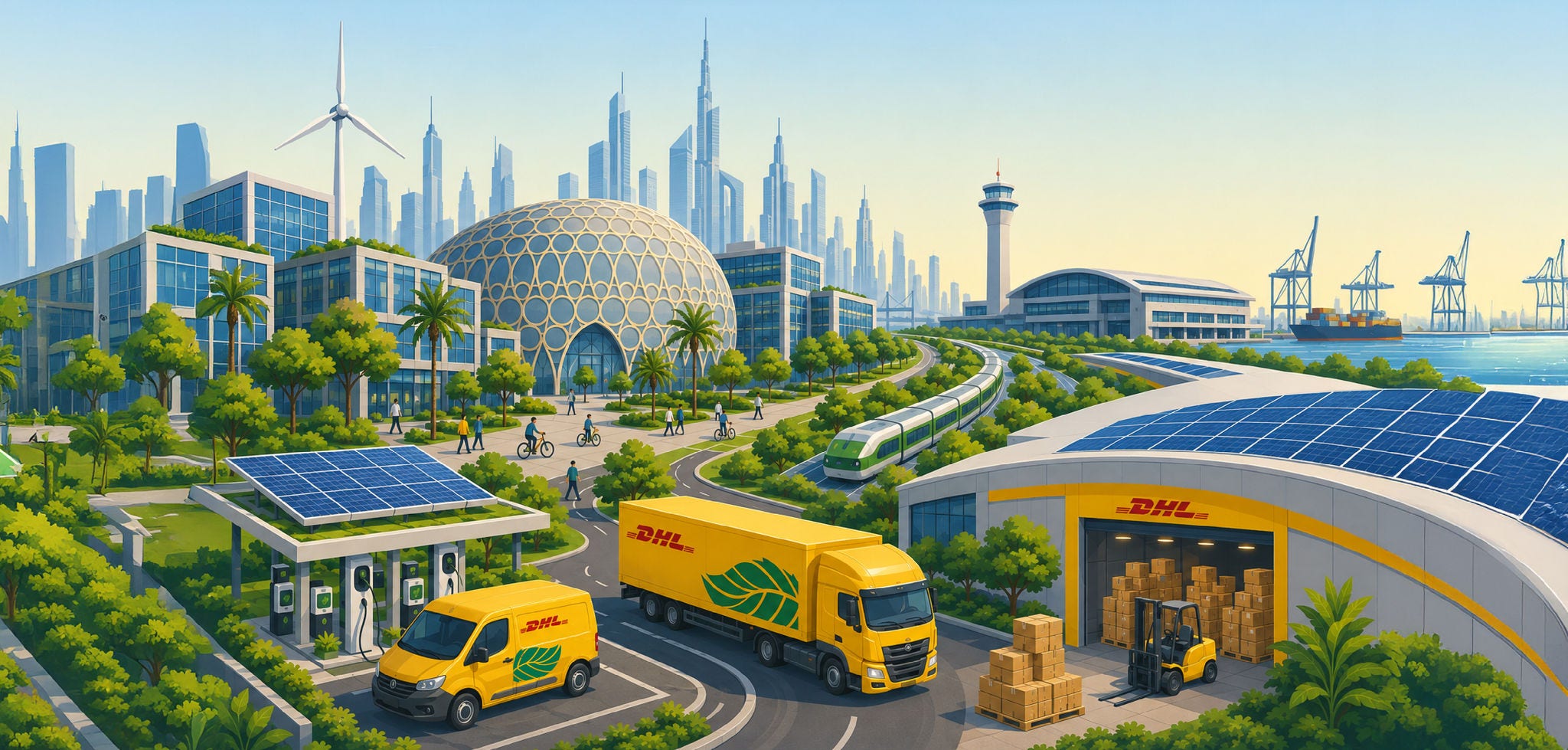
For businesses that rely on international trade, sustainable logistics is becoming a competitive advantage rather than simply a compliance requirement As customers, investors, and regulators place greater emphasis on environmental responsibility, companies are looking for practical ways to reduce shipping carbon emissions while maintaining efficient supply chains and supporting eco-friendly shipping UAE goals. Across the region, businesses are increasingly investing in green logistics UAE initiatives and exploring more sustainable ways to move goods around the world.
Why your shipping footprint matters more than you think
Air freight is one of the most carbon-intensive modes of transporting goods per ton-kilometer. For businesses that rely on express shipping, such as ecommerce sellers, manufacturers, life sciences companies, and B2B exporters, the emissions footprint of moving goods internationally can represent a significant share of their overall Scope 3 emissions logistics footprint. Those are the indirect emissions generated across a company’s value chain, and they’re increasingly what regulators, investors, and customers want reported.
GoGreen Plus: from carbon offsetting to carbon insetting
GoGreen Plus is DHL Express’s sustainable logistics solution, and it works differently from the carbon offsetting programs most people are familiar with. Instead of compensating for emissions through external projects like reforestation, GoGreen Plus takes a carbon insetting logistics approach – directly reducing the emissions your shipments generate by replacing conventional jet fuel with Sustainable Aviation Fuel (SAF), making sustainable aviation fuel shipping a practical reality for businesses of all sizes.
SAF is produced from renewable feedstocks like waste cooking oils, animal fats, and agricultural residues. Compared to fossil jet fuel, it can cut greenhouse gas emissions by up to 80% on a lifecycle basis. DHL Express was the first global express company to give customers the option of using SAF for their shipments.
How does it work in practice? Through a Book and Claim model. DHL purchases SAF equivalent to your agreed reduction target and introduces it into the aviation fuel supply at source. The environmental benefit is allocated to your shipments, regardless of which specific aircraft carries them. An independent auditor verifies the emission reduction annually, and the resulting certificate can be applied toward your Scope 3 reporting in line with the framework of the Science Based Targets initiative (SBTi).
Flexible for businesses of every size
GoGreen Plus is designed to work for both large enterprises and smaller shippers. Businesses can engage through two routes: a contractual model, where the company decides its CO₂e reduction target and investment level, with full flexibility on the percentage of SAF used; or through the MyDHL+ platform, where GoGreen Plus can be selected on an individual shipment basis with a standard CO₂e reduction of approximately 30%.
Either way, DHL provides a certificate confirming the verified emission reduction value, which can be used in your own sustainability reporting. Contractual customers also receive a complimentary Carbon Footprint report.
Carbon reporting that actually holds up
Reducing emissions starts with understanding them. DHL’s GoGreen Dashboard gives you a consolidated view of the greenhouse gas emissions across all your DHL shipments, broken down by transport mode, trade lane, and product. The reporting is compliant with the ISO 14083 standard and the GLEC Framework – two of the most important benchmarks in transport emissions accounting.
With the UAE’s new climate legislation bringing mandatory emissions reporting closer for more companies, having standardised auditable logistics data supports accurate logistics emissions reporting UAE requirements and helps ensure credible sustainability claims.
Where DHL stands on the road to net-zero
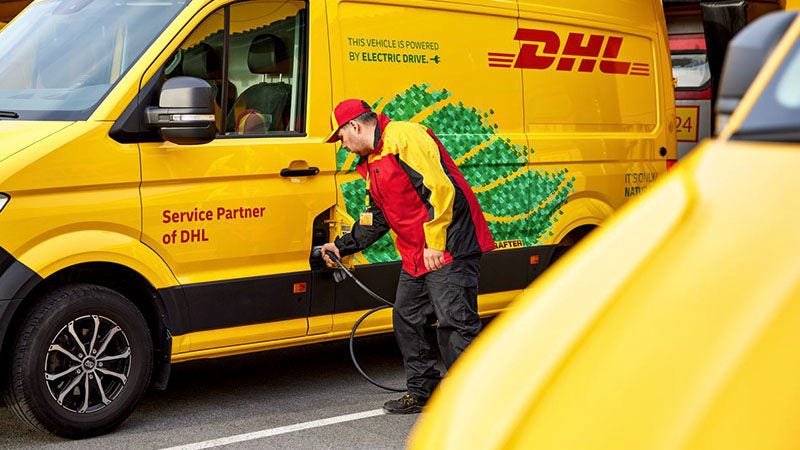
GoGreen Plus sits within a broader decarbonisation strategy that DHL Group has been building for nearly a decade. In 2017, it became the first logistics company in the world to set a net-zero emissions target for 2050. The SBTi validated DHL’s net-zero target in 2024, confirming the company’s trajectory aligns with climate science. The 2030 roadmap includes a commitment to more than 30% SAF blending, electrifying over 66% of last-mile delivery vehicles, and designing all new buildings to be climate-neutral.
In the region specifically, the company signed an MoU with Hyperview in Saudi Arabia in 2025 to pilot hydrogen-powered trucks – a step that aligns with the Kingdom’s Vision 2030 agenda and signals the direction of logistics decarbonisation in the Gulf. Globally, DHL secured one of its largest-ever SAF agreements in in the same year: over 240,000 metric tons (nearly 314 million liters) of SAF from Phillips 66 over three years, estimated to reduce lifecycle emissions by approximately 737,000 metric tons of CO₂e.
What this means for UAE-based businesses
The Net Zero 2050 strategy is reshaping how companies in the UAE do business. Transport and logistics are named as priority sectors for decarbonisation. Companies that get ahead of this shift now, by choosing greener logistics partners, improving logistics emissions reporting UAE, embracing sustainable shipping UAE solutions, and reducing their supply chain footprint, will be better positioned as regulations tighten and customer expectations evolve.
Whether you’re an SME shipping products across the Gulf or a multinational routing goods through Dubai, DHL Express gives you a practical way to act on sustainability today – without disrupting how you ship.


 Share
Share
Similar Stories