Australian knitwear designer Alberta Bucciarelli is part of a new generation of fashion talent redefining the future of sustainable knitwear. Following her successful showcase at this year's AFC Australian Fashion Week, Alberta discusses the inspiration behind her graduate collection OCEANA, the advanced Shima Seiki knitting technology used throughout her designs, and her journey from UTS Fashion & Textiles graduate to emerging fashion brand founder.
Tell us about your brand
The Alberta Bucciarelli brand is still in its very early stages, stemming directly from my graduate collection after recently completing my Bachelor's and Honours at UTS in Fashion and Textiles. The label is entirely knitwear-focused, driven by colour, texture, and storytelling.
I’m interested in exploring the full potential of knitwear and pushing the boundaries of how knitted textiles can behave, move, and transform. When people look at my garments, I want them to question how they’re made, then realise they're fully knitted.
Mother Nature is a constant source of inspiration for me, particularly the ocean and its unusual sea creatures.
In my most recent collection, OCEANA, shown at Australian Fashion Week, I drew inspiration from the brightly coloured aposematic fish native to Australia. Aposematic fish are known for their bright hues, contrasting patterns, and vivid colour combinations that warn predators to stay away.
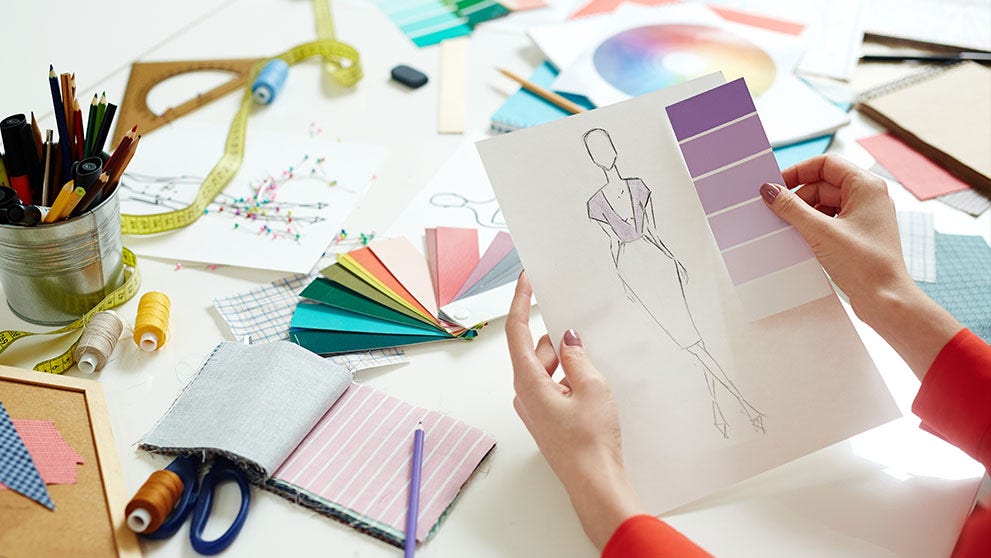
What began as a series of oil pastel studies evolved into textile prints that formed the foundation for the jacquard knitted pieces in OCEANA. I wanted to keep moments of my mark-making in the garments, even inside a highly technical knit process using the Shima Seiki.
This collection is an entirely Shima Seiki-knitted collection that celebrates our ocean’s own artistry and the natural wonders that define Australia’s oceanic identity.
OCEANA is an ode to Mother Earth, and I hope that this collection and the Alberta Bucciarelli brand serve as a reminder that the planet’s most mesmerising creations are worth protecting.
Hearing people connect with the work and express interest in owning pieces from the collection has given me the confidence to start planning an online store in the near future.
What inspired you to become a fashion designer and start your own label?
I always knew I wanted to pursue something creative, but growing up, I never realised that fashion could become my career. My Italian Nonna was a seamstress, and I spent a lot of time around her when I was young. I always looked up to her and wanted to do what she did. When I was younger, a career in fashion always meant sewing to me, but as I got older, I realised that sewing never felt quite right as my creative outlet.
What felt more natural to me was knitting. I learned to knit and crochet from my Nonna when I was around three years old and carried those skills with me throughout my life, although I always saw them as hobbies rather than something professional.
It wasn’t until studying fashion that I realised knitwear could become my niche in the fashion industry.
Although my Nonna is no longer here, I feel that this collection is a continuation of something she started, and through my designs, I am able to honour her and the creativity she nurtured.
What was your biggest learning in the lead up to the New Generation Runway show at Australian Fashion Week?
One of the biggest things I learned was shifting from a student mindset to a designer mindset.
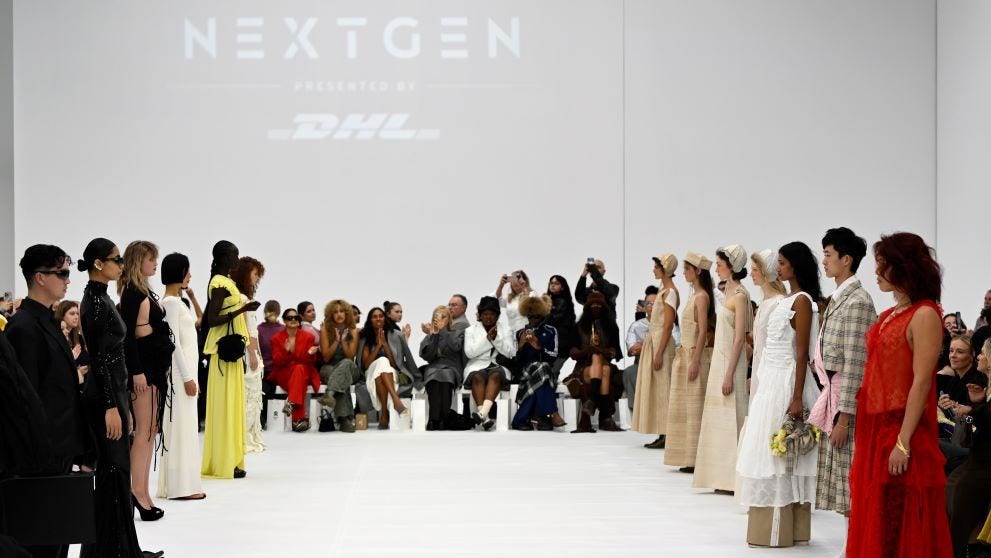
Australian Fashion Week challenged me to think differently about design, moving away from assignments and towards considering how an audience might connect with the garments and whether they could imagine themselves wearing them.
I had to find a balance between creativity and commercial viability because I don’t want to lose the experimental nature of my work. However, I’ve learned that innovation becomes even more powerful when it exists alongside wearability.
Developing pieces that are both expressive and desirable is something I’m continuing to refine as I grow the Alberta Bucciarelli brand.
How do you incorporate sustainable practices in your work?
Sustainability is embedded into my practice through both the way I design and the technologies I use.
Knitwear naturally creates far less waste than traditional cut-and-sew garment production because you knit only the panels or shapes you need, rather than cutting pattern pieces from large sheets of fabric and discarding the excess material.
My AFW and graduate collection is entirely knitted on various Japanese Shima Seiki knitting machines. Some of the pieces use WHOLEGARMENT® technology, which allows an entire garment to be knitted seamlessly in one piece, significantly reducing material waste.
Material selection is equally important to me. Across the collection, I use responsibly sourced fibres, including Australian Merino wool, which is renewable, biodegradable, and compostable at the end of its life, BCI cotton, and recycled yarns developed from post-consumer plastic bottles.
Through my concepts, too, I hope to encourage a greater appreciation for our planet by bringing attention to species and ecosystems that many people may never encounter.
By celebrating the natural beauty and diversity of nature, I hope to inspire a deeper connection to our Mother Earth and remind people why she is worth protecting.
What’s the best piece of advice you’ve received that you’d share with an aspiring designer?
The best advice I've received is to find your North Star, then follow it. Block out all the outside noise and trust your instincts.
As a designer, it's easy to become overwhelmed by trends, opinions, and expectations, but the strongest work often comes from staying connected to what genuinely excites and inspires you.
For me, this is working with colour, print, and knitwear, and allowing a sense of playfulness to be part of my design journey and process. This way, the outcome is often far more authentic and memorable.
Embrace what makes your work unique, and don't feel pressured to fit your designs into someone else's idea of what fashion could or should be.
How important are partnerships like DHL in shaping the future of fashion?
For emerging designers, partnerships like DHL are so valuable because they provide logistical support and create opportunities.
Through their sponsorship of the New Generation program and long-standing support of Australian Fashion Week, DHL helps provide a platform for young designers to gain national visibility at a pivotal stage in their careers.
As a recent graduate, having the opportunity to present my work at scale has been incredibly significant. Programs like New Generation help put emerging designers on the map, connecting us with industry professionals, media, buyers, and new audiences who can discover our work.
What has been so important is that DHL’s support extends beyond the runway itself.
Having access to business guidance, mentorship, and practical advice is incredibly valuable when you're transitioning from university into building a brand.
By bridging the gap between creativity and business, DHL gives emerging designers the tools and confidence to build viable careers in fashion.
How important is having a reliable logistics partner, and how has it impacted your ability to meet deadlines, scale, and deliver on your creative vision?
Having a reliable logistics partner is incredibly important, particularly within knitwear design.
Australia has a limited number of specialised knitwear manufacturers, so many designers rely on sourcing from overseas manufacturers. Being able to confidently transport samples, yarns, development pieces, and finished garments between countries is essential to keeping projects on track.
Reliable logistics provide peace of mind, especially when working to tight deadlines such as Australian Fashion Week, as well as production schedules and customer orders. Knowing that materials and garments will arrive safely and on time allows me to focus on the creative side of the process rather than worrying about delays.
As my brand grows, having trusted logistics support will continue to be crucial in helping me scale production, collaborate internationally, and bring my creative vision to life.


 Share
Share
Similar Stories