For many in Indonesia, Chinese New Year (CNY) is a time of festivity and family. But for logistics managers, procurement officers, and business owners, it represents something else entirely: the single most disruptive annual event for international trade.
China is Indonesia’s largest trading partner, serving as the primary source for raw materials and the biggest destination for many of our finished goods. When the "world's factory" shuts its doors for the Lunar New Year, the shockwaves are felt deeply across the archipelago.
However, a common misconception is that this disruption is limited to the public holiday itself. In reality, the Chinese New Year effect on supply chain operations is a multi-week or even multi-month cycle. It begins weeks before the holiday with a frantic rush to ship, continues during the shutdown with a total freeze in production, and lingers for weeks afterward as factories struggle to ramp back up to full capacity.
For Indonesian businesses relying on "Just-in-Time" manufacturing or tight retail inventory levels, this period is critical. Without proper planning, the resulting equipment shortages and logistical backlogs can cripple operations, turning a season of celebration into a season of stress.
How Chinese New Year impacts shipping and logistics in Indonesia
The dependency on Chinese manufacturing means that when China stops, a significant portion of Indonesia’s supply chain hits the brakes. Understanding the mechanics of this disruption is key to preparing the supply chain for Chinese New Year and avoiding Lunar New Year shipping delays.
Chinese New Year effect on supply chain: Import paralysis
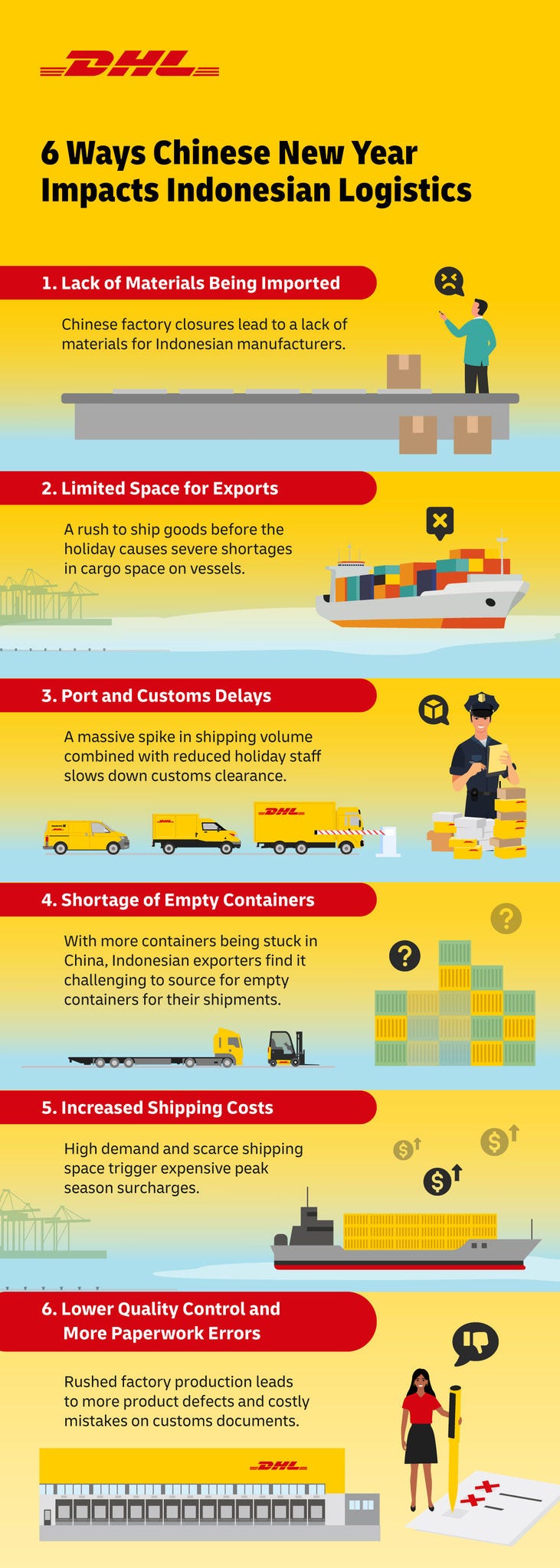
The most immediate Chinese New Year impact on shipping and logistics is the halt in the flow of essential goods. From the textile hubs in Bandung needing fabrics to the electronics manufacturers in Batam awaiting semi-conductors, the reliance on Chinese inputs is massive.
When Chinese factories close, shipments stop. For Indonesian manufacturers, this "import paralysis" can lead to production shutdowns if safety stock hasn't been adequately managed. Because more than just waiting for a holiday to end, you’re waiting for a factory to reopen, re-hire staff, and clear a massive backlog of orders before they even get to yours.
Chinese New Year effect on supply chain: Export squeeze
On the outbound side, Indonesian exporters, whether shipping furniture from Jepara, commodities like palm oil, or F&B products, face a severe "capacity crunch."
In the weeks leading up to the holiday, every shipper in the region is rushing to move goods in anticipation of Chinese New Year. Vessels become overbooked, and cargo is frequently "rolled" (bumped to a later ship) at major transshipment hubs and local ports like Tanjung Priok. The Chinese New Year impact on shipping capacity means that even if you have a booking, there is no guarantee your container will make it on board during this peak rush.
Chinese New Year effect on supply chain: Port and customs congestion
The surge in shipping volume doesn't just clog the ships, it also clogs the ports. As volumes spike, the risk of delays at Indonesian customs increases. This is the season where shipments are more likely to face scrutiny or delays simply due to the overwhelming volume of goods moving through the system. Furthermore, staffing levels at ports and logistics hubs often dip during the festive season, exacerbating the bottleneck.
The "Hidden" impacts of Chinese New Year on Indonesian businesses
While delayed shipments are the most visible symptom, the Chinese New Year impact on logistics doesn’t just affect those involved in the shipping industry. It creates several "hidden" problems that can silently erode an Indonesian business's bottom line.
Shipping delays beyond China
Global shipping relies on a circular flow of containers. When China stops exporting for several weeks, the flow of containers out of China stops. Suddenly, there are no empty containers arriving in Indonesia to be refilled with Indonesian exports. This shortage of empty containers means that even if you have a buyer in Europe or the US, and your factory in Java has produced the goods, you might not be able to find a metal box to put them in. This is a classic example of the ripple effect causing Chinese New Year shipping delay issues far outside of China itself.
Surge in shipping fees
Supply and demand dictate that when capacity is scarce, prices rise. During this period, carriers often implement a "Peak Season Surcharge."
For Indonesian SMEs that haven't locked in their logistics costs, this sudden spike in ocean freight rates can be devastating. The cost to move a container can jump significantly, eating into profit margins that are often already thin.
Decrease in product quality and increased lead time from Chinese factories
In the "pre-holiday rush" before Chinese New Year, Chinese factories are under immense pressure to finish orders before workers leave for their hometowns.
This can lead to cut corners and a spike in quality defects or even rushed documentation for customs clearance. Incorrect packing lists or certificates of origin can cause severe legal headaches and long delays during Indonesian customs inspections, effectively negating any time saved by rushing the order.
How an express courier can help you avoid lunar new year shipping delays

Given these challenges, the question becomes: how to avoid shipping delays during Chinese New Year?
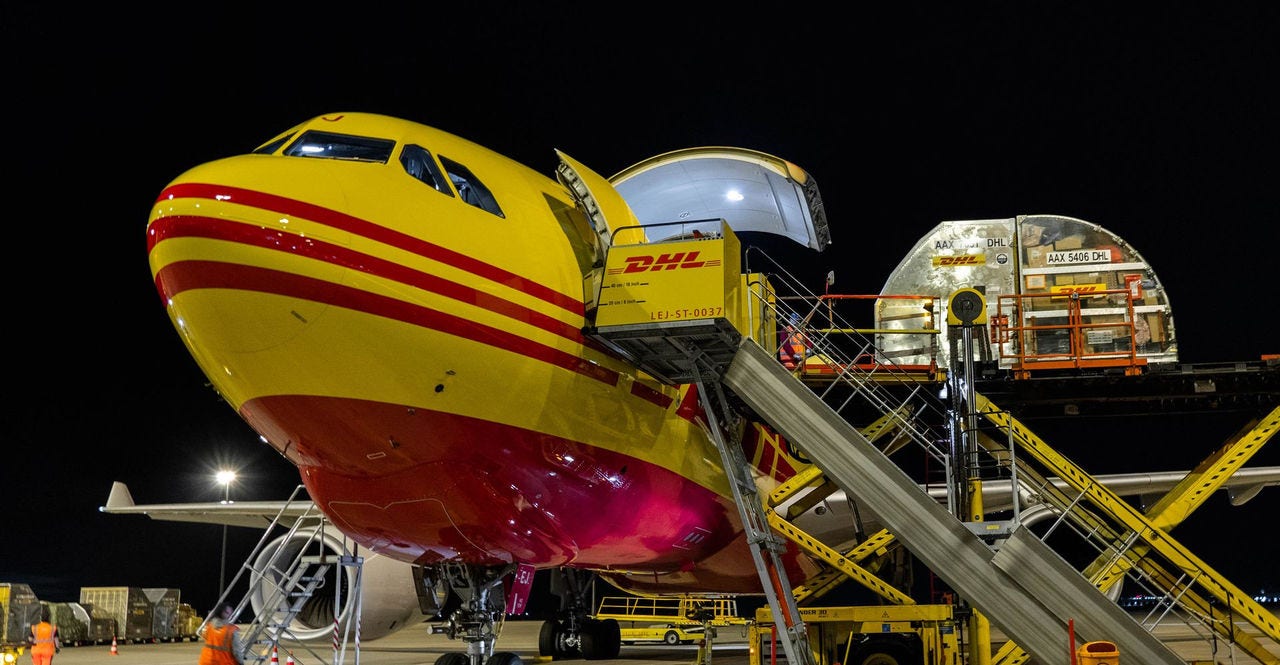
The answer often lies in diversifying your logistics mix. While traditional sea freight is vulnerable to port-wide delays and container shortages, a dedicated air express network operates on a different logic. Partnering with a global leader like DHL Express offers distinct advantages to keep your business moving during Chinese New Year:
Resilience via dedicated networks: Unlike sea freight, which relies on filling massive vessels that may sit idle or skip ports during disruptions, DHL Express operates dedicated aircraft. When the ocean becomes a bottleneck, the sky remains open, offering a more agile alternative.
The speed advantage: Express shipping bridges the 3 to 4 week "production gap" caused by factory closures. By moving goods in just 3 to 5 days, you can restart Indonesian production lines immediately once Chinese suppliers reopen, while competitors are still weeks away from receiving ocean freight.
Reliability over capacity: Ocean carriers frequently "blank" (cancel) sailings during CNY to manage costs, adding unpredictability to your supply chain. In contrast, express couriers maintain consistent flight schedules, providing a predictable mode of goods transport that allows you to keep promises to customers despite the Chinese New Year impact on supply chain.
The Chinese New Year effect on shipping is an unavoidable reality not only in Indonesia but in the rest of the world. However, disruption during such peak sales periods is only disastrous if you are unprepared. By understanding the full cycle of the holiday, Indonesian businesses take steps to prepare their supply chain for Chinese New Year.
Create a business account with DHL Express today and start exploring air courier solutions to keep your supply chain moving during Chinese New Year.


 Share
Share
Similar Stories