Overview
The UAE has established itself as one of the region’s leading trade and logistics hubs, connecting businesses to customers across Europe, Asia, Africa and the Americas. Emerging technology is playing a growing role in how that trade is managed. The UAE National Strategy for Artificial Intelligence 2031 identifies Logistics and Transport as a priority domain for AI transformation. [HS1] And in May 2026, Dubai launched a two-year programme to accelerate Agentic AI adoption across the private sector[HS2] .
For local businesses, this could shape the next phase of intelligent logistics in the UAE. Here’s everything you need to know about Agentic AI and what it could mean for the way your shipments move.
What is agentic AI?
Agentic AI refers to systems that can independently receive inputs, make decisions, plan tasks and execute them, adapting when information changes. In practical terms, an agentic AI could detect a shipment delay, evaluate the options, choose a route change permitted by your policy, and automatically rebook the shipment. These systems can tackle multi-step objectives with minimal human intervention. For businesses looking to enter the artificial intelligence logistics UAE ecosystem, AI can play a more active role in managing their routine operational decisions.
Its key functions include:
- Perceive and interpret: It gathers data from sensors and systems.
- Decision-making: It evaluates possible actions.
- Planning and execution: It triggers approved steps.
- Adaptation: It adjusts its plan if conditions change.
Moving beyond automation
To appreciate agentic AI, we need to see how it differs from today’s tools:
- Traditional Automation: Basic automation that follows fixed rules and workflows. These systems excel at repetitive tasks like data entry, but they struggle when exceptions occur or processes change.
- Predictive AI: Many supply chains already use AI and advanced analytics to forecast trends, optimize inventory and recommend actions. This includes short-term demand forecasting or dynamic route planning. However, traditional AI usually stops at advising humans on what to do.
- Generative AI: Tools like chatbots and image generators create content like text, summaries or images based on prompts. They help draft documents or answer queries, but they don’t directly execute logistics tasks.
- Agentic AI: Agentic AI goes a step further, bringing perception, planning and execution into one workflow. While predictive AI might flag a likely shipment delay, an agentic system can automatically rebook a later flight or reroute a truck without waiting for a planner’s email.
This ability to act on information is what sets Agentic AI logistics apart from systems that primarily analyse, predict or recommend.
What agentic AI looks like in practice
Agentic AI unlocks new capabilities across the supply chain:
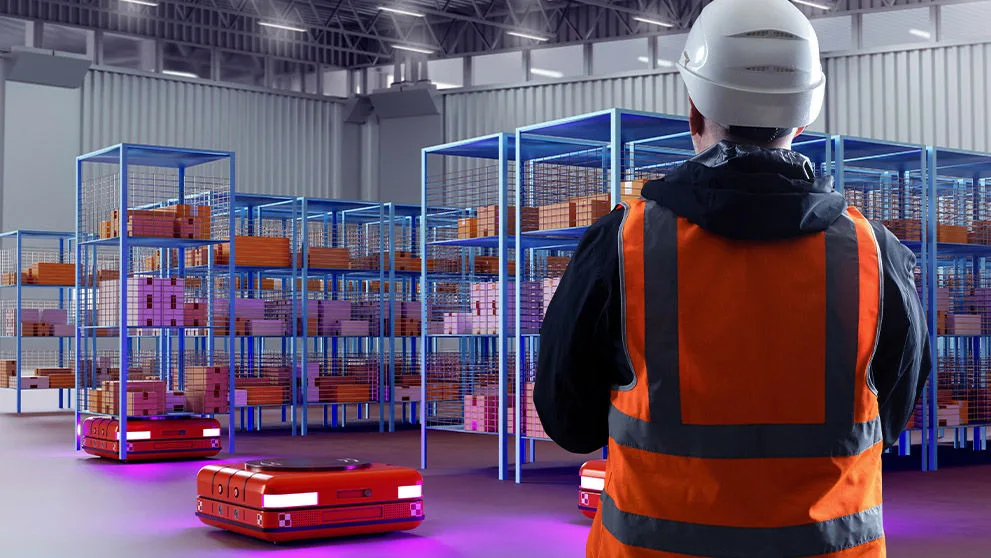
- Inventory: Spot a likely shortage, check affected orders and available stock, then initiate an approved replenishment action.
- Transport: Monitor conditions, identify a disruption, assess alternatives and reroute a shipment within set rules.
- Customer operations: Handle routine shipment enquiries, schedule appointments, send delay notifications and trigger follow-up actions.
For local companies exploring AI-enabled supply chains, faster response can protect both operations and customer commitments. Routine tasks such as status updates and appointment scheduling can also be handled automatically, giving teams more time to focus on exceptional cases and decisions that require human judgement.
Setting the rules before AI acts
The more authority an agent has, the more important the operating rules become. Before logistics technology in the UAE can act across live shipments, orders or inventory, businesses need four basics:
- Reliable data: Accurate, current information for dependable decisions.
- Connected systems: Access to the tools and data sources needed to complete a task.
- Clear permissions: Defined limits on what an agent can do independently and what needs approval.
- Human oversight: Governance, accountability and escalation when human judgement is required.
How DHL is applying AI today
DHL Express is already applying AI where it can remove friction from international shipping. Its AI-powered item identification tool turns a photo taken from a smartphone or a connected device into a precise, customs-compliant goods description, helping improve shipment data quality from the start. DHL also uses AI in route optimisation and predictive analytics to support planning and identify potential disruption earlier.
These capabilities give AI-enabled logistics in the UAE a more proactive role. Better information can surface problems sooner, while notifications and end-to-end visibility give customers more time to respond.
For more on smart logistics in the UAE, read DHL’s guide to AI and last-mile delivery.
Building more responsive supply chains
For local businesses competing across global markets, the future of logistics in the UAE will depend on how quickly supply chains can identify change and respond to it. Agentic systems can shorten that response when reliable data, system access and clear controls are in place.
DHL offers the digital tools, customs expertise and international shipping capabilities to help businesses keep shipments visible, compliant and moving.
Looking to unlock new operational efficiencies with intelligent logistics?


 Share
Similar Stories