A bona fide gift sent person to person and worth up to US$ 100 still enters the US duty free, according to CBP. Above that, duty applies by product and origin, paid by the receiver unless you ship with duties paid at origin.



 Share
Share

Shipping from Brazil to the US starts with a commercial invoice showing a precise description, the real value and the country of origin, a full address with ZIP code and a check on entry restrictions. Since August 2025, the US$ 800 de minimis exemption is suspended: low-value parcels now go through the same duty rules as any import.
Until 2025, a US$ 200 gift from São Paulo to a relative in Orlando arrived with no bill. Today it may arrive with one, and the person paying is usually the receiver. For an online store selling to American customers the risk is different: a customer surprised by a charge refuses the box, and the return comes out of your margin.
The exemption is gone for almost everything. De minimis, the rule that let shipments of up to US$ 800 enter duty free, was suspended for all countries on August 29, 2025. An executive order of February 20, 2026 kept the suspension in place, and rules published by CBP (US Customs and Border Protection) on June 24, 2026 made it indefinite for all transport modes. Source: CBP, September 2026.
Do not count on the old rule coming back. Public Law 119-21, enacted by Congress on July 4, 2025, repeals the exemption for commercial shipments from July 1, 2027.
In practice, every shipment that used to enter under de minimis now needs an import entry. Up to US$ 2,500, an informal entry applies; above that, a formal entry with heavier documentation (CBP, e-commerce frequently asked questions, September 2026).
Three factors set the duty, according to CBP: the product's tariff classification, its country of origin and its declared value. Brazilian products carry an extra layer: in July 2026, the US began applying surcharges of 25% and 12.5% to part of the imports originating in Brazil, under Section 301, and the two add up when they hit the same product.
According to MDIC (Brazil's Ministry of Development, Industry, Trade and Services), 23.1% of Brazilian exports to the US are subject to at least one surcharge, while 52.7% only pay the ordinary tariff, coffee among them (MDIC, July 2026). The products covered and the exclusions are in the guide to US Section 301 tariffs on Brazilian products.
The table sums up the rule in force in September 2026.
Type of shipment | Status in 2026 | What happens on arrival |
Bona fide gift, person to person, up to US$ 100 | Gift exemption still applies | Enters duty free |
Gift above US$ 100 | No exemption | Duty by product and origin, Section 301 included |
Sale to a consumer up to US$ 2,500 | De minimis suspended | Informal entry, with duty and any Section 301 surcharge |
Sale or cargo above US$ 2,500 | De minimis suspended | Formal entry, with duty and any Section 301 surcharge |
The US$ 100 gift has a formal requirement. CBP asks for the package to be identified as an "Unsolicited Gift", with the nature and value of the contents (CBP, December 2025). With a courier, that goes on the invoice: purpose "gift", item by item, with values.
The core document is the commercial invoice, or a proforma invoice when nothing is being sold, as with a gift. It tells US customs what is coming in, what it is worth and where it comes from. Fill in:
The product's HS code, when you know it, speeds up classification. How to fill in each field, with an example, is in the guide to the commercial invoice for international shipping.
On the Brazilian side, the export is registered too. For goods of up to US$ 1,000 that need no export license, the courier files a DRE (Declaração de Remessas de Exportação, the simplified export declaration for courier shipments); above that, or for licensed goods, the filing moves to the DU-E, Brazil's standard export declaration (Receita Federal, August 2026).
Declare the real value. Undervaluing to avoid duty is an offense in both countries. It also reduces what you can recover if the box is lost.
The destination country's rules apply, and in the US they involve two agencies besides customs: USDA, for agricultural and animal products, and FDA, for food. The receiver is the importer of record and may see the package seized and destroyed, plus a fine (USDA, guide to shipping agricultural items by express courier).
For a gift sent person to person with no commercial purpose, FDA says it typically takes no action over missing Prior Notice (FDA, December 2024). That does not clear meat or cheese, which remain under USDA rules.
A US address follows a different order from a Brazilian one. Street number before the street name, city and two-letter state code on the same line and the five-digit ZIP code at the end: Maria Souza, 1250 Main Street, Apt 804, Austin, TX 78701, United States, with a phone number in +1 format including the area code.
Before shipping from Brazil to the US, get the address in writing from the receiver instead of piecing it together from a chat. A wrong ZIP code delays delivery. Without a phone number, the courier cannot warn the receiver about delivery or about duties due.
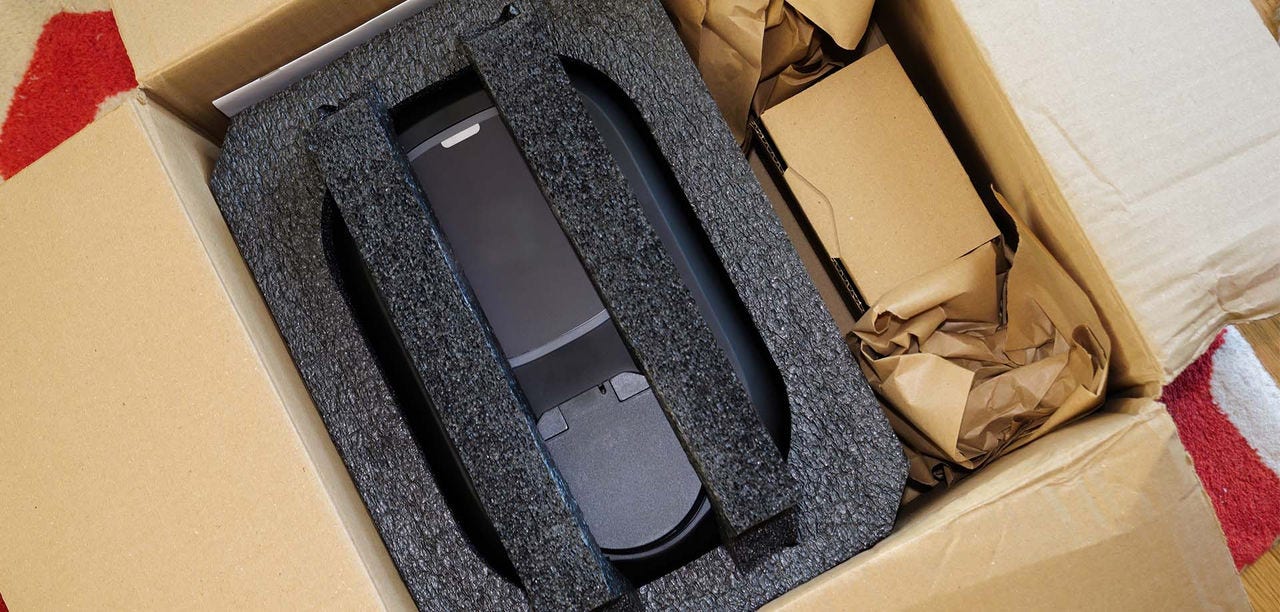
For the box, the basics solve almost everything: a new, sturdy carton, padding on every side, nothing loose inside and old labels removed. The step by step, from choosing the box to H-taping and handling labels, is in the guide to preparing your package for international shipping.
By default, the receiver. When duties are the buyer's responsibility, which in international trade matches the DAP Incoterm, the bill arrives on the US side. If you want your customer or relative to receive the box with nothing to pay, ship with duties paid at origin, the DDP model: you cover the duties and the receiver gets the package already cleared. What it means to pay US duties on the buyer's behalf is covered in the guide to the DDP Incoterm.
For an online store, this choice affects conversion. A final price with duties included prevents refusals at the door, which cost the outbound freight, the return freight and the customer. Duties then have to be built into your pricing, and the guide to exporting from Brazil lays out the cost blocks that go into that calculation.
Transit time is the sum of four things: the service booked, the pickup city, the destination and customs clearance on arrival, which no carrier controls. The quote shows the estimate for your lane; no service guarantees a release date.
November and December bring Black Friday, Thanksgiving and Christmas in the US. Ship earlier in that window.
A bona fide gift sent person to person and worth up to US$ 100 still enters the US duty free, according to CBP. Above that, duty applies by product and origin, paid by the receiver unless you ship with duties paid at origin.
No. CBP suspended it for all countries on August 29, 2025 and made the suspension indefinite in June 2026. A 2025 US law sets the permanent end of the exemption for commercial shipments on July 1, 2027.
It depends on the food. Meat, sausages, milk, eggs, fresh fruit and seeds are restricted by USDA; sealed processed food follows FDA rules, which require Prior Notice before arrival when the shipment is commercial.
The surcharge applies by product and origin, not by shipment size. With the US$ 800 exemption suspended, a listed Brazilian product can be surcharged even in a low-value sale.
It varies with the service, the lane and customs clearance on arrival, which has no guaranteed date. The quote gives the estimate for your lane, and in November and December it pays to ship earlier.
Once US shipments become part of the business, each one needs a well-prepared invoice, a choice between DAP and DDP and an eye on clearance. With a business account, you create labels and documents in one place, decide who pays duties on each shipment and follow everything through tracking.
To get started, open a DHL Express business account.
Share