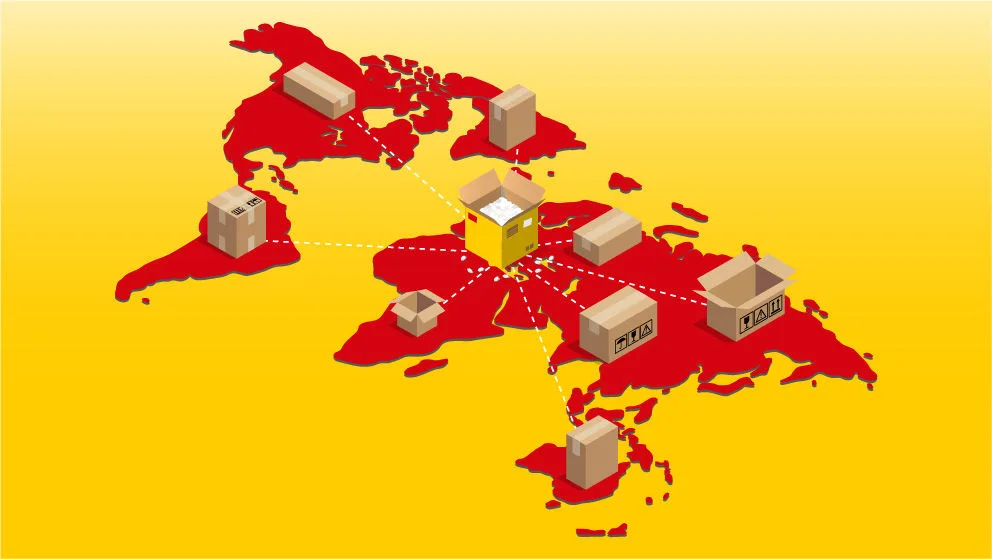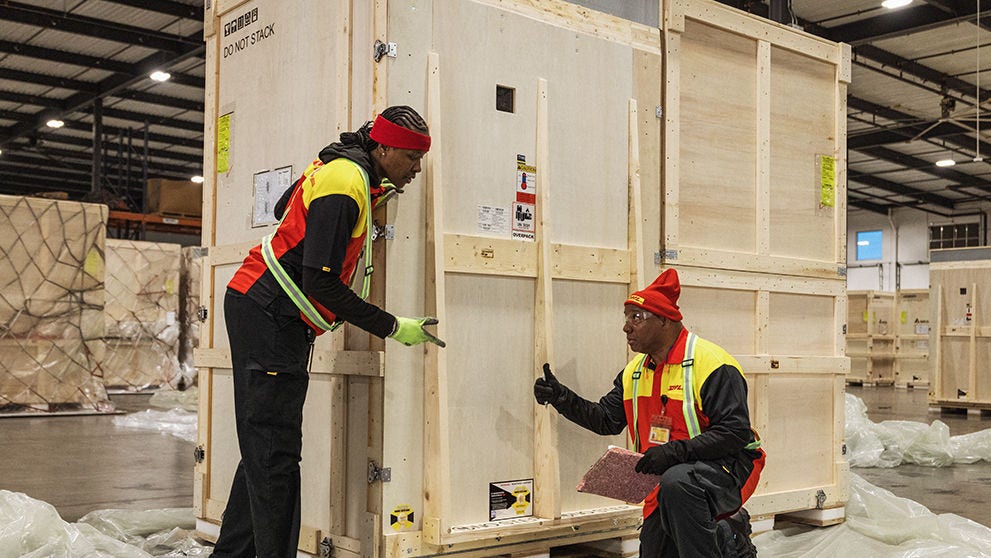
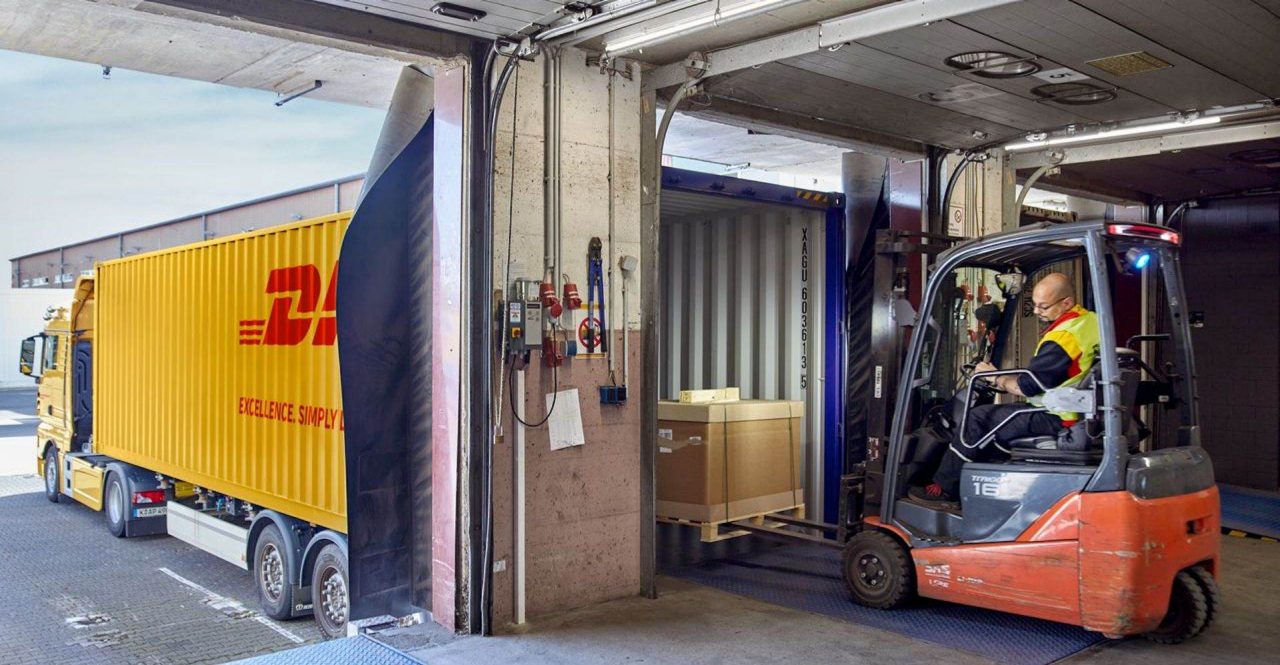
Pallet shipping is used to move heavy, bulky, or multiple items together as a single shipment. It is the practical choice when goods are too large or heavy for standard parcel couriers, or when several boxes are heading to the same destination.
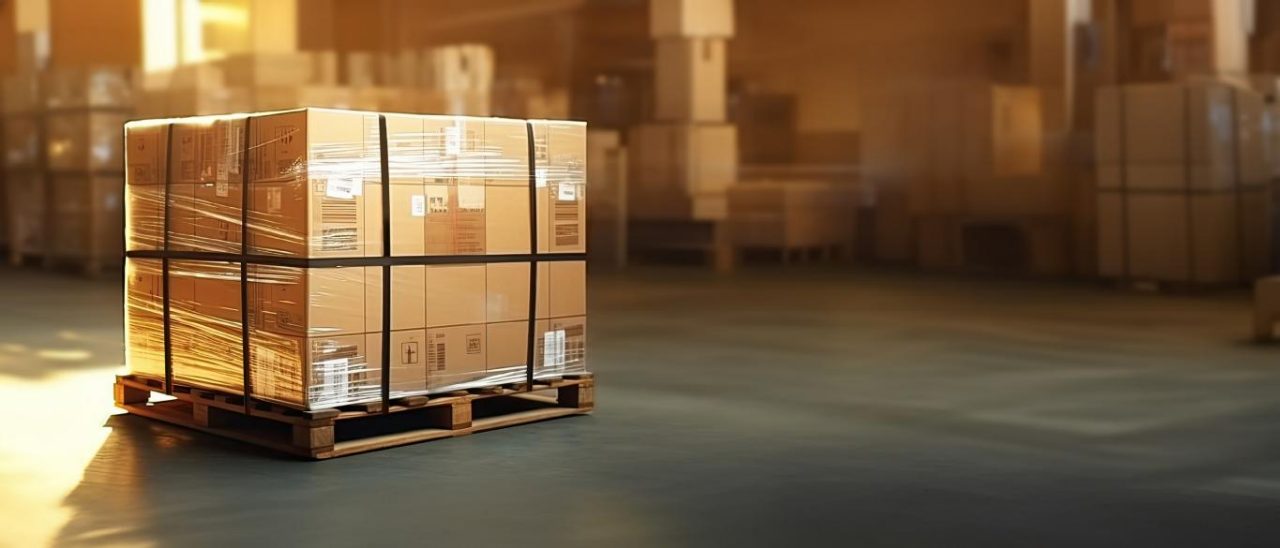
Pallet shipping is the process of moving goods that are stacked and secured on a pallet, then handled as a single shipment unit.
For UK businesses, it is a practical way to send larger or higher-volume shipments, and it changes how goods are packed, priced, and transported compared with sending individual parcels. It is widely used across industries such as automotive, retail, and healthcare, wherever goods are too big or too numerous for standard parcel services.
What a pallet is, in shipping terms, is a rigid base that lets goods be stacked, secured, and moved as a single load.
Wood pallets are the most common. They are strong and reusable, and they must be treated to International Standards for Phytosanitary Measures No. 15 (ISPM-15) for international export. Plastic pallets are easy to clean, so they suit sectors where hygiene matters, such as food and healthcare, and do not need ISPM-15 treatment. Cardboard or composite pallets are lightweight and generally suit one-way shipments carrying smaller loads.
Pallet dimensions vary by region. In the UK, 122cm x 102cm pallets are commonly used for freight handling. The EUR pallet (1200mm x 800mm) is a standard size for shipments moving across Europe and internationally. Choosing a size that fits your cargo keeps the load stable and easier to handle.
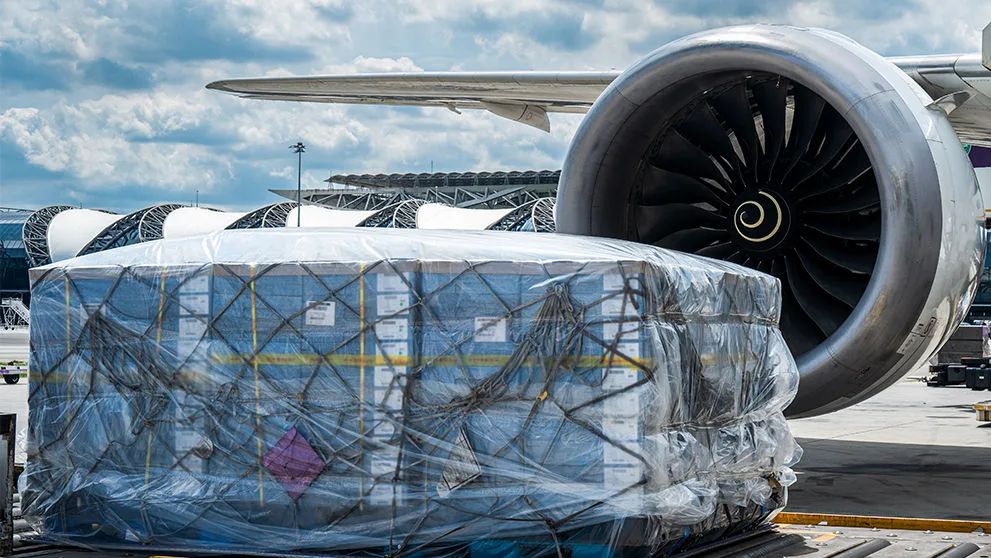
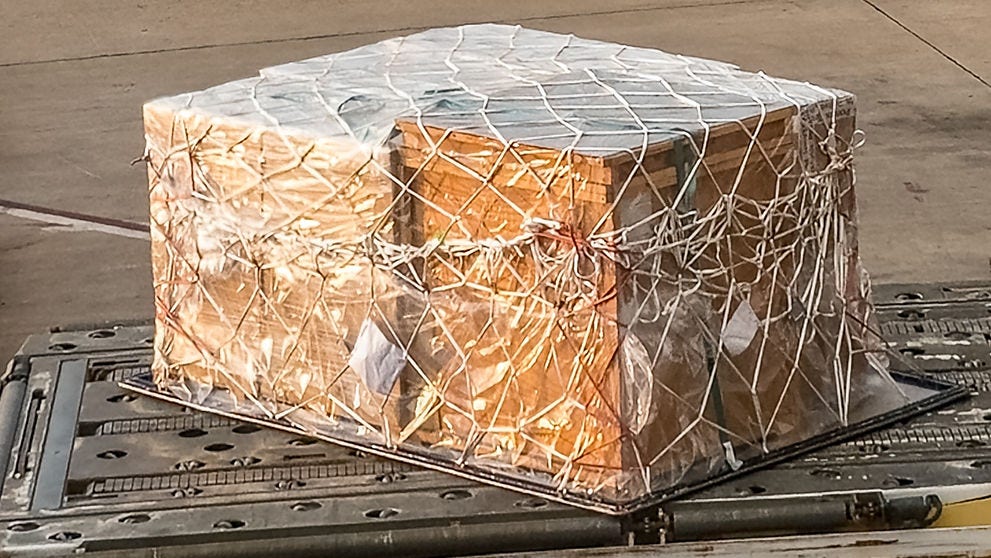
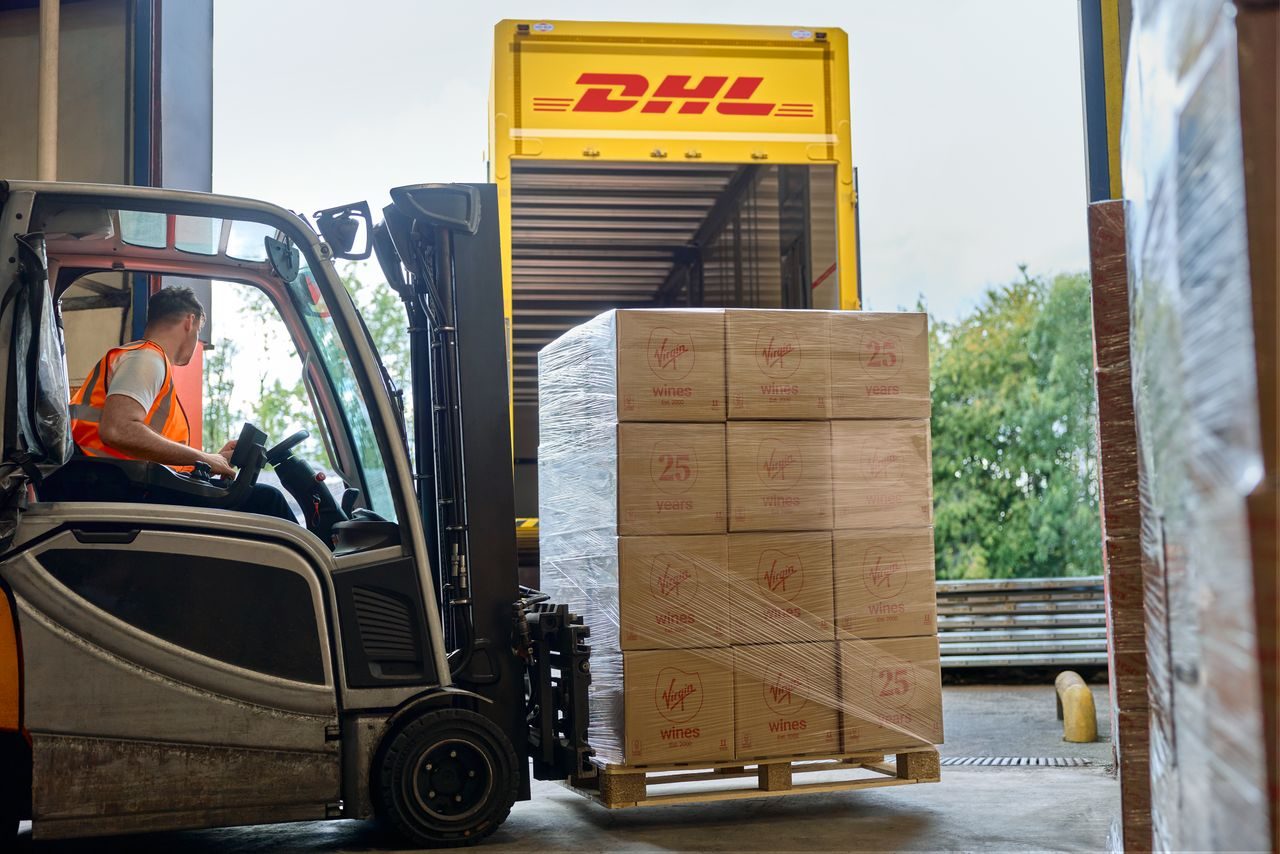
Pallet shipping works by turning a mix of boxes or bulky items into one secured unit that travels as a single consignment. Put simply, pallet shipping means handling everything together instead of box by box, which improves stability and lowers the risk of damage. The process usually follows a few clear stages. Goods are stacked and secured on the pallet, then wrapped and labelled so nothing shifts in transit. The pallet is collected and moved through the carrier's network toward its destination, often by road, air, ocean, or a combination of these. Throughout the journey, the shipment is tracked from collection to delivery, so its location is always visible.
Because the load is handled as one unit, pallet shipping tends to be quicker to load and simpler to monitor than sending many parcels separately.
Pallet, skid, and parcel shipping each suit different loads, so it helps to know how they differ before you book.
A pallet has both a top and bottom deck, which lets a forklift lift it from multiple sides and makes it easy to stack and store. A skid is a single-deck platform with no bottom base, often used for machinery or lighter loads that do not need stacking. Both carry freight, but pallets generally offer more load security and work better with warehouse handling systems.
If you are sending multiple boxes to one destination, irregularly shaped or fragile goods, or a shipment too heavy to lift safely, pallet shipping is usually the better option. For packing and shipping guidance, see how to ship large items and heavy equipment shipping.
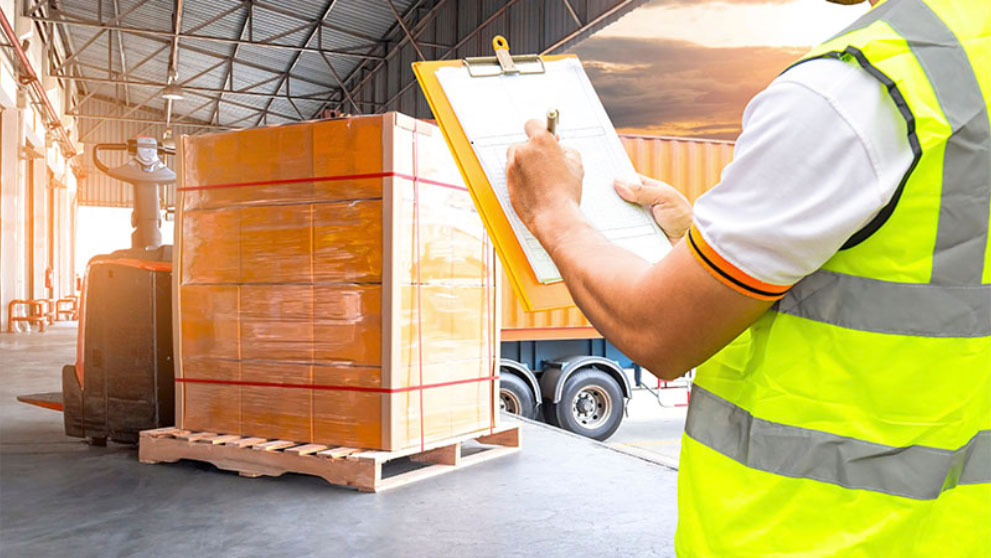
Pallet shipping tends to make sense once a shipment outgrows the parcel network, whether that is down to size, weight, or the number of items involved. It is worth considering in a few common situations:
Sending several boxes to the same destination as one consignment
Moving stock or inventory between business locations
Shipping bulky, heavy, or irregularly shaped goods
Sending items that are too heavy for standard parcel couriers
Handling regular business distribution or supply chain volumes
If more than one of these applies to your shipment, palletising the load is usually the safer and more efficient choice.
Preparing a pallet well protects your goods and helps you avoid delays or surcharges. You do not need to master every technique to get the basics right:
Choose the right pallet size and check it is in good condition
Distribute weight evenly, with heavier items at the base
Secure the load with stretch wrap and strapping so nothing shifts
Label clearly with the destination and any handling instructions
For the full step-by-step method, including stacking, load securing, and labelling, follow the DHL Express guide on how to pack large and heavy shipments.
Where your pallet is going shapes how it travels and what paperwork it needs.
Domestic UK pallet shipments usually move by road freight. Services are typically split into Less Than Truckload (LTL) for smaller loads, Part Truckload (PTL) for medium loads, and Full Truckload (FTL) for larger shipments that need direct transport.
International pallet shipments add a customs layer, so you will need accurate customs documentation and may owe import duties on the goods. Any wooden pallets must also be treated to ISPM-15 standards to get the stamp they need to clear customs.1 For the official requirements, see the UK government guidance on wood packaging material for import and export.
DHL Express offers fully integrated, time-definite pallet shipping across the UK and internationally, combining express transport speed with the capability to move heavy, door-to-door freight. Designed for urgent or high-value cargo, we ensure end-to-end reliability and complete visibility for cross-border shipments without relying on multiple third-party hauliers.
Key features of shipping pallets with DHL Express include:
Capability: Accommodates shipments from 50kg up to 3,000kg with standard UK pallet dimensions.
Speed: Rapid, time-definite delivery options with international delivery in as little as 1 to 3 business days.
End-to-End Tracking: Full real-time visibility from pickup to final delivery through a single fully integrated network.
Integrated Customs Clearance: Built-in customs management at international borders to handle documentation, duties, and regulatory compliance without unexpected delays.
Whether moving urgent industrial components or high-value cross-border goods, DHL Express provides fast, reliable, and fully transparent pallet shipping solutions. To see pricing for your shipment, request a quote from DHL Express. If your business ships heavy or palletised cargo regularly, you can also open a DHL Express Business Account to streamline booking, access preferential rates, and receive dedicated support from our cargo specialists.
Pallet shipping is used to move heavy, bulky, or multiple items together as a single shipment. It is the practical choice when goods are too large or heavy for standard parcel couriers, or when several boxes are heading to the same destination.
A pallet has both a top and bottom deck, so a forklift can lift it from multiple sides and goods can be stacked on it. A skid is a single-deck platform without a bottom base, typically used for machinery or lighter loads that do not need stacking.
In the UK, 122cm x 102cm pallets are commonly used for freight handling. For shipments moving across Europe and internationally, the EUR pallet (1200mm x 800mm) is a standard size.
Transit times depend on the origin, destination, and the service you choose. Air freight offers faster transit for urgent shipments, while ocean and road freight suit larger or more cost-focused loads. You can see estimated times when you request a quote.
Yes. International pallet shipments need accurate customs documentation, and wooden pallets must be treated and marked to ISPM-15 standards before they can cross borders.


 Share