#LogisticsAdvice

Why Your Heaviest Shipments Deserve Express Treatment

Vivien Christel Vella
Senior Global Digital Marketing Manager
5 min read
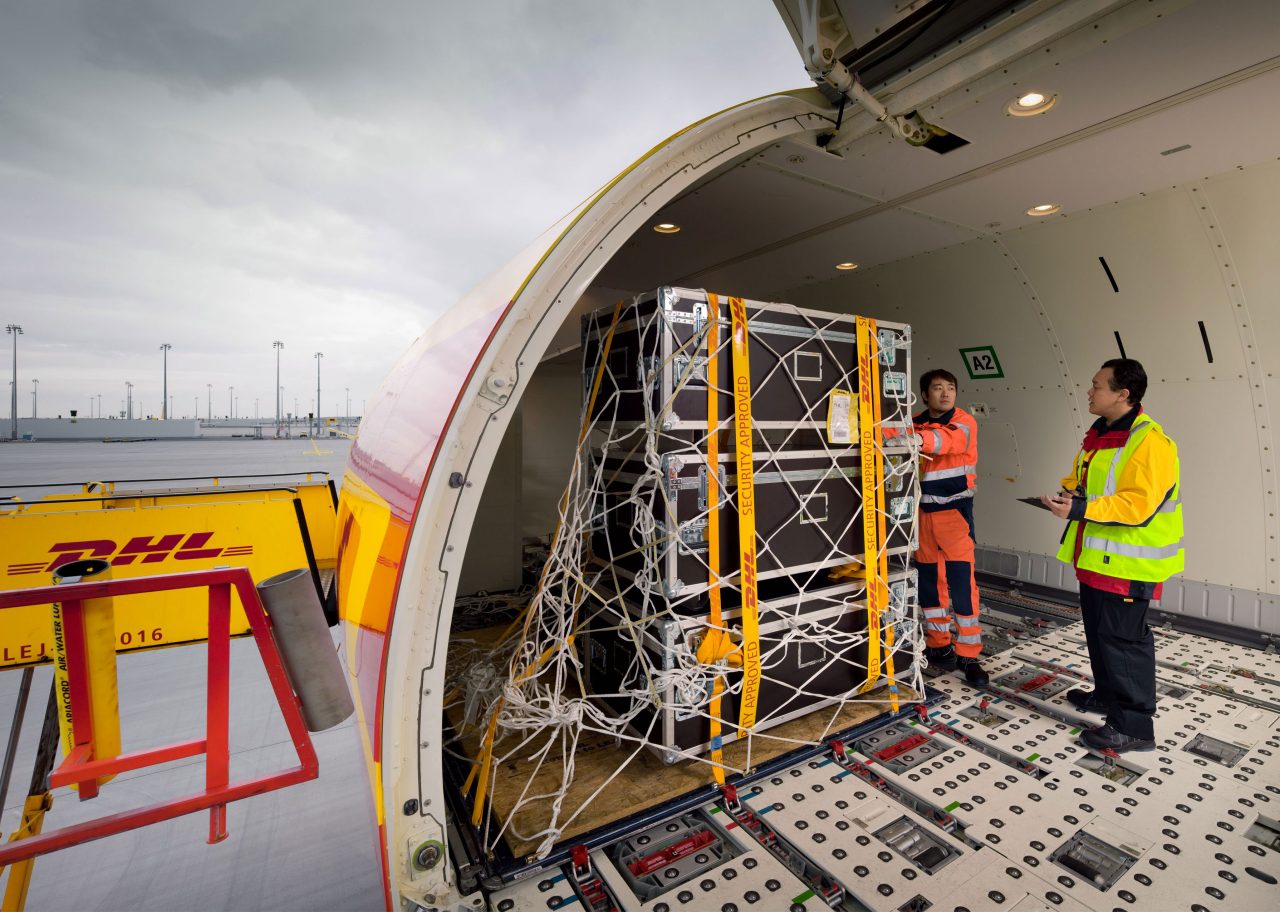
Heavy weight shipping
This article covers
The key challenges in international freight shipping
How DHL Heavyweight Express can simplify your operations
How to decide when express makes sense

For heavyweight shipments in particular, the cost of "slow" is rarely visible on a single invoice. It's spread across inventory holding, missed production windows, expedited fees, and quietly eroded customer trust. 

DHL Express’s Heavy Weight Express (HWX) service is built specifically to move shipments of 50 kg and above with the speed and reliability of express, not the variability of freight.

Slow freight can be a silent profit killer. It often goes unnoticed until it shows up in the place businesses feel it most - the bottom line.

This article looks at where slow freight really costs businesses money - and where DHL Express's Heavyweight Express changes that equation.

What Causes Slow Freight - and Why Heavy Shipments Are Especially Exposed

Slow freight refers to shipments that take longer than expected to reach their destination. For heavyweight cargo, this delay is often baked into the process rather than being an exception to it.

Several factors commonly contribute to slow freight for heavy shipments:

  • Consolidation waiting periods - heavy cargo through a traditional forwarder often waits for a commercially viable load before it moves, rather than departing on the next available flight.

  • Multiple handoffs - freight forwarder, airline, ground handler, and local delivery partner each manage a different leg, with no single point of accountability. 

  • Customs delays - handled reactively on arrival rather than proactively in advance.

  • Carrier and routing inefficiencies - heavy shipments are frequently not prioritised in the same way smaller, faster-moving parcels are.

DHL Express built Heavyweight Express specifically because these structural causes of delay aren't really about distance or weather - they're about network design.

A shipment moving through a single, integrated express network with one waybill and proactive customs clearance simply doesn't accumulate the same friction as one passing through three or four separate parties.

If you’re comparing how heavy cargo is typically moved, our guide to international freight shipping explains the options and where the handoffs happen.


The Direct Financial Impact of Slow Freight

The financial repercussions of slow freight on heavy shipments are significant and far-reaching. 

Businesses face increased inventory holding costs while goods sit in transit or in a warehouse waiting for onward movement. When transit time stretches from days into a week or more, the capital tied up in that inventory - particularly for high-value items like industrial equipment or semiconductor components - adds up quickly. 

Many businesses then turn to expedited shipping as a late fix, often at a premium that erodes the margin they were trying to protect by choosing standard freight in the first place. This is one of the central ironies DHL Express set out to solve with HWX: businesses are frequently paying more for last-minute expediting than they would have paid for a properly planned heavyweight express shipment from the outset - This is one of the central ironies HWX is designed to address. It uses transparent all-in pricing, so planned heavyweight express shipments come with fewer unexpected costs than last-minute expediting.

Beyond that, there are lost sales opportunities from stock shortages, penalties or fines for missed delivery deadlines on contractual shipments. For sectors like automotive and industrial manufacturing - For sectors like automotive and industrial manufacturing, where heavy components are often time-critical, these penalty clauses can be substantial.

In summary, the direct financial impact of slow freight on heavy shipments shows up through: 

  • Increased inventory holding costs 

  • Premium-priced expedited shipping used as a workaround 

  • Lost sales opportunities from stock shortages 

  • Penalties and fines for late delivery 


Operational and Supply Chain Disruptions 

Slow freight disrupts operations well beyond the shipment itself. When a critical, heavy component is delayed, the operational consequences cascade. Production lines wait. Staff work unplanned overtime. Maintenance schedules slip. In sectors like oil & gas, automotive, and data centres, a delayed heavy shipment isn't just a logistics inconvenience, it's a direct driver of downtime cost. 

Slow freight also complicates inventory forecasting. Without reliable, predictable transit times, businesses struggle to plan stock levels accurately, leading to a difficult choice between costly overstocking or risky understocking. DHL Heavy Weight Express addresses this directly through transit time consistency, with international delivery in as little as 1-3 days, a window businesses can plan around rather than a variable freight estimate.

Key operational disruptions from slow heavyweight freight include: 

  • Increased labour and handling costs from unplanned delays 

  • Complications in stock management and forecasting accuracy 

  • Missed time-sensitive market opportunities, including programme launches and fixed deadlines


The Hidden Costs: Beyond the Obvious

Slow freight incurs costs that often go unnoticed because they don't show up as a single line item.

Increased risk of damage during extended transit. 

  • The longer cargo spends in transit, particularly across multiple handoffs between freight parties, the greater the risk of mishandling. For heavy, high-value cargo such as precision instruments, medical equipment and aerospace components, this risk is amplified. Our guide to preventing heavy freight failures covers damage, delays and the most common challenges in more detail.

Erosion of margin through inventory inefficiency. 

  • Businesses managing slow-moving heavy inventory often have to invest in additional warehousing or tracking technology simply to cope with unpredictability -a cost that a more reliable transit model removes at the source.

This is precisely the rationale behind one of DHL Express's core HWX use cases: working capital optimization. When a business can rely on a 24 - 72-hour heavyweight express transit time instead of a freight estimate measured in days, it can hold meaningfully less safety stock for high-value components.

Key hidden costs of slow heavyweight freight include: 

  • Increased insurance exposure from extended transit risk

  • Erosion of margin through inventory inefficiency

  • Cash flow disruption from delayed delivery cycles


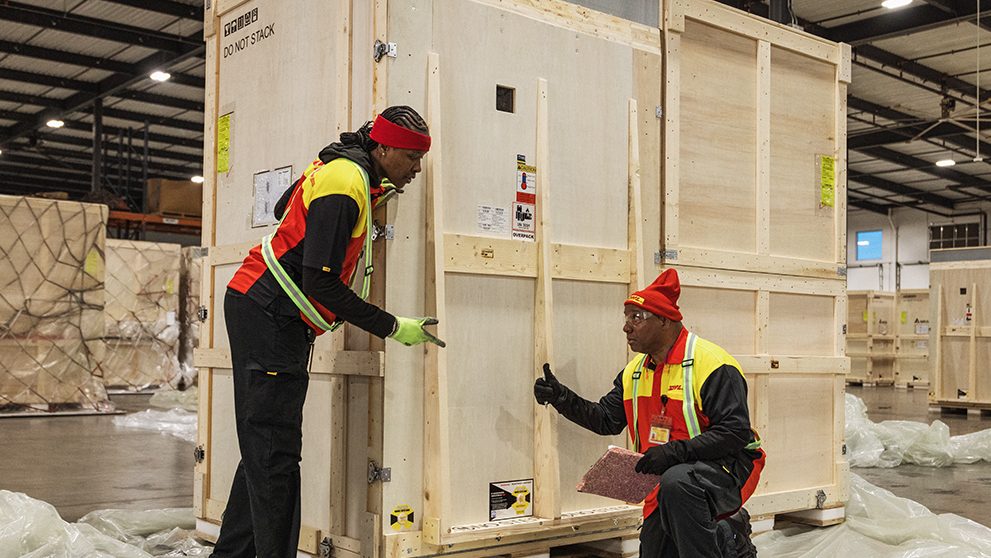
HWX Shipping

Effects on Customer Satisfaction and Brand Reputation

Slow freight affects more than internal operations - it shapes how customers and partners experience your business.

When a heavy, critical shipment arrives late - whether it's a piece of equipment a customer is waiting on, or a component holding up a delivery commitment further down the chain - the frustration compounds. Heavy shipments tend to be high-value and high-visibility within a business relationship; a delay here is rarely a minor inconvenience.

Repeated delays damage trust in a way that's slowed to rebuild. For B2B relationships - where DHL Express's HWX target customers tend to be repeat, high-value accounts in sectors like pharma, technology, and industrial manufacturing -reliability on heavy shipments becomes a genuine differentiator between suppliers, not just a service-level detail.

Key effects include: 

  • Customer dissatisfaction stemming from unreliable heavy shipment delivery

  • Reputational damage that compounds across a long-term B2B relationship

  • Reduced likelihood of repeat business or expanded account relationships

Compliance Considerations 

Compliance is another important dimension of heavy shipment logistics. Longer, more fragmented freight journeys typically involve more customs touchpoints and documentation handoffs, each one a potential point of regulatory risk. DHL Express's Heavyweight Express model - built around proactive customs clearance and a single network rather than multiple handoffs - reduces both the number of compliance touchpoints and the associated risk exposure for heavy shipments.

If customs paperwork is unfamiliar territory, our customs advice for first-time shippers covers the essentials.


Strategies to Minimize the Hidden Cost of Slow Freight

Mitigating the hidden costs of slow freight starts with rethinking the default assumption that heavy automatically means freight forwarding. 

For businesses currently routing time-sensitive or high-value heavy shipments through multi-party freight, a few practical steps are worth considering:

  • Identify which heavy shipments are genuinely time-critical - production-critical spares, programme launch components, high-value or perishable cargo -and evaluate whether DHL Express's Heavyweight Express would reduce total cost once delay risk is factored in, not just the headline freight rate 

  • Calculate the real cost of delay for your highest-value heavyweight shipments, including downtime, expediting, and inventory holding costs, before assuming standard freight is the cheaper option

  • Consolidate accountability by using a single-network provider rather than coordinating across multiple freight parties, reducing the number of places a delay can originate 

  • Build contingency into your logistics strategy by having an express option, like DHL Express HWX, available for the subset of heavy shipments where reliability matters most.

Whichever service you choose, correct packing protects heavy cargo in transit, so see our guide on how to pack large and heavy shipments.

Acting Against the Hidden Cost of Slow Freight 

Understanding the hidden cost of slow freight is crucial, particularly for heavyweight shipments where the financial, operational, and reputational stakes are highest. The impact compounds across inventory costs, production downtime, customer trust, and compliance risk - often in ways that don't show up until they've already affected the business.

For non-urgent, flexible heavy cargo, traditional freight remains a perfectly reasonable, cost-effective choice. But for the heaviest, most time-critical, and highest-value shipments - the ones where delay genuinely costs the business money - DHL Express's Heavyweight Express exists precisely to remove that hidden cost, combining the reliability of a single integrated network with transit times measured in hours rather than days. 

To find out more, read our complete guide to DHL Heavy Weight Express or get in touch with the team today.

FAQs - DHL Express Heavy Weight Shipping

DHL Heavy Weight Express is DHL Express’s air service for international shipments weighing 50 kg and above. Shipments move through DHL’s own integrated network from pickup to delivery, rather than being passed between several separate freight providers.

HWX handles shipments from 50 kg up to 3,000 kg per shipment. DHL’s global limit is 1,000 kg per piece, but limits can vary by country, so confirm the details for your route when you request a quote.

HWX is available to business customers. If you’re a UK-based business, open a DHL Express business account, then get in touch with the team to arrange a quote and collection. Shipments above standard online booking limits are arranged directly with DHL.

Yes. HWX includes integrated customs support through DHL’s own customs operations. Goods moving between the UK and other countries need a customs declaration, and UK businesses will generally need a GB EORI number. Accurate paperwork and correct commodity codes also help clearance move faster. See our customs advice for first-time shippers.

A forwarder typically coordinates several third parties and may hold cargo until there is a viable load. HWX keeps your shipment in one network with a single point of accountability, and dedicated Heavy Weight Priority Desks monitor each shipment and step in if an exception arises. For flexible, non-urgent cargo, traditional freight can still be the more cost-effective option.