#b2bAdvice

What B2B Buyers Expect From Heavy Freight Shipping

Vivien Christel Vella
Senior Global Digital Marketing Manager
5 min read
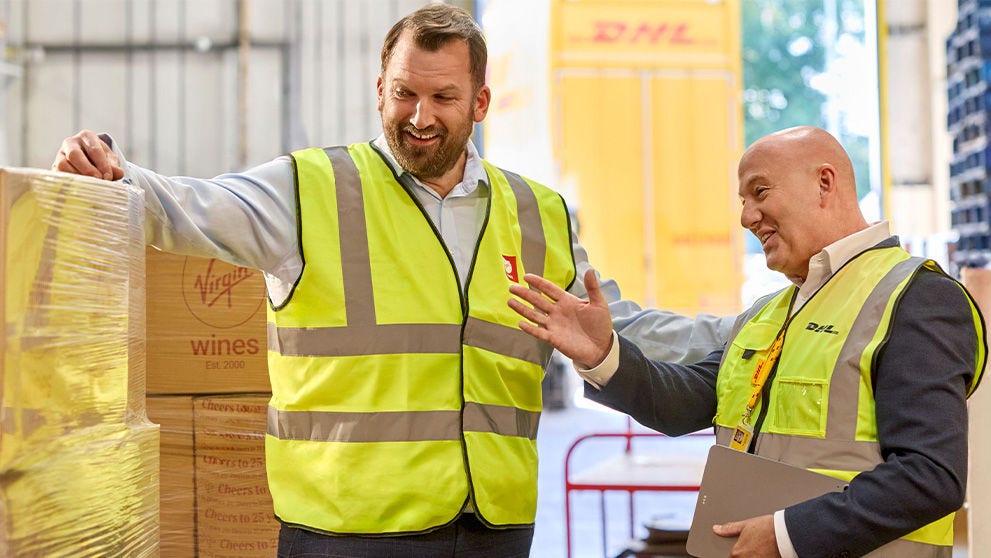
two men in hi vis vests looking at pallets
This article covers
B2B buyers' expectations of B2B shipping
How DHL Heavy Weight Express Shipping can help your business meet those demands

Today’s B2B buyers have come to expect the same seamless experiences they have in their B2C interactions: simple ordering, transparent information, reliable delivery and real-time visibility.

And those expectations don’t change just because the shipment is bigger. In B2B shipping, however, the consequences when something goes wrong can be far greater. A late delivery could disrupt production, delay a project or damage an important customer relationship.

That’s why B2B logistics has an increasingly important role to play in delivering a positive customer experience. In this article, we explore what B2B buyers expect from heavy freight shipping – and why meeting those expectations matters.

What today’s B2B buyers expect from a logistics partner

So, what does a good heavy freight delivery experience look like? For modern B2B buyers, six expectations stand out.

hand touching chip

1. Reliable, predictable delivery

When a shipment is business-critical, an “estimated” arrival date isn’t always enough. Buyers need confidence that it will arrive when promised – particularly if engineers are waiting to install equipment, a production line needs a replacement component, or a customer launch depends on it.

Delivery performance is already an important part of the wider customer experience. In DHL research, 44% of B2B respondents identified time-specific delivery as a key customer expectation. For heavy freight, where the knock-on effects of being late can be substantial, predictability becomes even more valuable.

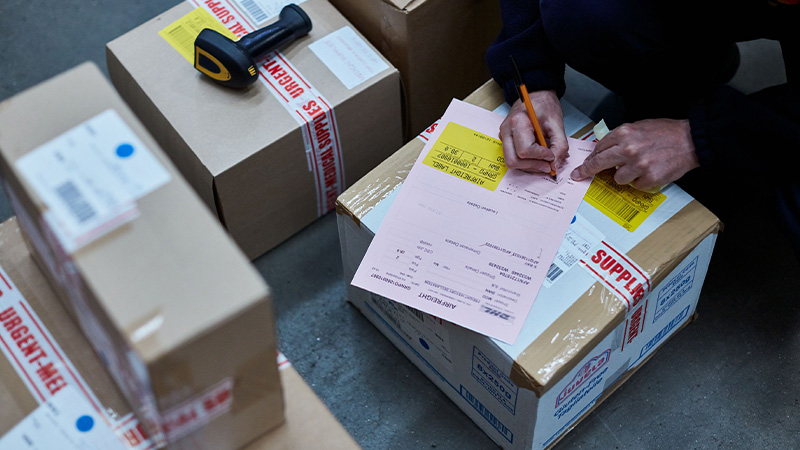
hand signing parcels

2. End-to-end tracking and real-time shipment visibility

B2B buyers increasingly expect to know what is happening to their shipment throughout its journey.

For heavy or oversized goods, that means visibility from pickup through transit and customs clearance to final delivery. A single “in transit” update provides little reassurance when a high-value shipment is traveling thousands of miles.

Real-time visibility is therefore becoming less of a “nice-to-have” and more of a basic expectation. Buyers want the information they need to plan resources and keep their own customers informed.

Asian man smiling at mobile phone

3. Proactive communication

Visibility is important, but buyers shouldn’t have to spend their day refreshing a tracking page or contacting customer service.

If a delay or other issue occurs, they increasingly expect to hear about it proactively. That becomes harder when a shipment moves between several carriers, handlers and systems, leaving the customer to work out who to contact.

Working with one logistics partner and one tracking platform can simplify communication, giving businesses a clearer picture of what is happening and helping issues to be addressed before they escalate.

Asian man smiling at mobile phone

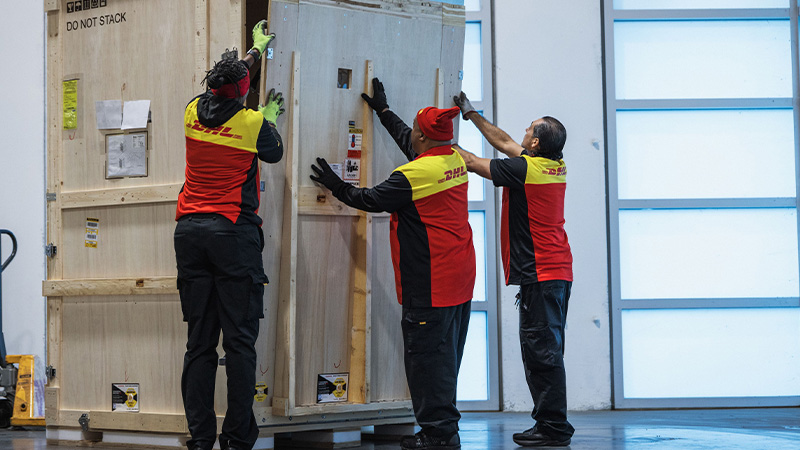
4. Consistent handling of heavy, oversized, or high-value goods

Moving a 500 kg piece of industrial machinery isn’t the same as moving a parcel. Heavy, oversized and high-value goods may require specialist equipment and carefully managed handling throughout their journey.

Consistency matters. Every additional handoff introduces another point at which processes can vary, information can be missed or goods can be mishandled.

DHL Heavy Weight Express Shipping is designed for shipments from 50 kg up to 3,000 kg, moving them through a single integrated global network. This reduces reliance on multiple providers and helps provide consistent handling standards from origin to destination.

Asian man smiling at mobile phone

5. A simple, transparent shipping experience with minimal friction

B2B purchasing may be more complex than ordering something at home, but buyers increasingly expect the experience surrounding it to be just as straightforward.

That means clear information, easy access to shipment updates, and fewer administrative headaches. Yet there’s still a gap between expectation and reality: research1 found that 50% of B2B e-commerce sites were not fully meeting buyer expectations, while 94% of buyers reported experiencing customer experience challenges online.

Significantly for logistics, delivery and tracking was the most commonly cited challenge, reported by 44% of respondents.

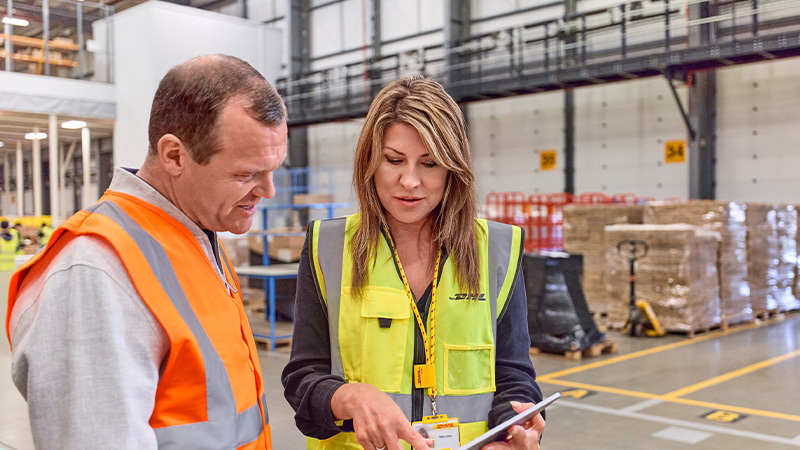
Man and woman in hi-vis suits looking at tablet screen

6. Confidence that suppliers can support increasingly complex global supply chains

Growth often makes supply chains more complicated. New customers can mean new markets, customs requirements and shipping lanes, while suppliers and production facilities may be spread across several countries.

B2B buyers don’t necessarily want to manage that complexity themselves. They want confidence that their suppliers – and the logistics partners behind them – have the international capabilities to make it work.

For SMEs with cross-border ambitions, that confidence can become particularly important. A logistics operation that works in one market needs to be able to scale as the business reaches the next.

Why these expectations matter

A poor delivery experience doesn’t end when a shipment eventually arrives.

Late heavy deliveries can leave engineers waiting on-site, interrupt production, or push back an installation. A lack of visibility can generate calls and emails to customer service teams simply because buyers don’t know what is happening. Repeated problems can gradually undermine confidence in the supplier itself.

And that matters commercially. If two businesses offer comparable products at similar prices, the one that can provide a more dependable delivery experience has another way to stand out.

This is why heavy logistics should be viewed as part of the overall B2B customer experience. Buyers aren’t necessarily interested in what happens behind the scenes; they care that their order arrives when promised, that they know where it is and that any problems are dealt with quickly.

How logistics is becoming a competitive advantage

Product quality and price will always matter in B2B purchasing, but they’re no longer the whole story.

The experience surrounding the product matters too – from placing the order to receiving it. Reliable delivery, visibility and responsive support can give buyers greater confidence in a supplier, particularly when the goods they’re purchasing are valuable or critical to their own operations.

For growing B2B businesses, that creates an opportunity. Investing in logistics capabilities can help strengthen existing customer relationships while providing another point of differentiation when competing for new business.

Seen this way, logistics stops being simply a cost of getting goods from A to B. It becomes an investment in the customer experience – and, ultimately, in the reputation of the business delivering it.

How DHL supports heavy weight B2B deliveries

DHL Heavy Weight Express Shipping combines express speed with the capacity to move international shipments from 50 kg up to 3,000 kg. Shipments travel through one integrated DHL Express network, supported by real-time tracking, proactive shipment control and specialist heavy weight support.

For businesses expanding internationally, that combination of speed, visibility and consistent handling can help make complex heavy weight shipping feel simpler – both for the business sending the goods and the customer waiting for them.

A heavy weight freight partner should provide reliable and predictable delivery, end-to-end tracking, proactive communication and consistent handling of complex goods. Buyers should also expect a straightforward shipping process and confidence that their logistics partner has the network and expertise to support their business as its supply chain grows.

Using a logistics partner with an integrated tracking platform (like DHL) can provide shipment updates throughout the journey, from pickup to final delivery. Rather than checking different systems as freight moves between providers, businesses can follow progress in one place, making it easier to plan resources and keep customers informed.

Heavy freight can be delayed by factors including customs clearance, incomplete documentation, multiple carrier handoffs and poor coordination between providers. While not every disruption can be avoided, using one logistics partner with an integrated network can reduce unnecessary handoffs, improve visibility and make exceptions easier to manage.

With DHL Heavy Weight Express Shipping, shipments from 50 kg up to 3,000 kg can move internationally in as little as 1–3 days. Open a DHL Express Business Account or speak to your Account Manager to find out how it can support your business.