#eCommerceAdvice

Beyond the Marketplace: When Is It Time for Your Own Online Store?

Paul Makolosi
Paul Makolosi
Country Manager Kenya
When Is It Time for Your Own Online Store
This article covers:
When growing businesses should launch their own online store.
Why combining marketplaces with direct sales drives growth.
How reliable logistics support cross-border e-commerce.

For many Kenyan online sellers, the dream is simple: more sales, more channels, less hassle. Maybe your products are flying off the shelves on Jumia. Maybe Instagram is buzzing with comments and DMs, and WhatsApp is where your regulars come to reorder week after week. 

But sooner or later, a big question lands on your desk: should you keep sharing a piece of every sale with the marketplace, or is it finally time to launch your own store?

It’s not a small decision. Move too soon, and you risk missing out on the steady flow of customers that marketplaces bring. Wait too long, and you keep giving away your profits, your customer data, and your chance to reach buyers outside Kenya.

Are You Ready, or Just Frustrated?

Don’t let frustration with commissions push you out the door. The right time to launch your own store is when you’ve built a name strong enough that customers look for you, not just your products. You’ll know you’re there when people are messaging you directly to reorder or searching for your name online. If the commission you’re paying, often 5% to 15% per sale on Kilimall, sometimes higher elsewhere, now looks like money better spent on your own advertising, it’s a sign. If price wars on identical listings stop you from charging what you’re worth, that’s another. When both of these hit at once, the conversation shifts from “Will customers find me?” to “Can I deliver reliably, every time?” 

/content/dam/kenya/ecommerce-advice/ecommerce-best-practice/Setting Up Shop.jpg

Setting Up Shop: Easier Than Ever

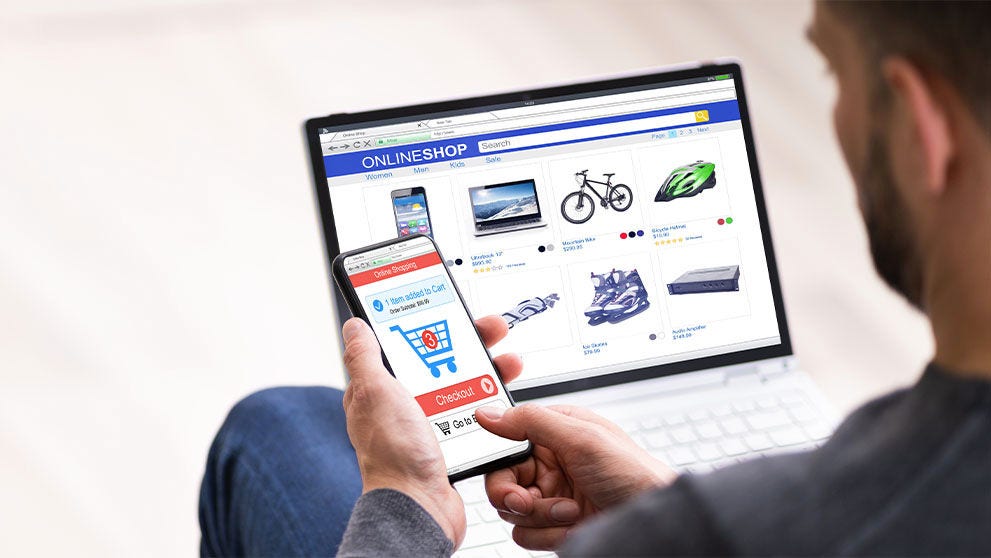
The old barriers are gone. Platforms like Shopify and WooCommerce work seamlessly in Kenya. Payments? Covered.

M-Pesa still rules, and you can accept it directly via Safaricom’s Daraja API, or through all-in-one gateways like Pesapal or Flutterwave that combine M-Pesa, cards, and bank transfers in a single checkout. But here’s the thing: discovery doesn’t come free anymore. You’ll need to pull in your own traffic from social media, search, and returning customers. And every delivery, across town or across the world, is now your responsibility. 

Why Go Independent? Think Bigger. 

Getting your margin back and owning your customer list are great. But the real magic happens when you break out of Kenya’s borders. Marketplaces tend to keep you local. Your own store can take you to the whole of East Africa, the Kenyan diaspora, or even further afield. That’s where true growth lives. But cross-border selling brings new challenges. Delivery is everything. A sale to Kampala, London, or Dubai only counts if the parcel gets there, in good time, with no nasty surprises. That’s where DHL Express shines, shipping out of Kenya, handling customs, and with the MyGTS Pre-Shipment Planner, you know your duties and taxes upfront. Your price holds, your customer’s happy, and your business grows. 

/content/dam/kenya/ecommerce-advice/ecommerce-best-practice/Keep Every Channel Working.jpg

Keep Every Channel Working

Going independent doesn’t mean ditching the channels that built your business. The strongest brands in Kenya are running a hybrid model: let Jumia, Kilimall, and Instagram keep finding new buyers, while your own store takes care of repeat orders, loyal customers, and high-margin cross-border sales

Your store isn’t a replacement. It’s an upgrade. But it only works if your delivery promise is rock solid. Customers expect every order to arrive, on time, and fully trackable. That’s the standard DHL Express is built for.

Delivery You and Your Customers Can Trust 

Your store is only as good as its delivery. Before you launch, set yourself up for success with a DHL Express Business Account. You’ll get competitive rates, invoice billing, expert customs support, and end-to-end tracking for every shipment. Start strong. Open an account and see how far your business can go. 

FAQs

Not necessarily. In fact, many thriving Kenyan businesses have found success by balancing both. Marketplaces are a great way to introduce your products to a wider audience, especially when you’re starting out. But your own online store is where you build real connections, turning first-time buyers into loyal, repeat customers and boosting your profits in the process. Diversifying sales channels also means you’re not putting all your eggs in one basket. If your orders are multiplying and you’re wondering how best to keep pace, check out Doubling Orders? Here's How to Keep Up and Thrive, a practical guide for scaling up without losing the personal touch your customers appreciate.

Before you open your doors to the world, take a moment to make sure your online store is ready. Can your site calculate shipping costs accurately? Does it collect detailed delivery addresses and set clear expectations for when parcels will arrive? You’ll also want to get familiar with customs rules, duties, and taxes for each country you plan to serve. Our guide, Take Your Kenyan Business Global: Create Shipment with MyDHL Express, breaks down the steps for preparing shipments from Kenya using MyDHL+. It’s a must-read if you want to deliver a smooth international experience right from the start.

If you need a customs duties and taxes calculator to estimate duties in advance, try the Pre-Shipment Planner on DHL Express' Global Trade Services (MyGTS). You can use this tool to estimate the total landed cost of an international shipment, including duties, taxes, and other import fees. To get an estimate:

  • Sign up for DHL Express' Global Trade Services (MyGTS)

  • Navigate to the Pre-Shipment Planner

  • Enter the destination country, product description, and declared value

  • (Optional) Add the HS code for more precise results

The tool will calculate estimated costs based on the destination country's import regulations, helping you plan your shipping budget and avoid unexpected charges at delivery.