1. The HS Code Identifies the Product
The Harmonised System (HS) is an international system for classifying traded goods. Customs authorities use product classifications to determine the duties, taxes and import requirements that may apply.
A smartphone, leather handbag and pair of shoes fall into different classifications. Even products that look similar can have different tariff codes depending on their materials, composition or intended use.
It’s important to use the right code. An incorrect classification can produce an inaccurate estimate and cause complications during customs clearance. DHL’s My Global Trade Services (MyGTS) platform includes a Tariff Code Finder, where you can search for codes using product keywords or an existing HS code.
2. Customs Value Goes Beyond the Advertised Price
SARS generally starts with the transaction value of imported goods: the price actually paid or payable for them. That figure is then subject to customs valuation rules and any required adjustments.
That means the customs value may not be identical to the amount shown on your shopping receipt. Depending on the circumstances, certain costs or adjustments may need to be included or excluded. See SARS guidance on customs valuation for more detail.
3. Country of Origin Can Affect the Duty Rate
Where a product was manufactured or produced can affect the duty rate. South Africa has trade agreements with several countries and regional trading blocs, and goods that meet the relevant rules of origin may qualify for preferential rates.
The country you buy from isn’t necessarily the country where the goods originated. For example, buying a product from a UK retailer doesn’t automatically make it eligible for preferential treatment under a trade agreement. You’ll need accurate origin details and any supporting documents required to show that the goods qualify.
How import VAT is calculated in South Africa
South Africa’s standard VAT rate is 15%. But import VAT isn’t simply 15% of the product’s purchase price. SARS calculates it on the Added Tax Value (ATV).
For goods imported from outside the Southern African Customs Union, the general calculation is:
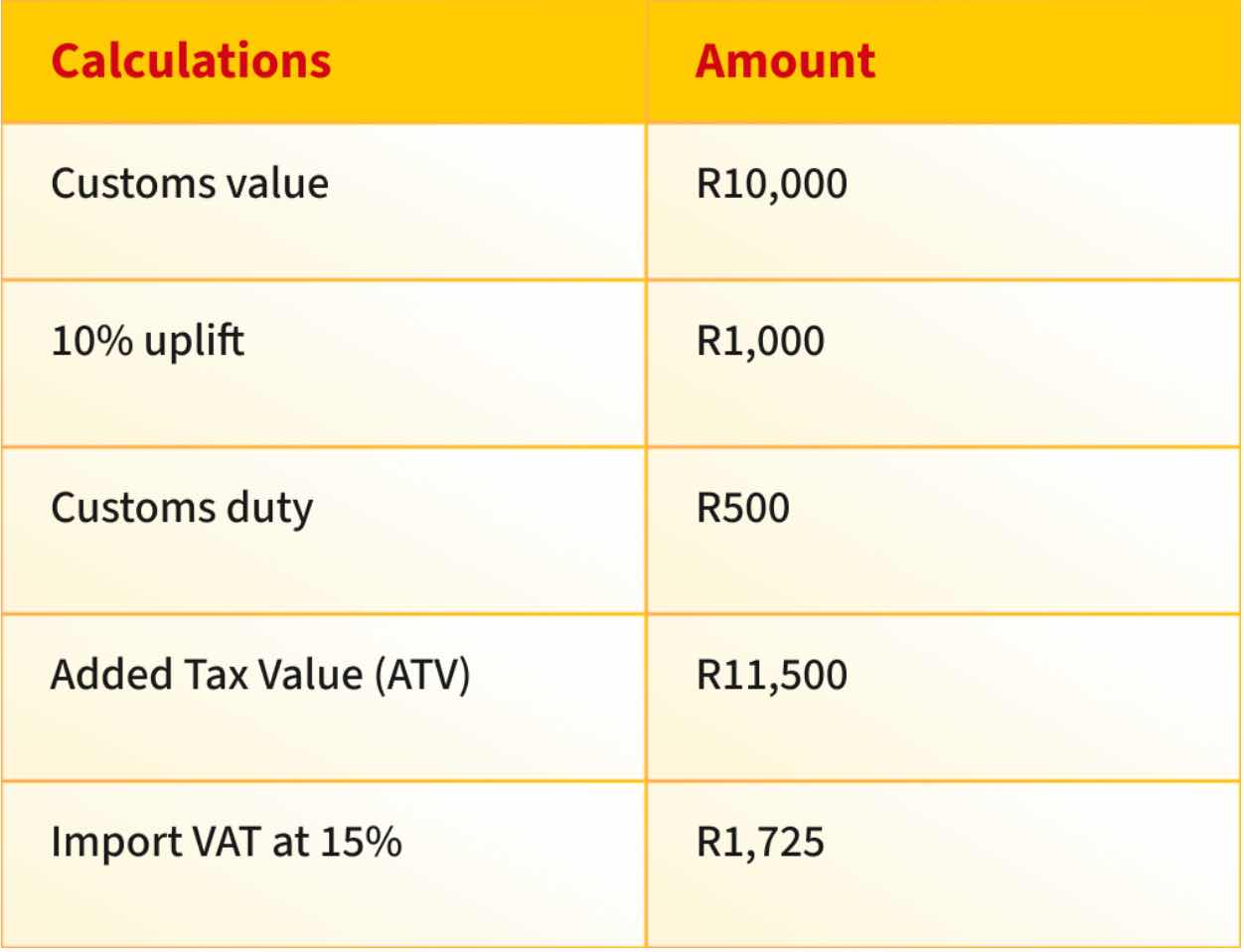
ATV = Customs value + 10% of customs value + applicable non-rebated duties
Import VAT = ATV × 15%
The 10% uplift is part of the VAT calculation; it isn’t a separate 10% charge. Under the relevant conditions, the uplift does not apply to goods originating in, and imported from, Botswana, Lesotho, Namibia or Eswatini.
For example, say an imported product has a customs value of R10,000 and attracts R500 in customs duty. If the uplift applies, the calculation would look like this: