#AboutDhl


 Share
Share
Australian exporter confidence drops as global disruption bites, DHL Export Barometer reveals
Share

91% of Australian exporters experienced challenges last year, including the impact of US tariffs, rising fuel costs and shipping disruption, but businesses are consolidating rather than retreating
Sydney, 16 September: Confidence among Australian exporters has fallen over the past year, with just 52% expecting growth in the next 12 months, according to the DHL Export Barometer 2026. The figure is down from 60% in 2025 and sits below the long-term average of 62%, marking the lowest outlook since the pandemic.
Now in its 22nd year, the independent report surveyed 506 Australian exporters, ranging from sole traders to large enterprises, and found businesses are responding to a turbulent global trading environment with caution rather than retreat. More than a third of exporters expect revenue to hold steady, while only 11% are forecasting a decline.
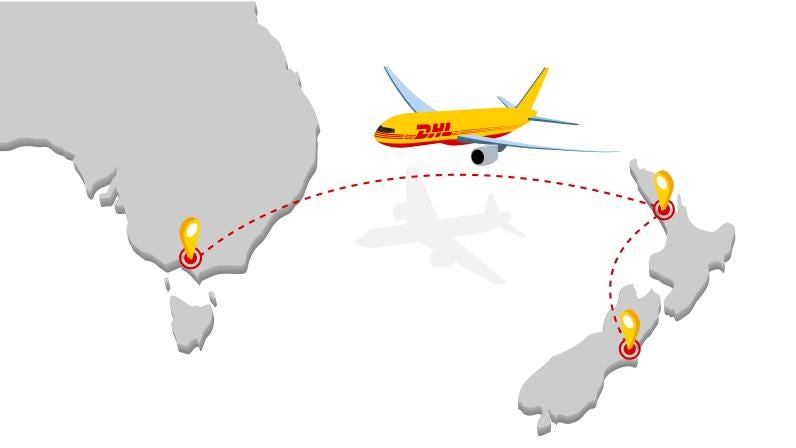
The report points to a deliberate consolidation of global footprints, with the average number of export destinations per business contracting from 5.2 to 4.6. New Zealand and North America remain Australia's two largest export markets, though participation in both has eased, while Europe, Japan and South Korea are gaining ground as exporters diversify their trade lanes.
Cost and trade pressures were widespread, with 91% of exporters reporting some impact over the past year, up from 85% in 2025. Rising freight costs (55%) and fuel and energy costs (36%) were the most common challenges, followed by tariffs (27%) and shipping disruptions (18%). Almost seven in ten exporters trading with the United States (69%) said US trade policy had hurt their business, with a similar proportion (68%) expecting further impacts in the year ahead.
Despite the tougher conditions, the report found encouraging signs of adaptation. Free trade agreements remain a key tool for navigating global markets, with 79% of exporters saying they are important to market decisions, and the Australia-UK FTA already in use by 41% of exporters. Uptake of artificial intelligence also continues to climb, with 58% of exporters now using or planning to use AI in some form and active use rising from 19% to 26% year-on-year, increasingly for market intelligence, logistics optimization and identifying new markets rather than marketing alone. Online channels remain the dominant sales driver, generating orders or enquiries for 81% of exporters.
“This year’s Barometer shows that even amid ongoing global disruption, particularly the fuel supply and demand from the conflict in the Middle East, Australian exporters continue to demonstrate an encouraging ability to adapt and innovate,” said Phil Corcoran, Managing Director, DHL Express Australia and Papua New Guinea. “While confidence has understandably fallen, we’re not seeing a widespread downturn. Exporters are being more deliberate about their exporting strategy, consolidating their markets and building resilience into their supply chains with current uncertainty.”
“The decline in exporter confidence, now below the long-term average, reflects the challenging global environment in which Australian exporters are operating,” said Arnold Jorge, Chief Executive Officer, Export Council of Australia. “Businesses continue to navigate higher input costs, geopolitical uncertainty and increasingly complex international markets, which has contributed to a contraction in the average number of export destinations. We welcome the significant efforts being made by governments and trade agencies to support exporters in diversifying into new markets and strengthening Australia's international competitiveness. The findings of this report highlight the importance of maintaining and building on these initiatives to ensure Australian businesses are well positioned to seize future export opportunities, drive productivity growth and contribute to the nation's long-term economic prosperity.”
Other findings from the DHL Export Barometer 2026 include a decline in hiring intentions, with 36% of exporters planning to grow headcount, down from 47% in 2025, and continued but uneven progress on sustainability, with 40% of exporters redesigning products for sustainability while only 21% have adopted lower-emission freight options such as sustainable aviation fuel.
The 2026 DHL Export Barometer full report will be available in October 2026.
– End –
Share
Similar Stories