India is emerging as one of the fastest-growing economies in the world, presenting a wealth of investment opportunities for Singaporean businesses. According to Statista, its real gross domestic product grew 8.15% in 20231, and along with the other BRIC countries – Brazil, Russia, India, and China – has strengthened its economy over the last few decades, making it an ideal market to conduct trade with.
However, to ensure a successful shipment to India, understanding the customs regulations of the country is key. India is particularly careful about the goods entering its borders, as well as the legitimacy of the importer. Therefore, when shipping from Singapore, you should anticipate a round of in-depth checks. DHL Express is an ideal courier service to assist you in navigating this comprehensive customs process and simplify the delivery of your goods, ensuring that your parcel to India reaches its destination on time and in an undamaged condition.
If you’re wondering how your Singaporean business can export to India, then you’re in the right place. Here’s our comprehensive guide on India’s regulations and what you need to know before sending a parcel from Singapore.
Why ship to India?
The economic relationship between Singapore and India has consistently been strong and cordial. In 2023, the bilateral trade between Singapore and India demonstrated robust growth, reaching USD 35.6 billion, an impressive increase of 18.2% from 2022.2
Singapore is also the fourth-largest exporter of goods to India, creating a compelling landscape for Singaporean businesses looking to expand their footprint.
For merchants keen to leverage this advantageous relationship, consider establishing contact with local retailers, exploring distribution channels, and effectively shipping and distributing your products within India. It is also crucial to gain a comprehensive understanding of India’s customs regulations, restrictions, the list of prohibited and restricted goods, and the essential documents required for a smooth courier to India.
India's trade policy and regulations
Keep in mind the following items you can and cannot ship out of Singapore and into India. If proper prior research is not carried out, you might face delays in your shipments or have them rejected.
Main exports from Singapore to India
- Petroleum products
- Electronic and Machinery equipment
- Iron and Steel products
- Inorganic chemicals and miscellaneous chemical products
- Mechanical appliances, among others
Prohibited exports from Singapore
- Rough diamonds
- Meat products
- Rhinoceros horns
- Animals
- Chemicals
Prohibited imports into India
- Antiquities
- Narcotic and psychotropic substances
- Counterfeit and pirated goods
- Wildlife products and human skeleton
- Aero models
- Maps and literature where Indian external boundaries have been shown incorrectly
- Pornographic and obscene materials
- Chemical weapons
You can learn more about DHL’s list of prohibited and restricted items here.
How to send your parcel from Singapore to India
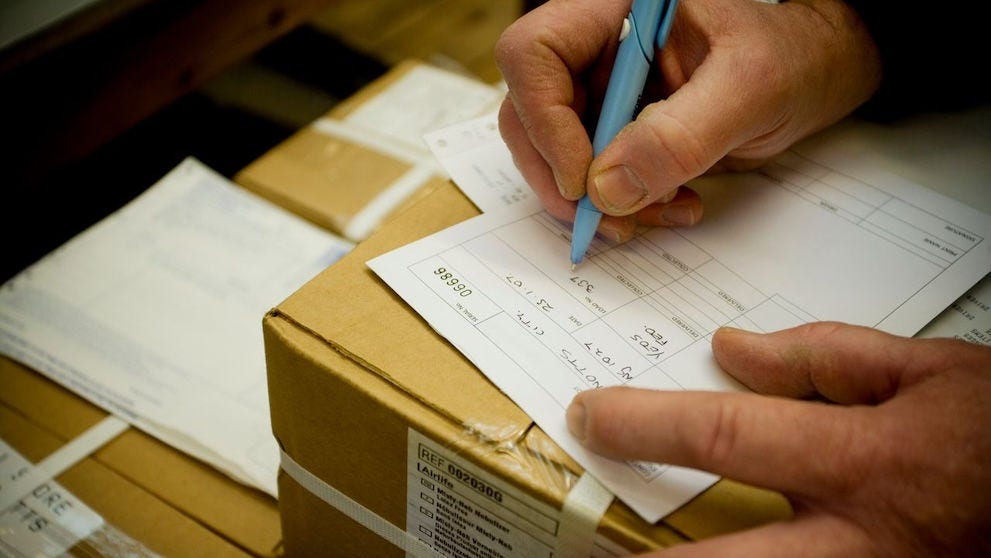
When preparing your parcel for India, pay careful attention to documentation. Accurately creating your DHL Air Waybill and preparing a commercial shipping invoice are key steps. These documents ensure you present accurate information about the package, such as its actual value, which is crucial for preventing clearance delays.
If you are shipping restricted items, such as certain chemicals or specific machinery parts, a formal customs clearance will likely be required. In such cases, your consignee in India must provide the necessary paperwork to ensure the goods are permitted entry. Always verify with your consignee that all required documentation is prepared in advance to prevent any delays or disruptions to transit time for your shipment from Singapore to India.
To ensure your courier from Singapore to India has the smoothest possible journey, proactively prepare the following:
1. Commercial invoice
A commercial invoice is a mandatory document for all non-document shipments when shipping to India. It serves as a legal document between the exporter and the importer, detailing the goods being sold, their value, and the terms of sale. Customs authorities in India rely on this invoice to assess duties and taxes and to ensure compliance with import regulations. An accurate and complete commercial invoice helps prevent customs hold-ups and ensures a smooth entry for your goods into India.
2. Prepare Know Your Customer (KYC) & Power of Attorney (POA) documents
Being aware of who your consignee is, is of paramount importance when shipping products to India. Here are some key points to note:
- It is mandatory for the consignee to upload the KYC and POA in www.kyc.india.express.dhl.com in order for the parcel to clear customs.
- Consignee’s name and address on the KYC document must match the AWB and invoice details.
- Failure to upload KYC will result in the shipment not being cleared, with no option for service recovery. All imports attract duty. Duty exemption, if any, will need a specific duty exemption notification from IN Customs.
- The consignee should have a valid Import Export Code No. (IEC), unless the import is specifically by individuals for personal use, which may qualify for exemption.
Read our detailed guide on KYC documents for each classification or organisation.
How does the KYC process work?
Before you send a parcel to India, the receiver must gather their KYC proof and provide it to your chosen courier, like DHL Express. The courier will then securely save the receiver’s details in their KYC database and use it for all future shipments to that specific address.
This process must be repeated each time you use a different courier, send goods to a new address, or when the receiver’s details change. Even if a business has multiple addresses, each location must be registered separately in your courier’s KYC database to ensure compliance.
What if the receiver’s KYC documents aren’t ready?
Missing KYC documentation can cause significant delays for your shipment from Singapore to India. It may even lead to penalty fees. To ensure a smooth and timely process, it is highly recommended to ask your receiver if their KYC details are already known and updated with the courier. If not, advise your receiver to gather all necessary documents for submission before you send the parcel. Proactive communication here is vital for seamless clearance.