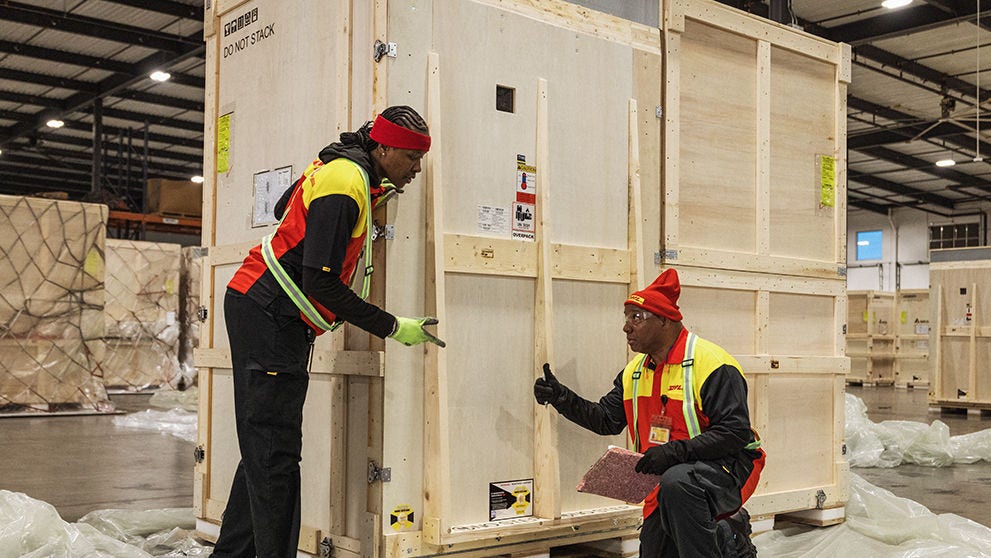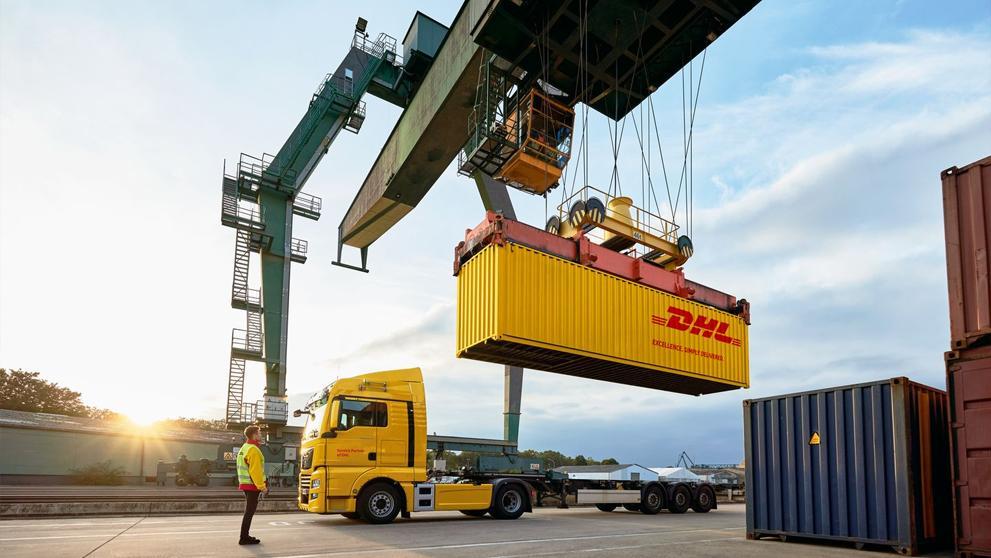
The shipment keeping a factory running isn’t always a parcel.
It could be a gearbox, engine block or stamping die weighing several hundred kilograms. Getting it to site quickly may matter far more than moving a standard parcel across town.
Siemens’ True Cost of Downtime 2024 study estimates that one hour of downtime at a large car plant can cost US$2.3 million. When a critical component is holding up production, its weight is only part of the story. The real priority is how quickly it can arrive.
In South Africa, heavy shipments are often sent through traditional freight channels by default. That makes sense for some consignments, but not all of them. When a shipment is urgent and falls within the weight and size limits of an express network, routing it as standard freight can introduce extra handling, handovers and administration at the very moment speed and visibility matter most.
That is where DHL Heavy Weight Express (HWX) comes in. It is designed for shipments too heavy to be treated as conventional parcels, but urgent enough to benefit from an express network.
This guide looks at what South African businesses can send through DHL Express beyond the usual parcel, why speed matters when critical shipments are delayed, and how DHL Heavy Weight Express helps get heavier, time-sensitive goods where they need to be.
How much weight can an express courier carry?
In May 2026, DHL Express introduced Heavy Weight Express (HWX), extending its Time Definite International portfolio to shipments above 50 kg. Businesses can send individual pieces weighing up to 1,000 kg, with a maximum shipment weight of 3,000 kg. Each piece can measure up to 300 cm long, 200 cm wide and 160 cm high, or 180 cm high with prior approval.
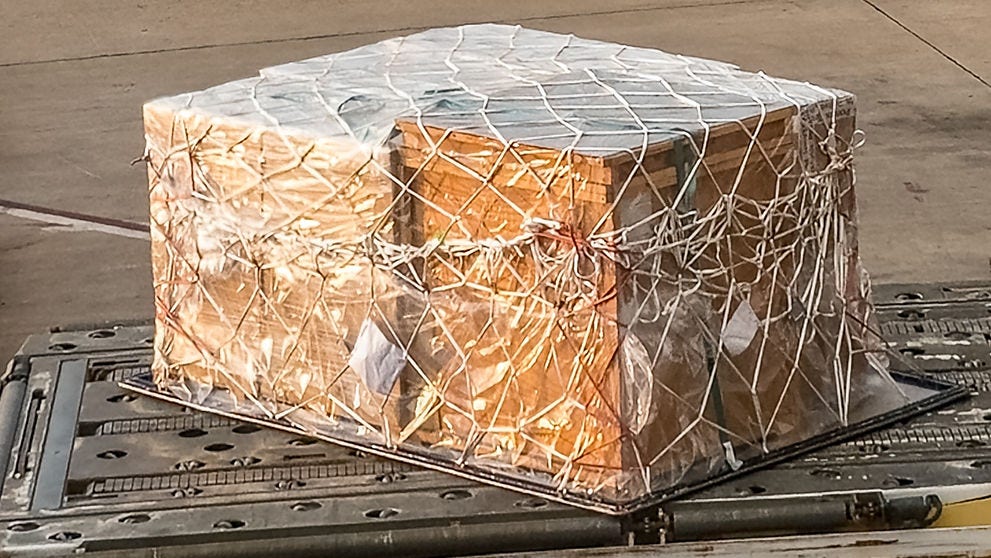
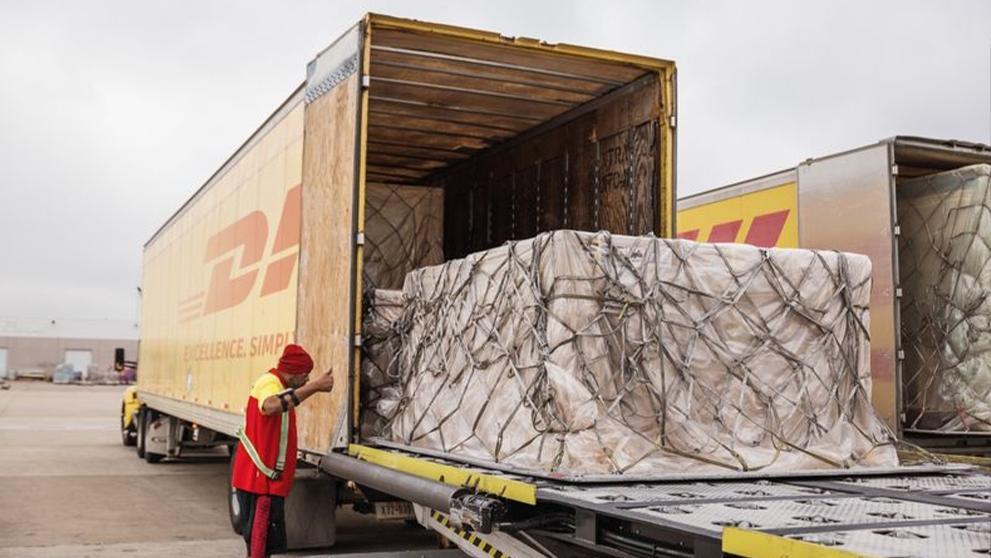
Preparing a shipment correctly is essential when moving goods of this size. Choosing the right pallet, distributing the weight and securing the load are essential when preparing heavy goods for transport. Following DHL’s advice on packing large shipments can help ensure they are ready for handling throughout the journey.
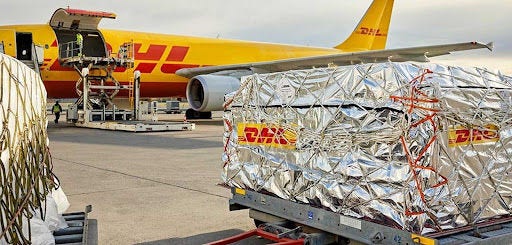
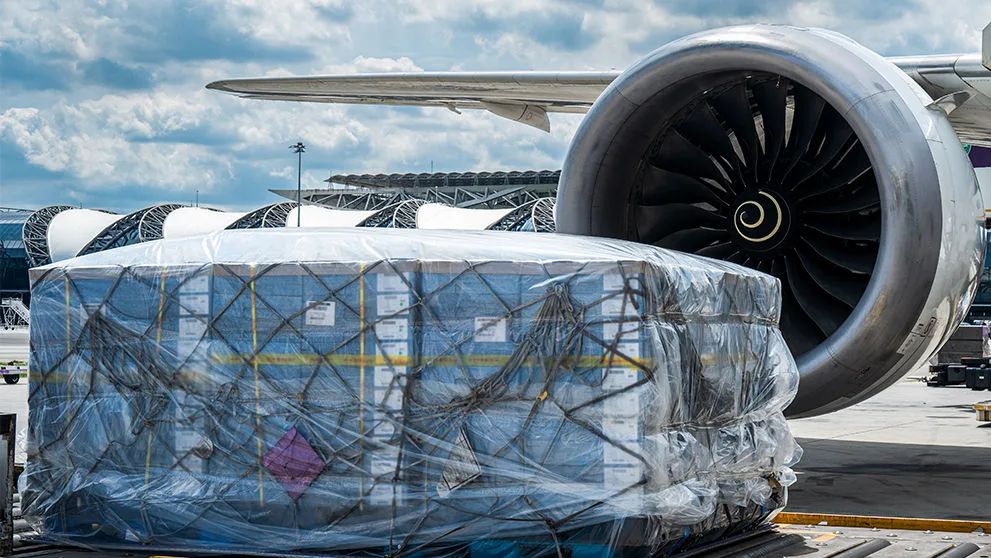
What sets HWX apart is that these heavier consignments move through the DHL Express network, from aircraft and hubs to customs operations and final delivery. With daily flights connecting the network, DHL manages the shipment as a time-definite, door-to-door service, reducing the need for businesses to coordinate separate providers at different stages of the journey. For companies moving urgent equipment, machinery or spare parts, HWX brings heavyweight capacity within reach of the express model.

Heavy Freight for Time-Critical Industries
For some businesses, a delayed shipment can bring far-reaching consequences. It may stop an assembly line, postpone a product launch, keep a drilling rig offline or disrupt essential hospital services.
DHL built Heavy Weight Express (HWX) for industries where heavy, time-critical items need to arrive quickly and reliably. Across these sectors, the goods may be different, but the challenge is the same: one missing component can hold up an entire operation.
Automotive
South Africa’s automotive industry contributed 5.2% to GDP in 2025. According to naamsa, locally built vehicles contain an average of about 39.7% local content, which means many components used on assembly lines still cross an international border before reaching the factory.
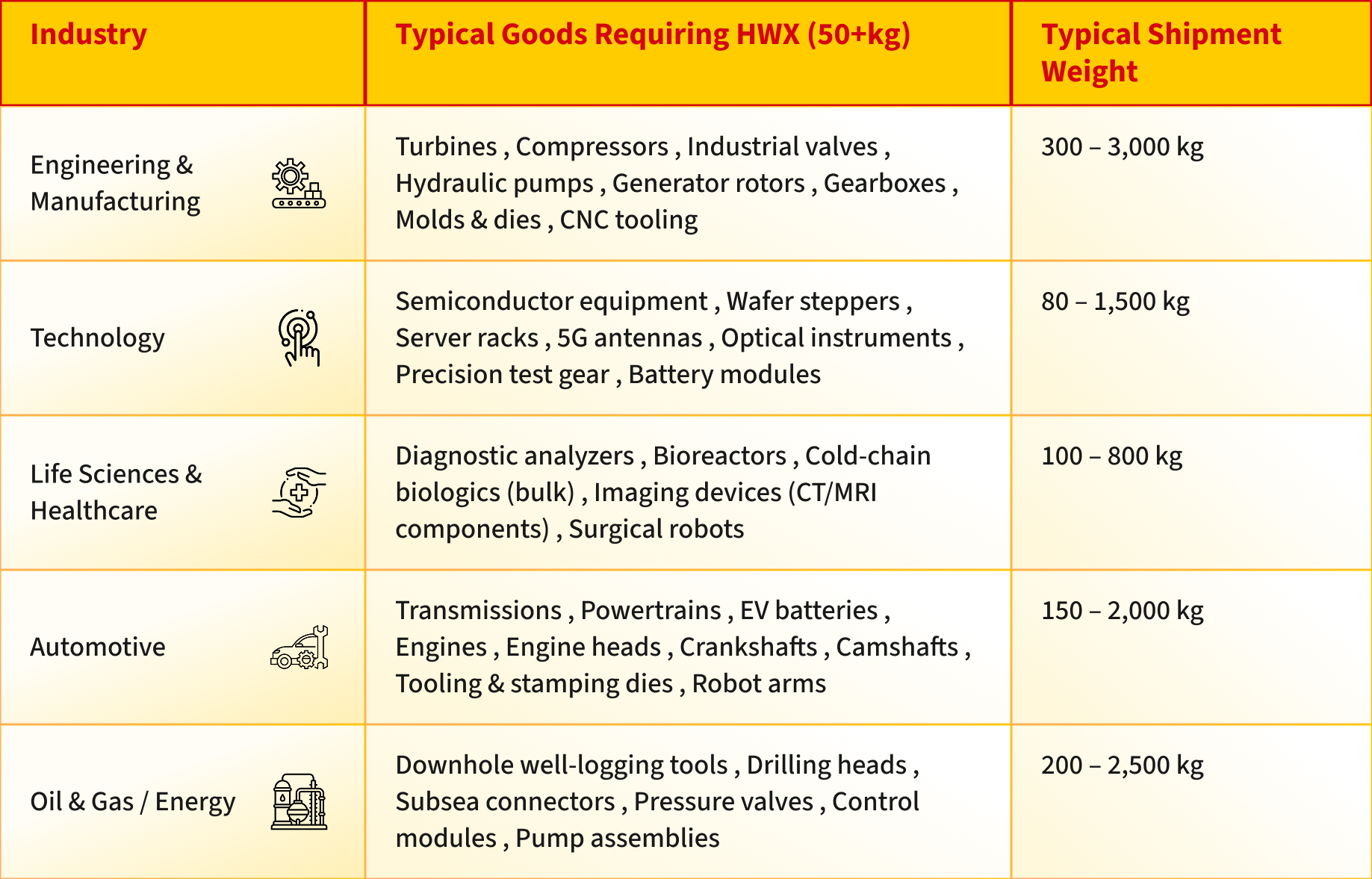
When a critical part is delayed, production can come to a standstill. Engine blocks weighing between 300 and 600 kilograms, transmission and gearbox assemblies, and stamping dies of up to 1,000 kilograms are among the heavy items that can prevent a line from starting or resuming.
EV battery packs may also need to be moved urgently for research, testing or recalls. Depending on their chemistry, they may need to travel as dangerous goods.
HWX supports automotive manufacturers with late cut-off times, late-change options and door-to-door delivery for time-critical parts.
Engineering and manufacturing
Manufacturing operations often depend on complex supply chains that connect multiple plants, suppliers and production sites. When an urgent component is missing, the effect can spread well beyond one facility.
Downtime avoidance and the movement of critical items between sites are key reasons manufacturers use HWX. Typical shipments include turbine rotors and blades weighing between 400 and 1,000 kilograms, compressor and pump units, industrial robot arms, and control cabinets or PLC systems needed to commission new equipment.
Urgent spares, heavy prototypes and replacement components can all require fast, carefully managed transport. Getting the right item to the right site can help manufacturers reduce delays and restore production sooner.
Oil, gas and energy
Oil, gas and energy operations are often located far from major transport hubs, with limited access and demanding maintenance schedules. A refinery, offshore platform or power station may not be able to restart until a single missing component arrives.
HWX moves a range of heavy and time-critical equipment, including downhole well-logging and measurement-while-drilling kits, drilling heads, blow-out preventer components, subsea connectors and valve manifolds. Other examples include pressure valves, control modules and pump assemblies, typically weighing between 200 and 2,500 kilograms.
The timing of a delivery matters particularly during offshore operations and planned maintenance windows. Fast, trackable transport can help operators move essential equipment where it is needed and reduce the disruption caused by unexpected downtime.
Life sciences and healthcare
In life sciences and healthcare, delivery speed must be matched by careful handling. Temperature-sensitive products can be compromised by delays or unsuitable conditions during transit.
DHL combines HWX with temperature-controlled solutions and tracking for time-critical shipments. These can include diagnostic analysers, laboratory systems, bioreactors used in vaccine and biologics production, MRI and CT subsystems weighing up to 2,000 kilograms, and temperature-sensitive clinical batches.
Delays can affect more than a supply chain. If imaging or laboratory equipment does not arrive on time, hospitals and healthcare facilities may need to reschedule procedures, delay testing or work with reduced capacity.
Technology
Technology supply chains operate against strict deadlines. Data-centre infrastructure, semiconductor equipment, precision test systems and electronic components often need to arrive in a particular sequence. A delay at one point can affect installation, testing, commissioning or a product launch.
HWX supports the movement of high-value and time-critical technology shipments, including hardware modules, semiconductor equipment, precision test equipment and electronic components. Data-centre shipments may include server racks and chassis weighing between 200 and 600 kilograms.
Product launches can create an additional logistics challenge, with large quantities of stock needing to reach distribution centres, retail sites or customers on a fixed date. Reliable, door-to-door delivery helps technology companies manage these deadlines and keep their launch plans moving.
What changes when heavy freight moves on an express waybill?
Moving a heavy shipment through an express network changes more than the transit time. It can also reduce the amount of the journey your team needs to coordinate.
Traditional air cargo may involve several parties, from the airline handling the main air movement to separate providers managing customs clearance, destination handling and final delivery. With HWX, the shipment remains within the DHL Express network from collection through to delivery. That gives the business one service to book, track and manage.
Heavy shipments also receive dedicated oversight through DHL’s Heavy Weight Priority Desks. These specialist teams monitor shipments against key milestones, identify exceptions and provide a single point of contact when intervention is needed.
For a time-critical part or piece of equipment, that visibility is valuable. Knowing where a shipment is can help. Knowing that someone is actively monitoring its progress and can respond when something changes is even better.
An express service can also make the total cost of a shipment easier to assess. Comparing only an airport-to-airport rate per kilogram does not show the full picture. Handling, documentation, screening, customs clearance, storage and final delivery all form part of the journey, whether they are included in one service or arranged separately.
And when a shipment is keeping a production line, project team or customer waiting, there is one more figure to include: the cost of the delay.
Make heavyweight express part of the way you ship
If heavy spares, tooling or equipment move through your business regularly, they do not need to be treated as exceptional shipments every time.
A DHL Express business account gives businesses access to preferential rates, invoice billing, customs support and end-to-end shipment tracking. Heavyweight shipments can then become part of the same express shipping process already used for other time-critical goods.
When the next critical shipment cannot afford to wait, Heavy Weight Express gives South African businesses another way to move it: door to door, with visibility and the support of an integrated international express network.
Open a DHL Express business account and make HWX part of your shipping options.
Frequently asked questions
Yes. DHL Express Breakbulk lets you send multiple shipments under one customs entry at origin. Once the consignment has cleared customs, DHL separates it for delivery to the relevant addresses. That means less paperwork to manage and a simpler way to coordinate deliveries across South Africa. See Moving Big Cargo with Speed: Your Guide to Express Solutions.
Before collection, provide accurate measurements, the total weight, loading requirements and any special handling instructions. Clear information helps DHL plan the right vehicle and equipment, prepare the shipment correctly and reduce the risk of delays, especially when you’re moving oversized freight. See Move Big Shipments with Confidence: DHL Heavy Weight Express in South Africa.
The chargeable weight is based on whichever is greater: the shipment’s actual weight or its volumetric weight. DHL Express calculates volumetric weight by multiplying the length, width and height in centimetres, then dividing the result by 5,000. Any applicable surcharges are added to the final price. See How to Estimate Courier Delivery Charges Across South Africa.


 Share

Similar Stories