Yes. The duty-free threshold will be removed starting 1 July 2026, meaning shipments of any value may be subject to customs duties.

As cross-border eCommerce continues to grow rapidly, the European Union (EU) is rolling out a new round of customs reforms under the EU Customs Reform (EUCR). One of the most significant changes is the removal of the duty-free threshold for shipments valued at €150 or below, effective 1 July 2026. This policy will fundamentally reshape the operating model of cross-border eCommerce and export logistics.
Whether you are running an online store, managing a global brand, or handling B2B exports, understanding the latest EU customs regulations, clearance processes, and logistics strategies will be essential to staying competitive.
Previously, shipments imported into the EU with a value not exceeding €150 could benefit from duty-free treatment. Under the new system:
All shipments (regardless of value) may now be subject to customs duties and Value Added Tax (VAT), depending on factors such as:
For low-value B2C shipments, the EU will introduce a new flat-rate duty model, changing how duties are calculated and applied.
| Previous System (Before 1 July 2026) | New System (From 1 July 2026) | |
| Shipment ≤ €150 | ✅ Duty-free | ❌ No longer duty-free |
| Low-value B2C shipments | Duty-free (VAT may apply) | €3 duty per item |
| B2B shipments | Standard duty rates | Standard duty rates |
| Duty calculation | Based on shipment value | Based on shipment type and HS Code |
📌 All shipments to the EU may now be subject to both customs duties and Value Added Tax (VAT).
| Shipment Content | Duty | |
| 📦 Example 1 | 1 item (1 HS Code) | €3 |
| 📦 Example 2 | 3 different items (3 HS Codes) | €9 |
| 📦 Example 3 | Multiple units of the same item (same HS Code) | €3 |
📌 Even if the shipment value is below €150, it is no longer exempt from duty.
With the implementation of the EU Customs Reform (EUCR), consolidated clearance for low-value B2C shipments will be significantly restricted, requiring businesses to adjust their shipping and customs strategies.
| Shipment Type | Before 1 July 2026 | From 1 July 2026 | Clearance Country |
| B2C Low-Value (≤150€)1 | ✅ Consolidation allowed | ❌ Consolidation no longer allowed | Must be cleared in the final destination country |
| B2C High-Value (>150€)1 | ✅ Consolidation allowed | ✅ Consolidation allowed (additional data required)2 | Can be cleared in a country other than the final destination |
| B2C Mixed Value (≤150€ & >150€)1 | ✅ Consolidation allowed | ❌ Consolidation no longer allowed3 | Must be cleared in the final destination country |
| B2B Shipments (all values) | ✅ Consolidation allowed | ✅ Consolidation allowed4 | Can be cleared in a country other than the final destination |
1 B2C Non-IOSS shipments: Please note that IOSS shipments cannot be customs cleared in a consolidated way ; this remains unchangedunder EUCR.
2 From 1 July 2026 onwards, DHL express requires a signed Power of Attorney, a signed attestation letter and Line-item data per baby shipment: Buyer and seller information and retail value
3 In case of mix value of baby shipments, the entire shipment will be classified as low value baby shipments -> consolidated clearance is not possible
4 From 1 July 2026 onwards, DHL express requires a signed Power of Attorney (POA) and attestation letter

With the advancement of the EU Customs Reform (EUCR), another key regulatory change will take effect on 1 November 2026:
👉 All B2C shipments imported into the European Union (EU27) must include a Product Identifier (PID).
📌 This is a mandatory requirement imposed by the EU (not DHL-specific), and all express carriers must comply in order to complete import customs clearance.
A Product Identifier (PID) is a unique alphanumeric code used to clearly identify a specific product, enabling it to be accurately tracked and recognised throughout the entire supply chain.
There are two main types of Product Identifiers:
📌 Starting from November 2026, all B2C shipments must provide the following Product Identifiers (PIDs) at line-item level:
Under the EU Customs Reform (EUCR), businesses will face a comprehensive shift across cost structure, customer experience, and customs compliance.
Firstly, with the removal of the €150 duty-free threshold, business models that previously relied on low-value, duty-free shipments will no longer be sustainable. Shipping costs are expected to increase, and recipients may also face additional duties and taxes, which can further compress profit margins.
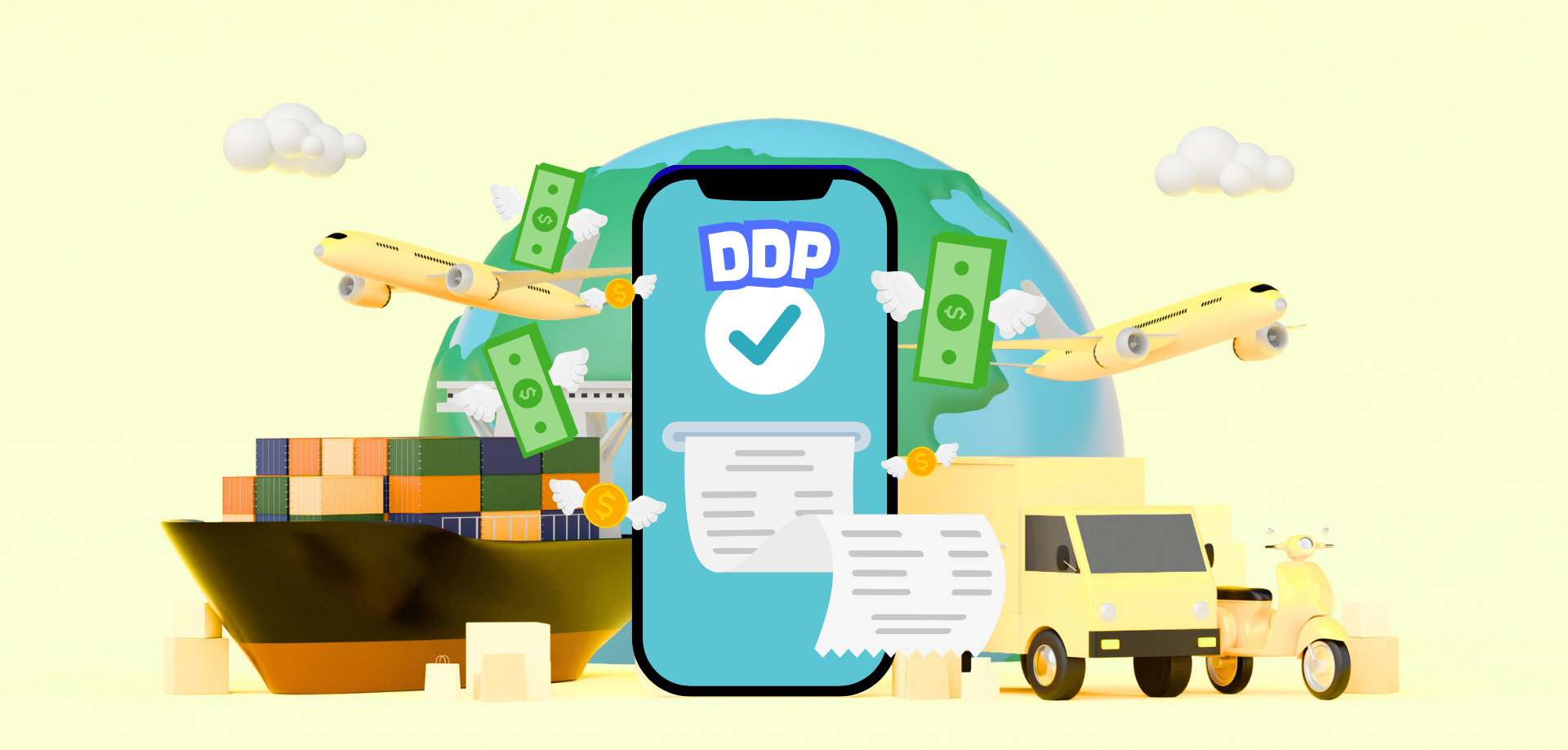
Secondly, if duties and taxes are charged to the receiver, this may lead to higher refusal rates, negatively impact brand perception, and increase return and operational costs. To address this, DHL recommends using the Duty Tax Paid (DTP) service, where the shipper prepays all applicable charges, ensuring a smooth and consistent delivery experience for customers.
Finally, customs requirements will become significantly more stringent. All shipments to the EU must be supported by accurate and detailed documentation, including precise product descriptions, itemized values, country of origin, HS Codes and Product Identifer (starting from 1 Nov 2026). Incomplete or inaccurate information may result in customs delays or even shipment holds.
To ensure smooth entry into the EU market under the new regulations, businesses should adopt a proactive and forward-looking approach.
Start by clearly informing EU customers about potential customs duties and Value Added Tax (VAT) to reduce uncertainty at delivery. At the same time, leverage DHL’s electronic shipping and customs declaration solutions to submit complete and accurate shipment data — including item descriptions, value breakdown, country of origin and Product Identifier — to ensure efficient clearance.
Businesses should also review their IOSS and overall customs strategies, ensuring all required documentation, such as a valid Power of Attorney (POA), is in place, and select the most appropriate clearance model based on their shipping practices.
Finally, adopting the DTP (Duty Tax Paid) service allows shippers to manage duties and taxes upfront. This not only avoids charging the receiver upon delivery but also helps improve delivery success rates and overall customer satisfaction.
As the EU Customs Reform brings significant changes, choosing a logistics partner with strong customs expertise is more important than ever. DHL Express offers:
✅ Extensive experience in EU customs clearance
✅ Dedicated customs advisory support
✅ End-to-end electronic declaration solutions
✅ Duty Tax Paid (DTP) services
✅ A global network with fast and reliable delivery
👉 Whether you are an eCommerce seller, brand owner, or business exporter, DHL helps you stay competitive, reduce logistics and duty risks, and unlock new opportunities in the European market.
Yes. The duty-free threshold will be removed starting 1 July 2026, meaning shipments of any value may be subject to customs duties.
A flat duty of €3 per item (based on HS Code) will apply to low-value B2C shipments (≤ €150).
The Import One-Stop Shop (IOSS) is a VAT (Value Added Tax) simplification scheme introduced by the EU for cross-border eCommerce, primarily for B2C shipments valued at €150 or below. Through IOSS, sellers can collect VAT at the point of sale and report it via a single platform, helping to speed up customs clearance and improve the delivery experience.
However, it is important to note that:
To ensure smooth customs clearance, make sure to provide complete and accurate shipment information, including:


 Share
Share