Multi-functional equipment often does not align perfectly with standard customs categories. A device that performs two or three distinct functions may fall under multiple harmonized headings simultaneously.
Incorrect classification exposes a business to tangible penalty risks, not just administrative issues. If a machinery import has not been through a rigorous classification process, it may be detained at the border while officials conduct their own engineering assessments.
My Global Trade Services (MyGTS), our trade services tool, allows your team to search current Harmonized System listings across global markets and cross-reference potential headings before a shipment is even collected.
Three risk factors to weigh
If you are managing outbound freight, it is important to be aware of the following:
• Overlapping Functions: Devices that combine separate capabilities may not fit cleanly under a single tariff description.
• Varying Duty Rates: Different potential headings for the same item can carry significantly different duty rates.
• Subjective Interpretation: Border officials in different countries may interpret the primary purpose of your goods differently.
This challenge is evident in sophisticated exports, such as advanced industrial robotics, where multiple integrated systems create overlapping functions that can make classification tricky.
How do you actually apply the General Rules of Interpretation?
Compliance officers apply the World Customs Organisation's General Rules of Interpretation in order until one resolves the classification. For composite or multi-function goods, like the overlapping-function devices covered above, that's usually Rule 3b.
What Rule 3b says
Rule 3b stipulates that composite goods made of different materials or components, which cannot be classified under Rule 3a, are to be classified as if they consisted of the material or component that gives them their essential character. In practice, this requires isolating the part that drives the item's principal value and function.
Specialized services from DHL Express can help you make sense of complex regional rules and align your documentation with the correct standards.
How to work through the rules in three steps
• Apply Rule 3a: First, determine whether one heading provides a more specific description of the goods than a more general one.
• Apply Rule 3b: If specificity is not decisive, identify the "essential character" based on the volume, weight, value, or functional role of the components.
• Apply Rule 3c: In the event that headings are still considered equally valid, the goods are classified under the heading which occurs last in numerical order.
How do customs thresholds affect how much duty you pay?
An incorrect assessment of an import's primary function can alter the applicable tariff rate and, consequently, your cost calculations, particularly if the value falls outside standard exemptions.
A shipment cost variance can accumulate significantly across regular freight movements. Such discrepancies often trigger post-clearance audits and penalties from destination revenue authorities.
Using Duty Tax Paid solutions means duty and tax charges are calculated and handled upfront, which helps to reduce unexpected payment delays at the border. This arrangement also ensures the tax invoice is directed to the shipper's account instead of the consignee, so there is no need to wait for the recipient to settle the charges.
Minor Component vs. Essential Character: How Your HS Code Choice Affects Duty and Risk
Classification Detail
| Coding by a minor part
| Coding by the main part ("essential character")
|
|---|
Tariff Rate (Duty)
| Typically lower
| Often higher
|
De Minimis Inclusion
| May fit under low-value thresholds
| Often exceeds national limit markers
|
Audit Risk
| High: Likely to trigger reassessments
| Low: Consistent and defensible,
supports long-term compliance consistency
|
Baseline thresholds vary considerably by destination. For goods imported into Japan, the de minimis threshold is a total customs value of JPY 10,000. Shipments below this value are generally exempt from customs duty and consumption tax, though some product categories, such as leather goods, knitwear, and certain footwear, are excluded regardless of value.
This threshold is changing. Under Japan's FY2026 tax reform, enacted in March 2026, low-value goods sold cross-border to Japanese consumers will become subject to consumption tax from 1 April 2028, collected by registered sellers or platforms. The special rule valuing personal imports at 60% of retail price ends on the same date. A valuation error can push a shipment over the threshold, triggering duties, taxes and a full customs declaration.
What do you need for a compliance file that holds up at the border?
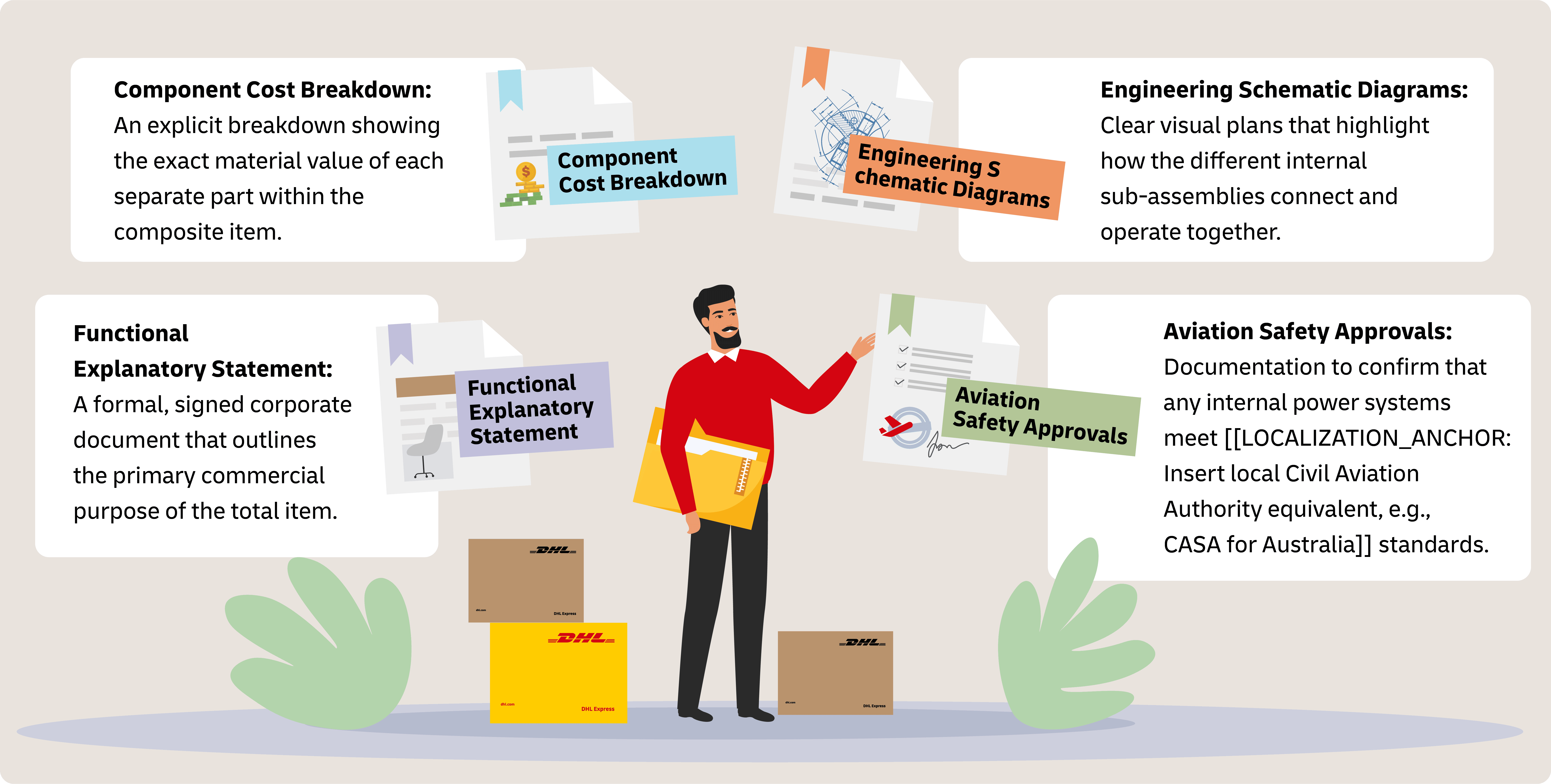
Assembling your technical literature, schematics, and functional breakdowns before you ship places you in a much stronger position should a border official attempt to reclassify your goods. If an official disputes your chosen code, a well-prepared file gives your customs broker concrete evidence to support your declaration. While customs authorities hold the final legal say, clear and thorough documentation strengthens your position.
MyDHL+ supports pre-clearance visibility, enabling your team to submit documentation to customs before the shipment physically arrives.