Two Kenyan traders buy the same handbag for KES 1,000 and sell it for KES 1,500. The first says they have made a 50% markup. The second says their profit margin is 33.3%. Both are right.
The problem starts when markup and margin are treated as the same thing. That can give you the wrong picture of what your business is actually earning. The gap widens once delivery to customers in other towns is added to the bill.
If you sell beyond your immediate area, getting the numbers right is essential. Here’s how markup and margin differ, where delivery belongs in your calculations, and how to charge for shipping without quietly giving away your profit.
Markup and margin: the same profit, viewed differently
Markup and margin begin with the same figure: gross profit.
Gross profit = selling price − cost
What changes is the number you compare that profit with.
Markup compares profit with the cost of the item:
Markup = (selling price − cost) ÷ cost × 100
Margin, also called gross profit margin, compares profit with the selling price:
Margin = (selling price − cost) ÷ selling price × 100
Let’s return to the handbag.
It costs KES 1,000 and sells for KES 1,500, leaving a gross profit of KES 500.
Divide that KES 500 by the original cost of KES 1,000 and you get a 50% markup. Divide it by the selling price of KES 1,500 and you get a 33.3% margin.
That distinction matters. Markup is always the higher percentage, so it can make a product appear more profitable than it really is.
Margin is usually the more useful number for business planning. It shows how much of every shilling earned remains available to pay for rent, salaries, packaging, delivery and your own income.
If your business is registered for VAT, calculate margin using prices that exclude the 16% VAT. That money is collected for the Kenya Revenue Authority; it is not business income.

Where does delivery fit?
If your business pays for delivery and does not charge the customer separately, delivery belongs on the cost side of the calculation.
Add it to the cost of the product to find the full cost of making that sale. Only then can you calculate the real margin.
Suppose you sell the same handbag to a customer in another county. The handbag costs KES 1,000, delivery costs KES 300, and the selling price remains KES 1,500.
Your calculation now looks like this:
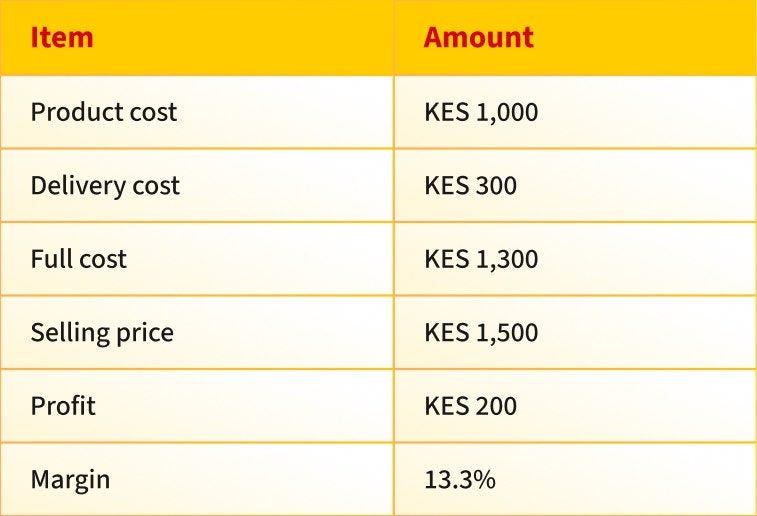
The price on your Instagram page has not changed, but your margin has fallen from 33.3% to just 13.3%.
To maintain a 33.3% margin, you need to set the price using the full cost:
Selling price = full cost ÷ (1 − target margin)
Using a full cost of KES 1,300:
KES 1,300 ÷ (1 − 0.333) = approximately KES 1,950
That calculation only helps when the delivery figure is accurate.
For many SMEs, shipping costs can be difficult to predict. A rider may charge one amount today and another next week. The price may also change with the destination, parcel size or urgency of the order.
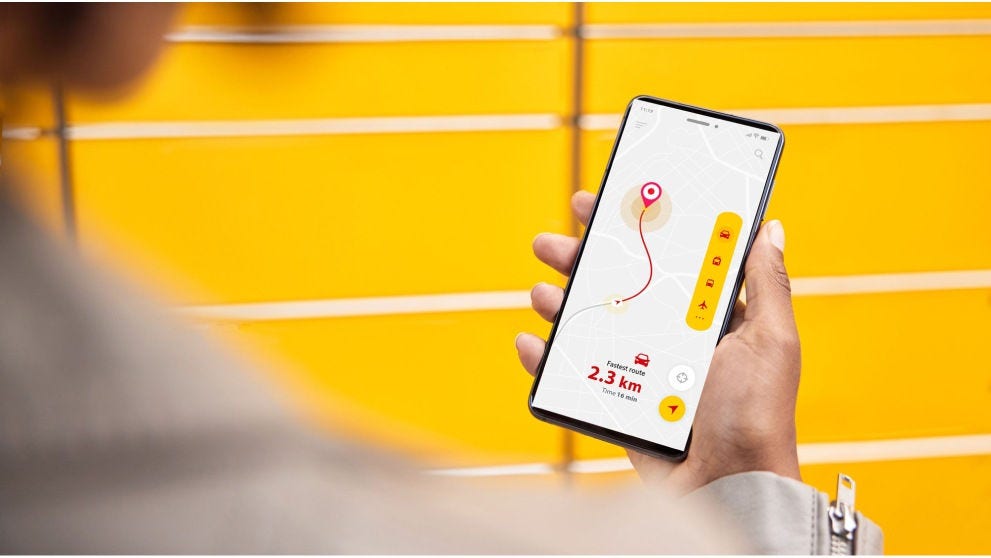
MyDHL+ lets you check an estimated shipping rate and delivery time using details such as the parcel’s origin, destination, weight and dimensions. This makes it easier to quote customers before confirming an order, rather than discovering the true cost after the parcel has already left.
Three ways to charge for nationwide delivery
There is no single delivery-pricing model that suits every biashara. The right approach depends on your products, customers and typical order size.
1. Build delivery into the product price
This approach works well when most parcels are similar in size and are sent to destinations with comparable delivery costs.
You include delivery in the product’s full cost, set the price from that figure and advertise one all-inclusive amount. Customers see a simple price with no separate shipping fee at checkout.
The downside? A customer nearby may pay the same price as someone much farther away, even though the first order costs less to deliver.
Before choosing this model, look at your average delivery cost across several orders. Avoid building your price around the cheapest route unless most customers are located there.
2. Charge for delivery separately
Listing delivery as a separate charge keeps the product price clear and allows the shipping fee to reflect the actual order.
It also gives customers a choice. Someone who needs an order urgently may be happy to pay more for a faster service, while a customer with more time may prefer a lower-cost option. Offering speed as a paid upgrade helps protect your product margin instead of forcing your business to absorb the extra expense.
Be transparent about the charge from the start. Customers want to know the full cost of an order before committing to buy, and an unexpected delivery fee at checkout may cause them to abandon the purchase.
3. Offer free delivery above a minimum order value
Free delivery is not truly free. Your business still pays for it.
It can still make commercial sense if the minimum order is set high enough to cover the shipping cost and leave you with a worthwhile profit.
A simple starting point is:
Typical delivery cost ÷ gross margin
If delivery usually costs KES 300 and your margin is 33%:
KES 300 ÷ 0.33 = approximately KES 909
This means roughly KES 909 in sales would generate enough gross profit to cover one KES 300 delivery, before considering other operating expenses.
Your free-delivery threshold should therefore sit comfortably above that figure. For example, you might set it at KES 2,000 or KES 2,500, depending on your average order, product costs and other expenses.
The goal is not simply to recover the delivery fee. It is to encourage a larger basket while keeping the order profitable.

How to protect your margin as orders grow
Your costs will not stay the same forever. Supplier prices change. Packaging becomes more expensive.
Customers begin ordering from new areas. Your average parcel may become larger or heavier. That is why margins should be reviewed regularly, not once a year when you happen to remember.
Three practical habits can help.
Consolidate orders where it makes sense
If several parcels are heading in the same direction and customers can wait, grouping shipments may lower the cost per parcel. Consolidated consignments can help businesses secure better value than sending each small shipment separately.
This works best for planned, non-urgent orders. Just be clear with customers about dispatch days and expected delivery times.
Reduce failed deliveries
A failed delivery can leave you paying for transport without completing the sale. If the parcel has to be returned and sent again, the cost climbs further.
Before dispatching, confirm the order, the customer’s phone number and the exact delivery point. For deliveries within Kenya, it can help to collect the town or county, estate or building name, road and a recognisable landmark. This matters most where a street address alone may not be enough.
Flexible delivery arrangements can also reduce missed attempts by allowing customers to choose when and where they receive their parcels.
Make your shipping volume work for you
As your order volume grows, review whether you are still using the right shipping arrangement.
A DHL Express business account offers up-front, volume-based pricing, which can make delivery costs easier to predict and manage. MyDHL+ can also be used to create shipments, arrange courier pickups, track parcels and manage billing in one place.
The key is to update your pricing when your delivery rate changes. If shipping becomes cheaper but your prices stay the same, your margin improves. If it becomes more expensive and you do nothing, the extra cost comes directly out of your profit.
FAQ
Yes. When a customer refuses a cash-on-delivery order, you may have to cover both the outbound and return delivery costs without making a sale. Your delivery pricing should account for this risk by including a reasonable buffer. For Kenyan online sellers, cash on delivery can build customer trust, but it can also put pressure on cash flow. It’s worth assessing each order carefully before offering it as a payment option.
Incomplete or unclear addresses can lead to delays, additional calls and repeat delivery attempts, and each one adds to the true cost of fulfilling an order. To help keep deliveries across Kenya on schedule and within budget, collect complete address details from the start, including the town, postal code, building or estate name, and a clear physical landmark where necessary.
Yes. Once your online store is connected to the right shipping tools, delivery charges can be calculated and added automatically. As your order volumes grow, tools such as batch uploads in MyDHL+ can help you automate e-commerce deliveries in Kenya. This reduces manual data entry and makes it easier to create labels, process shipments and manage charges across multiple orders.
Start when your profit margins can comfortably absorb delivery costs and you can consistently meet the delivery timelines you promise customers. Scaling an e-commerce business beyond your town takes more than demand. You’ll need reliable suppliers, clear fulfilment processes and a dependable delivery partner in place before order volumes begin to climb.


 Share

Similar Stories