#eCommerceAdvice

How to leverage the pharmaceutical industry in Malaysia & ship abroad

4 Mins Read

The pharmaceutical industry in Malaysia is one of the biggest in Southeast Asia, valued at RM15.7 billion in 2025 and projected to grow to RM21.4 billion in 20291. 

With major industry players constantly innovating and evolving products for retail, Malaysia is a force to be reckoned with in the global pharmaceutical market. At the same time, global demand for Malaysian pharmaceuticals also poses an opportunity for local producers. 

However, exporting medical drugs overseas is not an easy feat. From product-specific regulations to shipping requirements, here’s what you need to know before you start shipping.

Malaysia pharmaceutical industry overview: four types of pharmaceutical products

The pharmaceutical industry in Malaysia can be broadly categorized into four sectors:

  • Prescription medications
  • Over-the-counter (OTC) products
  • Traditional medicines
  • Food or health supplements

The market is unique in the sense that the Malaysian demographic represents a modern, yet traditional, outlook on medicine. While prescription drugs and OTC products are highly in demand, traditional and herbal medicines are also used in conjunction to deter and cure illnesses.

With diversity and demand within the industry, businesses enjoy a unique advantage when exporting to the world.

Prescription medications

Prescription medications, often referred to as scheduled poisons, form the backbone of clinical healthcare in Malaysia. 

To facilitate the overseas export of pharmaceutical products in this category, your items must be listed on the official KKM-approved product list. Furthermore, your business must hold a valid Type A Poison License (Wholesale) issued by the Ministry of Health2. 

Additionally, remember to verify the specific medical regulations of your destination country and the necessary local import approvals. 

Over-the-counter (OTC) products

Over-the-counter (OTC) medications are drugs available without a doctor's prescription. They are used to treat minor ailments, such as colds and allergies. 

For OTC items manufactured exclusively for a foreign market rather than local sale, an FEO (For Export Only) registration is necessary3. 

With this registration, an “E” administrative code will be added to your MAL number, qualifying the product for an abridged evaluation3. 

As with shipping prescription medication, you must ensure your OTC products comply with the health authority requirements of the destination country, such as Singapore’s Health Sciences Authority (HSA) or Australia’s Therapeutic Goods Administration (TGA). 

Traditional medicines 

Traditional medicines and supplements encompass a vast array of herbal and natural products rooted in cultural heritage. 

They must be registered with the Drug Control Authority (DCA) to certify their quality and safety standards before they are permitted for market entry4. 

As different countries maintain different restrictions and safety benchmarks for herbal supplements, it is essential to verify specific destination requirements before shipping herbal medicines internationally

Food or health supplements

Food or health supplements in the pharmaceutical industry in Malaysia consist of vitamins, minerals, or substances intended to supplement the diet. These products are not permitted to make any medicinal or therapeutic claims5.

Enjoy Up to 64% Off on International Shipping
Ship Globally for Less!

Open a DHL Account

The regional and global demand for the Malaysian pharma sector

The consistent investments from the Malaysian government into its pharmaceutical industry have ensured its steady growth over the years, making it a medical destination and a highly demanded medical product pioneer in Southeast Asia. 

Additionally, Malaysia’s large Muslim population makes the country a key player in the Halal pharmaceutical manufacturing industry. This represents a niche opportunity if you’re looking to export prescription drugs and the like to other countries. 

In particular, Muslim-dominated countries with smaller scales of pharmaceutical production could be targeted as key export destinations for Halal medical products.

In the process, you can also address the rising need for medication, the increased adoption of herbal solutions, and the growing demand for health supplements worldwide.

Why global demand is rising

The global dietary supplements market in particular is undergoing significant growth, with its valuation projected to reach US$319,180.2 million by 20306. 

This growth reflects a massive shift in consumer behavior, where heightened demand can be attributed to an increased prioritization of holistic wellness and preventive health, particularly among Gen Z and millennial consumers7. 

Regulations for shipping pharmaceuticals and restricted drugs in Malaysia

Shipping documents

The export of drugs and chemicals is restricted in Malaysia. In addition to your standard export documents, such as the Certificate of Origin, Commercial invoice, and Bill of Lading, you must apply for a Type A or B Licence to import or export chemicals before they can clear customs in Malaysia. This process can be done online via ePermit to ensure your qualification to export dangerous chemicals. 

Ensure that you obtain the necessary permits and licenses from MOH to avoid delays from shipment seizures by customs authorities.

Taxes

While the export of goods out of Malaysia does not incur any duties and taxes, you will have to pay the import equivalent in the destination country you ship to, depending on the legislation’s specific rules. 

Packaging

Special measures must be taken to ensure the safe and proper shipping of pharmaceuticals, such as:

  • The use of special packaging material for insulation
  • The use of temperature-controlled transport

Given the delicate nature of these products, working with an international logistics carrier that specializes in medical express transportation can go a long way in protecting product integrity and consumer safety.

Shipping insurance

Insuring your packages is also an important part of the shipping process. Shipping insurance is designed to financially protect your medical products on their journey. 

In the event of physical damage or loss, you can claim the necessary amount to facilitate the reproduction of medicines and refund affected customers. 

Learn more about exporting goods out of Malaysia and be well-informed about all that is required before you ship medical drugs abroad.

Pharmaceutical export checklist

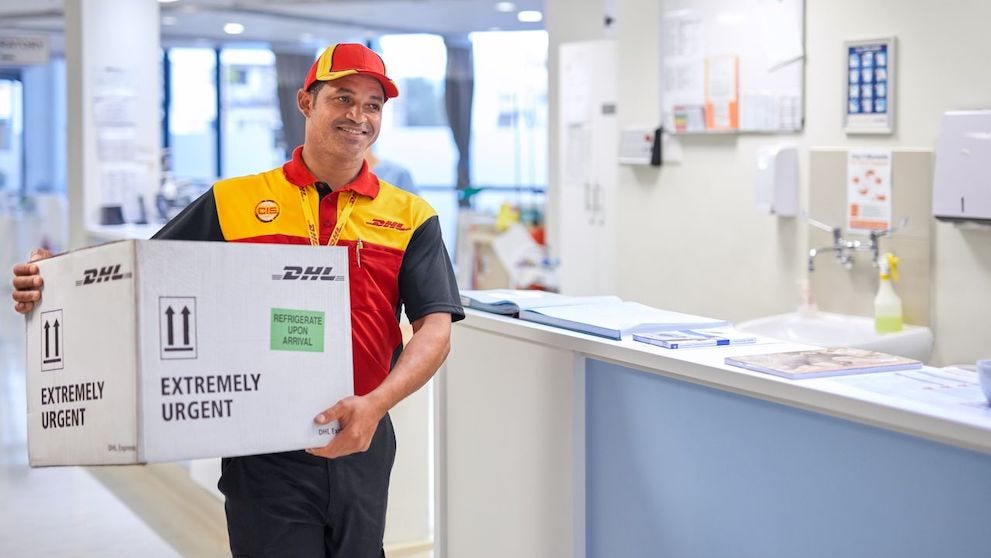
DHL staff walks out of a medical center carrying a parcel

Navigating international regulations when shipping pharmaceutical products requires a meticulous approach to documentation and product compliance. These efforts help you ensure your shipment reaches its destination without incident. 

Use this checklist to verify your export readiness:

  • HS code accuracy: Use precise harmonized system classifications for your medications to avoid costly customs holds or unnecessary package inspections.
  • Quality invoice description: Provide detailed data by replacing vague terms with specific identifiers. For example, instead of “Health Products”, use "Vitamin C Supplements (Non-Scheduled Poison) for Retail Sale”.
  • Destination-specific licensing: Secure the mandatory Certificate of Pharmaceutical Product or Certificate of Free Sale as required by foreign health authorities to permit legal entry.
  • Labeling compliance: Ensure every label features active ingredients, batch numbers, and expiry dates, translated correctly into the required language for your target market.
  • Temperature sensitivity protocol: Specify the required thermal range on your Air Waybill and apply IATA-compliant labels, particularly for delicate vaccines and biologics.
  • NPRA verification: Ensure all retail-ready packages display the mandatory FarmaTag™ hologram issued by Malaysia’s National Pharmaceutical Regulatory Agency to prove product authenticity.

Accelerate your global reach 

Meticulous compliance and efficient logistics are essential pillars of successful pharmaceutical shipping. By prioritizing cold-chain integrity, securing the documents required for pharmaceutical export, and ensuring regulatory precision, you can safeguard your products and consumer safety. 

Take the next step in your expansion journey today as you share your medical innovations with the world.

1- Bernama, accessed January 2026

2- National Pharmaceutical Regulatory Agency (NPRA), Ministry of Health Malaysia, accessed January 2026

3- Registration Of Product For Export Only (FEO), NPRA, accessed January 2026

4- Guideline on Natural Products with Therapeutic Claim, NPRA, accessed January 2026

5- Guideline on Registration Of Health Supplements, NPRA, accessed January 2026

6- Global Dietary Supplements Market Size & Outlook, Grand View Horizon, accessed January 2026

7- Future of Wellness Survey 2025, McKinsey & Company, accessed January 2026

Enjoy up to 64% off on international shipping
Only with DHL Express Business
Register Now
>