Import taxes, or customs duties, are one of the quiet forces shaping international trade. They directly influence whether cross-border ventures in Singapore succeed or struggle by determining pricing, profitability, and competitive positioning. A product that looks affordable at the factory gate can become expensive once taxes and compliance costs are applied at the border.
In 2026, import taxes continue to play multiple roles within the global economy. Governments use them to generate revenue and to protect domestic industries from foreign competition. They also function as tools of economic policy and diplomacy.
For companies operating across borders and enterprises involved in the logistics and supply chain industry, duties are more than regulatory line items. They shape what is known as Landed Cost, the total cost of delivering a product to the customer, including product value, shipping, insurance, and customs charges. Landed Cost is the true measure of global price competitiveness. If it is miscalculated, profit margins can evaporate, and pricing strategies can fall out of step with market realities.
Here we explore how import duties are calculated, why they vary between countries and products, and what businesses can do to manage both cost and compliance effectively.
Why do import taxes vary by country and product?
Import taxes vary because governments use them to achieve different economic and policy objectives. Duties depend on factors such as the Country of Origin (COO), product classification, and trade agreements.
Country of Origin (COO)
Customs authorities assess duties based on where the product was substantially transformed, not necessarily where it was shipped from. In 2026, many authorities now use blockchain-based supply chain documentation and AI-driven tracing tools to prevent “transshipment,” where goods are rerouted through a third country to disguise their true origin.
If a product originates from a country subject to higher tariffs or trade sanctions, it will be taxed accordingly, even if it is stored or repackaged elsewhere. This makes accurate origin documentation critical to compliance and cost control.
Product classification (HS codes)
Every product traded internationally is classified under the Harmonized System (HS), a globally standardized tariff nomenclature. HS codes act as the universal language of trade, ensuring consistency in product identification.
However, classification is not always straightforward. Minor differences in composition can dramatically affect duty rates. For example, a “pure silk” shirt may fall under one classification, while a “silk-blend” garment may be categorized differently and taxed at another rate.
Strategic industries
In 2026, industries such as electric vehicle (EV) batteries, semiconductors, and green steel are frequently targeted by governments seeking to protect domestic manufacturing or accelerate national energy transition goals.
These strategic tariffs are not always about revenue; they are often policy-driven measures designed to shape industrial development and supply chain resilience.
Development status
Import duty rates can also reflect a country’s development status. Least Developed Countries (LDCs) often benefit from preferential tariff programs. In contrast, trade between major developed economies typically falls under Most Favored Nation (MFN) rates, which apply standard tariff schedules unless a free trade agreement provides special terms.
Regional trade blocs
In 2026, major blocs such as the CPTPP, RCEP, and the recently expanded MCSFTA (Singapore-MERCOSUR FTA) offer zero-tariff benefits for qualifying goods. However, businesses must prove compliance with strict Rules of Origin to access these benefits.
How do import duties affect cross-border businesses?
Import taxes can transform the economics of a transaction overnight. A surprise 15% duty, if not factored into pricing, can erase profit margins entirely. For exporters and importers alike, failure to calculate duties in advance often leads to unexpected losses or renegotiated contracts.
This pressure has accelerated the trend toward nearshoring, where businesses relocate production to countries with favorable trade agreements to avoid high-tariff zones.
Another key consideration is the transfer of cost. Businesses must decide whether to absorb duties internally or pass them on to consumers. The transfer of costs into pricing of goods can protect margins but may reduce demand, while absorbing costs to support sales volume can compress profitability.
Finding the right balance between pricing strategy and cost management is essential for sustainable growth in an interconnected global trade economy.
Import tax lookup table by country
| Country | Standard Import Taxes (VAT/GST) | De Minimis Threshold (Tax-Free Limit) |
Australia | 10% GST | GST is applicable for all imports |
China | ~13% VAT | The general duty-free allowance of China Customs is less than 50 RMB and is based on the duty/tax amount, not on the goods value |
Germany (EU) | 19% VAT | VAT is applicable for all imports (no de minimis for VAT) Below €150 for exemption from standard customs duties |
Hong Kong | 0% | N/A (Most goods are tax-free) |
Indonesia | 11-12% VAT | US$3 (FOB value) |
Japan | 10% Consumption Tax | JPY 10,000 |
Malaysia | 10% Sales Tax (on LVG) | RM 500 (CIF value) |
New Zealand | 15% GST | GST is applicable for all imports |
Philippines | 12% VAT | PHP 10,000 de minimis for duties and taxes |
Singapore | 9% GST1 | S$ 400 |
South Korea | 10% VAT | US$150 ($200 for US-origin goods) |
Thailand | 7% VAT | THB 0 |
United Kingdom | 20% VAT | VAT is applicable for all imports (collected at checkout for items under £135) Below £135 for exemption from customs duties |
United States | 15% Global Surcharge (as of 24th February) | $0 (De minimis suspended as of Feb 2026) |
Vietnam | 8 % VAT | 8% VAT (Standard 10% rate reduced for most goods through Dec 31, 2026) |
Best practices for managing import taxes
Identify the correct HS code
HS Codes determine how goods are classified for customs purposes and directly influence duty rates. Even small differences in product composition or description can change the applicable tax outcome.
Use the official World Customs Organization (WCO) Nomenclature and review the Chapter and Section Notes for guidance. Where uncertainty exists, previous customs rulings can provide useful insight into how similar products have been classified in the past.
For businesses navigating classification or compliance requirements, DHL Express’s MyGTS (My Global Trade Services) provides expert guidance on HS code selection, customs documentation, and regulatory requirements. This service helps exporters reduce classification risk and streamline cross-border shipments, ensuring smoother international trade operations.
Determine precise Country of Origin
Businesses should maintain clear production records and a detailed Bill of Materials (BOM) to demonstrate compliance with Rules of Origin requirements under relevant trade agreements. Without sufficient records, customs authorities may apply standard import duty rates instead of reduced or zero-tariff treatment.
Research applicable trade agreements
Bilateral and regional agreements often allow qualifying goods to enter markets at lower import duty rates, yet many businesses overlook these opportunities.
By reviewing applicable agreements and eligibility requirements, companies can identify potential cost savings and improve their competitive positioning in international markets.
Factor in valuation and anti-dumping duties
Customs authorities typically calculate duties based on the CIF Value, the total value of the product plus shipping and insurance costs. This means import taxes apply not only to the product price but also to transportation expenses. Misunderstanding valuation rules can therefore lead to underestimating the total duty exposure.
Anti-dumping duties also remain a significant consideration in 2026. These measures address situations where imported goods are priced below market value in a way that harms domestic industries. Duties in anti-dumping cases can be substantial and may apply to sectors such as steel, aluminium, and ceramics.
Streamline your logistics with DHL Express
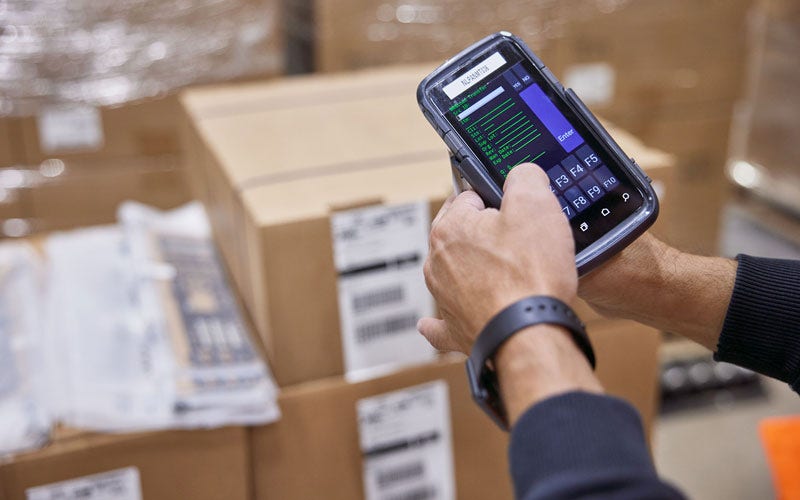
In 2026, manual paperwork remains one of the primary causes of trade bottlenecks. Incomplete invoices, incorrect HS codes, and missing origin documentation often lead to clearance delays.
International delivery services like DHL Express help close this compliance gap by digitizing and automating customs processes.
Paperless Trade (PLT) benefits
Paperless Trade enables Digital Customs Data to be transmitted electronically before shipments arrive at the border. Details such as HS Codes, invoices, and origin documentation are shared in advance. This approach shortens inspection times and helps shipments move through customs with fewer delays.
Duties & Taxes Paid (DTP) strategic advantage
DHL Express’ Duties & Taxes Paid (DTP) service allows businesses to pay import duties on behalf of the receiver. This creates a seamless, local-like checkout experience and ensures that customers do not have to pay unexpected fees upon delivery.
By absorbing and managing duty payments upfront, businesses gain greater control over customer experience and strengthen retention.
MyDHL+ landed cost calculator
The MyDHL+ platform provides a Landed Cost Calculator covering more than 220 territories, delivering up-to-date duty estimates and compliance insights. SMEs can use these estimates to quote all-inclusive prices with confidence, protecting margins and reducing the risk of underpricing international shipments.
Speed-to-market value
Modern logistics is about more than transportation. It is about reducing compliance risks, avoiding customs holds, and accelerating speed-to-market so businesses can respond quickly to customer demand.
By combining digital customs tools with logistics expertise from partners such as DHL Express, companies can move goods efficiently while maintaining regulatory compliance.
Mastering import taxes for competitive advantage
Import taxes are one of the fundamental forces shaping global commerce. They determine the true cost of international trade and directly influence pricing, sourcing strategies, and many other aspects of international trade and shipping.
While the system may seem complex, it is manageable with the right knowledge, preparation, and digital support. To strengthen your cross-border strategy, consider opening a DHL Express business account to gain access to dedicated shipping rates, digital customs tools, landed cost visibility, and expert support designed to help Singapore-based businesses.

Trade smarter. Partner with DHL Express for dedicated rates and customs tools today.
Open an Account


 Share
Share
Similar Stories