#LogisticsAdvice

Kenya Customs Charges: Duty, VAT, IDF and RDL

Paul Makolosi
Paul Makolosi
Country Manager Kenya
5 min read
Kenya Customs Charges Duty
This article covers:
Start with the CIF value. KRA generally uses the cost of the goods, insurance and freight
Get the HS code right
Check current rates before every order

On 30th June 2026, a mobile phone imported into Kenya attracted no import duty. From 1st July, the same phone attracted a 25% rate. The product hadn't changed. The tariff rate had, and so had the cost of importing it.

For Kenyan businesses, that difference can affect pricing, cash flow and profit margins. Before placing an order, it helps to know how import duty, VAT and other charges are worked out. Here's a practical guide to estimating the cost of bringing goods into Kenya.

A note on calculators: Many online tools labelled as KRA import duty calculators focus on motor vehicles. This guide is for business imports such as stock, spare parts, equipment and raw materials.

First, work out the customs value

For most imports, KRA starts with the CIF value: the cost of the goods, insurance and freight.

  • Cost: The amount paid to your supplier

  • Insurance: The cost of insuring the goods in transit

  • Freight: The cost of transporting the goods to Kenya

Add these amounts together to get the customs value. It's the basis for calculating most import charges.

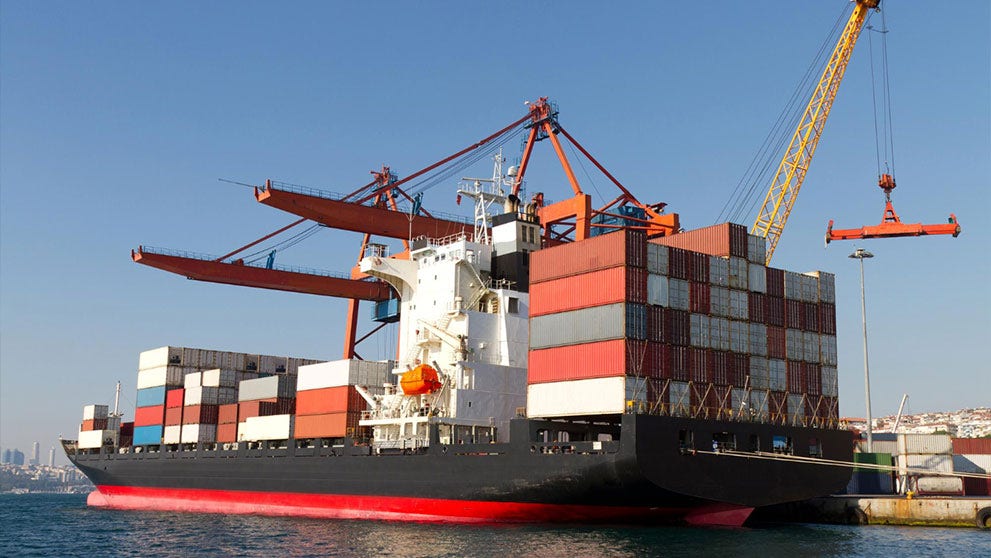
/content/dam/kenya/logistics-guide/export---import-advice/import charges in Kenya.jpg

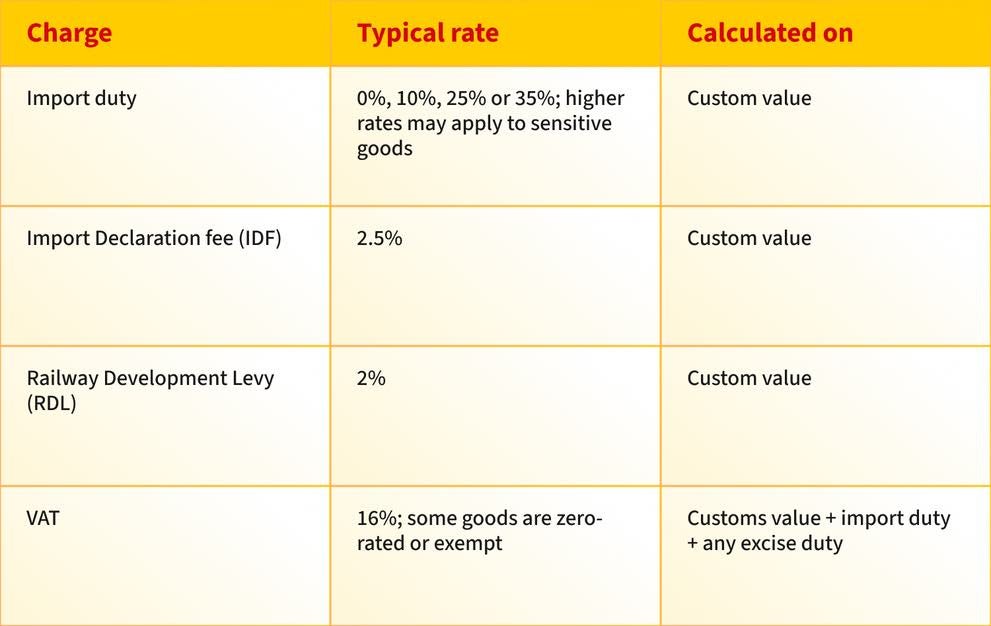
The main import charges in Kenya

Import duty

Import duty

The duty rate depends on your product's tariff classification under the East African Community Common External Tariff. Most goods fall into one of four bands: 0%, 10%, 25% or 35%.

IDF and RDL

IDF and RDL are levies under Kenya's Miscellaneous Fees and Levies Act. RDL increased from 1.5% to 2% on 27th December 2024. Some goods may be exempt, and registered manufacturers can qualify for lower rates on certain imports.

VAT

VAT is calculated on a larger base than IDF and RDL. KRA adds import duty and any excise duty to the customs value, then applies VAT to the total. This means VAT is charged on top of duty.

Some goods also attract excise duty. For example, the Finance Act 2026 raised excise duty on imported sugar from KSh 7.50 to KSh 40 per kilogram.

Worked example: importing goods worth KSh 100,000

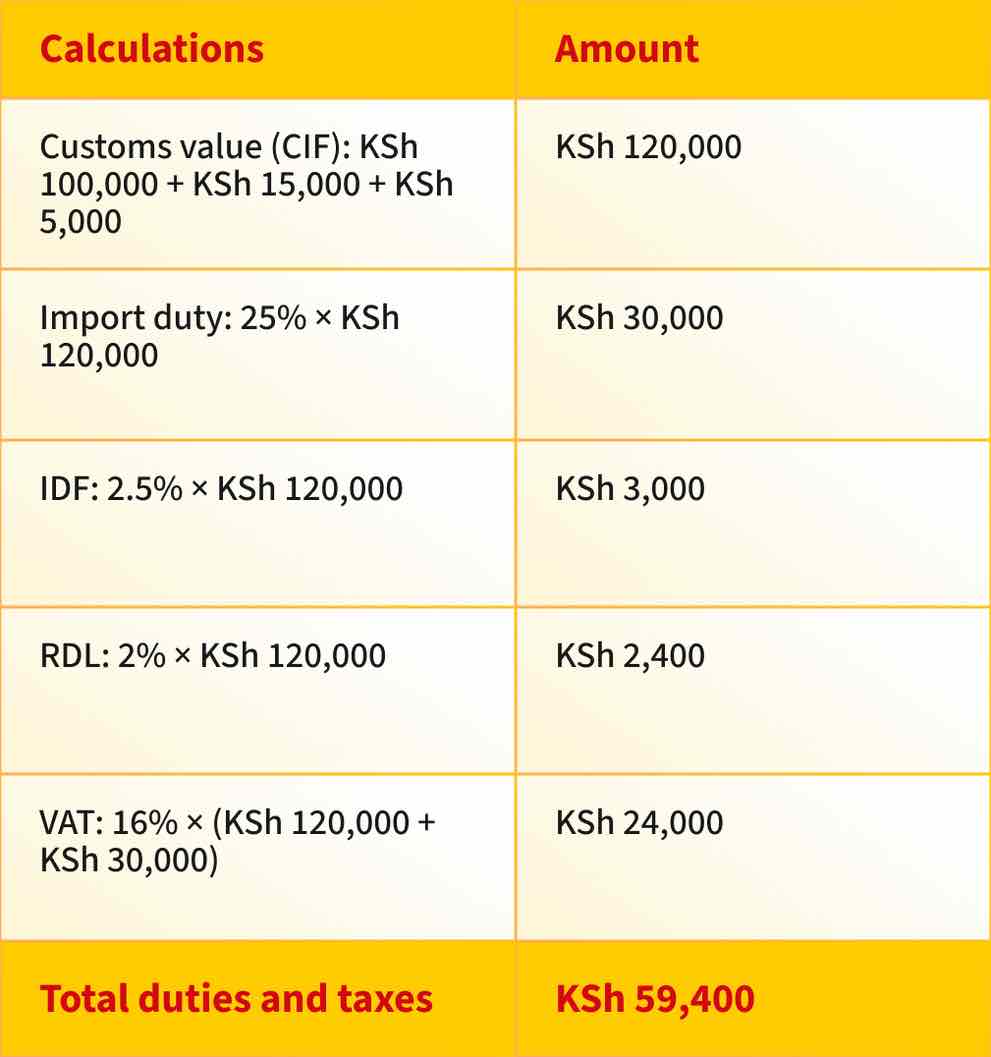
Say you order goods for KSh 100,000, pay KSh 15,000 for freight and KSh 5,000 for insurance. The goods fall in the 25% duty band and attract no excise duty.

Import duty calculations

Your estimated cost comes to KSh 179,400: the KSh 120,000 customs value plus KSh 59,400 in duties and taxes. This excludes clearing fees and delivery to your premises.

Now put the same goods in the 10% duty band. Import duty falls to KSh 12,000, and VAT falls to KSh 21,120. Total duties and taxes come to KSh 38,520, which is KSh 20,880 less than in the 25% band.

That's why getting the product classification right matters.

/content/dam/kenya/logistics-guide/export---import-advice/Kenya HS code.jpg

Your HS code can change the bill

Every traded product has a Harmonised System (HS) code. Customs uses it to determine the applicable duty rate and identify permits or other import requirements. Products that look similar can fall under different codes and attract different charges.

Don't rely on your supplier's description alone. A wrong code could mean paying too much, or paying too little and facing penalties later. Check the classification before your goods leave the supplier. If you're unsure, speak to your clearing agent or KRA.

Check rates before each order

Import rates and exemptions can change, so don't assume last year's calculation still applies.

From 1st July 2026, for example, mobile phones moved from 0% to 25% duty for one year, while some software media moved from 0% to 10%. Finance Acts can also change excise duty and levies. From the same date, the aviation exemption from IDF and RDL was narrowed to specific aircraft goods.

Before confirming an order, check the current rate, any applicable exemptions and the product's import requirements.

Estimate your landed cost before you buy

You don't have to wait for your goods to arrive in Kenya to estimate the full cost. Our free My Global Trade Services (MyGTS) tool can help you find an HS code, check import requirements and estimate duties, taxes and freight.

Use the estimate alongside your supplier's quote to plan your order. MyGTS is a planning tool, not an official KRA assessment. KRA confirms the final charges during customs clearance.

When your goods travel with DHL Express, we handle customs clearance for your shipment. For larger shipments by air or sea, DHL Global Forwarding offers customs brokerage services.

/content/dam/kenya/logistics-guide/export---import-advice/import duty and taxes.jpg

Who pays import duty and taxes?

That depends on what you agree before shipping. When importing goods into Kenya, the importer will normally need to settle the applicable charges before customs releases the goods.

If you're sending goods from Kenya, eligible DHL Express shipments can use Duties and Taxes Paid (DTP) billing. This lets you pay the destination country's import charges instead of asking your customer to pay when the shipment arrives.

Agreeing who pays doesn't change the amount due. It simply makes clear who will settle the bill.

Know your landed cost before you commit

A lower supplier price doesn't always mean a cheaper order. Freight, import duty, VAT and levies all contribute to the amount you'll spend getting goods to your business.
Before you buy, confirm the HS code, check the latest rates and estimate the full landed cost. With a DHL Express business account, you can use MyGTS to plan your costs and ship with customs clearance support.

FAQs

KRA publishes Kenya's tariff rates and import rules, but many online "KRA import duty calculators" focus on motor vehicles. For business goods, you can estimate charges using the steps in this guide or use MyGTS to get an estimated view of duties, taxes and freight. If you import regularly, automating landed cost calculations can also help you keep quotes aligned with current rates.

Goods that meet the East African Community (EAC) rules of origin may qualify for duty-free entry into Kenya. You'll need the required proof of origin, such as an EAC certificate of origin. VAT may still apply, along with any other relevant charges. If you're also selling across the region, compare the potential costs and requirements of each export market before deciding where to focus.

Not necessarily. It depends on the shipping terms you agree with your supplier. A quote may include freight to Kenya but exclude import duty and taxes, which you may need to pay before your goods are released by customs. Confirm in writing what the price covers before you pay. That matters most if you're importing from China to Kenya for the first time.

You'll generally need a commercial invoice, packing list and transport document, such as an air waybill or bill of lading. Depending on the goods, permits, certificates or other documents may also be required. Check the requirements before shipping, and make sure the commercial invoice clearly states the goods' description and value, as these details help determine the charges due.