No. The Customs K3 is submitted through the RMCD declaration portal, which is accessible only to licensed customs agents. You can download the K3 PDF for reference, but the submission must be made by a registered agent such as DHL Express.

The K3 Form, or Borang Kastam K3, is a shipping document used in Malaysia for transporting goods with customs duties or taxes already paid. It is required by the Royal Malaysian Customs Department (RMCD) for shipments by air or sea between Peninsular Malaysia, Labuan, Sabah, and Sarawak.
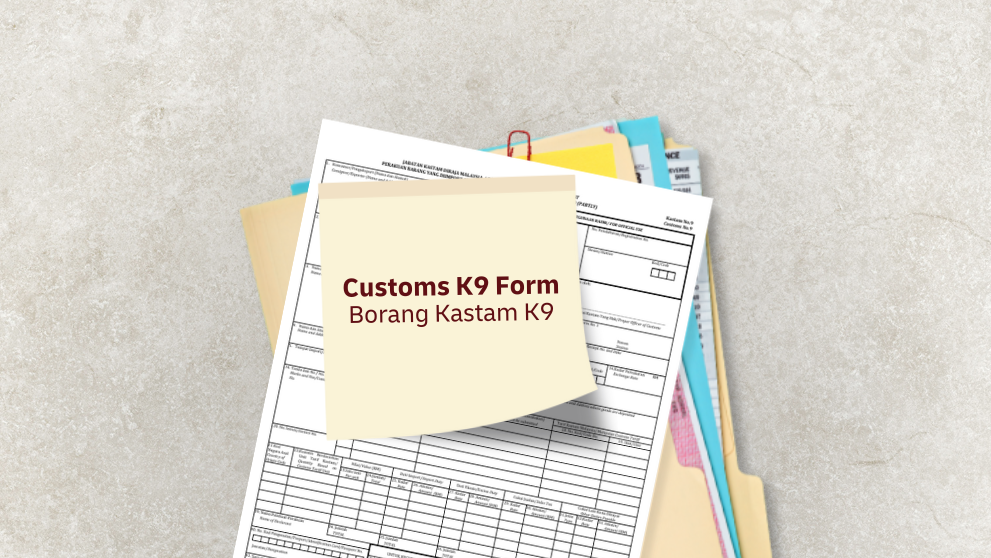
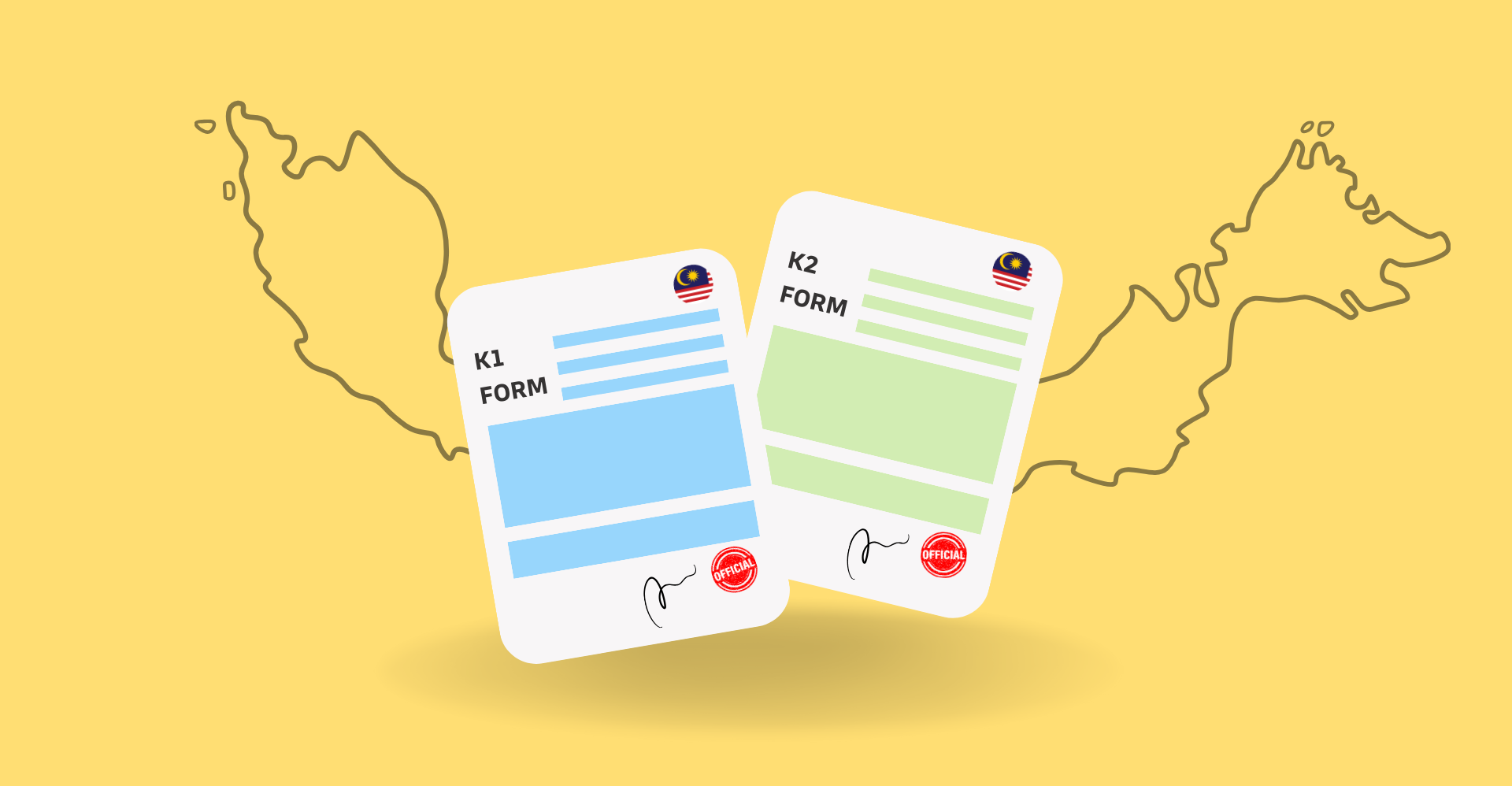
In Malaysia, various customs declaration forms exist, including K1, K2, K8, and K9, each serving a specific purpose in the customs process to ensure goods are properly declared and cleared according to regulations.
In this article, we will cover everything you need to know about K3 Form, explaining what they are, when they're needed, and how to prepare them.
In Malaysia, the term, K3 form can refer to two different documents:
This article focuses on the Customs K3 form (Borang Kastam K3).
The K3 form is a permit required by RMCD to move goods within Malaysia’s different customs territories. It applies when transporting duty-paid goods between Peninsular Malaysia, Sabah, Sarawak, and Labuan.
This is an essential document for businesses managing inter-state shipments across these regions. The requirement applies to all modes of transport, including air and sea.
As these movements are considered domestic, no additional import duties or taxes are charged. The K3 form serves to declare and track the movement of goods, not to assess taxes.
Here’s what a K3 form looks like:

Malaysian customs uses a family of K-forms for different shipment stages. In short: K1 is for imports, K2 for exports, K3 for moving already-cleared goods between Malaysia's customs territories (the subject of this page), K8 for goods under customs control in transit, and K9 for releasing goods from a licensed warehouse.
The K3 form must be submitted to a customs officer at the receiving location before the goods can be transported.
The customs officer will use it to check the details, ensure compliance, and approve the goods for transport.
The K3 applies whenever duty-paid goods cross between any of Malaysia's four customs territories including, Peninsular Malaysia, Sabah, Sarawak, and Labuan.
A few concrete examples:
No additional import duty or SST is charged on these movements, as the goods have already been cleared when they first entered Malaysia. The K3 declaration is required at this stage as a record of movement for RMCD.
At the receiving port, the customs officer verifies the K3 declaration against the shipment. Once approved, a stamped or system-generated confirmation (sometimes called the "K3 chit") is issued, confirming the goods have been cleared for onward delivery. Your forwarder will normally pass this to you or hold it on file as part of the shipment record.
You cannot submit the K3 form directly to RMCD yourself.
Declarations are filed through the Royal Malaysian Customs declaration portal, and only licensed customs agents, such as DHL Express, are authorised to submit them on your behalf.
Hence, the PDF file of the K3 (Borang Kastam K3) below is only for reference. The actual submission goes through your agent.
Here are the necessary information and documents required from you for submission:
When shipping with DHL Express, there's no need for you to prepare your own K3 form. Our customs team will take care of the customs declarations for you.
Thus, it's important to provide accurate information during booking, as they will be used to prepare your customs declarations forms.
In cases where we need clarification or more information, our customs officers will reach out, usually via email.
No. The Customs K3 is submitted through the RMCD declaration portal, which is accessible only to licensed customs agents. You can download the K3 PDF for reference, but the submission must be made by a registered agent such as DHL Express.
No. They share the name but are issued by different authorities for different purposes. This page is about the Customs K3 (Borang Kastam K3). For vehicle ownership transfers, see the JPJ forms page.
No. No additional import duty or SST is charged on duty-paid goods moving between Malaysia's customs territories. The K3 records the movement; it is not a tax assessment.
Informal term for the stamped or system-generated confirmation issued at the receiving port once the K3 declaration is cleared. It confirms the goods have been released for delivery.
Usually no. Inbound overseas parcels held at customs are typically a K1 (import declaration) matter, not K3. If your shipment is held at KLIA or another customs point, see our guide on shipment on hold: reasons and solutions.
No. K3 is for inter-territorial movement of duty-paid goods. Warehouse-specific operations fall under different customs forms (for example, K9 for removal from licensed warehouses). If you operate a Licensed Manufacturing Warehouse, see our LMW guide.
The K3 form template is fixed. What changes over time is the filing system (currently the RMCD declaration portal) and the supporting documents a customs agent may require. Check with your customs agent (typically your courier’s appointed customs support, such as DHL Express) if you are unsure whether you have the latest version.


 Share
Share