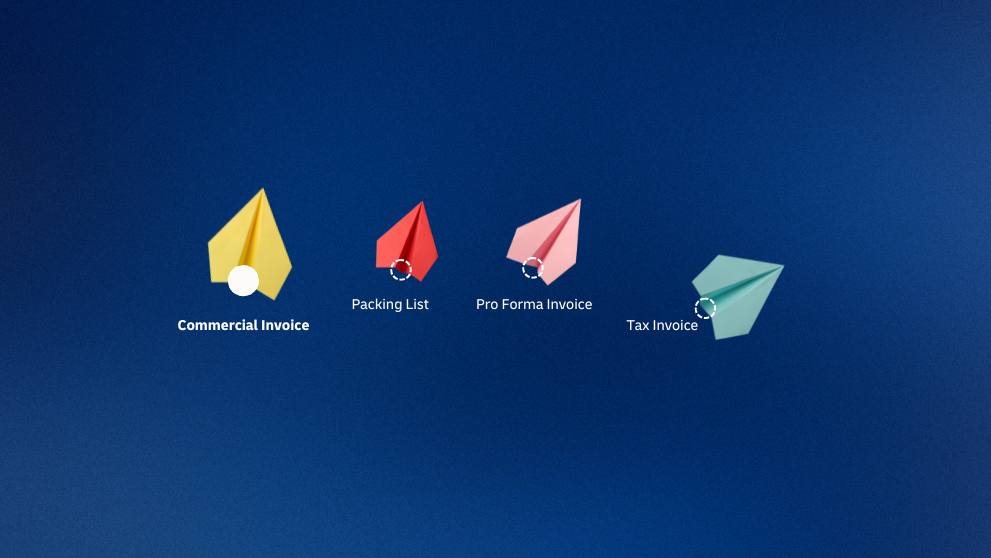
For Malaysian businesses engaged in international trade, the paperwork can be daunting. One particular document that often causes confusion and delay is the pro forma invoice, which is frequently mistaken for a legally binding commercial invoice.
However, a pro forma invoice is not the same as a commercial invoice. These key shipping documents serve distinct purposes in the sales and international logistics and transportation process, particularly when dealing with customs authorities.
If your Malaysian business is involved in exporting or importing goods and you're seeking to understand the difference between these two critical documents, and more importantly, how to get them right, this guide will help.
We'll cover what a pro forma invoice is for customs, and when and how to use a pro forma invoice. We'll also explore what a commercial invoice is and how to prepare one. We will also explain how DHL Express can make creating both pro forma and commercial invoices a much easier process.
Pro forma invoice: what it is and when to use it
To understand this term, let’s first look at the meaning of 'pro forma'. Pro forma, which means ‘as a matter of form’ in Latin, is a phrase that refers to actions taken or services that are conducted out of courtesy or tradition rather than for a legitimate purpose.
Hence, a pro forma invoice is a document that states the offer or preliminary bill from the seller to provide specific products at a given price. It is essentially a good-faith estimate of the final commercial invoice. That's why a proforma invoice is not the same as a commercial invoice.
This document functions as a preliminary document that lists the particulars and anticipated charges of a proposed transaction. It is often given by a vendor to a potential customer before the delivery of the products or services. It is essential to note that a pro forma invoice is not legally binding, meaning it cannot be used to demand payment or enforce the terms of the sale; it is purely informational. A pro forma invoice's objective is to provide the buyer with an idea of how much money they may anticipate paying overall for the goods or services.
Like a majority of shipping documents, not all pro forma invoices are the same, so there might be slight differences with each company. However, a typical pro forma invoice includes these key elements:
- Description of Goods: A complete description of the goods or services being offered, including their quantities, details, and any additional terms or conditions.
- Estimated Costs: An estimate of the expenses for each good or service, taking into account unit pricing, taxes, shipping charges, and any applicable rebates or special offers.
- Contact Information: Contact details for the buyer and the vendor, such as names, addresses, phone numbers, and email addresses.
- Validity Period: Details of the pro forma invoice's validity term, showing the window of opportunity for the buyer to accept the offer.
- Terms and Conditions: Detailed terms and conditions related to the transaction, such as payment guidelines, delivery dates, and any applicable warranties or guarantees, may also be included in the invoice.
Typically, a pro forma invoice is utilised when a buyer and seller are still in the planning or negotiating stages of a transaction. This is because it gives the buyer a rough idea of the costs, enabling them to decide whether the purchase can be afforded and adjust their budget accordingly.

Commercial invoice: the document that clears customs
A commercial invoice serves as a customs declaration for goods being shipped across international boundaries. For Malaysia import and export businesses, it is the most critical document for customs clearance locally and overseas.
A commercial invoice serves as a customs declaration and a contract of sale. This means that it legally formalizes the transaction between the seller and the buyer while also providing customs authorities with the detailed information needed to calculate the applicable taxes, levies, and charges on imported products.
A standard commercial invoice includes these key elements:
- Seller and Buyer Information: Detailed information about the seller and the buyer, such as their names, addresses, contact details, and tax identification numbers.
- Description of Goods: A comprehensive description of the products shipped, detailing their quantities, unit costs, overall costs, and any pertinent product codes or specifications.
- Commodity Code: Shows the product identification code that is used in the country of export to help categorize the product or items that are being exported.
- Origin Country: This section refers to the original location of the items' manufacture (not the country of the exporter). Do take note that Items that are produced or made in more than one nation will be listed in this section.
- Invoice Total Declared Value: The total value of the commodities using the chosen Incoterm. These two elements must also be noted if the seller is responsible for paying the freight and insurance costs. However, if the buyer is to pay the freight company and any other incurred costs, you simply need to enter the worth of the goods.
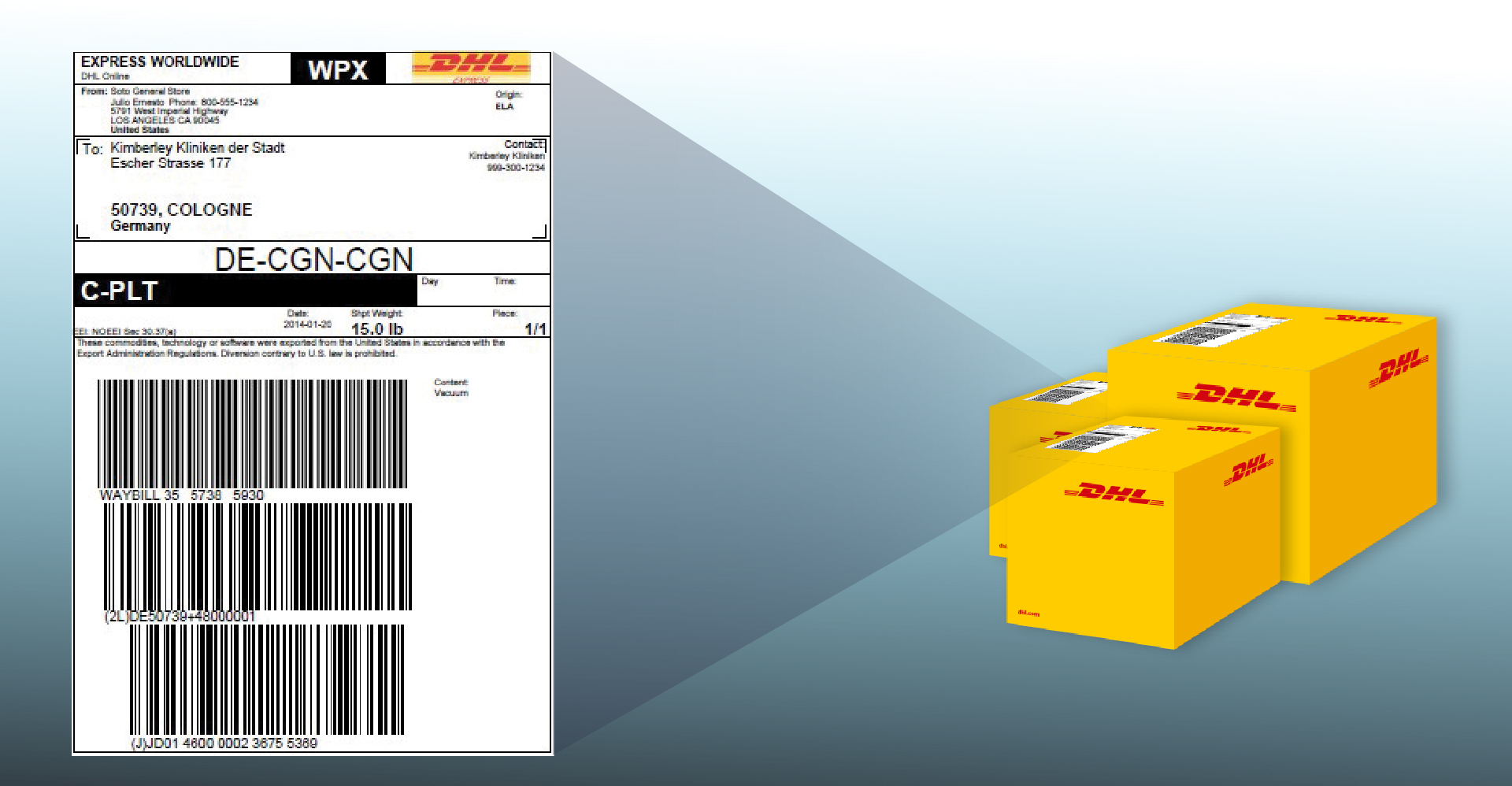
- Shipping Information: Information about the shipment's method of delivery, carrier, tracking information, and any relevant shipping documents, including airway bills or bills of lading.
DHL Express makes it easy to generate an accurate commercial invoice through its online shipping platforms, such as MyDHL+. This vital automation reduces the risk of human error and helps streamline the process. For import export businesses, this efficiency is critical to avoid customs delays and ensure compliance with international trade regulations.
Pro forma vs commercial invoice: the differences
A proforma invoice is not the same as a commercial invoice. While both of these documents are forms of invoices and share similar qualities, they have several distinctive features. To summarize everything, here are the main differences between these two invoices:
| Feature | Pro Forma Invoice | Commercial Invoice |
| Main purpose | To provide an estimated cost, offer, or sales quote to a potential buyer. | To serve as a legally binding record of sale and a required customs document. |
| Legality | Not legally binding; it is only an informational document. | Legally binding; it represents a finalized sale contract. |
| Timing | Issued before the goods are shipped and before the transaction is finalized. | Issued after the transaction is finalized and shipped with the goods. |
| Payment | Does not constitute a formal demand for immediate payment. | Acts as a formal demand for payment from the seller to the buyer. |
| Customs Clearance | Not used for customs purposes; it is only a preliminary document. | Required for customs clearance to assess duties, taxes, and verify compliance. |
Two invoices — similar, yet different
It's safe to say that pro forma and commercial invoices have similar details, such as buyer and seller information, the contents of the shipment, their price, terms of sale, insurance costs, country of origin, and the Harmonised System (HS) codes.
However, we hope that you understand what a pro forma invoice is, what a commercial invoice is, and the differences between pro forma invoices and commercial invoices after reading this article.
Understanding the differences may be crucial when it comes to shipping your products internationally. This is especially important as customs authorities from all around the world typically use invoices to determine whether the goods in question may be exported or imported — for instance, in the case of restricted goods.
So, to wrap things up, commercial invoices record completed transactions and serve as official documents for payment. On the other hand, pro forma invoices give estimations and introductory data to potential customers.


 Share
Share
Similar Stories