Multi-functional equipment doesn't always fit neatly into standard customs categories. A device that performs two or three jobs at once can often sit under multiple harmonised headings at the same time.
If the classification isn't quite right, you can be exposed to real penalty risk, not just extra paperwork. If a machinery import hasn't been through a careful classification process, it can end up held at the border while officials conduct their own engineering checks.
Our My Global Trade Services (MyGTS) tool can help your team search current Harmonised System listings across global markets and cross-reference potential headings before your freight is even collected.
Three risk factors to weigh
If you're managing outbound freight from a major manufacturing hub like Cikarang, it's helpful to watch for:
- Overlapping Functions: Devices that merge separate capabilities don't always fit cleanly under a single tariff description.
- Varying Duty Rates: Different headings for the same item can carry very different duty rates, impacting your final costs.
- Subjective Interpretation: Border officials in different countries can sometimes interpret the purpose of your goods differently.
You might see this with complex equipment, such as automated agricultural machinery that combines sorting, processing, and data-logging functions. In cases like this, the overlapping functions make classification anything but straightforward.
How do you actually apply the General Rules of Interpretation?
To find the correct legal code, compliance officers work through the World Customs Organisation's rules in a specific order. If Rules 1 through 3a don't resolve the heading, then Rule 3b often provides the clarity needed.
What Rule 3b says
Rule 3b states that composite goods made of different materials or components, which can't be classified under Rule 3a, are to be classified as if they consisted of whichever material or component gives them their "essential character." In practice, this means we need to identify which part truly drives the item's value and function.
DHL Express's Non-Routine Entry service can help you make sense of complex regional rules and get your documentation lined up with the right standards.
How to work through the rules in three steps
- Apply Rule 3a: First, check if one heading gives a more specific description of the item than a more general one.
- Apply Rule 3b: If not, then work out the "essential character" based on the volume, weight, value, or role of the components.
- ·Apply Rule 3c: If headings are still equally valid after this, you classify the item under whichever heading comes last numerically.
How do customs thresholds affect how much duty you pay?
Misjudging an import's primary function can change the tariff rate that applies, and with it, your cost calculations. This is especially true if the value falls outside standard exemptions.
A variance of IDR 895,000 per shipment can add up quickly across regular freight movements. Spikes like this can sometimes trigger post-clearance audits and penalties from the destination's revenue authorities.
Using Duty Tax Paid solutions means duty and tax charges can be calculated and handled upfront, which helps reduce unexpected payment holdups at the border. It also means the tax bill goes straight to the shipper's account instead of your customer's, so no one is left waiting for them to pay.
Classification Detail
| Minor Component Coding
| Essential Character Coding
|
|---|
Tariff Rate Application
| Uses lower auxiliary component rate
| Uses primary high-value machinery rate
|
De Minimis Inclusion
| May fit under low-value thresholds
| Often exceeds national limit markers
|
Audit Vulnerability
| Triggers frequent reassessment notices
| Supports long-term compliance consistency
|
Baseline thresholds vary a lot by destination. For example, for goods imported into Indonesia, the de minimis threshold is currently USD 3. An error in calculation when you are exporting to a country with a similar low threshold can push your shipment into a full multi-day entry process.
What do you need for a compliance file that holds up at the border?
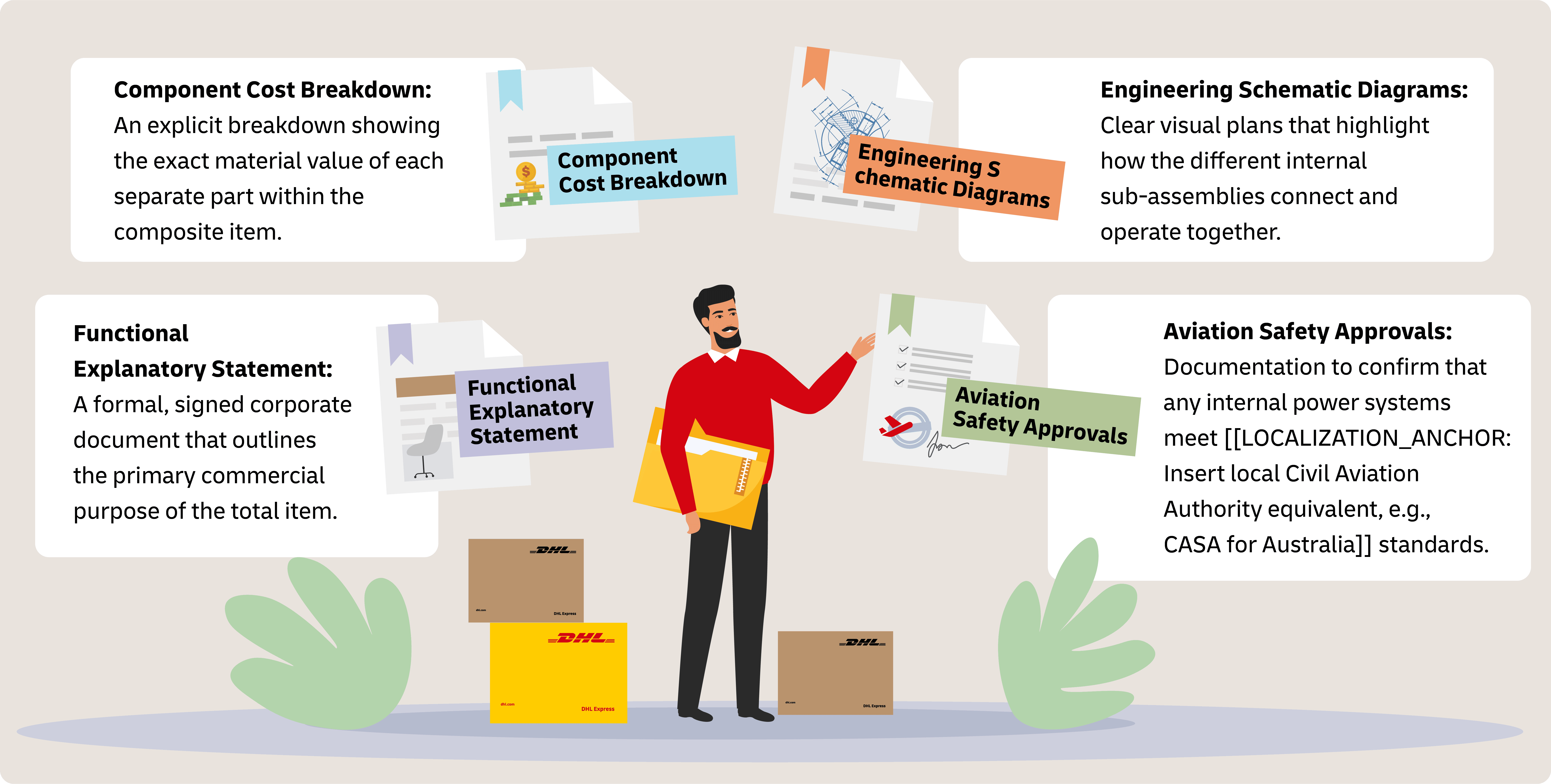
If you put your technical literature, schematics, and functional breakdowns together before you ship, you're in a much stronger position should a border official try to reclassify your goods. If an official disputes your code, a solid file gives your PPJK something concrete to argue from. While customs authorities always have the final legal say, clear documentation really does put you in a stronger position.
MyDHL+ supports pre-clearance tracking, so your team can get documentation in front of customs before the shipment physically arrives, helping to smooth the process.