Malaysia’s e-commerce market continues to grow rapidly – and so does competition. According to Mordor Intelligence, the online retail sector is projected to increase from USD 10.62 billion in 2025 to USD 12.18 billion in 2026 and reach USD 23.11 billion by 2031, growing at a CAGR of 13.67% over 2026-20311, driven by digital adoption and cross-border trade.
For many sellers, the next logical step is global e-commerce. The growth of e-commerce platforms and increasing familiarity of consumers with online shopping mean business owners looking to expand globally are more likely to succeed today compared to several decades ago.
But that does not mean you can take success for granted. This guide will walk you through how to start global e-commerce the right way — from choosing target markets and setting up checkout for cross-border sales, to understanding customs requirements, managing returns, and partnering with a trusted international courier to confidently deliver overseas and scale your business beyond Malaysia.
Step 1: Pick the right countries to expand into
Every successful e-commerce business entering global e-commerce begins with identifying markets where demand exists and delivery expectations can realistically be met.
Check demand and product–market fit
Before committing to e-commerce expansion, validate demand using measurable indicators. Look at marketplace trends, competitor activity in target countries, and the geographic breakdown of your website traffic. If you are already receiving overseas enquiries or occasional international orders, that is a strong signal of early product–market fit.
Testing demand through marketplaces can also help reduce risk. This approach allows sellers to explore how to start global e-commerce to validate traction before investing heavily in localization or marketing.
Understand duties, taxes, and de minimis thresholds
Every country applies its own customs duties and tax rules. A critical concept to understand is the de minimis threshold — the shipment value below which duties and taxes are not charged. For sellers serious about international e-commerce, understanding landed costs upfront helps protect conversion rates and reduce friction at delivery.
Confirm restricted and prohibited items early
Certain categories, such as traditional herbal medicines, cosmetics, and pharmaceutical products, often face stricter controls. Some markets require product registration, specific labelling, or import permits. If your products fall into regulated sectors, review compliance requirements carefully before you deliver overseas.
Step 2: Decide on your delivery promise (DDP vs DAP)

One of the most overlooked decisions in global e-commerce is choosing between DAP (Delivered at Place) and DDP (Delivered Duty Paid). This choice directly influences checkout conversion, delivery success, and customer satisfaction.
| DAP | DDP | |
Who pays import duties & taxes | Customer pays upon arrival | Seller pays upfront |
Checkout transparency | Duties not included at checkout | Duties included in final checkout price |
Customer experience | Risk of surprise charges at delivery | Smooth delivery with no additional payment |
Risk of refused shipments | Higher if customers reject duties | Lower – charges already settled |
Cash flow impact on seller | Lower upfront cost | Higher upfront cost |
Best for | Testing new markets, lower AOV products, and early-stage e-commerce strategies | Scaling markets, premium positioning, and higher AOV products |
Impact on repeat purchases | May reduce repeat purchases if the experience feels unclear | Stronger trust and a higher likelihood of repeat purchase |
Suitablity | Good for initial validation phase | Better for long-term e-commerce expansion |
If you are wondering how to proceed, a simple rule of thumb is: if the average order value is high and customer experience is central to your brand, DDP is typically the stronger long-term option; and if you are validating demand or operating with tighter margins, DAP may be appropriate during this early phase of expanding an e-commerce business.
Step 3: Set up your storefront and sales channels for international buyers
After choosing your markets, the next step in how to grow an e-commerce business is deciding where and how you will sell.
Choose the right e-commerce platform
Some sellers prioritize building their own online store for full brand control and higher margins. Others begin with e-commerce marketplaces to gain faster traction and access built-in traffic.
Build a strong website foundation
Selling internationally requires credibility. A secure checkout, fast loading speed, transparent policies, and professional domain structure signal trust to overseas buyers.
Step 4: Optimize checkout and payments for cross-border conversion
Many international sales fail due to payment friction rather than product issues. For sellers entering international e-commerce, checkout clarity is critical.
Offer payment methods that customers trust in their respective markets, whether credit cards, PayPal, BNPL services, or regionally preferred e-wallets. Payment gateway selection also affects fraud protection, currency support, and transaction fees.
It is equally important to maintain pricing transparency. Display currency clearly, outline shipping fees upfront, and communicate estimated delivery timelines. If using DDP, ensure duties and taxes are reflected clearly in the final checkout total.
Step 5: Set up international shipping rules
Before launching in new markets, define your shipping framework. Clear delivery zones and realistic transit time expectations protect your brand promise.
Time-definite international delivery services can help you balance speed and cost, depending on customer expectations. Starting with a limited number of priority markets allows you to refine operations before expanding further.
Packaging also plays a critical role. Durable cartons, accurate weight declarations, and compliant labelling prevent damage and customs complications. Even small documentation inconsistencies, such as vague product descriptions or incorrect HS codes, can trigger delays.
Step 6: Build a customs documentation workflow
For many first-time exporters, customs documentation is the most intimidating part of international e-commerce.
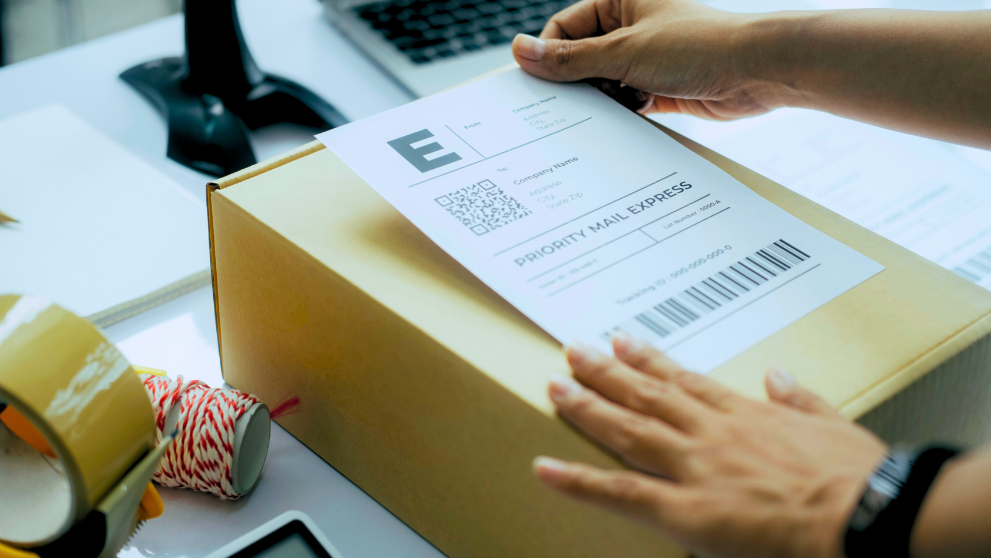
Most shipments require a commercial invoice, air waybill, accurate product descriptions, declared value, quantity, and country of origin where applicable. The information on your invoice must match your checkout pricing and shipment declaration exactly.
Inconsistencies can result in inspections, delays, or returns. Establishing a consistent documentation workflow early protects your growing e-commerce business as order volumes increase.
Step 7: Create a returns plan
Cross-border returns are more complex and expensive than domestic ones. Without a structured plan, returns can quickly erode margins during expansion.
Define return timeframes, clarify who pays return shipping, and determine whether products are returned to Malaysia or handled locally. In some cases, partial refunds without return shipment may be operationally practical.
A transparent returns policy builds trust. Customers are more likely to purchase again when they feel protected — an important factor in long-term e-commerce business strategies.
Step 8: Scale with multi-channel operations
As you expand, operational discipline becomes essential. Selling across your own website, marketplaces, and social commerce channels increases reach but also increases complexity.
Inventory synchronization prevents overselling, especially during peak campaigns. Monitoring delivery performance, landed cost impact, returns rate, and repeat purchase behavior allows you to refine your international e-commerce strategy with data rather than assumptions.
Taking your e-commerce business beyond Malaysia
Expanding into global e-commerce is not simply about shipping to another country. It requires a clear strategy, operational readiness, and a strong understanding of how international customers shop, pay, and receive their orders.
By carefully selecting target markets, setting the right delivery terms, optimising checkout for cross-border buyers, and building reliable shipping and documentation workflows, Malaysian sellers can expand internationally with greater confidence. Just as importantly, establishing clear returns policies and scalable operations helps protect customer trust as order volumes grow.
With the right preparation and a dependable international logistics partner, expanding your e-commerce business globally becomes far more manageable. As cross-border trade continues to grow, businesses that invest early in efficient international delivery and transparent customer experiences will be better positioned to reach new markets and build long-term growth beyond Malaysia.


 Share
Share
Similar Stories