You must ensure the vehicle's battery is at a 30% state of charge or less. It is also mandatory to use the new, specific UN numbers like UN 3556 or UN 3558 and provide a UN 38.3 test summary as proof that the battery is safe for air transport.

Mandatory 30% Charge: From 1 January 2026, the 30% State of Charge (SoC) limit is a strict legal requirement for battery-powered vehicles in our air network.
New UN Classifications: You must use UN 3556 for Lithium-ion and UN 3558 for Sodium-ion vehicles to ensure your documentation is accurate for clearance at hubs like KLIA.
Air Express Focus: Shipping via our time-definite air network provides the fastest path for high-value e-mobility components, bypassing potential port congestion.
Digital Proof: You must link your UN 38.3 test summaries and SoC declarations via QR codes on all shipping documents for faster verification.
Shipping electric vehicles (EVs) in 2026 involves managing large-scale dangerous goods. The guidelines have evolved from best practice suggestions into mandatory international laws with significant penalties for non-compliance. These regulations require a clear understanding of IATA safety standards to ensure your shipments move smoothly and avoid delays at the border.
The 30% State of Charge (SoC) rule is now law for all battery-powered vehicles transported by air freight. Under the IATA 67th Edition, any vehicle with a battery exceeding 100Wh must be at or below a 30% SoC.
Immediate Rejection: If your vehicle arrives for its flight with a 50% charge, it will be rejected at the terminal.
Extra Costs: Missed flight windows and subsequent storage fees can quickly affect your profit per unit.
Small Vehicles: These rules apply equally to smaller items like e-scooters and e-bikes.
Special Permits: For specific technical reasons requiring a higher charge, you must obtain a formal Special Provision A331 approval.
We can help you understand these energy levels to ensure they match your declaration. A variance resulting in surcharges of around 1,175 MYR per pallet can occur if these specific handling needs are not planned for in advance.
Moving electric vehicles via air express provides a level of speed and security that other modes cannot match, which is vital for high-value goods. Our global network is built to handle the technical requirements of modern e-mobility.
Speed of Recovery: Air express significantly reduces the time your capital is tied up in transit.
Climate Control: Our hubs, including Kuala Lumpur International Airport (KLIA), provide a controlled environment that helps protect sensitive electronics.
Priority Handling: Time-definite shipments receive first-on, first-off priority on our dedicated aircraft.
Global Access: We reach over 220 countries and territories, supporting your global fleet and export goals.
The year 2026 introduces specific UN numbers to replace generic codes, a change designed to help emergency responders immediately identify the chemical risks involved. Using an incorrect code on your commercial invoice is a major compliance issue for customs inspectors.
UN 3556: This is the standard classification for most EVs powered by Lithium-ion batteries.
UN 3557: This applies to vehicles powered by Lithium-metal batteries, often found in specialised industrial equipment.
UN 3558: This is for the newer Sodium-ion batteries that are becoming more common in budget e-mobility.
Maturity Check: If you're sourcing from major manufacturing hubs, it is essential to ensure your suppliers are using these mandatory 2026 codes on all documentation.
Sodium-ion vehicles are generally considered a lower risk as they can be discharged to zero volts without cell damage. However, they are still regulated under the same 30% SoC rules as their lithium counterparts.
Customs authorities now require a complete safety history for the battery within any vehicle. Without the correct laboratory reports and declarations, your shipment will almost certainly be held for a manual audit, causing delays.
UN 38.3 Test Summary: This is the official lab report proving the battery has passed stringent safety tests.
SoC Declaration: A formal statement confirming the battery's state of charge is at 30% or less.
Safety Data Sheet (SDS): This document must explicitly reference the 2026 IATA 67th Edition regulations.
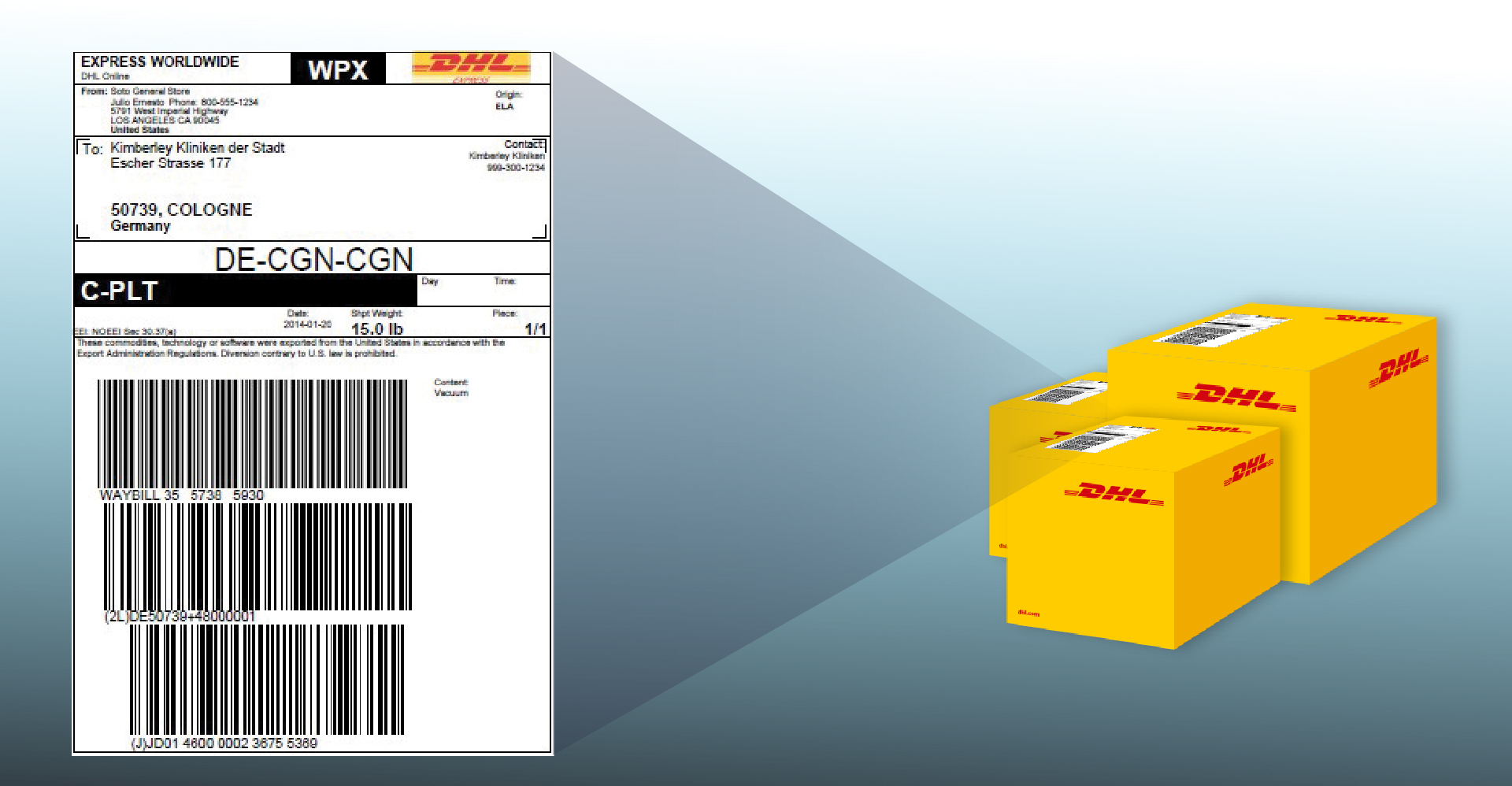
Digital Access: Our MyDHL+ platform allows you to upload QR codes for these summaries directly onto your waybill.
This digital approach ensures that the Royal Malaysian Customs Department (RMCD) can verify your shipment's compliance data instantly. Just as local exporters must ensure cosmetics are properly notified with the NPRA before shipment, EV shippers must have all their battery documentation in order to avoid costly returns or seizures.
EVs are classified as Dangerous Goods in Apparatus. They require specific Class 9 Hazard Labels that must be clearly visible on the packaging or the vehicle itself. The 2026 labels now combine symbols to represent both Lithium and Sodium-ion risks.
Class 9 Label: This is the primary mark for miscellaneous dangerous goods.
CAO Label: This "Cargo Aircraft Only" label is mandatory if the battery size exceeds passenger aircraft limits.
Battery Mark: This is required for vehicles that do not meet the full criteria for exceptions.
Safety Compliance: We adhere strictly to Packing Instruction (PI) 952, ensuring your vehicle is handled according to the highest air safety standards.
Ensuring these labels meet the standards of the local civil aviation authority is critical. A single missing sticker can lead to a fine of 23,500 MYR or more per shipment.
The industry trend is moving towards digital visibility, which provides real-time monitoring of shipments. This level of oversight is increasingly becoming a prerequisite for securing high-value insurance policies on luxury EV shipments.
Thermal Monitoring: We can use SmartSensor technology to help track temperature and humidity during transit.
Instant Alerts: You can receive notifications if your shipment encounters any unexpected environmental conditions.
Peak Planning: Space for dangerous goods becomes limited during busy periods like the lead-up to Hari Raya Aidilfitri or Chinese New Year. Congestion at hubs like Port Klang can cause significant delays, so planning is essential.
Early Scheduling: Booking your air express shipments well in advance ensures you secure the capacity you need during these critical times.
Navigating the 2026 battery regulations requires a partner who understands the technical details of transporting dangerous goods within an express network. By mastering the SoC rules, new UN classifications, and documentation requirements, you can transform a complex logistics challenge into a smooth, reliable operation. Speak to a DHL specialist today to review your fleet plan and move your vehicles with confidence.
You must ensure the vehicle's battery is at a 30% state of charge or less. It is also mandatory to use the new, specific UN numbers like UN 3556 or UN 3558 and provide a UN 38.3 test summary as proof that the battery is safe for air transport.
It is a critical safety regulation designed to minimise the risk of fire during a flight. Batteries with lower energy levels are significantly less likely to experience a thermal event if they are damaged or encounter turbulence during transit.
DHL Express is focused on providing international air express services. For ocean freight solutions or large-scale containerised shipping, we would be happy to connect you with our colleagues at DHL Global Forwarding.
UN 3556 is the classification for vehicles powered by Lithium-ion batteries, which is the most common type. UN 3558 is used for vehicles with the newer Sodium-ion battery technology. Using the correct code on your documentation is essential to avoid customs delays and to provide accurate information for emergency responders.
We offer digital platforms that enable you to upload crucial safety summaries and declarations directly to your waybill. Our in-house specialists are also available to help you ensure your safety data sheets are compliant with the latest 2026 standards.


 Share
Share