Yes, you can ship golf clubs internationally, as they are classified as sports equipment. Just ensure that you comply with the customs regulations of the destination country.
If you are shipping golf clubs on your own for the first time, whether for a tournament, vacation, relocation, or resale, it is important to understand that golf clubs require more preparation than typical shipments.
Golf clubs are long, fragile, heavy, and often high in value. As a result, packing becomes one of the most important aspects of the shipment, alongside factors such as shipping cost estimation, courier selection, customs documentation, duties and taxes, and additional precautions during transit.
This article guides you through secure golf club packing and explains shipping costs, customs processes, declarations, duties, and taxes based on shipment type.
Golf clubs are long and fragile, making proper packing essential to prevent damage during transit.
Follow these 5 steps to pack your clubs securely:
Step 1: Clean your clubs
Start by cleaning off any dirt from the club heads and the base of the golf bag.
Step 2: Use strong outer packaging
Choose sturdy packaging to protect your golf clubs during shipping:
Step 3: Protect the club heads
If your clubs have detachable heads, remove them and mark the shaft settings to make reassembly easier. Cover all club heads with their protective head covers, even if the heads are removed.
Next, wrap the club heads in paper or a soft material, followed by bubble wrap for added cushioning. Similarly, wrap the shafts in bubble wrap or padding and secure everything with tape to prevent movement during shipping.
Step 4: Group the clubs together
Once wrapped, gather the clubs into a single, stable bundle. Secure them tightly with tape so they move as one unit.
If possible, insert a support rod or stiff arm inside the bag to absorb impact and protect the shafts from pressure.
Step 5: Fill and seal the package
After placing the clubs inside the bag or box, cushion the bottom and fill all empty spaces around the clubs with padding such as bubble wrap, air cushions, paper, or towels.
Once securely packed, close the box and seal all seams with strong packing tape using the H-tape method to ensure a secure shipment.
Golf clubs are classified as sports equipment. They can be shipped by express courier to most countries worldwide.
However, how the shipment is treated depends on the purpose of shipment:
This distinction directly affects how customs charges are calculated, what information must be declared, and what happens to the shipment upon arrival.
The shipping documents required for golf club shipments generally follow standard international shipping requirements, such as a commercial invoice and an air waybill.
While the documents themselves are similar across shipment types, the key difference lies in how the shipment is declared. Understanding how duties and taxes apply to each type of golf club shipment, and what to expect during customs clearance, helps reduce delays and unexpected charges
Duties and Taxes
Personal used golf clubs may still be subject to duties and taxes in some countries, even if they are not newly purchased. Customs authorities generally assess whether the clubs are clearly used and owned by the shipper or receiver.
Declaring the shipment as used personal golf clubs helps establish intent, but duties and taxes may still apply depending on the destination country’s regulations. Some countries provide relief for personal effects, while others apply standard import charges regardless of ownership history.
Documents and Declarations
Shippers should prepare a commercial invoice stating that the clubs are used personal items and include a reasonable declared value that reflects their current condition rather than the original purchase price. Where possible, the sender and receiver names should be consistent to support personal ownership.
In some cases, customs may request supporting information such as travel context or relocation details. When declarations are clear, realistic, and consistent, customs clearance is usually straightforward.
Duties and Taxes
New golf clubs are treated as standard imports and are subject to customs duties and taxes in most countries. This applies whether the clubs are purchased online, shipped from a retailer, or sent by an individual who has bought new equipment abroad.
Customs authorities calculate duties and taxes based on the declared value, product description, and country of manufacture. Undervaluing new golf clubs to reduce taxes often leads to customs challenges, which can result in reassessment, delays, or penalties.
Documents and Declarations
Shippers should ensure the commercial invoice accurately describes the clubs as new, states the correct quantity and value, and includes country of manufacture where required.
Receivers should be prepared to pay duties and taxes before delivery is completed.
Duties and Taxes
Golf clubs sent as gifts are still subject to customs duties and taxes in many countries.
While some destinations offer gift allowances, these thresholds are often low and high value items like golf clubs usually exceed them.
Declaring a shipment as a gift does not automatically make it tax exempt. Customs authorities focus on the value and nature of the item rather than the relationship between sender and receiver.
Documents and Declarations
Shippers should clearly indicate that the shipment is a gift on the commercial invoice and declare the true market value. Misdeclaring value or purpose can result in delays or reassessment. Receivers should expect that duties and taxes may still apply.
Duties and Taxes
Commercial sales include golf clubs sold to a customer, distributor, retailer, or business partner. These shipments are treated as commercial imports and are fully subject to customs duties, taxes, and regulatory requirements.
Documents and Declarations
Customs authorities may require additional information such as business registration details, importer identification numbers, or tax registration numbers depending on the destination country. Incorrect or incomplete documentation is a common cause of clearance delays for commercial shipments.
Shippers should prepare a detailed commercial invoice that includes seller and buyer details, accurate product description, unit value, total value, currency, and country of manufacture. Receivers should be aware of their responsibility to settle duties and taxes and provide any required importer information promptly.
Temporary shipments are golf clubs shipped for a specific purpose such as tournaments, training, or short term travel, with the intention that the clubs will be returned to the origin country
Duties and Taxes
While some countries allow temporary imports with reduced or suspended duties, this treatment is not automatic.
Additional documentation may be required, and customs may request proof that the clubs will be re exported. Without proper arrangements, customs may still treat the shipment as a permanent import and apply duties and taxes.
Documents and Declarations
Shippers should clearly state the temporary nature of the shipment on the commercial invoice and be prepared for additional customs questions. In many cases, duties and taxes may still be charged upfront and refunded only after re export, depending on local regulations.
Shipping golf clubs internationally typically costs more than shipping smaller or standard parcels because golf clubs are inherently long, bulky, and relatively heavy. A standard set of clubs requires a long package, which occupies more space in aircraft and sorting systems, and this directly affects how couriers calculate shipping charges.
Courier shipping costs are generally calculated based on dimensional weight, also known as volumetric weight. This method reflects how much space a shipment occupies during transport rather than relying only on physical weight. Because of their length, golf club shipments are usually priced using dimensional weight.
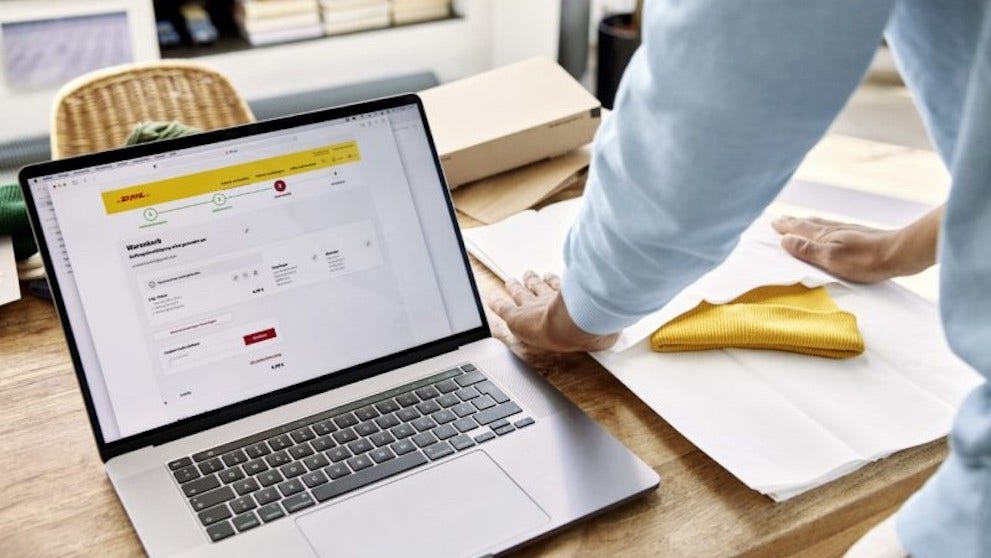
Shippers can estimate costs by calculating this themselves or by obtaining a quote directly from a courier. With DHL Express, this can be done by entering the shipment specifications into MyDHL+ to receive an instant quote, as explained in our guide.
If you want to estimate shipping cost before requesting a quote, dimensional weight can be calculated using the package dimensions.
Dimensional weight represents the space a shipment occupies in transit and is calculated using the following formula:
Dimensional weight = (Length × Width × Height) ÷ 5,000
The dimensional factor is a standard value used in air express shipping to convert volume into an equivalent billable weight. While the exact factor may vary slightly by service or mode of transport, the calculation logic remains the same.
A set of golf clubs is packed in a box measuring 140 cm in length, 30 cm in width, and 25 cm in height.
If the actual weight of the golf clubs is lower than 21 kg, the courier will charge based on 21 kg because dimensional weight is higher.
Overall, shipping golf clubs internationally comes down to two essentials: packing your clubs securely so they are protected throughout transit, and declaring the shipment accurately based on its purpose and value to ensure smooth customs clearance.
If shipping golf clubs still feels complex, we are ready to support you, just as we have supported businesses, professional golfers, and leisure players worldwide with their high value golf clubs.
Yes, you can ship golf clubs internationally, as they are classified as sports equipment. Just ensure that you comply with the customs regulations of the destination country.
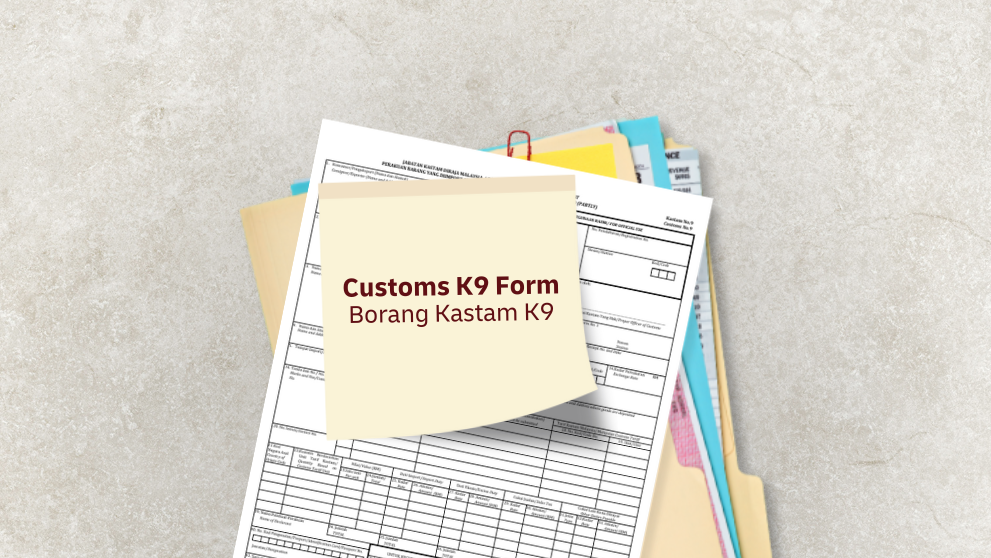
To export golf clubs from Malaysia, you will need to provide these shipping documents:
Accurate declarations are required for all items, including personal ones, as vague or incorrect descriptions can lead to customs delays.
Yes, you can ship golf accessories such as golf balls, shoes, and gloves alongside your clubs. Just make sure they are securely packed and accurately declared on the commercial invoice.
Shipping times with DHL Express vary based on the destination. For shipments within the same continent, delivery typically takes around 2 business days.
When sending clubs to other continents, you can expect delivery in approximately 3 to 5 business days.
For travel purposes, it is recommended to ship golf clubs several days in advance to allow a buffer in case of delays.
You can book your shipment via MyDHL+.
You can track your golf club shipment by entering the 10-digit tracking number from your Air Waybill (AWB) on our tracking platform.
Once your shipment is booked, simply enter the tracking number to check the status of your delivery.
If your golf clubs arrive damaged, you must file a claim within thirty (30) days of receipt by contacting DHL Express Customer Support. Compensation is only available for insured shipments.
When submitting your claim, include the following details:


 Share
Share