#LogisticsAdvice


 Share
Share
Customs clearance in Malaysia: Three easy steps to follow in 2026
5 Mins Read
Share

Customs clearance in Malaysia has become increasingly digital, more data-driven, and more closely monitored than ever before. Between the rollout of the Low Value Goods (LVG) tax, stronger invoice scrutiny, and expanded digital declarations through the National Single Window, even small documentation errors can now trigger clearance delays. For Malaysian exporters and online sellers, this means customs clearance is no longer just a back-office task; it directly affects delivery speed, customer satisfaction, and cash flow.
In 2026, smoother customs clearance comes down to three practical actions: preparing accurate digital-ready documents, calculating duties and taxes correctly, and clearly defining delivery terms. Get these right, and goods customs clearance becomes faster, more predictable, and far less stressful for you and your customers.
Step 1: Prepare digital-ready customs documents
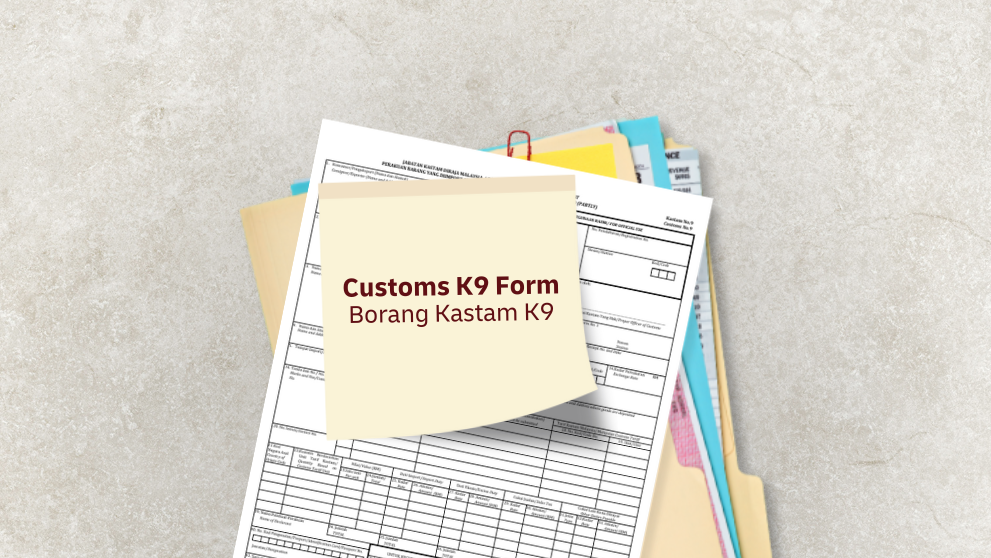
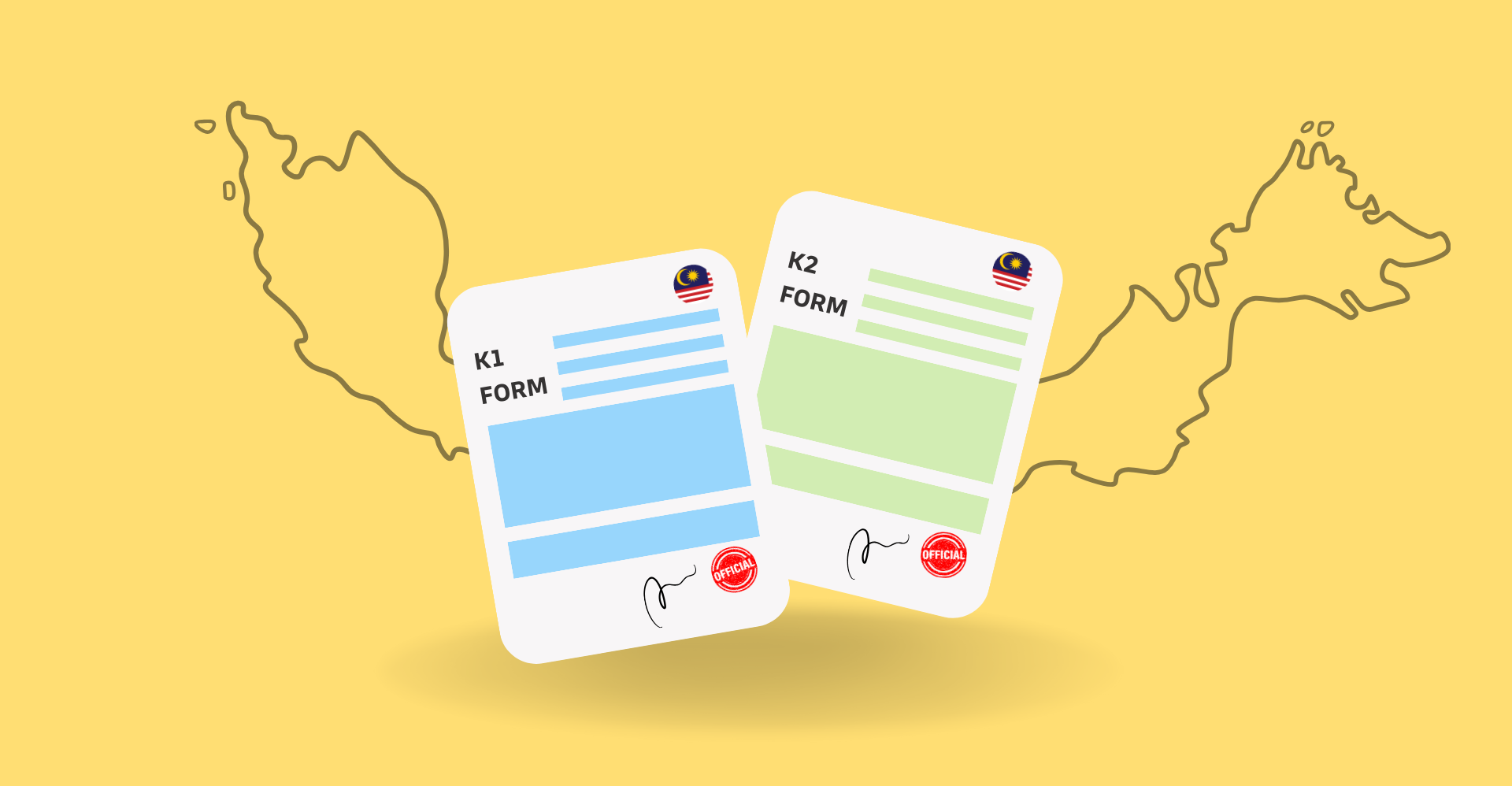
The majority of customs clearance delays in Malaysia is not caused by complex regulations, but by incomplete or inconsistent documents. For imports, businesses are generally required to submit an import declaration, commonly referred to as K1. For exports, an additional declaration, known as K2, is required. Here, understanding the difference between K1 and K2 forms is essential.
Both are increasingly processed digitally through Malaysia’s National Single Window platform, a digital-first environment that means your declaration, commercial invoice, and shipment label must match exactly.
Customs clearance documents required for international shipments
Most international parcel service shipments will require the following shipping documents:
- Commercial invoice
- Packing list, recommended for multi-item shipments
- Air waybill or shipment label
- Certificate of origin, if required by the destination country
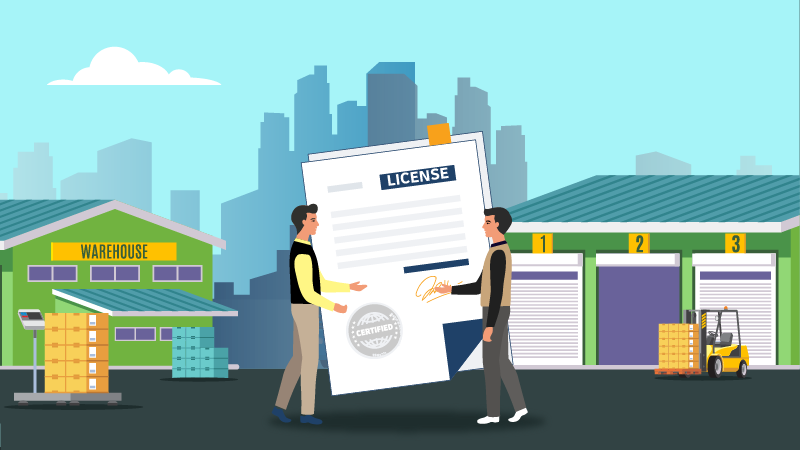
- Permits or licenses for controlled goods, where applicable
How to write a commercial invoice that clears faster in 2026
Your commercial invoice is the foundation of Malaysia's customs clearance procedure. In 2026, the key is specificity and consistency. A strong invoice should include:
- Clear product description
- Quantity, unit price, and total value
- Currency used
- Country of origin
- Receiver contact details (email and contact number)
- HS code or tariff code
- Delivery terms (DDP or DAP)
Examples:
Bad: Skincare
Better: Facial moisturiser, 50ml
Bad: Electronics
Better: Wireless earbuds with charging case
The clearer your customs clearance declaration data, the lower your risk of inspection or delay.
Restricted and controlled goods: Check before you ship
Certain goods require extra scrutiny before goods customs clearance is granted. Cosmetics, supplements and pharmaceutical-related items may require additional approvals. When in doubt, the National Pharmaceutical Regulatory Agency is a relevant checkpoint for products that fall under the health and beauty categories.1 Alcohol, perfumes and batteries may also face additional transport restrictions, especially under an international parcel service framework.
If you are unsure whether your product requires special approval, verify before dispatch. Clearance processing delays for restricted goods can lead to storage charges or return-to-sender scenarios.
Step 2: Calculate duties, taxes and LVG charges
Many sellers still assume that goods under RM500 automatically move without tax. In 2026, that assumption is risky.
Under Malaysia’s evolving tax framework, including the Low Value Goods (LVG) regime, low-value shipments may still be subject to customs tax depending on how the sale is structured and whether tax is collected at the point of sale. Official SST and LVG guidance is available at Malaysia’s Sale and Service Tax (MySST)’s official website.2
What determines duties and taxes in 2026
The final payable amount in Malaysia customs clearance depends on:
- HS code classification
- Declared transaction value
- Product type and material
- Country of origin
- Destination import rules and thresholds
- Whether the shipment is B2B or B2C
Customs systems cross-check declared values with HS classifications. Undervaluation or mismatched data can trigger reassessment or audit under the customs clearance procedure in Malaysia.
LVG tax: What Malaysian sellers need to know
The RM500 threshold still matters, but low-value goods may now be subject to LVG sales tax, depending on whether tax was collected during checkout or deferred to customs. For e-commerce sellers, unclear LVG handling can create extra payment steps during clearance processing, slowing delivery and frustrating customers. The takeaway is simple: clarify tax treatment upfront and align your documentation accordingly.
HS codes and PDK accuracy
HS codes determine duty rates, inspection risk, and routing in the customs clearance procedure. Even small classification errors can affect clearance duty calculations. Using the correct 10-digit tariff classification under Malaysia’s PDK system reduces disputes and speeds goods customs clearance.
Step 3: Decide on DDP vs DAP
In 2026, payment responsibility is one of the most overlooked causes of customs clearance delays. When delivery terms are unclear, shipments may be held pending payment of Malaysian customs tax or destination duties. Here, the most important decision a seller can make is between Delivered Duty Paid (DDP) and Delivered at Place (DAP).
- With DDP, the seller pays duties and taxes upfront, accounting for this in the total cost charged to the buyer.
- With DAP, the buyer pays duties and taxes upon arrival. Although this may appear as a lower upfront payment, buyers may be surprised by an additional bill at the door, making it paramount for sellers to be transparent about total costs.
When DDP works better for e-commerce
DDP often makes sense for:
- Premium or express shipments
- Higher-value goods
- Brands promising “no surprise fees”
By settling clearance duty upfront, sellers reduce friction and failed deliveries.
When DAP can still make sense
DAP may be suitable for:
- Early market testing
- Lower-value goods
- B2B shipments where buyers expect to manage import costs
The key is clarity. Ambiguous delivery terms frequently result in customs clearance delays.
Common reasons shipments get stuck in customs
Even experienced exporters encounter holds in clearance processing. The most common causes for this include:
- Vague product descriptions
- Missing or incorrect HS codes
- Undervaluation or invoice mismatches
- Missing consignee contact details
- Restricted items without permits
- Unclear duty or tax responsibility (DDP vs DAP)
Customs may request clarification or additional documents when clearance processing is delayed. Preparing digital-ready customs clearance documents from the start significantly reduces this risk.
Clear customs more smoothly with DHL Express Malaysia

As regulations evolve and Malaysia’s customs systems become more digital, the fundamentals remain the same: accurate data, correct tax calculation and clearly defined delivery terms. Aligning shipment details, documentation and declarations from the start reduces clearance risks and prevents avoidable delays.
Partnering with an experienced courier service like DHL Express further supports a smoother customs clearance process, especially for time-sensitive shipments. In 2026, proactive preparation is what ensures faster international parcel delivery times and a more consistent customer experience.
Share
Similar Stories