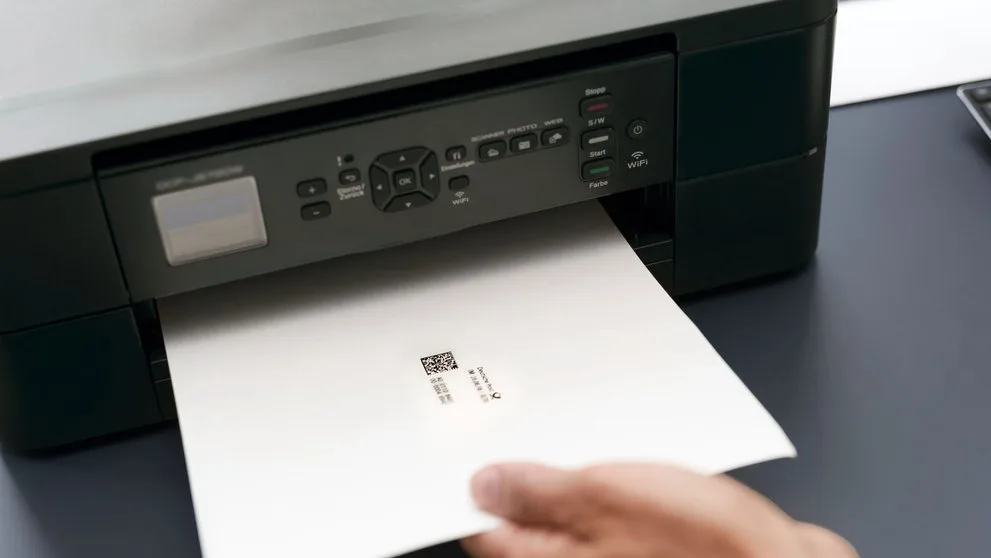
Any standard printer works, on adhesive paper or on plain paper taped down at the edges with clear tape. What matters is a visible wine glass symbol, legible text and the whole label on one face of the box, without covering the waybill.



 Share

A fragile label tells whoever handles the box that the contents break on impact. Use it on glass, ceramics, electronics and precision parts shipped from Brazil, visible on the top and sides. It asks for care, but it does not guarantee orientation or special handling: the packaging, with a rigid box, cushioning and no empty space, protects the item.
Plenty of senders stick on the red label, close the box with thin padding and trust the warning to do the rest. An international shipment goes through pickup, automated sorting, air transport, customs clearance and delivery. Each stage has different hands and different conveyors, and a sticker holds nothing in place inside the box.
It communicates a handling instruction: "handle with care". It is a request, not a contracted service. DHL itself states, in its Discover guide to shipping cosmetics, that it cannot guarantee the stable orientation of shipments in transit, although its teams actively look for visible handling instructions on the box (Source: DHL Discover, 2026).
In practice, the label helps when someone lifts the box by hand. It improves the odds that the box is not thrown, stacked under a heavy piece or turned on its side. How much care is possible depends on the stage, though, and a large share of the journey is mechanical.
So the right question is not "should I add the label?". It is "if nobody reads this warning, will my item still arrive in one piece?". If the answer is no, the problem is the packaging.
Handling symbols follow ISO 780:2015, the international standard for graphical symbols on distribution packaging. The advantage is that the drawing is understood in any country, whatever the language. The table shows the symbols most used on parcels and the limit of each one.
Symbol | What it communicates | When to use it | What it does not do |
Wine glass (fragile) | Contents break on impact | Glass, ceramics, porcelain, screens, instruments | Does not absorb drops or vibration |
Two upward arrows (this way up) | Correct position for transport and storage | Liquids, perfumes, plants, fitted parts | Does not keep the box upright |
Umbrella (keep dry) | Contents sensitive to moisture | Paper, electronics, textiles, leather | Does not waterproof the box |
Thermometer (temperature limits) | Indicated temperature range | Items that warp or degrade in heat | Does not control temperature |
The standard itself offers a useful rule: use a symbol only when it is necessary. A box covered in stickers loses the effect. If everything is urgent and fragile, nothing is.
Because express parcels are sorted on conveyors and automated systems, and machines do not read warnings. The DHL Express 2026 Service and Rate Guide for Brazil shows how central that flow is: it applies a "non-conveyable piece" surcharge when a package does not fit the automated process.
According to the guide, a piece falls into that category when it:
The takeaway is simple. The network is designed for closed, regular corrugated boxes that run on conveyors alongside thousands of others. Your fragile item has to survive that standard flow. The label is a reinforcement for the manual stages, not a protection plan.
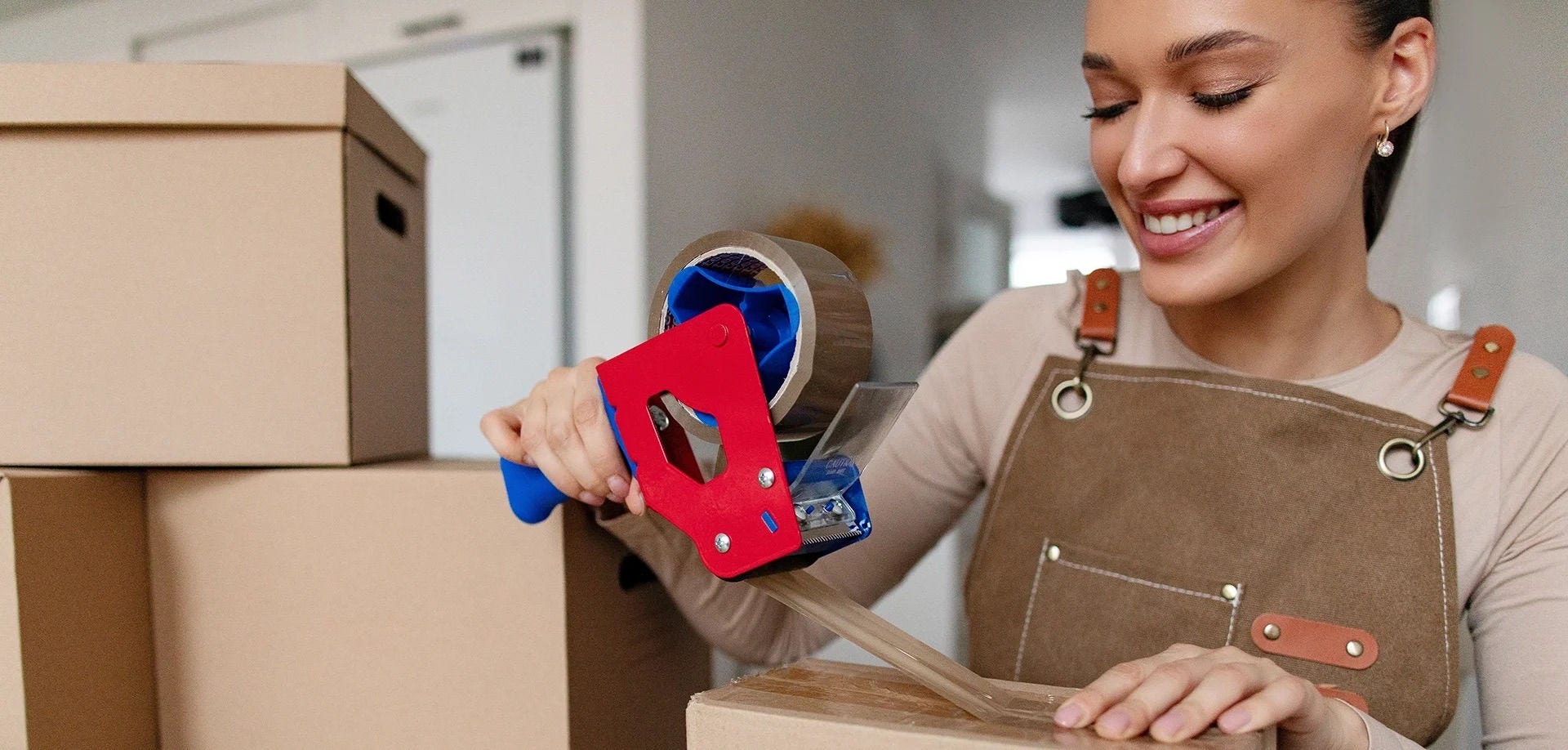
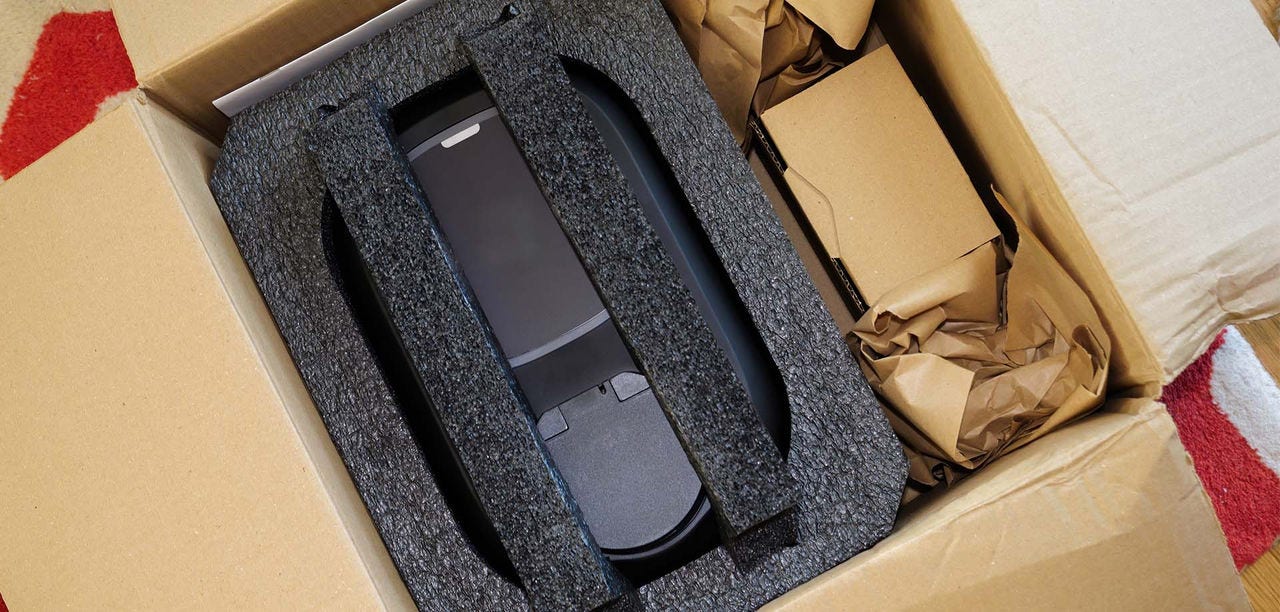
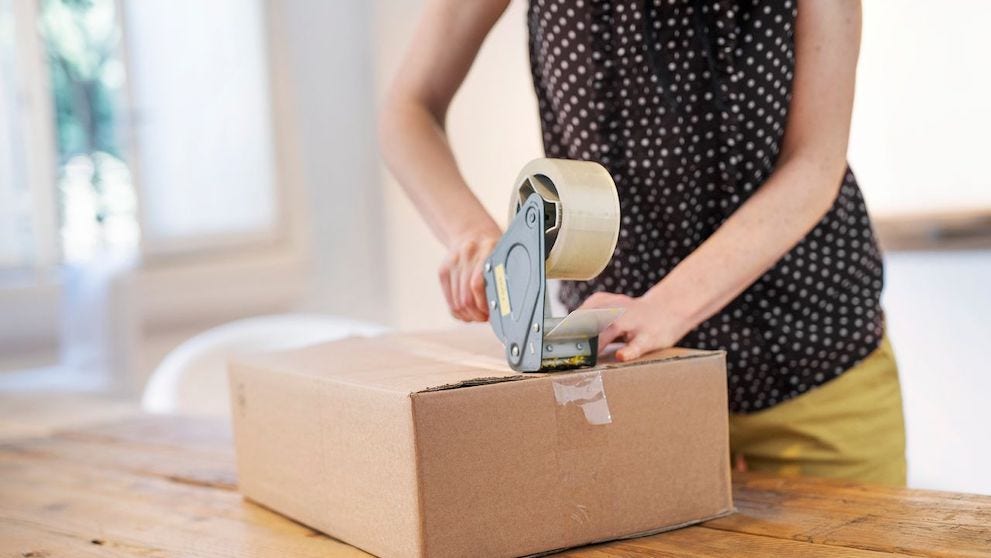
Pack as if the box will fall on its side at least once along the way. DHL's global Discover packing guide recommends the two-box method for fragile, valuable or irregularly shaped items (Source: DHL Discover, 2026). Step by step:
For heavier or more valuable items, DHL recommends a double-wall box. The full guide on how to pack a parcel covers cushioning materials and sealing, and works as a checklist before every shipment.
A frequent mistake in online stores is reusing the supplier's box. It has already made one trip, has lost stiffness and usually carries old labels. DHL asks senders to remove old labels and markings from reused boxes, because they confuse barcode scanners.
Place the fragile label on the top and on at least two opposite sides, so it shows whatever the box's position in a stack. If the item also needs to stay upright, add "this way up" arrows on all four sides, always pointing the same way.
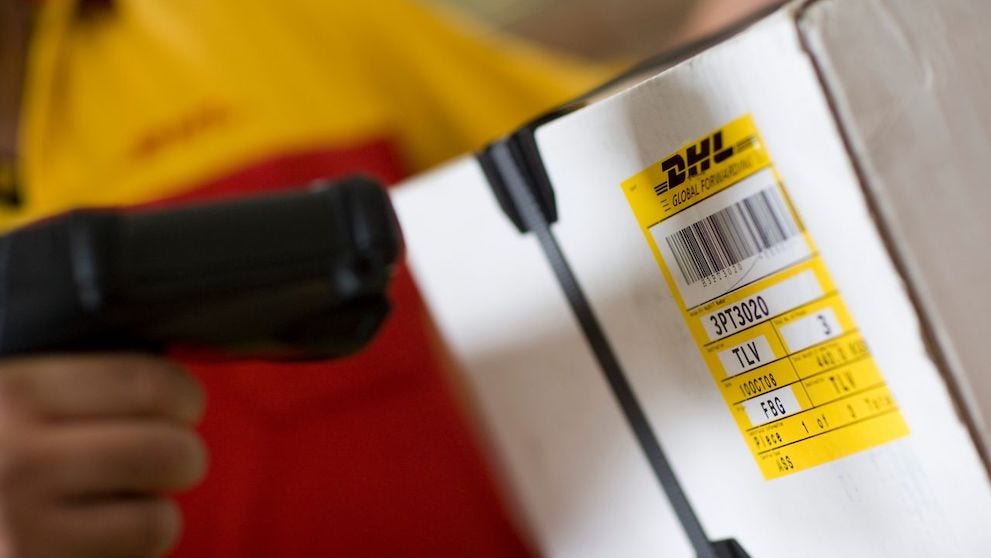
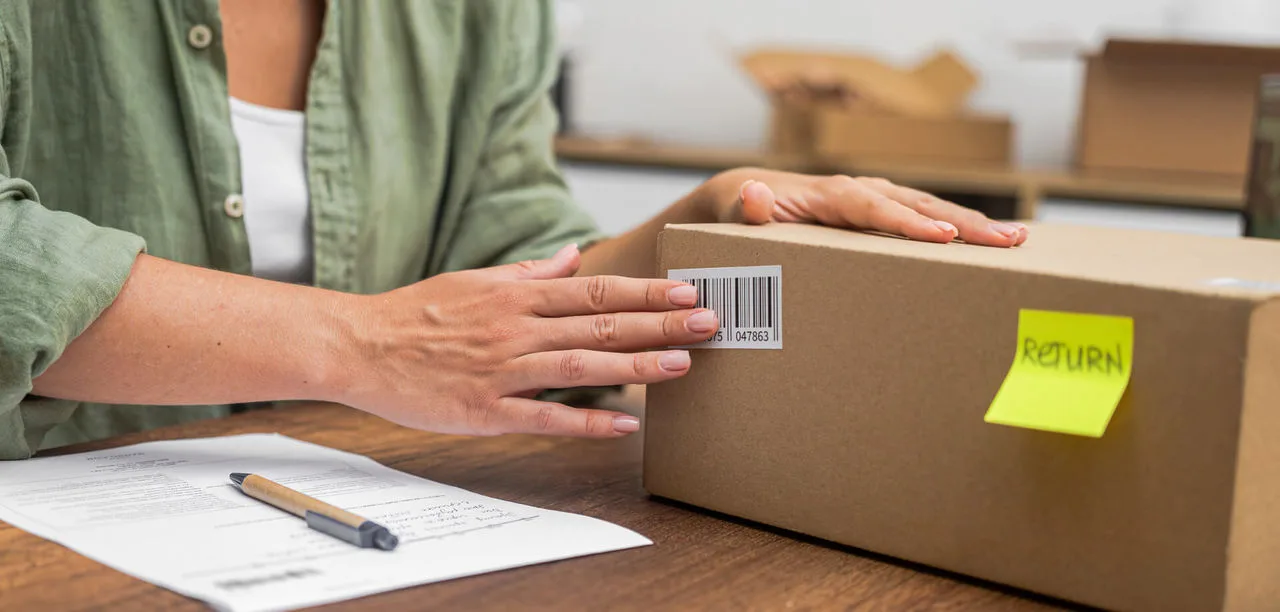
The most valuable space on the box, however, belongs to the shipping label. DHL's guide says to fix the waybill (the transport document with the barcode) on the top or side, away from corners and edges, with no tape over the barcode. The guide to the international shipping label explains what it carries and where to place it on each piece.
A few rules for keeping both labels working together:
No. The label asks for care, and insurance covers the loss if something still goes wrong. They are different layers of protection, and for a valuable fragile item it makes sense to use both. DHL Express insurance is purchased per shipment, based on the declared value, and the article on shipment insurance from Brazil explains when it pays off and how to claim.
It also helps to think about what happens in a claim. Good packaging is part of what is expected from the sender, and photos of the wrapped item, the inner box and the sealed outer box show how the shipment left. Keep those photos until the shipment has been delivered.
Before sealing the box, run through the checklist on how to prepare your package for international shipping: documents, restricted items and recipient details all belong in that final check.
Any standard printer works, on adhesive paper or on plain paper taped down at the edges with clear tape. What matters is a visible wine glass symbol, legible text and the whole label on one face of the box, without covering the waybill.
You can, but it has less effect. Small handwriting gets lost among other markings, while the ISO 780 graphic symbol is recognised in any country. If you write by hand, use large letters on more than one face.
No. It is a visual instruction for the manual stages, and DHL states that it cannot guarantee the stable orientation of shipments in transit. Real protection comes from the packaging.
A new corrugated cardboard box, double-wall when the item is heavy or more valuable, using the two-box method with at least 6 cm of cushioning between the boxes, as DHL's packing guide recommends.
As inner cushioning, yes. As outer packaging, it is not advisable: the DHL Express 2026 Service and Rate Guide for Brazil treats a piece packed in polystyrene foam, with no corrugated box outside, as non-conveyable, which triggers a surcharge.
The right packaging, the warning in the right place and insurance when the value calls for it: that combination is what gets a ceramic vase or a piece of lab equipment to your overseas customer intact. With a business account you can schedule pickups, follow each piece through tracking and add cover directly when you book.
To ship with more predictability, open a DHL Express business account.
Share