Yes. The DHL Express Terms and Conditions exclude liability for electrical or magnetic damage and for changes to electronic data and records, so save and, where appropriate, wipe your data before packing.

To know how to pack electronics for shipping abroad from Brazil, think in three layers: the device in its original box or wrapped and wedged, a new double wall outer box with at least 6 cm of fill around it, and the battery prepared under air transport rules. On the invoice, declare the real model and value.
Electronics rarely break from a single knock. They break from the sum of conveyor vibration, short drops at sorting and a box that gives way when another is stacked on top. And when the battery is not prepared the way air rules require, the shipment never leaves the ground. The steps below follow the DHL Express packing guide and its battery guide.
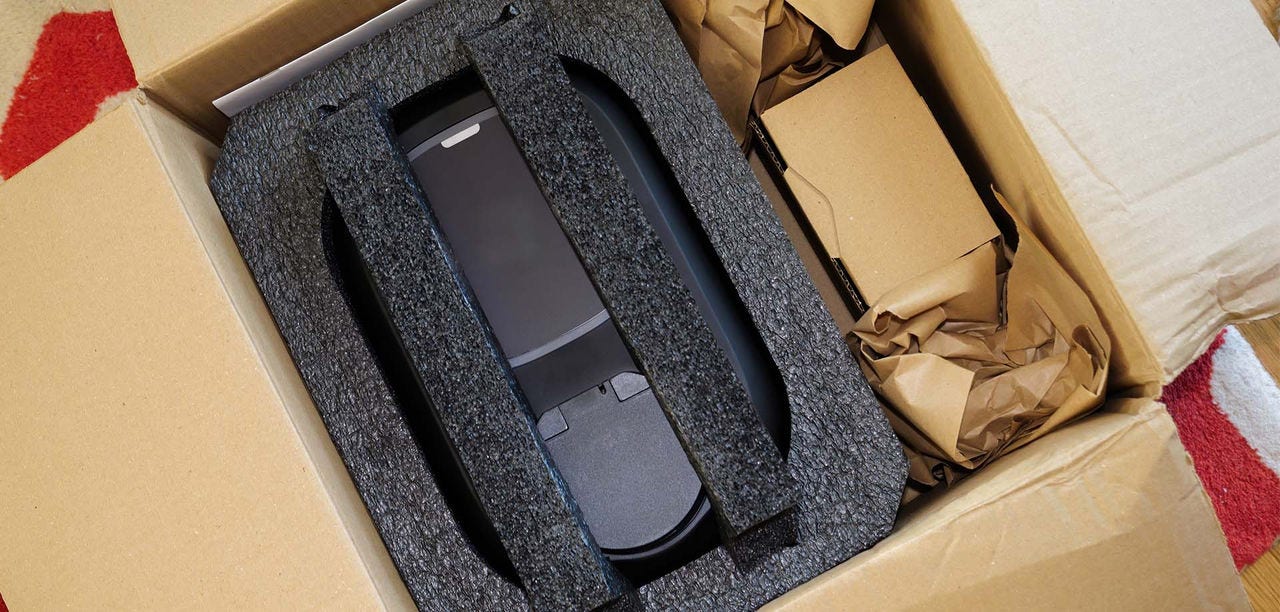
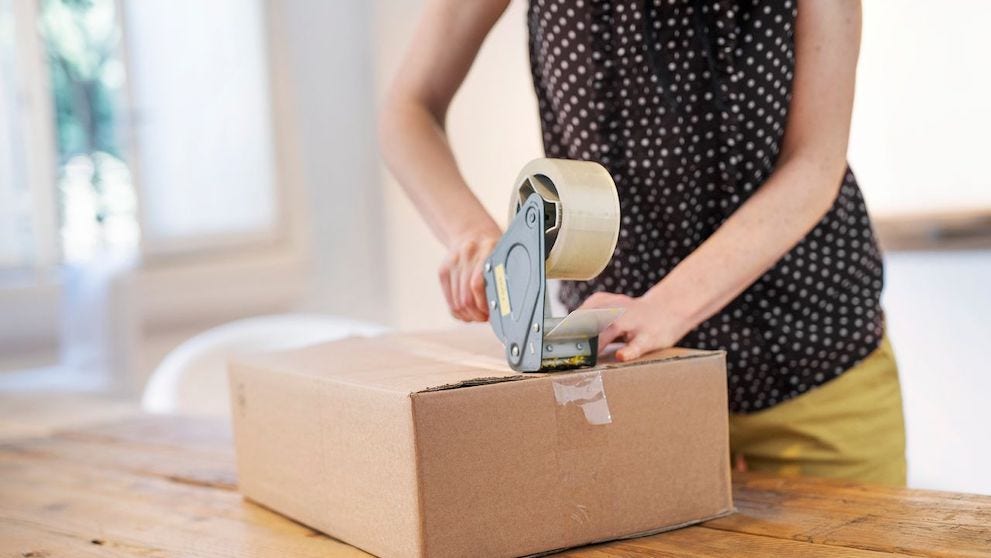
Use the box-in-box method. The manufacturer's original packaging becomes the inner box, because it was designed for that device, with made-to-measure inserts. It goes inside a new outer box made of double wall corrugated board.
The table compares the two methods in the DHL Express packing guide:
Method | When to use it | How to set it up |
Basic | Non-fragile items: cables, chargers, parts with no screen or moving parts | Sturdy box, item in the centre, 6 cm from every wall and all empty space filled |
Box-in-box | Laptops, phones, cameras, monitors, consoles and any device with a screen | Inner box (ideally the original), outer box at least 14 cm larger in every dimension, about 6 cm of fill at the bottom and sides |
Without the original box, build the inner one with the basic method: device wrapped, centred and locked in place. Source: DHL Express, An Essential Packing Guide for Express Shipments.
Wedge it so that nothing moves when you shake the closed box. That ten second test is the part of packing electronics that prevents the most breakage, and it does more than any label.
Each filling material has a job, according to DHL Express:
Protect the screen with a sheet of rigid cardboard before wrapping. Cables, power supply and remote go in their own bag so they do not scratch the device. With two devices in one box, wrap each one and separate them with a divider. Foam peanuts sink under weight, so do not rely on them to hold a laptop in place. The general rules for boxes and sealing, which apply to any shipment, are in the guide on how to pack a parcel.
Lithium batteries are dangerous goods in air transport, and the preparation changes with where the battery sits. Under the DHL Express battery guide, version 2.1 in force since 1 January 2026 and aligned with the 67th edition of the IATA regulations:
A defective, damaged or recalled battery is not accepted, not even inside the device. The limits by watt-hour and the statement that goes on the paperwork are in the guide on how to ship batteries.
In the original box whenever possible, and upright. The screen is the part that suffers most, and factory packaging has moulded foam inserts that hold the panel by its edges.
Without the original box, cover the screen with rigid cardboard, wrap the whole set in bubble wrap and use a box with room for fill on all four sides. Mark the box with "this way up" arrows. DHL Express points out that the carrier cannot guarantee a package's orientation in transit, but its teams look for visible handling labels. The arrows help, but the wedging is what protects.
Describe the device the way customs needs to read it: type, brand, model, new or used, and whether it contains a lithium battery. "Used laptop, brand and model, with installed lithium ion battery" works. "Electronics" does not.
The declared value must be the real one. Undervaluing to pay less tax at destination is an offence and, if something goes wrong, compensation never exceeds the declared value. The guide to the commercial invoice walks through every field.
If the device is going abroad for repair and coming back, there is temporary export. DHL Express coordinates this kind of operation for repairs, testing or exhibitions, with the customs paperwork required, according to its customs services page for Brazil. For anyone selling devices abroad, the guide to exporting from Brazil covers the rest of the process.
For most electronics, yes. The DHL Express Terms and Conditions cap standard liability on air transport under the Montreal Convention, with a limit calculated per kilogram. A 2 kg laptop weighs little and costs a lot, so the per-kilogram limit falls far short of the device's price.
Shipment Value Protection covers the full value of the goods in case of physical loss or damage, and you buy it when you book the shipment. How it works and when it pays off are covered in the article on shipment insurance.
Yes. The DHL Express Terms and Conditions exclude liability for electrical or magnetic damage and for changes to electronic data and records, so save and, where appropriate, wipe your data before packing.
Not on pieces up to 30 kg. DHL Express does not endorse strapping or banding on those pieces, because it damages the network's machinery and the package itself.
It helps handling, but it does not replace wedging. Orientation is not guaranteed in transit, so the packaging has to protect the device in any position.
Yes, with each phone wrapped and separated by a divider. Beyond the limit for packages and batteries shipped without the battery mark, DHL Express requires pre-approval for lithium battery shipments.
Box-in-box, device locked in place, battery prepared and real value declared: that is how electronics arrive working and paperwork stops holding shipments up.
If you sell or service electronics for customers abroad, open a DHL Express business account and ask for approval to ship devices with lithium batteries.


 Share