Yes. The Central Bank publishes the parity of other currencies against the dollar, captured at 13:00, and the rate in reais comes from crossing those parities with the day's PTAX.



 Share

PTAX is the Brazilian Central Bank's reference exchange rate for the real against the US dollar, set from four daily polls of accredited banks. When you import into Brazil, it converts the customs value declared in foreign currency into reais, so it moves the tax base of every duty and tax on the shipment.
You agree the order with your supplier in dollars, buy the currency from your bank at one rate and, weeks later, the import declaration calculates taxes at another. If PTAX rose in between, the tax bill rises with it, even though the price of the goods did not change.
The Banco Central do Brasil polls its foreign exchange dealers (banks accredited to trade currency with it) four times a day and averages the results. Each poll lasts two minutes and starts at a random moment inside four windows: 10:00 to 10:10, 11:00 to 11:10, 12:00 to 12:10 and 13:00 to 13:10, Brasília time.
In each poll, every dealer submits a buy quote and a sell quote for the dollar in the spot interbank market, settling in two business days. The bank drops the two highest and the two lowest quotes on each side and averages the rest. The day's PTAX is the simple average of the four polls. Source: Banco Central do Brasil, Resolution BCB No. 45/2020, in force since January 2021.
The design makes manipulation hard. Because the exact start time is drawn at random and the extremes are discarded, no single bank can push the reference rate on its own.
PTAX buy is the average price at which dealers buy dollars; PTAX sell is the price at which they sell them. The gap is small: on 20 October 2026, PTAX buy closed at R$ 5.0134 and PTAX sell at R$ 5.0140. Source: Banco Central do Brasil, PTAX rate series, October 2026.
For importers, the sell rate is the one that matters. It is the basis for the conversion rate used for taxes on the declaration. The buy rate shows up more in export contracts and in the accounting of assets held in foreign currency.
The Receita Federal (Brazil's federal revenue and customs authority) converts the customs value at the exchange rate in force on the date of the taxable event, which, for goods cleared for consumption, is the date the import declaration is registered. Source: Brazilian Customs Regulation, Decree No. 6,759/2009, articles 73 and 97, checked in October 2026.
In practice, Siscomex (Brazil's integrated foreign trade system) publishes a daily conversion table built from the previous business day's PTAX sell rate, and it applies to declarations registered on the day after publication. Source: Receita Federal, Ordinance SRF No. 87/1999.
This has a consequence few importers plan for: the rate that counts for tax is neither the one on the day you paid the supplier nor the one on the day the cargo landed. It is the one on the day the declaration is registered. If the goods sit at the terminal waiting for a document, PTAX keeps moving.
In direct proportion. The customs value (goods, freight and insurance to Brazil) is converted into reais, and import duty, IPI (federal excise tax), PIS and Cofins (federal contributions) and ICMS (state VAT) are all calculated on that base in reais. If the rate rises 5%, the base rises 5%.
An example with real figures. Between September and October 2026, PTAX sell ranged from R$ 5.2238 (2 October) to R$ 4.9698 (6 October), only two business days apart. Source: Banco Central do Brasil, PTAX series, October 2026.
The table below shows the effect on an import with a customs value of US$ 10,000 on each of those dates.
PTAX sell date | Rate | Customs value in reais |
2 October 2026 | R$ 5.2238 | R$ 52,238 |
6 October 2026 | R$ 4.9698 | R$ 49,698 |
Difference | R$ 0.2540 | R$ 2,540 |
That is R$ 2,540 more in taxable base with nothing changed in the goods. Every tax charged as a percentage of that base grows in the same proportion, and ICMS, which is calculated "inside" its own base, amplifies the effect. To see how each tax works, read the guide on what import duty is.
No. PTAX is a benchmark, not a retail price. When you pay a supplier abroad, the bank charges the rate it negotiated with you, which includes its spread and, depending on the transaction, fees and IOF (the tax on financial transactions).
So the same import lives with two rates: the one on the foreign exchange contract, which decides how much left your account, and the one on the declaration, which decides the tax base. They rarely match. The guide to international payments from Brazil walks through the ways to pay a supplier.
What your finance team needs is the total cost, adding both ends. Anyone who looks only at the bank rate underestimates the tax whenever the dollar climbs between payment and registration.
On the Banco Central do Brasil website, in the quotes and bulletins area, which shows the day's PTAX and the history for any date. The bank releases a bulletin after each poll, and the closing PTAX comes out with the result of the last window, shortly after 13:10 Brasília time.
Before that, you will only see intermediate bulletins. They are a preview of the day, but they do not replace the closing rate in a contract or in a tax calculation.
Protection starts with the calendar. The shorter the gap between placing the order, shipping and registering the declaration, the smaller the window in which the exchange rate can move against you.
Some practices that work for frequent importers:
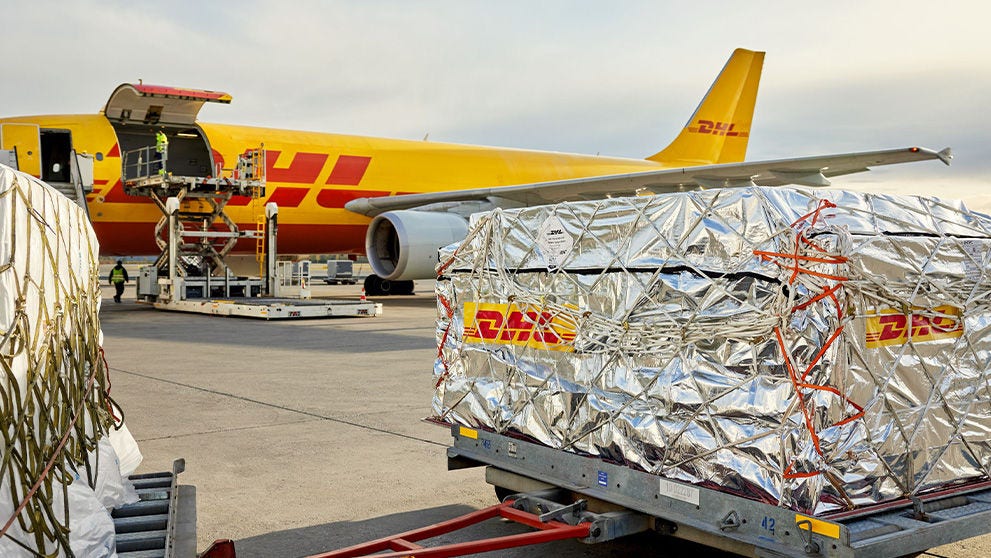
Transport counts too. An express shipment leaves the supplier and reaches clearance in a few days, which shortens your exposure to the exchange rate. For larger cargo, the same logic applies when you choose between modes. The guide to importing into Brazil shows the stages where time usually slips away.
The base that PTAX converts is the customs value, and getting freight or insurance wrong inside it distorts the result as much as the exchange rate does. The article on customs value in Brazil explains what goes into that figure.
Yes. The Central Bank publishes the parity of other currencies against the dollar, captured at 13:00, and the rate in reais comes from crossing those parities with the day's PTAX.
The commercial dollar in the news is usually the rate traded in the market during the day, which changes minute by minute. PTAX is an average set by a fixed Central Bank rule, which is why contracts and the Receita Federal use it as a reference.
Yes, as a reference. PTAX appears in export contracts, in the conversion of revenue for accounting and as a benchmark when negotiating currency with a bank, although the effective rate on the exchange contract is the one agreed with the bank.
The rate Siscomex published for that day, based on the previous business day's PTAX sell rate. Since there is no quote on Saturday or Sunday, the reference becomes Friday's rate.
Yes, as long as you treat the figure as an estimate. The final rate only exists on the day the declaration is registered, so the prudent approach is to simulate with the current PTAX and with a higher scenario, to see how much of your cost depends on the exchange rate.
You cannot control the exchange rate, but you can control transit time and how organised your documents are. The fewer days your goods spend between the supplier and the registration of the declaration, the less room PTAX has to change your numbers.
If you import into Brazil regularly and want shorter transit times and tracking from pickup to clearance, open a DHL Express business account and get rates and support built for your business.
Share