Yes. It can import with its own funds and resell to the Brazilian customer, or act as a service provider in an import on the customer's behalf.



 Share

A trading company in Brazil is a commercial company that buys goods domestically to export in its own name, or that runs imports for other businesses. For the manufacturer, selling to one is an indirect export: the trading company takes on clearance, foreign exchange and the sales risk abroad, and the deal keeps export tax treatment.
Every first-time exporter asks the same question: is it worth handing exports to an intermediary, or should you build the operation in-house? The answer depends on volume, margin and how much control you want over the customer abroad.
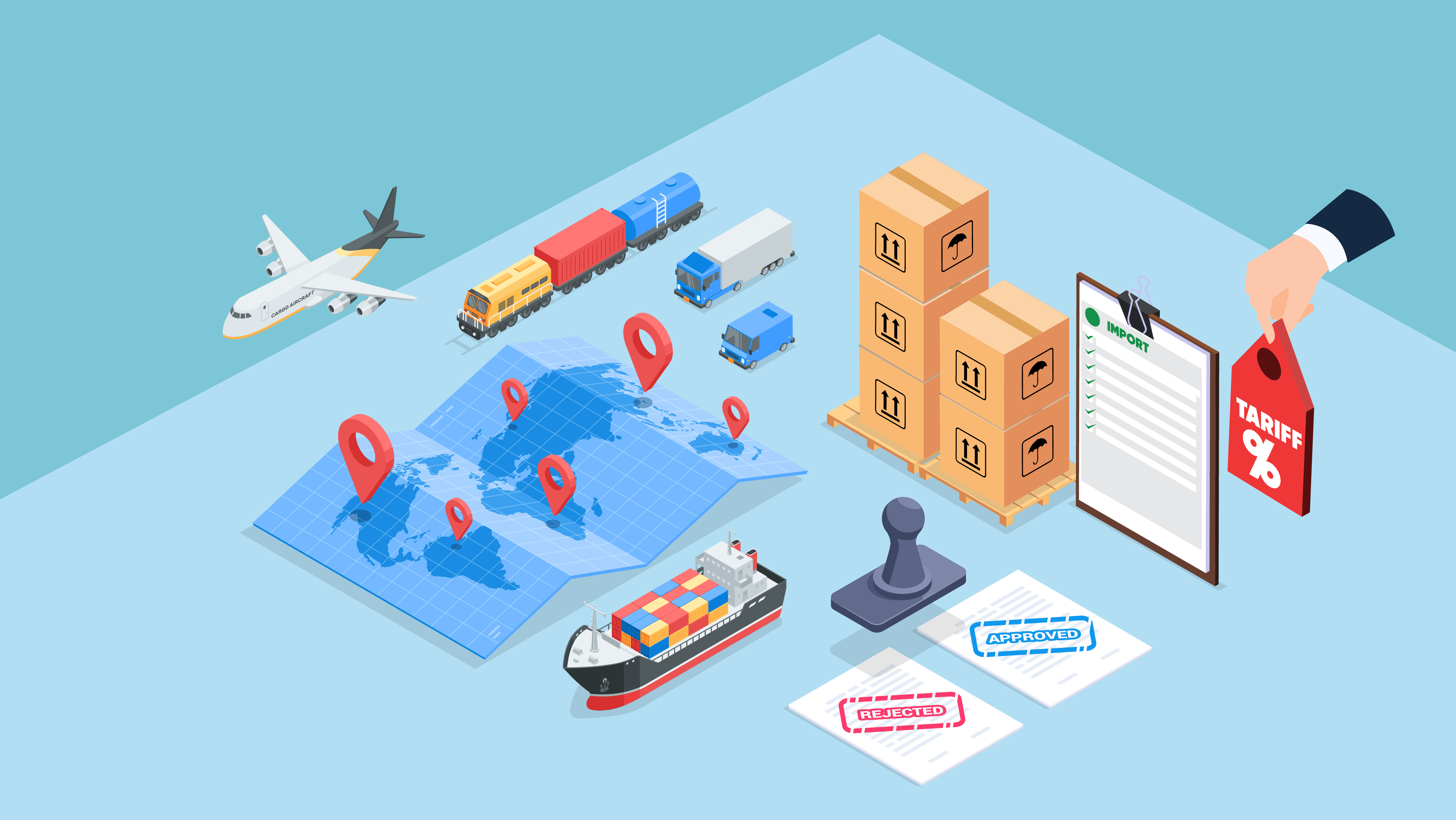
It is a business that earns its living by intermediating foreign trade. On the export side, it buys from the Brazilian producer and resells to the foreign buyer; on the import side, it can bring goods in for a Brazilian customer, on its own account or at the customer's request.
The legal concept dates back to Decree-Law No. 1,248/1972, which grants export tax treatment to domestic purchases made by a commercial exporting company for the specific purpose of export. Source: Planalto (the Brazilian presidency's legal database), Decree-Law No. 1,248/1972, checked in October 2026.
Under that law, goods are bought for the specific purpose of export when they leave the producer's premises straight for shipment, or for a bonded warehouse, on behalf of the commercial exporter. There can be no stop along the way for another transaction.
Every trading company is a commercial exporter, but not every commercial exporter is a trading company in the strict legal sense. Decree-Law No. 1,248/1972 reserves the registered model for companies meeting three minimum requirements:
An ordinary commercial exporter is any trading business that buys goods to export. The PIS and Cofins legislation (Brazil's federal contributions on revenue) refers to sales to a "commercial exporting company for the specific purpose of export", without requiring special registration in the text of the benefit. Source: Law No. 10,833/2003, article 6, III.
In practice, the label in the contract matters less than how the deal is structured. What secures the tax treatment is the invoice issued for export, direct shipment to the port or airport and export within the deadline.
For the manufacturer, a sale to a commercial exporter for the specific purpose of export gets the same treatment as a direct export. The table sums up the main effects.
Tax | Effect on the sale to a commercial exporter | Legal basis |
PIS and Cofins | Not levied on the revenue from the sale | Law No. 10,637/2002, art. 5, III; Law No. 10,833/2003, art. 6, III |
ICMS (state VAT) | The sale is treated as an export, with no tax | Complementary Law No. 87/1996, art. 3, sole paragraph |
IBS and CBS (tax reform) | Payment suspended, converted to a zero rate after export, if the commercial exporter meets the requirements | Complementary Law No. 214/2025, art. 82 |
Source: Planalto, consolidated texts checked in October 2026.
One detail changes the trading company's numbers. Law No. 10,833/2003 bars a commercial exporter that bought for export from claiming PIS and Cofins credits tied to that export revenue. The credit stays with the manufacturer, not with the exporter.
The benefit comes with a condition: the goods must leave the country. If the commercial exporter cannot prove shipment within 180 days of the seller's invoice date, it becomes liable for the taxes the manufacturer did not pay, plus interest and penalties. Source: Law No. 10,833/2003, article 9.
The same liability applies if the goods are resold in Brazil or destroyed. Under the tax reform, Complementary Law No. 214/2025 keeps the 180 days and adds loss, theft, robbery and industrial processing as cases in which the commercial exporter pays the suspended IBS and CBS.
To suspend IBS and CBS, the commercial exporter will need certification in the AEO programme (Authorised Economic Operator), equity of at least R$ 1 million or equal to the taxes suspended, whichever is higher, and joint authorisation from the IBS Management Committee and Receita Federal. Source: Complementary Law No. 214/2025, article 82. That bar is much higher than today's, and it is likely to separate well-structured trading companies from small intermediaries.
No. In a purchase for export, the trading company acquires the goods and exports in its own name; the DU-E, Brazil's Single Export Declaration, is the trading company's. In an export on behalf of a third party (conta e ordem), the hired company only provides a service, and for tax purposes the producer is still the exporter. Source: Portal Siscomex, export FAQ, item 1.2, October 2026.
Under conta e ordem, the export must happen within 30 days of hiring the service provider, and both parties are jointly liable for taxes if the deadline is missed. Source: Law No. 12,995/2014, article 8. A trading company can work under both models.
The same logic of separating purchase from service applies to imports. The differences between importing on behalf of a client and importing to order are covered in the guide to importing on behalf of a client in Brazil.
When the cost of building your own structure is higher than the margin you hand to the intermediary. The most frequent cases:
The price of that convenience is distance from the end customer. The trading company knows the buyer, negotiates the price abroad and keeps the resale margin. If your product carries a brand and you want to build relationships abroad, that distance gets expensive over time.
When exports stop being occasional. If you already have repeat buyers, predictable orders and you know your own FOB price, the margin going to the trading company starts to weigh more than the structure you save.
The path to going direct has four steps:
A hybrid model also works: the trading company serves distant markets or large volumes, while you sell direct to customers you already know. Samples, replacements and smaller orders are usually the first to move to direct export by express shipment. The guide to exporting from Brazil maps the full process.
Yes. It can import with its own funds and resell to the Brazilian customer, or act as a service provider in an import on the customer's behalf.
No. The law lets the selling company keep the PIS and Cofins credits linked to the revenue from that sale, as in a direct export. It is the commercial exporter that cannot claim credits tied to the export revenue.
Yes. Some trading companies specialise in one market or one product chain, and that specialisation is usually their main advantage for anyone without contacts at the destination.
Yes. To file the DU-E in its own name or provide services on behalf of a client, the trading company must be registered on Siscomex like any exporter or importer.
A trading company is a good way in, and many companies start that way. Once orders pick up pace, bringing part of your sales in-house gives you back margin and the customer relationship.
If you want to start exporting directly from Brazil, with formal clearance, shipment tracking and help with documents, open a DHL Express business account and get rates and service built for your business.
Share