#LogisticsAdvice

Supply chain in Brazil: what it is and how it works

Leendert van Delft
Leendert van Delft
Vice-President Global Sales Programs, (Digital) Marketing and Global E-commerce
8 min read
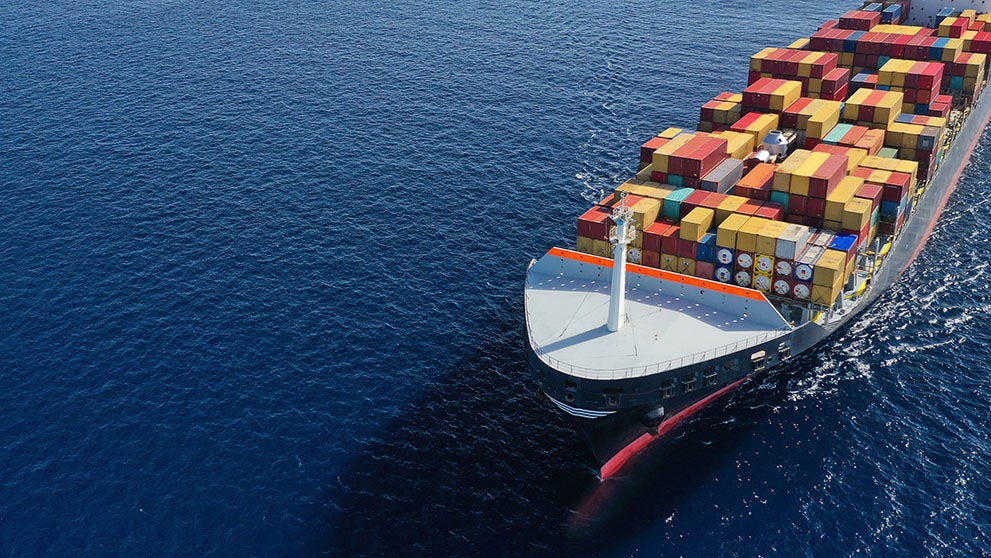
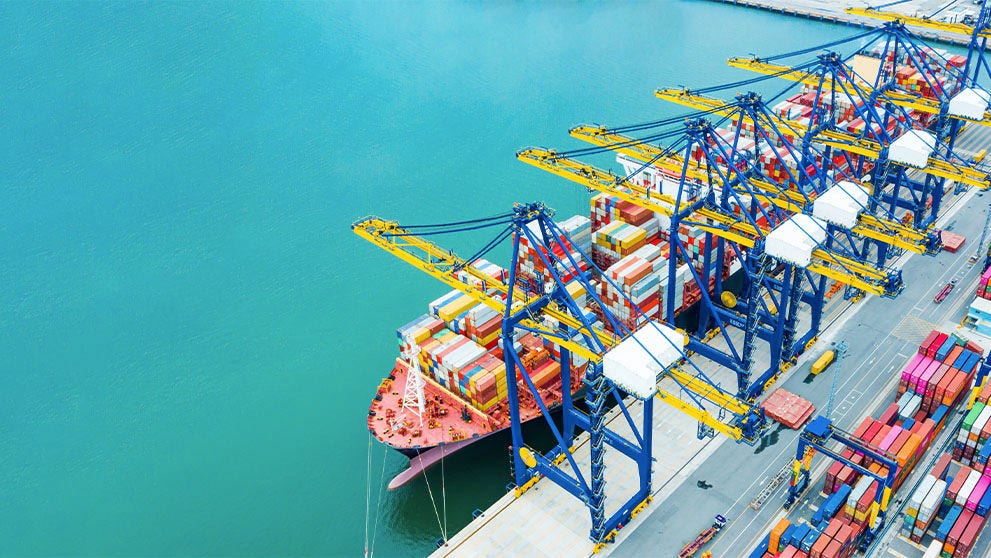
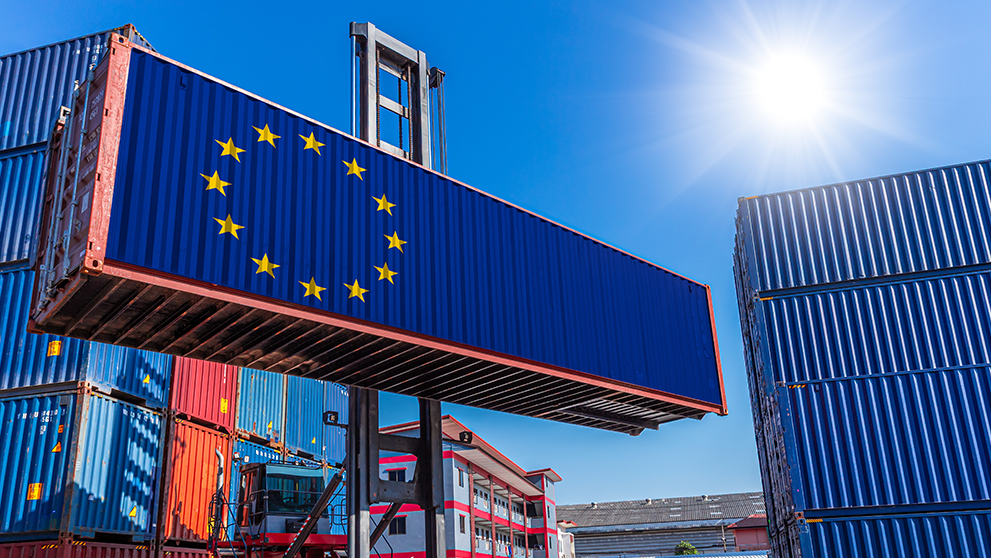
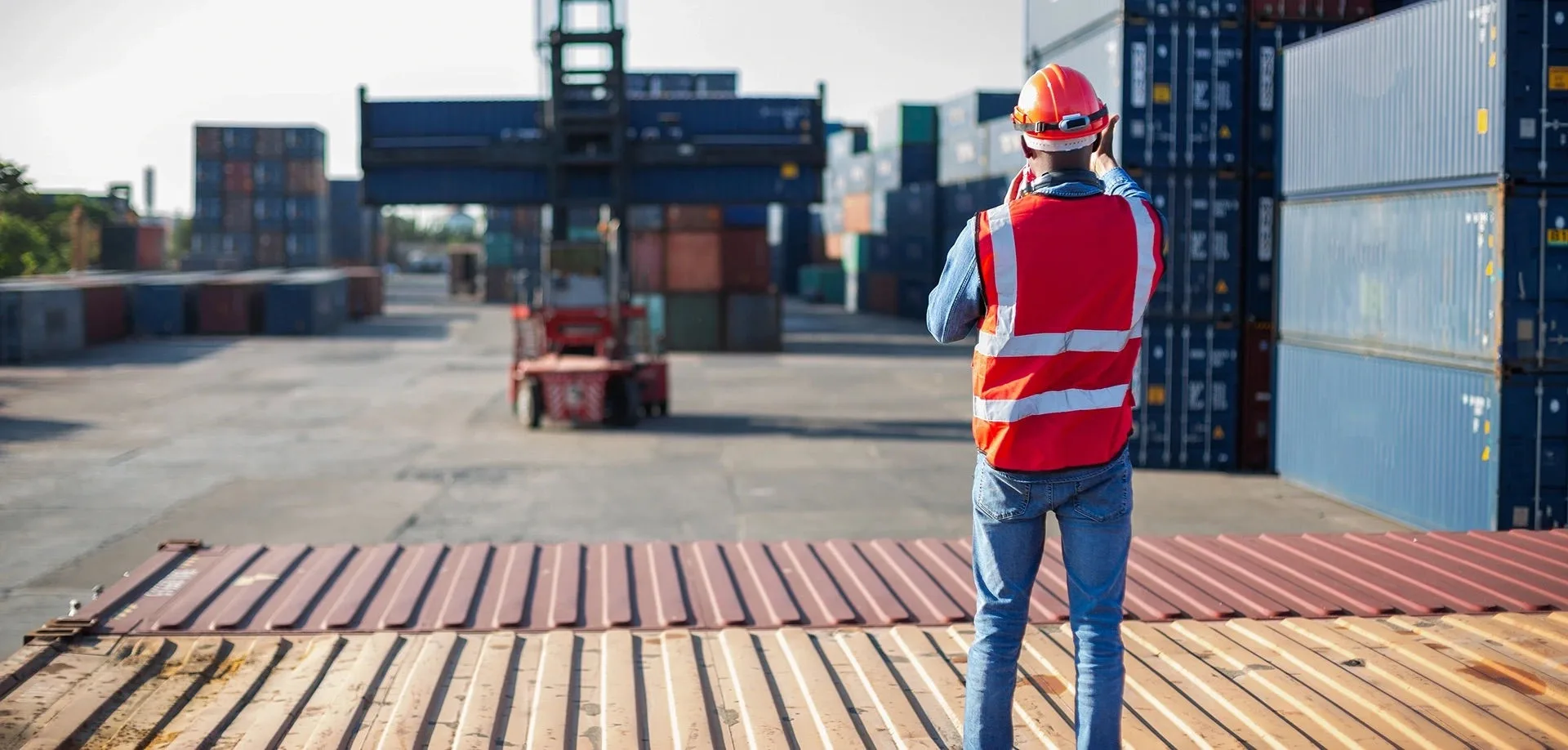
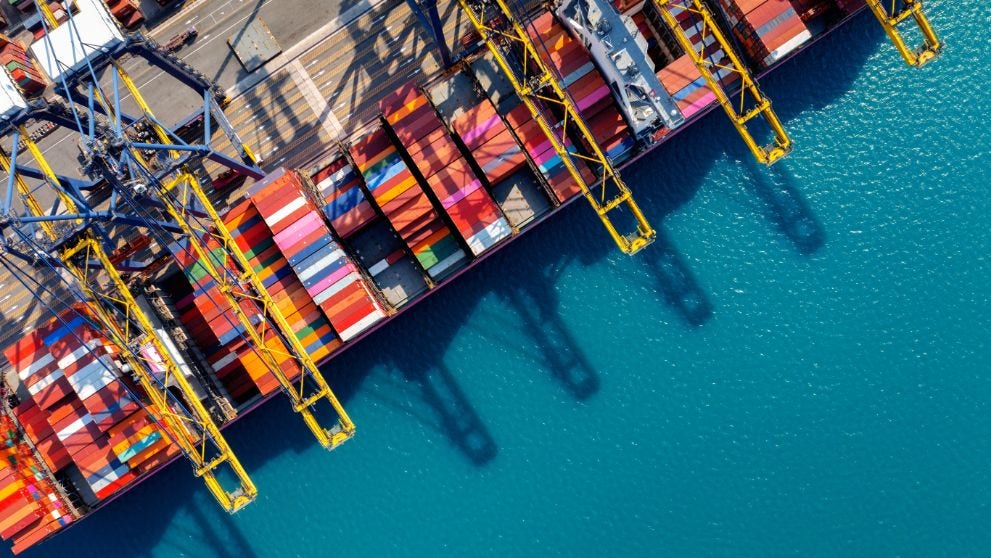
Stacked containers at a logistics terminal with boxes being moved, representing a supply chain in Brazil
In this article
A supply chain links supplier, factory, transport and customer
Three flows: goods, information and money
Tariffs and transit times reshape global chains
Express is the chain's contingency route

A supply chain is the network of companies and steps that takes a product from raw material to the end customer: suppliers, factory, transport, warehouses, distributors and retail. For businesses trading with Brazil, it runs on three flows at once. Goods move towards the customer, information moves both ways and money flows back to the origin.

Most companies only look at the whole chain when it breaks. The packaging supplier in China ships late, a destination country changes its tariffs within a week, a batch sits waiting for an import licence in Brazil. Knowing the links and the flows is what lets you spot the problem before it becomes a stockout.

What is supply chain management?

Supply chain management (SCM) is the coordinated management of everything between buying an input and delivering to the customer. The Council of Supply Chain Management Professionals (CSCMP), the US professional association for the field, defines SCM as the planning and management of sourcing and procurement, conversion and all logistics activities, including coordination with suppliers, intermediaries, third-party service providers and customers.

The key word in that definition is coordination. Logistics moves and stores goods. Supply chain decides what to buy, from whom, in what quantity, where to hold stock and on what timeline. If you want the line drawn in detail, our guide to what logistics is shows where one ends and the other begins.

A simple rule helps: any decision that affects more than one company in the chain is a supply chain decision. Switching carriers is logistics. Moving a supplier from Asia to Mexico, which changes lead time, cost, import tax and stock levels in one go, is supply chain.

What are the links in a supply chain?

The links are the companies and functions the product passes through. In a typical consumer goods chain serving Brazil, they appear in this order:

  1. Raw material and component suppliers, often abroad.
  2. The manufacturer, which turns inputs into finished goods.
  3. Inbound transport, including international freight and customs clearance.
  4. A warehouse or distribution centre, where stock waits for orders.
  5. Distributors, wholesalers or online marketplaces.
  6. Retail or direct sales to consumers.
  7. Reverse logistics, which brings back exchanges, returns and packaging.

Picture a cosmetics maker in Campinas, São Paulo, that buys bottles from China and fragrance from France, then sells to shops in Brazil and Chile. It has at least three links outside the country, two customs regimes and customers who expect delivery times as if everything were local. Each link has its own lead time, and a delay in one adds to the next.

How do the flows of goods, information and money work?

The three flows run in parallel, and most problems start when one of them moves slower than the others. The table shows what travels in each flow and where it tends to get stuck in an operation that imports into or exports from Brazil.

Flow

Direction

What moves

Where it gets stuck

Goods

Supplier to customer

Inputs, products, packaging, returns

Loading, customs, warehouse

Information

Both ways

Orders, demand forecasts, commercial invoices, tracking

Wrong documents, mismatched NCM (Brazil's 8-digit tariff code), outdated forecasts

Money

Customer to supplier

Payments, foreign exchange, taxes, freight

Payment terms, currency swings, unexpected duties

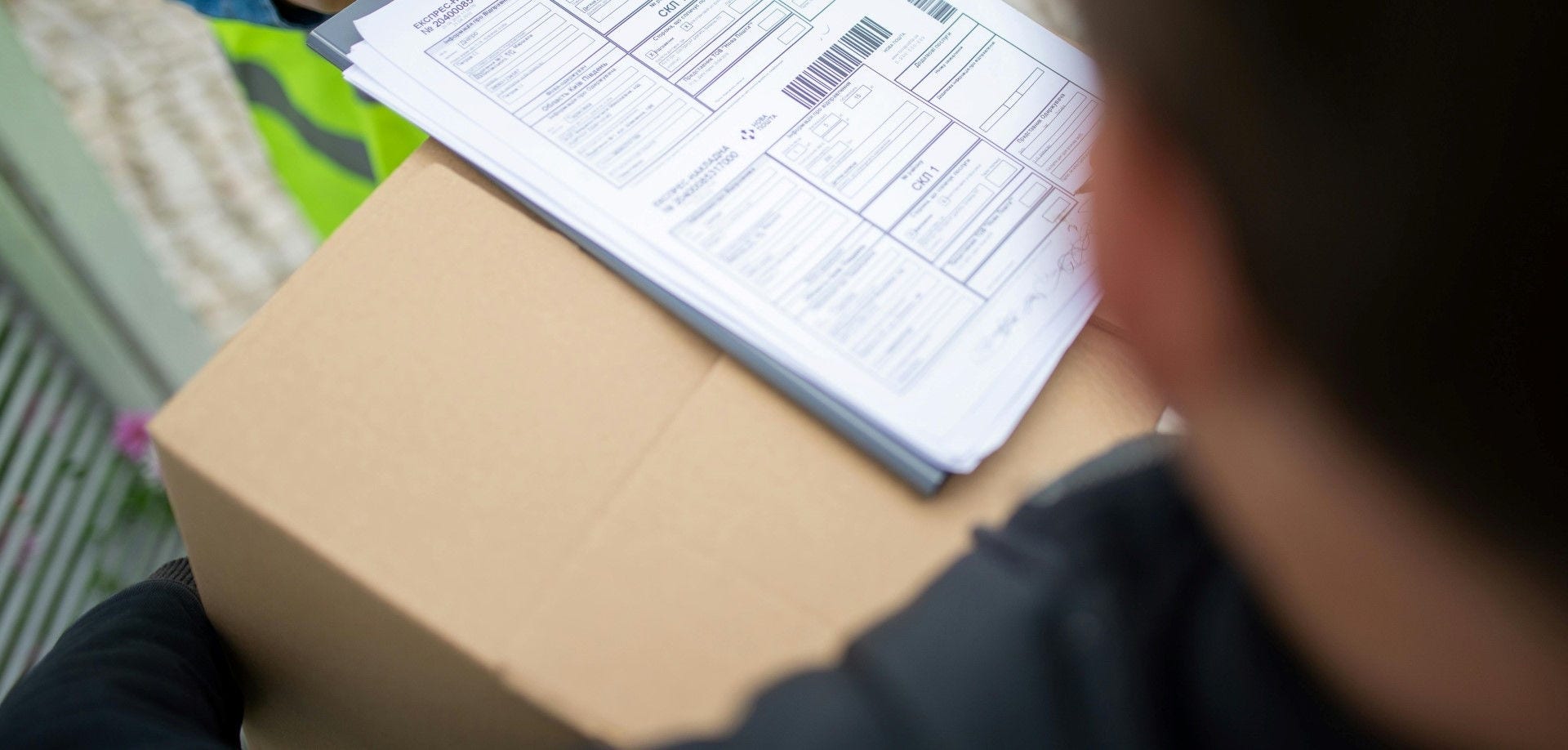
Information is the flow companies underestimate most. A commercial invoice with a vague description holds cargo at customs, and the goods stop moving even with the truck at the gate. A purchase order based on an old forecast fills the warehouse with the wrong item.

Money decides how much stock the business can afford to carry. If you pay the supplier 30 days before shipment and collect from your customer 60 days after the sale, your own cash is financing the chain. Shortening the gap between the two ends frees as much capital as negotiating a lower price.
How do tariffs and transit times reshape a global supply chain?

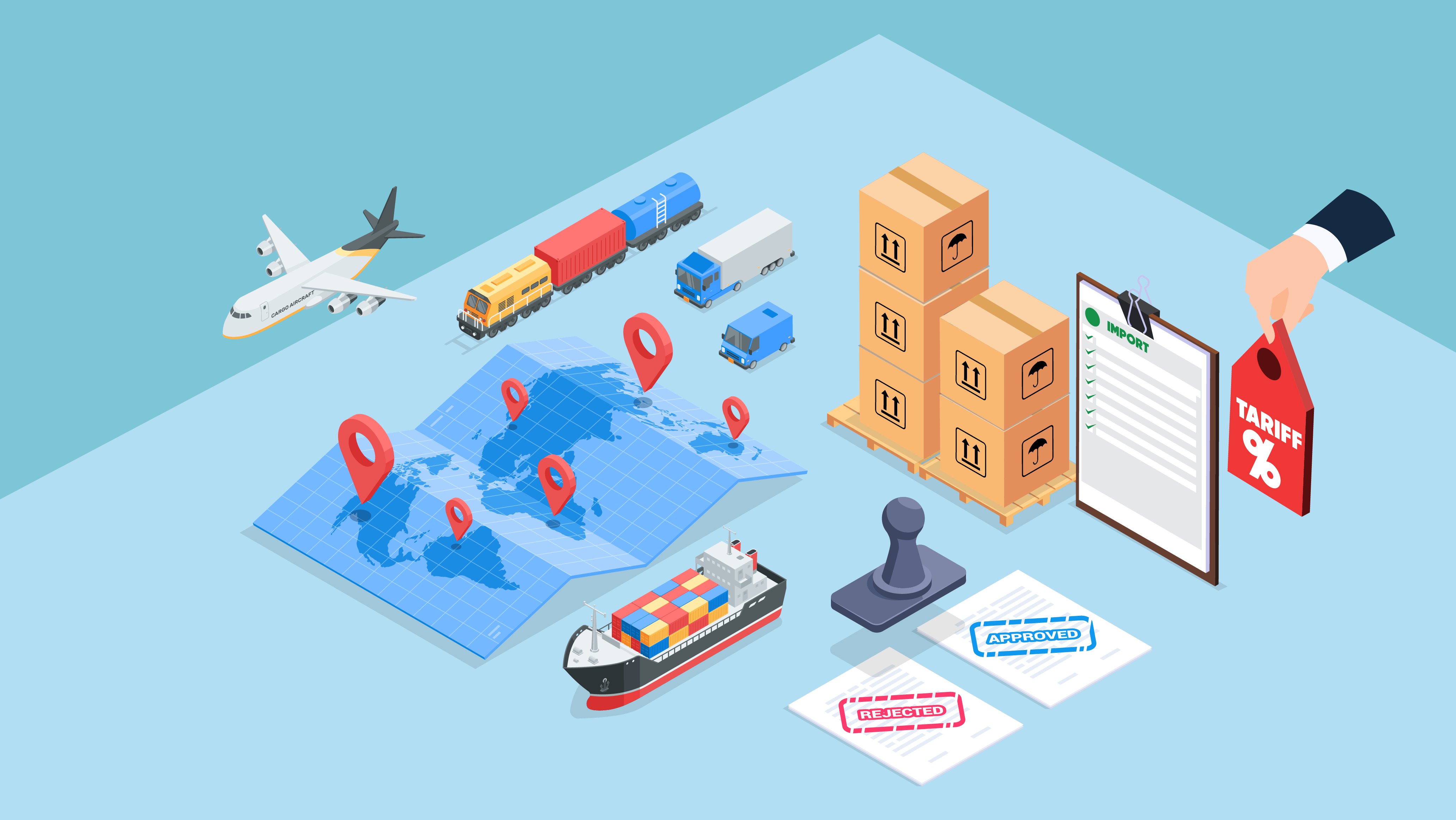
Tariffs and transit times are the two variables that most often redraw an international supply chain, because they change cost and inventory at the same time. In 2025, Brazil exported US$ 348.7 billion, a record for the series, with a trade surplus of US$ 68.3 billion. Sales to the United States fell 6.6% over the year, a drop concentrated between August and December after the US surcharge on part of Brazil's exports. Source: MDIC/Secex (Brazil's trade ministry), January 2026.
That figure shows how one trade policy decision reorganises whole chains. Exporters look for other markets, US buyers look for suppliers elsewhere and stock planned for one market has to be reallocated. If your products are affected, our guide to US Section 301 tariffs and Brazil covers the US trade action aimed at Brazilian products.

Transit time works differently. The longer the journey, the more stock you need to cover the wait and the more capital sits in the pipeline. Measuring the lead time of each link, from purchase order to warehouse receipt, is the first step to finding where the chain loses days.

How can you tell whether your supply chain is working?

You measure the chain with indicators that cut across companies, not just with freight cost. Four of them settle most discussions:

  • Service level: the share of orders delivered complete and on the agreed date.
  • Inventory turnover: how many times stock is renewed in the period.
  • Cash conversion cycle: days between paying the supplier and getting paid by the customer.
  • Total landed cost: product price plus freight, insurance, taxes and clearance expenses.

The last indicator changes the most decisions. A supplier that is 8% cheaper at origin can end up more expensive after ocean freight, storage and the extra stock a long lead time demands. Our logistics management tips cover routines to track these numbers without an endless spreadsheet.

Where does express shipping fit in the supply chain?

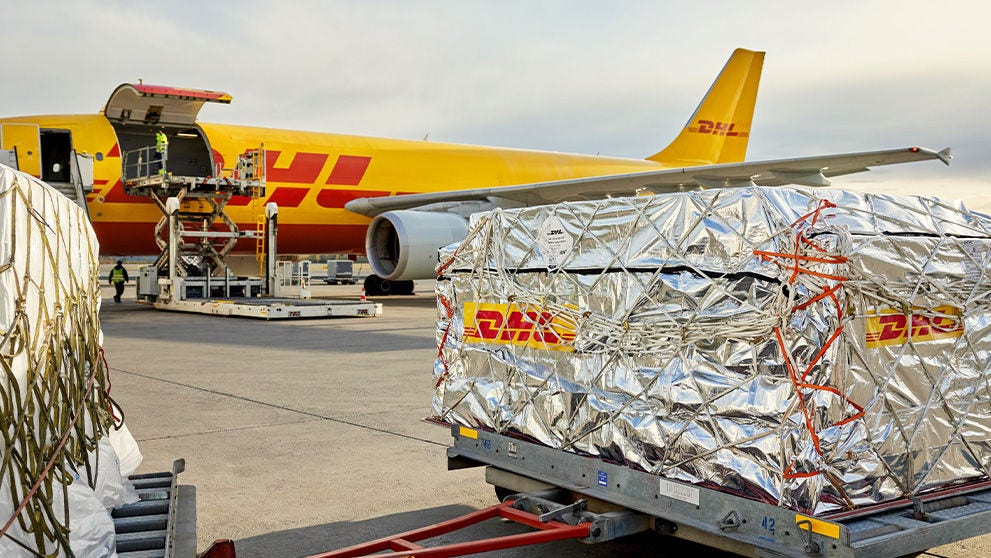
International express fits the points in the chain where time is worth more than freight cost: samples for approval, spare parts, first batches of a new product and emergency replenishment. It does not replace ocean freight for large, predictable volumes. It protects the chain when the predictable fails.

According to the DHL Express 2026 Service and Rate Guide for Brazil, DHL Express Worldwide serves more than 220 countries and territories and accepts shipments of up to 3,000 kg, with pallets of up to 1,000 kg. That weight range covers everything from a sample in an envelope to the replenishment load that keeps a production line running.

If you buy from abroad, design the chain with two routes: the regular one, by sea or consolidated air, and a contingency route by express, with documents and registrations ready. Our guide to importing into Brazil explains what needs to be in order so that the second route works on the day you need it.

Frequently asked questions about supply chains in Brazil

In everyday business use, yes: "supply chain", "supply network" and the Portuguese "cadeia de suprimentos" all describe the same set of suppliers, manufacturers, distributors and retailers. Some companies use "supply network" to stress that real chains branch out rather than run in a straight line.

They plan demand and purchasing, select and monitor suppliers, set inventory levels and coordinate transport and storage. In companies that import into Brazil, they also track shipping dates, documents and customs costs together with the foreign trade team.

A supply chain describes the physical, financial and information path of a product between companies. The value chain, a concept from Michael Porter, analyses the internal activities of one company that create margin, such as marketing, technology and service.

Yes, and more urgently than a large one, because it often has a single supplier per item and little cash for extra stock. Mapping the links, knowing the real lead time of each one and having an alternative shipping route for emergencies already removes much of the risk.

It is a chain that keeps delivering when one link fails, because it has an alternative supplier, calculated safety stock and more than one transport route. Resilience costs money, so a good design protects first the items that stop sales or production.

Sources

Take your supply chain across borders with less friction

If your supply chain already has a supplier abroad or a customer outside Brazil, the next step is an express route ready for samples, replenishment and emergencies, with pickup, documents and customs clearance handled by people who do it every day.

With a business account you can quote, create labels and track every shipment in one place. Open a DHL Express business account and have that contingency plan in place before the next urgent order.