It can be used, but it describes the deal poorly. When the seller is liable for the cargo up to the buyer's address, the "D" rules, such as DAP and DDP, better reflect who carries the risk along the way.



 Share

The CPT Incoterm (Carriage Paid To) is the rule under which the seller books and pays transport to the agreed destination, but risk passes to the buyer when the goods are handed to the first carrier, still in the country of origin. It works for any mode of transport, including air, road and containerised freight.
Anyone who reads "carriage paid to Frankfurt" on a quote tends to assume the seller is liable for the cargo all the way there. It is not. Under CPT, the freight bill and the responsibility for the goods split right at departure, and that gap causes most of the disputes between exporters and importers.
CPT is one of the 11 rules in the International Chamber of Commerce (ICC) Incoterms 2020 edition, in force since 1 January 2020. Source: ICC, official Incoterms page, October 2026. It belongs to the group of rules that work for any mode of transport, alongside EXW, FCA, CIP, DAP, DPU and DDP; our guide to what Incoterms are explains the full split.
The place after the code is the destination freight is paid to: "CPT Frankfurt Airport". But the rule has two critical places, and contracts usually name only one. The second, the delivery point where risk changes hands, needs to be written down too.
Wording that avoids doubt: "CPT Frankfurt Airport, Incoterms 2020, delivery at the Viracopos cargo terminal" (Viracopos is the main air cargo airport in Campinas, São Paulo state). In one line, both parties know where the money ends and where the risk begins.
The seller pays for packing, export clearance, handover to the carrier and main carriage to destination. The buyer takes over from there: unloading (unless included in the freight contract), import clearance, taxes and final delivery.
Obligation | Seller | Buyer |
Packing and marking | Yes | No |
Export clearance | Yes | No |
Handover to the first carrier | Yes | No |
Main carriage to the named destination | Yes | No |
Insurance during transport | Not required | Not required, but bears the loss if damage occurs |
Unloading at destination | Only if included in the freight contract | Yes, in all other cases |
Import clearance and taxes | No | Yes |
Look at the insurance line. Nobody has to buy cover, and the buyer carries the risk of a journey they neither chose nor paid for directly.
Risk passes when the goods are handed to the carrier the seller hired, at the agreed place of delivery. If there are two or more carriers and the contract is silent, handover to the first one counts.
Here is how that plays out. A parts manufacturer in Belo Horizonte, in Minas Gerais, sells CPT Frankfurt Airport. A truck takes the cargo to São Paulo's Guarulhos airport, where it boards a plane. With no delivery point in the contract, risk passed in Belo Horizonte, at the factory gate, when the driver signed for the goods.
That means an accident on the road to the airport is, in principle, already the German importer's problem. If the parties wanted risk to pass only at the Guarulhos terminal, that has to be in writing.
Because CFR only works for sea transport with goods placed on board the vessel, while CPT applies the same logic, freight paid by the seller and risk at origin, to any mode. It is the right choice when cargo is handed over at a terminal before loading, as happens with containers and all air cargo.
The table compares the "C" rules with FCA, which splits risk at the same point:
Rule | Mode | Main carriage | Insurance | Risk passes to buyer |
FCA | Any | Buyer | Nobody required | On handover to the carrier |
CPT | Any | Seller | Nobody required | On handover to the carrier |
CIP | Any | Seller | Seller, broad cover | On handover to the carrier |
CFR | Sea only | Seller | Nobody required | On board the vessel |
CIF | Sea only | Seller | Seller, minimum cover | On board the vessel |
If you already use the CFR Incoterm for sea freight and start shipping by air, switch to CPT rather than keeping the old code out of habit.
Risk passes at the same place, on handover to the carrier. The difference is who chooses and pays for main carriage: under CPT it is the seller, under the FCA Incoterm it is the buyer.
For a Brazilian exporter, CPT makes sense when it has negotiated rates and wants to control timing and routing. For an importer, FCA makes sense when it has a trusted forwarder at origin. Choose based on each side's buying power in freight, not on custom.
In a CPT purchase, freight is built into the supplier's price, and that affects the tax base. Under Brazil's Customs Regulation, customs value includes transport to the port or airport of unloading, loading, unloading and handling charges up to that point and the insurance for those operations; charges incurred inside Brazil stay out when shown separately. Source: Decree 6,759/2009, art. 77, as amended by Decree 11,090/2022, Planalto website, October 2026.
In practice: if the supplier sells CPT Jundiaí, with air arrival at Guarulhos and a road leg from the airport to your plant, ask for that leg to be shown separately on the commercial invoice. Without that breakdown, you risk paying tax on freight that happened inside Brazil.
Any insurance you buy yourself also goes into the base. It is still worth having: under CPT the goods travel at your risk from origin. If you want insurance paid by the supplier, negotiate CIP, which in the 2020 edition requires cover in line with the Institute Cargo Clauses (A), while the CIF Incoterm keeps clauses (C) as its default. Source: ICC, October 2026.
It suits air cargo when the seller has access to competitive air freight and the buyer wants to know the arrival cost before placing the order. Spare parts and electronic components with tight deadlines are typical examples.
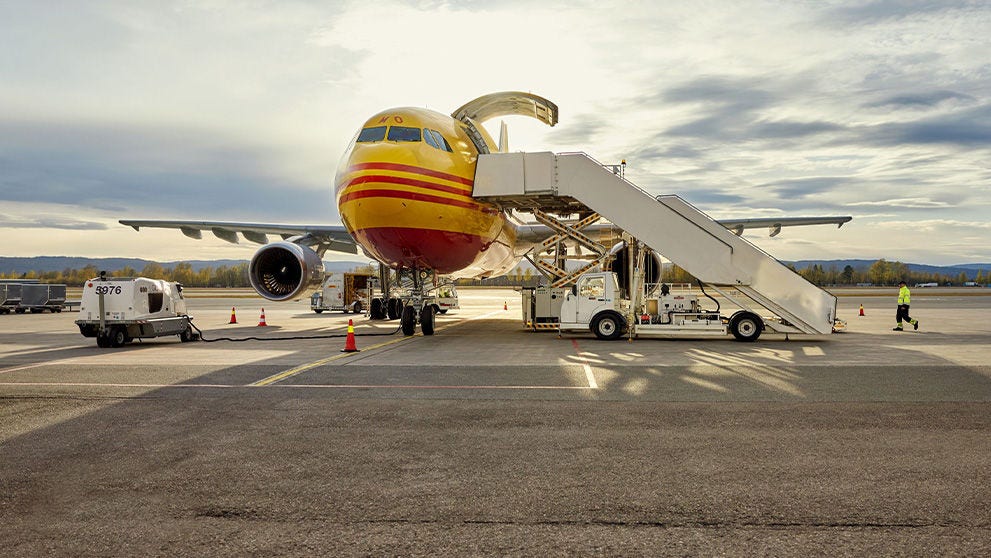
The weak spot is that risk shifts to the buyer early, in a mode where cargo changes hands at least three times: truck, terminal and aircraft. Our guide to air cargo transport in Brazil walks through each step and where handling happens.
It can be used, but it describes the deal poorly. When the seller is liable for the cargo up to the buyer's address, the "D" rules, such as DAP and DDP, better reflect who carries the risk along the way.
It means the price shown already includes transport to the place named after the code. The buyer does not pay main carriage separately but bears the risk from handover to the carrier at origin.
Yes. Incoterms apply to any mode and CPT works well by road: risk passes when the seller's truck collects the cargo at origin, and freight to the destination city is in the price.
You should. Without it, risk passes on handover to the first carrier, which may be a truck at the factory gate rather than the airport terminal both parties had in mind.
CPT organises consolidated air cargo well. For samples, urgent parts and smaller orders from or into Brazil, express air shipping takes goods door to door, with clearance and tracking under one responsibility and no handovers between different providers.
To quote and track those shipments in one place, open a DHL Express business account.
Share